Easter Garden Activities for Kids
Fun Easter garden activities for children of all ages. Planting, crafts, egg hunts, and nature projects to enjoy outdoors over the school holidays.
Key takeaways
- Sunflower seeds germinate in 7-10 days, giving kids fast visible results
- Cress eggs take just 3-5 days from sowing to harvest
- Garden egg hunts cost nothing if you use hard-boiled eggs decorated at home
- Bug hotels can be built from free materials like logs, sticks, and pine cones
- Runner beans grow up to 5cm per day in warm weather, keeping kids engaged
- All activities work in gardens of any size, including balconies and patios
Easter garden activities are the perfect way to get children outdoors during the spring holidays. Easter 2026 falls on 5 April, when UK gardens are warming up and daylight stretches past 7pm. The timing is ideal for planting, crafts, and wildlife projects.
This guide covers ten hands-on activities for children aged 2 to 12. Every project uses affordable materials, most under £10. Several cost nothing at all. Every activity works in gardens of any size, including balconies and patios. All of them build real skills: patience, observation, and a lasting connection with nature.
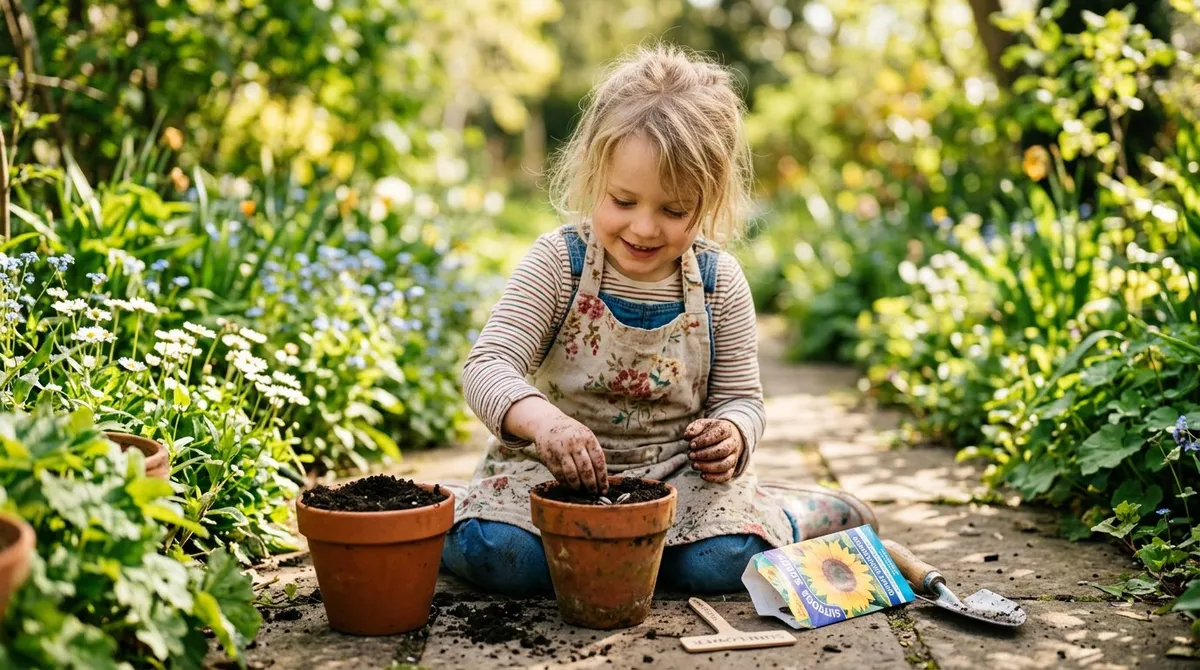
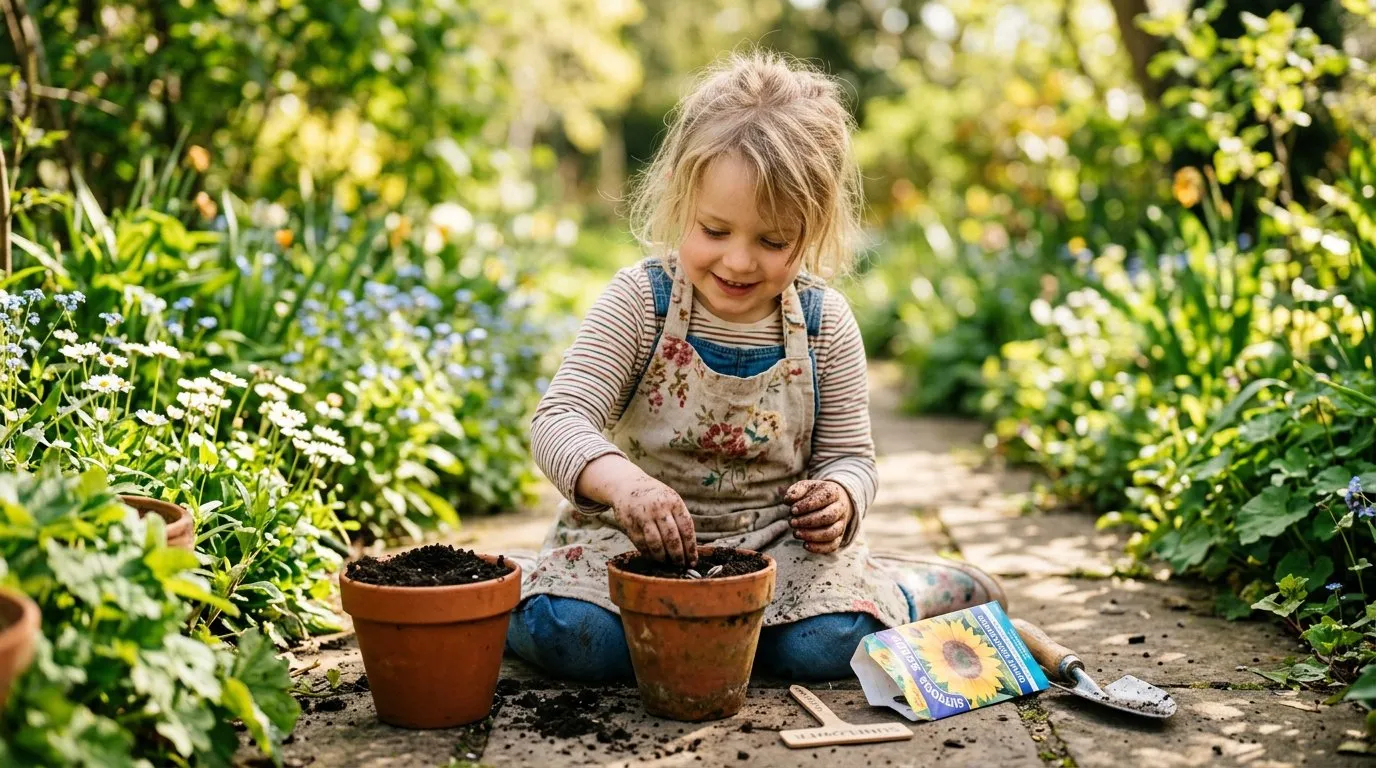 Sowing sunflower seeds gives children a fast-growing project to watch over the holidays
Quick-growing plants to sow at Easter
Children lose interest if nothing happens quickly. Choose plants that germinate fast and grow visibly within the holiday fortnight.
Cress is the fastest option. Seeds sprout in 24 hours on damp kitchen paper. Children can harvest and eat the cress within 3-5 days. No soil, pots, or garden space needed.
Sunflower seeds germinate in 7-10 days when sown 2cm deep in moist compost. Once established, tall varieties grow 2-5cm per day in warm weather. Children love measuring the daily progress. For the full growing process, see our guide on how to grow sunflowers.
Runner beans are another excellent choice. Soak seeds overnight, then push them 5cm deep into a pot of compost. Shoots appear in 7-14 days. In warm conditions, runner bean plants grow up to 5cm per day. The twisting stems climbing a bamboo cane fascinate young children. Our guide on how to grow runner beans covers the full process from sowing to harvest.
Lettuce seeds are tiny but germinate in 7-10 days. Sow them on the surface of damp compost and press gently. Do not cover the seeds as they need light to germinate. Baby leaves are ready to pick in 4-6 weeks. See our how to grow lettuce guide for varieties suited to containers.
Radishes give the fastest root vegetable harvest. Sow seeds 1cm deep in rows. Seedlings appear in 4-7 days. Some varieties produce edible roots in just 25 days. Children enjoy pulling them from the soil.
| Plant | Sowing depth | Days to germinate | Days to harvest | Cost per packet |
|---|---|---|---|---|
| Cress | Surface | 1-2 | 3-5 | £0.50-£1 |
| Sunflowers | 2cm | 7-10 | 60-90 (flower) | £2-£3 |
| Runner beans | 5cm | 7-14 | 60-70 | £2-£3 |
| Lettuce | Surface | 7-10 | 28-42 (baby leaf) | £1-£2 |
| Radishes | 1cm | 4-7 | 25-35 | £1-£2 |
If the weather is cold at Easter, start all seeds on a sunny windowsill. Our guide on how to sow seeds indoors explains the method step by step. Move seedlings outside once overnight temperatures stay above 10C.
Why we recommend sunflowers as the best first growing project for children: After 30 years of introducing children and school groups to gardening, sunflowers consistently produce the most enthusiasm. The seeds are large enough for small hands to sow without dropping, germination is reliable in almost any compost, and the daily height gain — up to 5cm in warm weather — gives children something measurable to celebrate. In groups of 10 children sowing different seeds together, sunflower growers check on their plants twice as often as those growing slower crops like lettuce or herbs.
Gardener’s tip: Give each child their own labelled pot. Ownership makes children far more committed to watering and checking their plant each morning. Use lolly sticks as plant labels and let them decorate the sticks with coloured pens.
How to grow cress in eggshells
This is the simplest Easter growing project. It works for children as young as two and takes five minutes to set up.
What you need:
- Empty eggshell halves (save them from breakfast)
- Cotton wool or kitchen paper
- Cress seeds (one packet is enough for 20 eggshells)
- A small cup or egg box to hold the shells upright
- Felt-tip pens for decorating
Step-by-step:
- Wash the eggshell halves gently and let them dry.
- Draw funny faces on the outside of each shell with felt-tip pens.
- Place a small wad of damp cotton wool inside each shell.
- Sprinkle cress seeds thickly over the cotton wool surface.
- Stand the shells in an egg box on a windowsill.
- Mist with water daily. Keep the cotton wool moist but not waterlogged.
- Shoots appear within 24 hours. The “hair” grows 3-5cm tall in 3-5 days.
- Harvest by snipping with scissors. Eat on buttered bread or in egg sandwiches.
Children love watching the faces “grow hair.” The whole cycle from sowing to eating takes less than a week. This makes it the perfect activity to start on the first day of the holidays. Each child can grow three or four eggshell characters and compare which grows fastest.
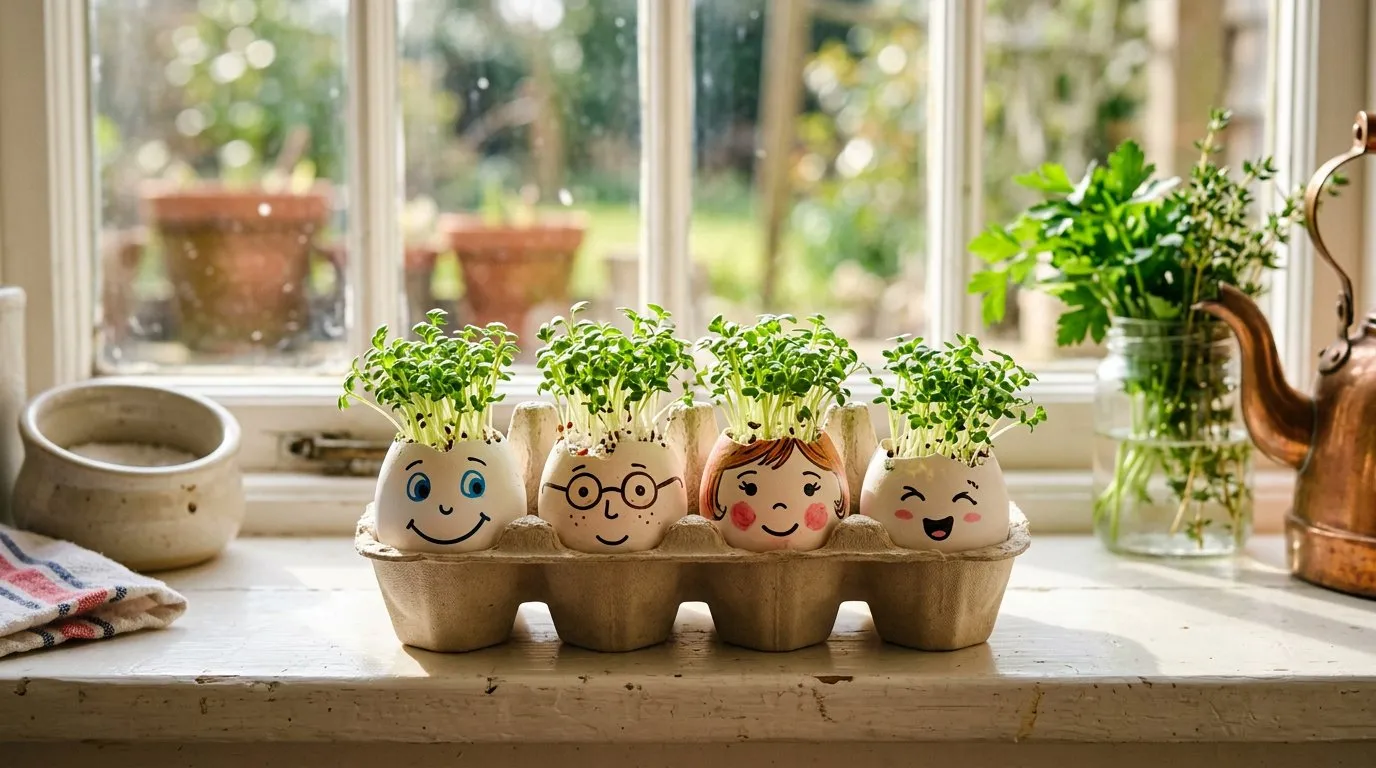 Cress eggs are the simplest Easter growing project for children of any age
Easter garden egg hunt ideas
A garden egg hunt is the centrepiece of most family Easters. It costs almost nothing and works in any outdoor space.
Basic setup: Hard-boil and decorate eggs the day before, or use foil-wrapped chocolate eggs. Hide them around the garden at heights appropriate to the youngest child. Give each child a basket or a bowl.
For toddlers (age 2-3): Hide eggs in plain sight. Place them on top of walls, in plant pots, and beside obvious garden features. Use large, brightly coloured eggs. Limit the total to 5-8 per child so the hunt does not overwhelm them.
For children aged 4-7: Mix visible eggs with partially hidden ones. Tuck eggs under leaves, behind watering cans, and inside wellington boots left on the doorstep. Provide a simple picture clue sheet showing where to search: “Look near something red” or “Find the egg beside a flower.”
For children aged 8-12: Write proper clue cards that lead from one egg to the next. Each clue reveals the location of the following egg. The final clue leads to a larger prize. Include riddles that reference specific garden features: “I have hands but cannot clap” (garden clock) or “I drink water but never get full” (plant pot).
Team hunts: Split children into two teams with colour-coded eggs. The team that finds the most eggs wins. This works well for mixed age groups because older children help younger ones.
Rainy day backup: If it rains, move the hunt indoors. Hide eggs around the house using the same clue system. Alternatively, wrap eggs in cling film and hide them under upturned plant pots on the patio. Children can hunt under umbrellas.
Nature scavenger hunt for Easter
A nature scavenger hunt gets children looking closely at the garden. It teaches observation skills and introduces spring wildlife.
Print or write a checklist of spring items for children to find. They do not collect the items. Instead, they tick them off the list or take a photo of each one.
Spring scavenger hunt checklist (20 items):
- A yellow flower (daffodil, dandelion, or forsythia)
- A bumblebee
- A worm
- A feather
- A bud on a tree branch
- A spider web
- A bird carrying nesting material
- A ladybird
- Something fuzzy (moss, catkin, or lamb’s ear plant)
- A smooth stone
- Three different leaf shapes
- A flower with five petals
- An insect on a leaf
- A Y-shaped twig
- Something that smells nice
- A snail shell (occupied or empty)
- A bird singing from a tree
- A patch of clover
- Lichen growing on wood or stone
- An ant trail
Adjust the list for your garden. Urban gardens might include “a plant growing through a crack” or “a bird on a rooftop.” Younger children need a shorter list of 8-10 items with pictures alongside the descriptions.
The hunt encourages children to slow down and notice details they normally walk past. It also introduces the idea that gardens are habitats for wildlife, not just spaces for people. For more on encouraging wildlife, read our guide on how to create a wildlife garden.
How to build a bug hotel with kids
A bug hotel is a shelter made from natural materials that provides nesting and hibernation spots for beneficial insects. Building one is a free activity that produces something useful for the garden.
Materials (all free from the garden or local park):
- A wooden pallet, old wooden crate, or large plastic bottle (the frame)
- Hollow bamboo canes or dried stems cut to 15-20cm lengths
- Pine cones
- Dry leaves
- Small logs with holes drilled into the ends
- Pieces of bark
- Corrugated cardboard rolled into tubes
- Straw or dry grass
Step-by-step:
- Choose a sheltered spot. South or south-east facing is best. Place the hotel at the back of a border or against a fence.
- Set the frame in position. A wooden crate on its side works perfectly. Stack bricks on either side to hold it steady.
- Fill each section with different materials. Pack bamboo canes tightly into one area. Stuff pine cones into another. Roll corrugated cardboard into tubes and push them in.
- Add a section of dry leaves held in place with chicken wire or a small mesh bag.
- Drill 6-10mm holes into any small logs and slot them in. Solitary bees nest in these holes.
- Top the hotel with a piece of bark, tile, or slate to keep rain off.
Who will move in? Solitary bees, ladybirds, lacewings, woodlice, earwigs, and spiders. Solitary bees are particularly valuable pollinators and completely harmless to children. They do not sting.
Check the hotel every few weeks through summer. Children will spot new residents as the weather warms. Our complete guide on how to build a bug hotel has more design ideas and tips for attracting specific species.
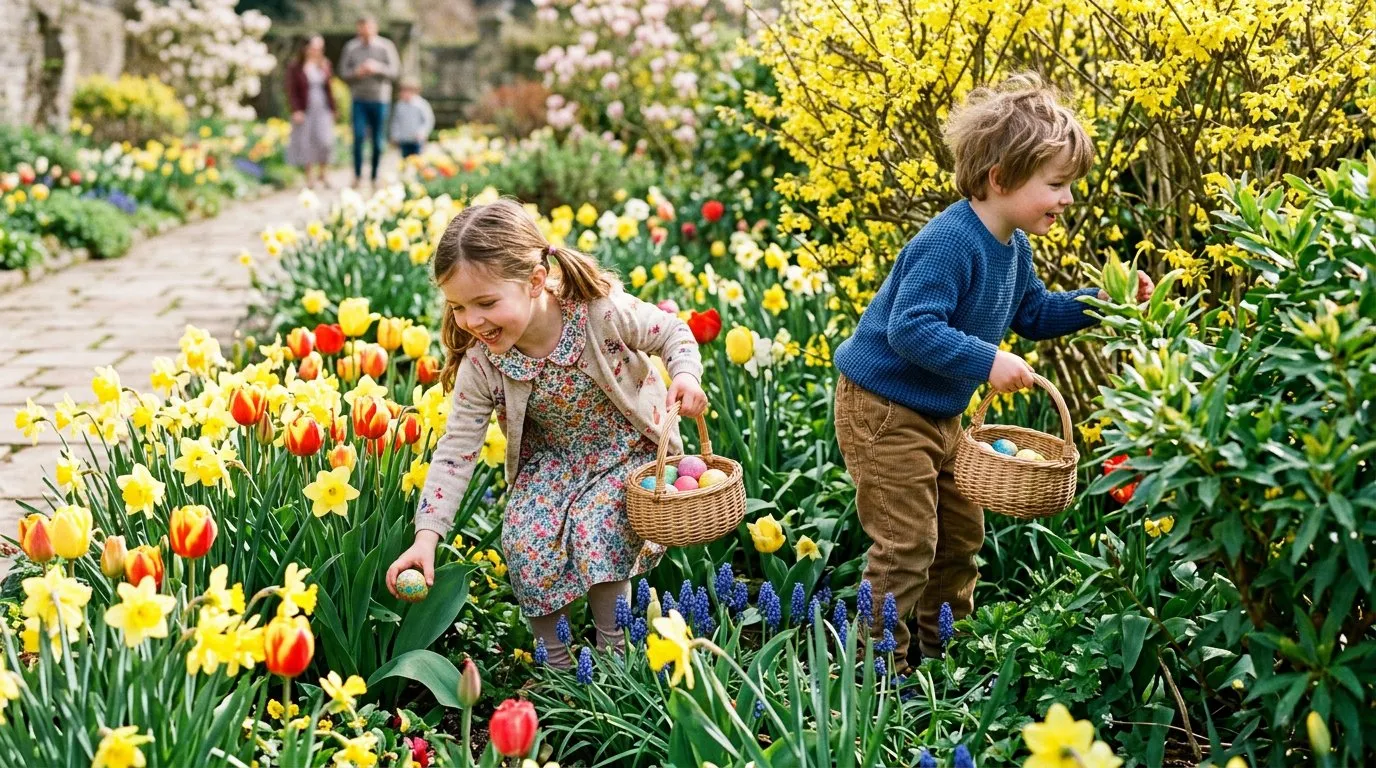 A garden egg hunt is the classic Easter activity and costs almost nothing to set up
Easter garden crafts
These craft projects use garden materials and produce something children can keep or give as gifts.
Painted plant pots
Buy cheap terracotta pots (7-10cm size, about 50p each from garden centres). Let children paint them with acrylic paints or outdoor craft paints. Once dry, fill with compost and sow a sunflower seed or plant a small herb like basil. These make excellent Easter gifts for grandparents.
Materials cost: Under £5 for four pots, paints, and seeds.
Seed bombs
Mix two parts peat-free compost with one part clay powder (from craft shops) and one part wildflower seed mix. Add water until the mixture holds together. Roll into walnut-sized balls and leave to dry on newspaper for 24-48 hours.
Children can throw the seed bombs into bare patches of garden in spring. The clay shell protects the seeds from birds. Rain dissolves the clay and the seeds germinate where they land. This is a fun way to introduce bee-friendly garden plants into overlooked corners.
Materials cost: Under £6 for enough materials to make 30-40 seed bombs.
Pressed flower bookmarks
Collect flat flowers and leaves from the garden. Lay them between sheets of kitchen paper inside a heavy book. Press for 7-10 days. Arrange the dried flowers on card bookmarks using PVA glue. Cover with clear sticky-back plastic to seal.
Spring flowers that press well include primroses, violas, daisies, and individual blossom petals. Flat leaves from ferns and herb plants also work.
Materials cost: Free if you have card and glue at home.
Nature crowns
Cut a strip of card about 5cm wide and long enough to fit around a child’s head. Staple the ends together. Walk around the garden and attach flowers, leaves, feathers, and twigs using small pieces of double-sided tape or PVA glue. Each child creates a unique crown using whatever catches their eye.
Materials cost: Free with household supplies.
Easter activities by age group
This table helps you choose the right activities for your children’s ages. All listed activities appear in this guide with full instructions.
| Activity | Age 2-3 | Age 4-7 | Age 8-12 | Materials cost | Time needed |
|---|---|---|---|---|---|
| Cress eggshells | Yes (with help) | Yes | Yes | Under £1 | 10 min setup |
| Sunflower sowing | With help | Yes | Yes | £2-£3 | 15 min |
| Runner bean sowing | No | Yes | Yes | £2-£3 | 15 min |
| Egg hunt (basic) | Yes | Yes | Yes | Free-£5 | 30-60 min |
| Egg hunt (clue trail) | No | With help | Yes | Free-£5 | 45-90 min |
| Nature scavenger hunt | With help (short list) | Yes | Yes | Free | 30-60 min |
| Bug hotel | No | With help | Yes | Free | 45-90 min |
| Painted pots | With help | Yes | Yes | Under £5 | 30 min |
| Seed bombs | No | Yes | Yes | Under £6 | 30 min |
| Pressed flowers | No | With help | Yes | Free | 10 min + 7 days |
| Nature crowns | With help | Yes | Yes | Free | 20 min |
The simplest activities for very young children are cress eggshells, basic egg hunts, and nature crowns. Older children gain the most from runner bean growing, bug hotel building, and clue-trail egg hunts. Mixed age groups work best with painted pots and scavenger hunts, where everyone participates at their own level.
Tips for gardening with children
Getting children into the garden takes patience and a willingness to let go of perfection. These practical tips help parents keep things enjoyable.
Start small. One pot and one seed packet is enough for a first session. Do not plan an entire afternoon of gardening. Fifteen minutes of focused activity beats an hour of reluctant participation.
Let them get dirty. Mud, water, and compost are part of the experience. Dress children in old clothes or waterproofs. Provide child-sized gloves if they dislike touching soil, but most children happily dig bare-handed.
Give them ownership. Allocate a specific patch, pot, or raised bed as “theirs.” Children care more when the space belongs to them. Let them choose what to grow from a shortlist of easy options.
Make it routine. A daily watering round takes five minutes. Build it into the morning or after-school routine. Children who water daily notice growth changes that weekly waterers miss entirely.
Celebrate every result. A wonky sunflower or a slug-eaten lettuce is still a success. The learning matters more than the harvest. Photograph their plants each week and compare the pictures together.
Use real tools. Toy trowels bend and frustrate. Buy proper child-sized tools from garden centres. They cost £3-£8 each and last years. A small trowel, a watering can, and a hand fork cover most tasks.
Connect food to the garden. Grow something edible in every session. Eating a radish they grew themselves changes how children think about food. Even cress on toast counts.
Explore together. Turn over a stone and count the woodlice. Watch a bee visiting flowers. Follow an ant trail to its nest. These moments of shared curiosity build a lifelong interest in nature.
The RHS Campaign for School Gardening offers free resources, activity sheets, and growing calendars designed specifically for children. Their materials are useful for parents running garden activities at home as well as in classrooms.
Now you have inspired the children to grow, read our guide on how to create a wildlife garden for the next step in turning their curiosity about nature into a lasting habitat project.
Frequently asked questions
What can kids plant at Easter time?
Sunflowers, cress, runner beans, and lettuce are best. All germinate quickly and give children visible results within 7-14 days. Sow indoors if the weather is still cold. Radishes are another strong choice, producing edible roots in 25-35 days. Choose large seeds for younger children as they are easier to handle.
What age can children start gardening?
Children from age 2 can help with gardening. Toddlers enjoy watering and digging in soil. From age 4, children can sow large seeds like sunflowers and beans independently. By age 8, most children can follow written instructions, use real tools safely, and manage their own small growing area with minimal supervision.
How do you make an Easter garden egg hunt?
Hide decorated hard-boiled eggs or wrapped chocolate eggs around the garden. Give each child a basket and a clue sheet. For younger children, keep eggs at ground level and clearly visible. For older children, write riddle clues that lead from one hiding spot to the next. Colour-code eggs for team hunts with mixed age groups.
What are cheap Easter garden activities?
Cress growing costs under £1. Bug hotel building uses free garden materials. Nature scavenger hunts need only a printed checklist. Seed sowing costs £2-£4 per packet, and one packet contains dozens of seeds. Painted pots cost under £5 including paints. Seed bombs and nature crowns use household supplies and garden scraps.
Can you do Easter garden activities without a garden?
Yes. Cress eggs, sunflower pots, and seed trays all grow on windowsills. Nature scavenger hunts work in local parks, woodland walks, or even along a street pavement. Container planting works on balconies, patios, and doorsteps. A single large pot on a balcony can grow runner beans up a bamboo cane.
What is the easiest plant for a child to grow?
Cress is the easiest. Spread seeds on damp kitchen paper inside an eggshell. Cress sprouts in 24 hours and is ready to harvest in 3-5 days. No soil or garden space needed. For something longer term, sunflowers are the next easiest. The large seeds are simple to handle and growth is visible daily once shoots emerge.
Lawrie has been gardening in the West Midlands for over 30 years. He grows his own veg using no-dig methods, keeps a wildlife-friendly garden, and writes practical advice based on real UK growing conditions.