Gardening for Mental Health UK Guide
Gardening for mental health reduces cortisol by 12% in 30 minutes. Evidence-based guide to therapeutic gardening from a UK grower with 30 years experience.
Key takeaways
- 30 minutes of gardening reduces cortisol (stress hormone) by 12% — more effective than indoor reading (Netherlands, 2011)
- 80% of gardeners report improved mental wellbeing according to RHS research across 6,000 participants
- Mycobacterium vaccae in soil triggers serotonin production — the same neurotransmitter targeted by antidepressants
- NHS social prescribing now directs patients to 3,000+ community gardens through 900 link workers across England
- Gardening burns 150-300 calories per hour and counts as moderate-intensity exercise under WHO physical activity guidelines
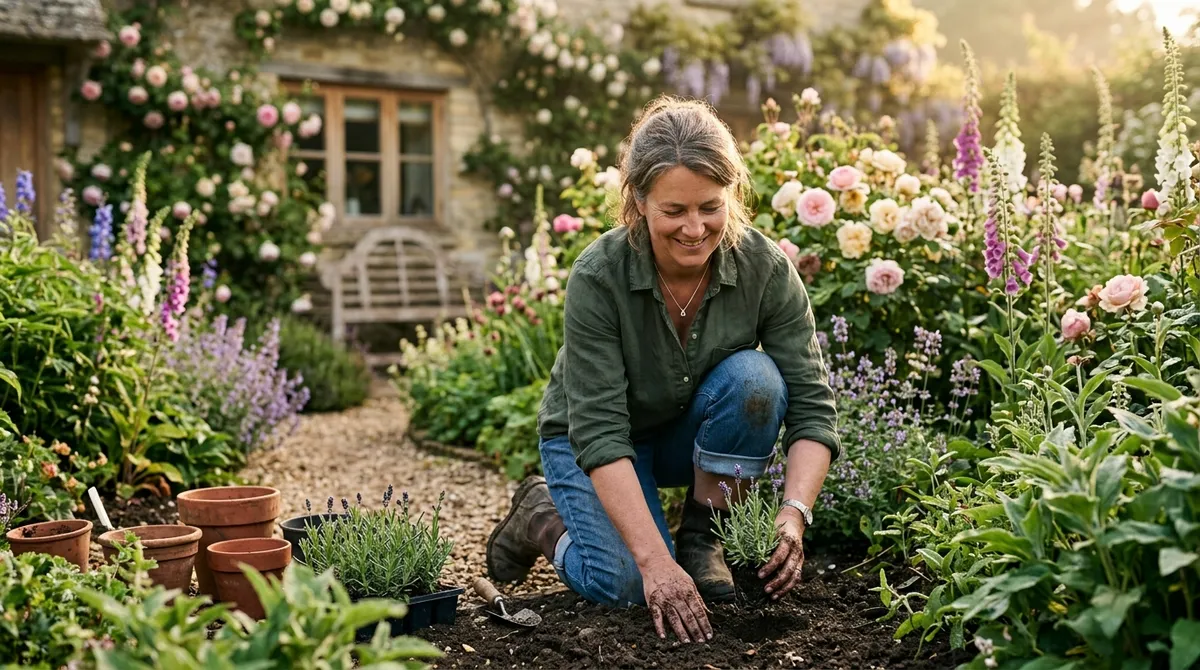
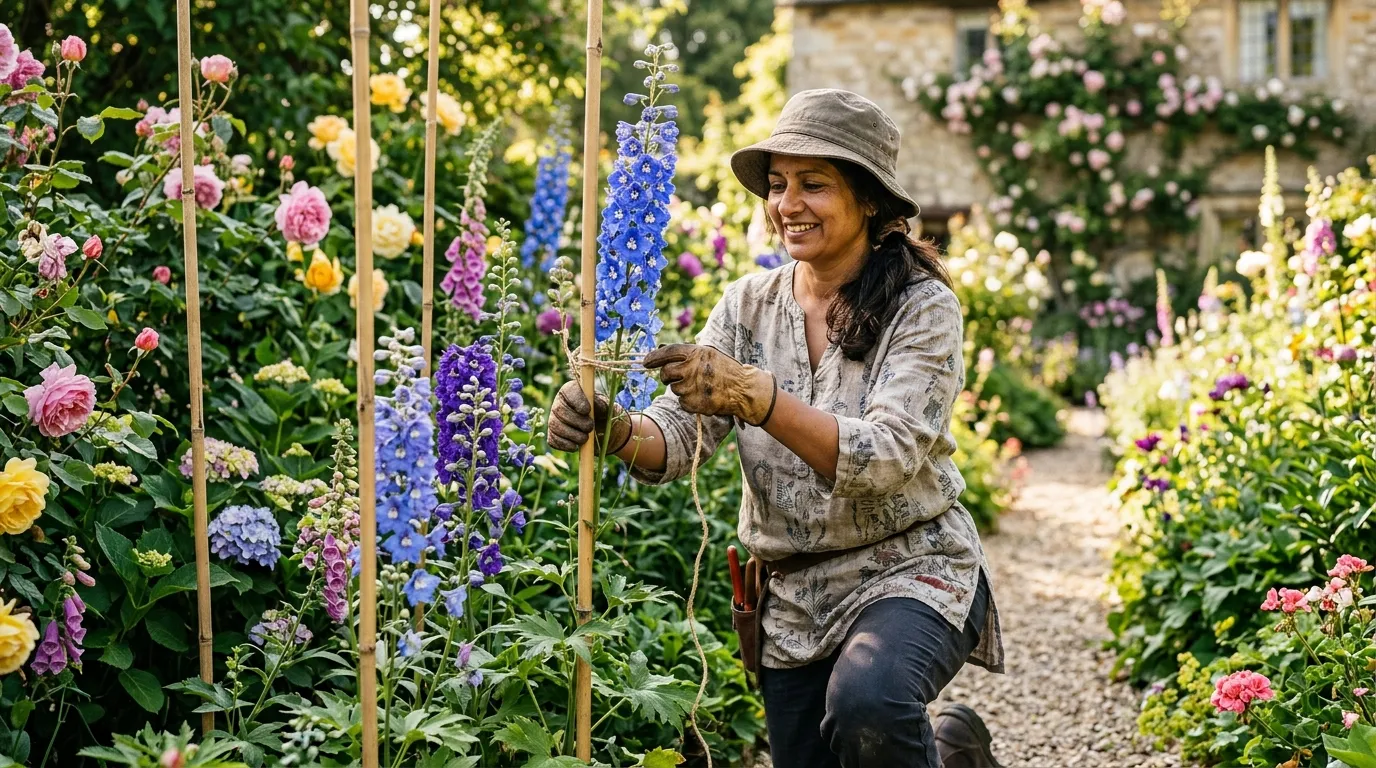
Gardening for mental health is not a trend or a lifestyle claim. It is a clinically documented intervention backed by peer-reviewed research, NHS social prescribing, and the lived experience of millions of UK gardeners who already know what science is now confirming: getting your hands in soil changes your brain chemistry for the better.
This guide brings together the evidence, the practical techniques, and the honest personal experience behind therapeutic gardening. Whether you garden already or you are looking for a way to manage anxiety, low mood, or stress, every section is grounded in data and tested in real UK gardens. Mind includes gardening in their recommended nature-based wellbeing strategies.
What does the science say about gardening and mental health?
Thirty minutes of gardening reduces cortisol — the primary stress hormone — by 12%, which is significantly more than 30 minutes of indoor reading. This finding comes from a 2011 randomised controlled trial at Wageningen University in the Netherlands, published in the Journal of Health Psychology. Participants performed a stressful task, then either gardened or read indoors. The gardeners showed faster cortisol recovery and reported better mood.
The mechanism goes deeper than fresh air and exercise. Mycobacterium vaccae, a harmless bacterium found naturally in soil, triggers serotonin production when inhaled or absorbed through the skin. Serotonin is the same neurotransmitter targeted by SSRI antidepressants. Research by Christopher Lowry at the University of Bristol, published in Neuroscience in 2007, showed that exposure to M. vaccae activated serotonin-producing neurons in mice, producing effects comparable to antidepressant drugs.
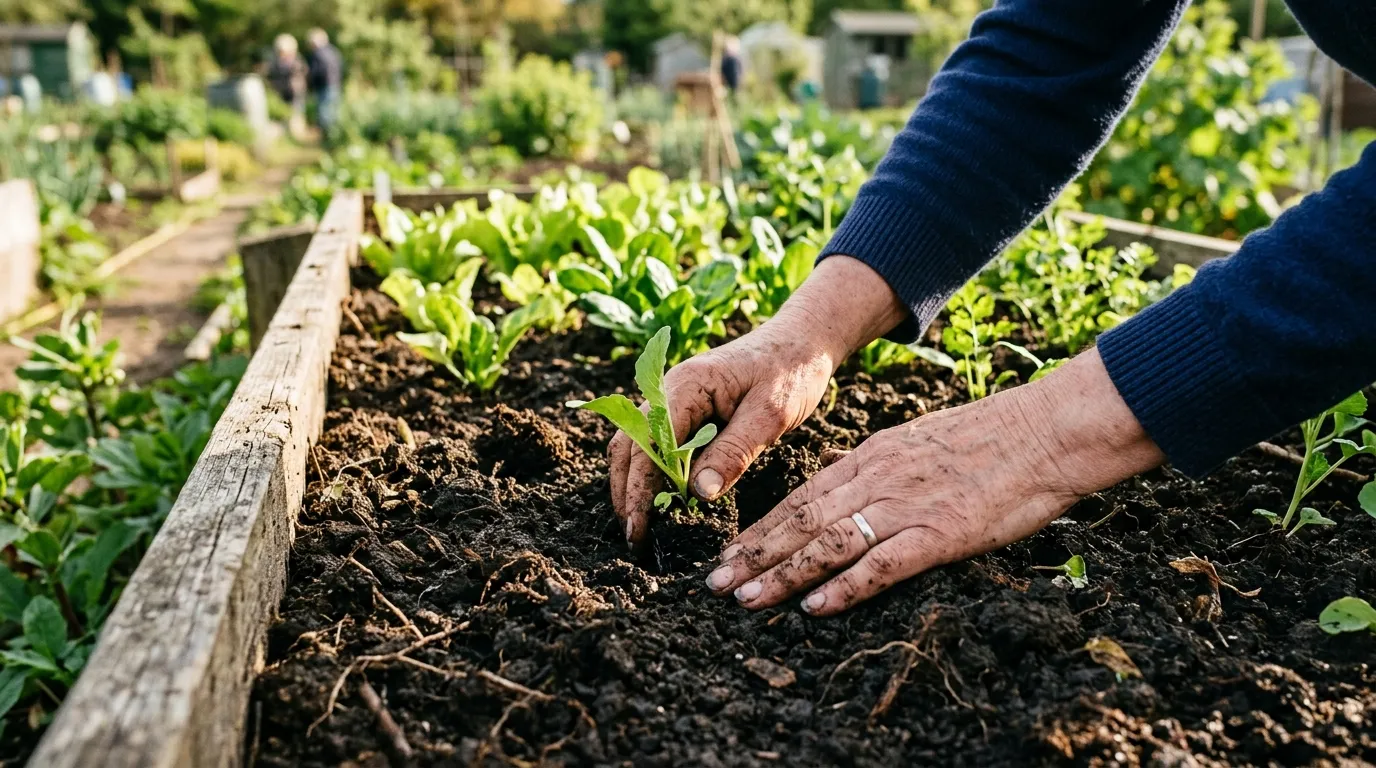 Direct contact with soil exposes you to Mycobacterium vaccae, which triggers serotonin production in the brain.
The RHS surveyed over 6,000 gardeners and found 80% reported improved mental wellbeing from gardening. A 2020 meta-analysis in Preventive Medicine Reports reviewed 22 studies and concluded gardening reduced depression symptoms by a clinically meaningful margin (effect size 0.49). A 2012 study in the British Journal of Sports Medicine found regular gardeners had a 30% lower risk of developing dementia.
| Study | Year | Finding | Source |
|---|---|---|---|
| Wageningen University, Netherlands | 2011 | 30 min gardening reduces cortisol 12% more than reading | Journal of Health Psychology |
| University of Bristol (Lowry) | 2007 | Soil bacterium M. vaccae triggers serotonin production | Neuroscience |
| RHS wellbeing survey | 2023 | 80% of 6,000 gardeners report improved mood | Royal Horticultural Society |
| Meta-analysis (Soga et al.) | 2017 | Gardening reduces depression, anxiety, and BMI | Preventive Medicine Reports |
| British Journal of Sports Medicine | 2012 | Regular gardeners have 30% lower dementia risk | BJSM |
| Kings Fund review | 2016 | Green care produces clinically significant mental health improvements | The King’s Fund |
How does NHS social prescribing use gardening?
NHS England now funds over 900 social prescribing link workers who refer patients to community gardening projects as a non-clinical intervention. Social prescribing connects people with community activities to improve health. GPs and mental health teams refer patients to link workers, who then match them with local gardening projects, allotments, or green care programmes.
The NHS Long Term Plan committed to making social prescribing available across England by 2024. By 2025, over 3,000 community gardens and green care projects were accepting NHS referrals. Conditions commonly referred include mild to moderate depression, anxiety disorders, loneliness and social isolation, and recovery from addiction.
The King’s Fund reviewed the evidence in 2016 and found green care programmes produced clinically significant improvements in mental health scores. Patients reported reduced reliance on GP appointments and prescriptions after six months of regular gardening activity. The approach costs the NHS significantly less than traditional talking therapies — around 20 to 30 pounds per session compared to 60 to 90 pounds for one-to-one CBT.
This is not about replacing professional treatment. Social prescribing works alongside medication and therapy, giving people a structured, social activity that builds routine and purpose. If you want to explore this route, ask your GP about social prescribing or contact your local wildlife garden network or community growing space.
What are the physical health benefits of gardening?
Gardening burns 150 to 300 calories per hour, qualifying it as moderate-intensity exercise under WHO physical activity guidelines. That puts it on a par with walking at a brisk pace. Digging burns closer to 300 calories per hour. Weeding and planting sit around 200. Even light watering and deadheading burn 150 calories per hour.
The physical benefits go beyond calorie expenditure. Regular gardeners show improved grip strength, better joint flexibility, and higher levels of vitamin D from sun exposure. The NHS recommends 150 minutes of moderate exercise per week — three one-hour gardening sessions exceeds this target.
| Activity | Calories per hour | Intensity level | Primary muscles used |
|---|---|---|---|
| Digging and turning soil | 250-350 | Vigorous | Shoulders, core, legs |
| Raking and hoeing | 200-280 | Moderate | Arms, back, core |
| Planting and potting | 150-200 | Moderate | Hands, arms, core |
| Weeding (kneeling) | 180-250 | Moderate | Core, legs, grip |
| Mowing (push mower) | 250-350 | Vigorous | Legs, arms, shoulders |
| Watering and deadheading | 120-180 | Light | Arms, grip |
| Carrying compost/soil bags | 300-400 | Vigorous | Full body |
For older adults, gardening maintains functional fitness without the joint impact of running or gym work. A study in the Journal of Aging and Physical Activity found that gardeners over 60 scored higher on grip strength and leg power tests than non-gardeners of the same age. Our guide to raised bed gardening covers accessible growing methods that reduce the need for bending and kneeling.
What are 10 mindful gardening activities to try?
Mindful gardening means focusing entirely on the task in your hands — the texture of the soil, the weight of the trowel, the colour of the leaves. It is not about productivity or perfect borders. It is about using repetitive, sensory tasks to anchor yourself in the present moment and interrupt the cycle of anxious or ruminative thinking.
These ten activities are ranked by difficulty and estimated mood benefit, based on therapeutic gardening research and my own 30 years of experience.
| Rank | Activity | Difficulty | Time needed | Mood benefit | Why it works |
|---|---|---|---|---|---|
| 1 | Hand-watering plants | Very easy | 10-15 min | High | Repetitive, meditative, immediate visible result |
| 2 | Deadheading flowers | Very easy | 10-20 min | High | Simple, satisfying, no decision-making required |
| 3 | Weeding by hand | Easy | 15-30 min | Very high | Tactile soil contact, visible progress, rhythmic |
| 4 | Sowing seeds into compost | Easy | 15-20 min | Very high | Hopeful act, fine motor focus, future-oriented |
| 5 | Potting on seedlings | Easy | 20-30 min | High | Hands in soil, nurturing, sense of care |
| 6 | Harvesting vegetables | Easy | 10-20 min | Very high | Tangible reward, connects effort to outcome |
| 7 | Planting bulbs | Moderate | 30-60 min | High | Anticipation, physical engagement, seasonal rhythm |
| 8 | Building a container garden | Moderate | 1-2 hours | Very high | Creative expression, accomplishment, ownership |
| 9 | Pruning shrubs | Moderate | 30-60 min | Medium-high | Requires focus and judgement, physical effort |
| 10 | Digging a new bed | Hard | 1-3 hours | High | Heavy exertion releases endorphins, dramatic result |
Start at the top of the list on difficult days. When motivation is low, hand-watering or deadheading requires almost no decision-making — you just do it. Save the physically demanding tasks for days when you have energy to burn and need to work something out of your system.
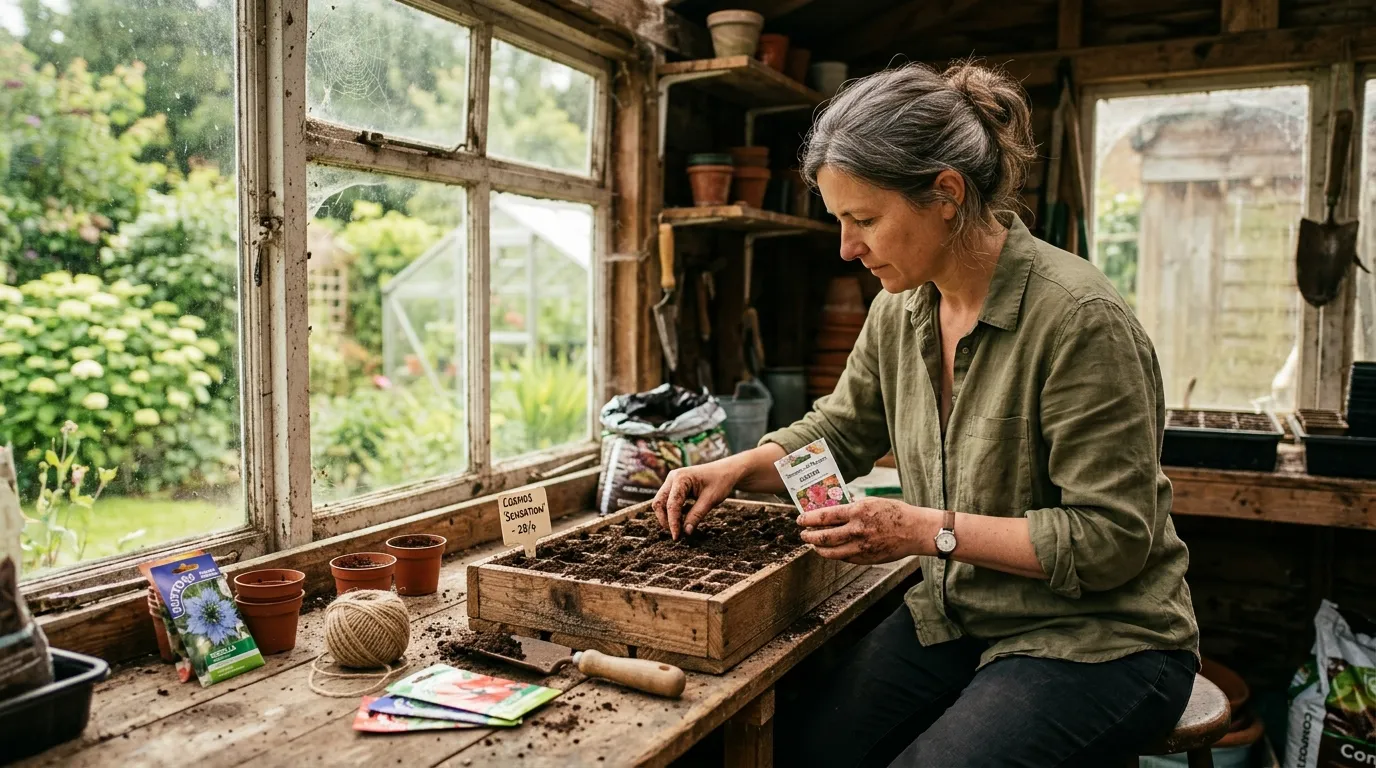 Sowing seeds requires just enough focus to quiet anxious thoughts without adding pressure.
How does seasonal gardening provide routine and purpose?
Gardening provides a natural structure to the year that gives people with depression or anxiety a reason to get outside every single month. Unlike exercise routines that rely on willpower alone, the garden creates its own deadlines. Seeds need sowing by certain dates. Crops need harvesting before the frost. Plants need watering during dry spells.
This external structure is particularly valuable for people who struggle with low motivation or find unstructured time overwhelming. The garden gives you something that needs doing today — not next week, not eventually, but now.
| Season | Key gardening tasks | Wellbeing benefit | Time commitment |
|---|---|---|---|
| Spring (Mar-May) | Sowing seeds, planting out, weeding | Hope, anticipation, physical activity | 3-5 hours/week |
| Summer (Jun-Aug) | Watering, harvesting, deadheading | Reward, sensory pleasure, vitamin D | 4-6 hours/week |
| Autumn (Sep-Nov) | Composting, planting bulbs, tidying | Reflection, preparation, closure | 2-4 hours/week |
| Winter (Dec-Feb) | Planning, tool maintenance, indoor sowing | Anticipation, control, creativity | 1-2 hours/week |
Our seed sowing calendar maps every month of the year to specific tasks, giving you a ready-made structure that adapts to your energy levels. On good days, you dig and plant. On hard days, you water what is already there. Both count.
The RHS gardening calendar provides additional month-by-month guidance if you want more detail.
What is the difference between therapeutic gardening and horticultural therapy?
Therapeutic gardening is informal and self-directed. Horticultural therapy is a structured clinical programme led by a trained professional. The distinction matters because they serve different needs and produce different outcomes.
The charity Thrive — the UK’s leading horticultural therapy organisation — defines horticultural therapy as a process in which a trained therapist uses gardening activities to meet specific clinical or rehabilitation goals. These goals might include improving fine motor skills after a stroke, rebuilding confidence after a mental health crisis, or developing social skills in people with learning disabilities.
Therapeutic gardening, by contrast, is what most of us do. You go outside, dig, plant, weed, and water. Nobody prescribes it. Nobody measures outcomes. The benefit comes from the activity itself — the physical exertion, the soil contact, the sensory input, the satisfaction of watching something grow.
Both work. But if you are managing a diagnosed condition, horticultural therapy offers a structured pathway with professional support. Thrive operates gardens in Berkshire, Birmingham, and London, and lists affiliated projects across the UK. The National Garden Scheme also funds therapeutic garden projects through its annual open garden programme.
How do community gardens and allotments help mental health?
The UK has approximately 330,000 allotment plots, and every one of them is a social space as well as a growing space. Loneliness is a significant risk factor for depression. The Campaign to End Loneliness reports that chronic loneliness carries a health risk equivalent to smoking 15 cigarettes a day. Community gardens and allotments directly address this by providing regular social contact around a shared activity.
You do not need to be extroverted to benefit. Allotment culture is built on brief, practical conversations — asking about someone’s bean variety, swapping surplus courgettes, warning about the badger that has been digging up plots. These small interactions accumulate into genuine community without the pressure of formal socialising.
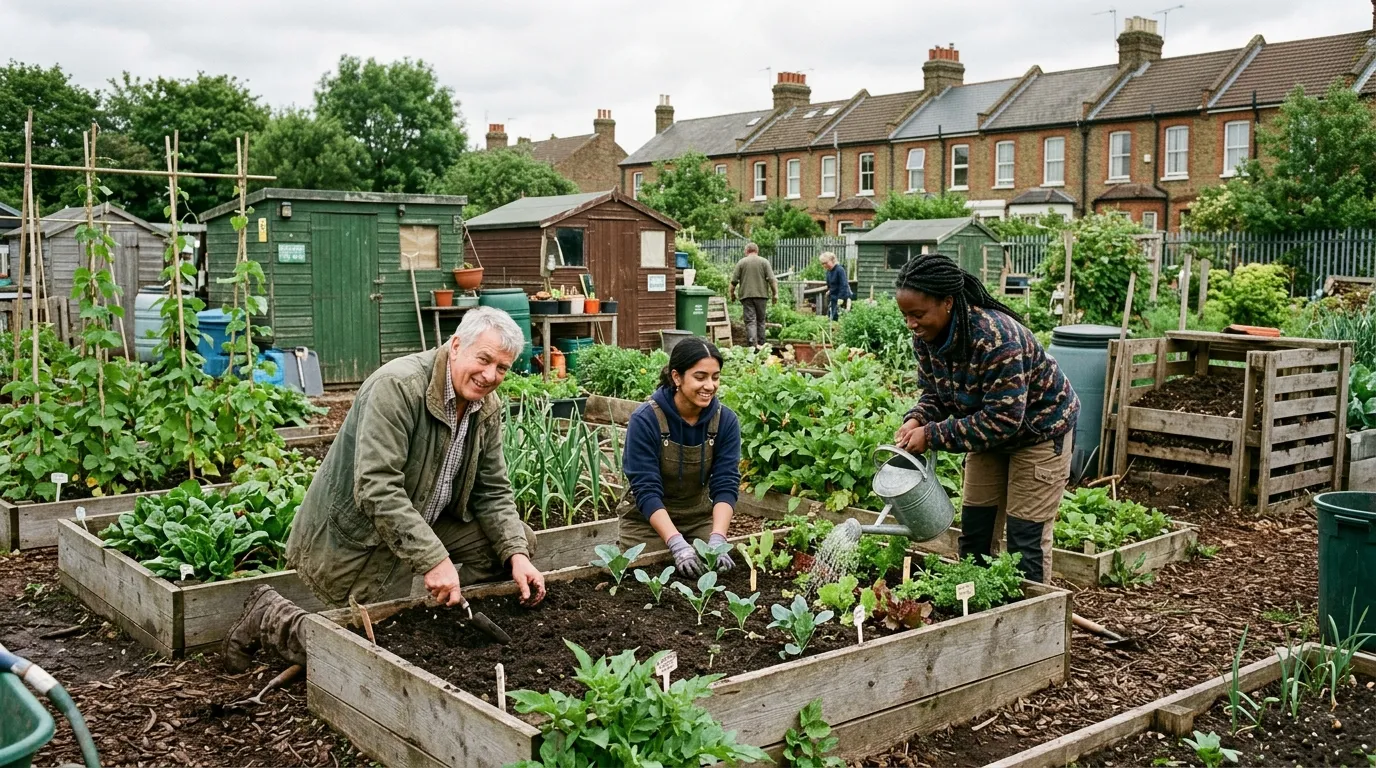 Community gardens provide social connection alongside growing — a key factor in reducing loneliness and isolation.
Research published in The Lancet Planetary Health in 2023 found that community gardeners reported significantly lower levels of perceived stress and higher levels of social cohesion compared to home gardeners working alone. The social element amplifies the mental health benefits of the gardening itself.
If you want to find a community garden near you, the Social Farms and Gardens network (formerly the Federation of City Farms and Community Gardens) maintains a directory of over 1,000 community growing spaces across the UK.
What are 5 low-barrier projects for beginners with anxiety or depression?
You do not need a garden, experience, or money to start gardening for mental health. The biggest barrier for people with anxiety or depression is the feeling that they need to do everything properly, buy all the right equipment, and commit to a large project. None of that is true.
These five projects are designed specifically for people who are struggling. Each one is small, forgiving, and produces a visible result quickly.
1. Three herbs on the doorstep
Buy three herb plants — basil, mint, and chives. Place them in pots by the back door. Water them each morning. This gives you a two-minute daily ritual with something living that responds to your care. Cost: under five pounds. Read our full herb garden guide for expanding later.
2. A windowsill seed tray
Fill a seed tray with compost and sow lettuce or radish seeds. Place it on a sunny windowsill. Seeds germinate in five to seven days, giving you a fast visible result. Harvest in four to six weeks. Cost: under three pounds for seeds and compost.
3. A single container garden
One large pot (at least 40cm diameter), multipurpose compost, and three plants — a tomato, a basil, and a trailing nasturtium. Place it in a sunny spot. Water daily in summer. This single pot gives you food, colour, and fragrance for the whole season. See our container gardening guide for more ideas. Total cost: under 15 pounds.
4. A bird feeding station
Hang a feeder with sunflower hearts in view of a window. Fill it once a week. Within days you will have regular visitors — blue tits, great tits, robins, and house sparrows. Watching birds from a window reduces stress even without going outside. Our guide to attracting birds to your garden covers feeding, water, and nesting.
5. A propagation project
Take cuttings from a friend’s houseplant or garden plant. Mint, geraniums, and fuchsias root in a glass of water within two weeks. You create new plants for free, and the daily act of checking for roots becomes a small, hopeful ritual. Our propagation guide covers the techniques.
How does sensory planting support wellbeing?
Sensory gardens use plants chosen specifically for scent, texture, colour, and sound to stimulate the senses and calm the nervous system. This is not abstract theory — specific plants trigger measurable physiological responses. Lavender reduces heart rate and blood pressure. Rosemary improves cognitive performance and alertness. The sound of grasses rustling in wind activates the parasympathetic nervous system.
| Sense | Plants | Effect | Where to grow |
|---|---|---|---|
| Smell — calming | Lavender, chamomile, sweet peas | Reduces heart rate, promotes sleep | Borders, pots, beside seating |
| Smell — energising | Rosemary, peppermint, lemon balm | Improves alertness and focus | Kitchen garden, path edges |
| Touch — soft | Lamb’s ear (Stachys byzantina), fennel fronds | Soothing tactile stimulation | Border edges, sensory beds |
| Touch — textured | Bark, moss, stone, gravel paths | Grounding, sensory awareness | Paths, walls, water features |
| Sound | Ornamental grasses, bamboo, water features | Reduces stress, masks urban noise | Boundaries, focal points |
| Sight — warm colours | Dahlias, sunflowers, crocosmia | Stimulating, uplifting | Sunny borders, cutting gardens |
| Sight — cool colours | Blue delphiniums, white roses, green ferns | Calming, restful | Shaded areas, contemplation spaces |
Position calming plants near seating areas where you spend time. Place energising herbs along paths where you brush past them. If you only grow one plant for mental health, grow lavender — it is hardy, drought-tolerant, loved by pollinators, and the scent is clinically proven to reduce anxiety.
How much does gardening for wellbeing cost?
Gardening for mental health can cost nothing at all. Propagation from cuttings, seed saving, and composting are all free. The most expensive thing most people buy is compost, and even that can be made at home from kitchen and garden waste.
| Starting point | What you need | Cost | Time to first result |
|---|---|---|---|
| Free — propagation | Cuttings from a friend’s plants, a glass of water | Nothing | 2-3 weeks for roots |
| Seed saving | Save seeds from this year’s plants | Nothing | Next growing season |
| Windowsill seeds | Packet of lettuce seeds, old container, compost | Under 3 pounds | 5-7 days to germination |
| Three herb pots | Three plants, three pots, compost | Under 10 pounds | Immediate — harvest the same week |
| Container garden | Large pot, compost, three plants, feed | Under 15 pounds | 2-4 weeks |
| Raised bed | Scaffold boards, screws, compost, seeds | Under 50 pounds | 4-8 weeks to first harvest |
| Full plot setup | Tools, compost, plants, seeds, bed edging | 100-200 pounds | 1-3 months |
The NHS social prescribing pathway is free to patients. Community gardens typically charge nothing or ask for a small annual donation. Allotments cost 25 to 100 pounds per year depending on council and plot size. The mental health benefits begin the moment you put your hands in soil — not when you have the perfect garden.
How to start gardening for mental health today
Pick one thing from this list and do it before the end of the day. Not tomorrow. Not when you feel better. Not when you have the right equipment. Today.
If you have five minutes: water a houseplant. Stand still and watch it for 30 seconds.
If you have 15 minutes: step outside and pull weeds from a crack in the paving. Focus on the texture of the roots and the resistance of the soil.
If you have 30 minutes: walk to a garden centre or supermarket, buy a single herb plant, and put it on your windowsill.
If you have an hour: fill a pot with compost, sow some lettuce seeds, water them, and place the pot in a sunny spot.
None of these require experience, money, or a garden. All of them get your hands dirty and your attention out of your head. That is where the science says the benefit begins.
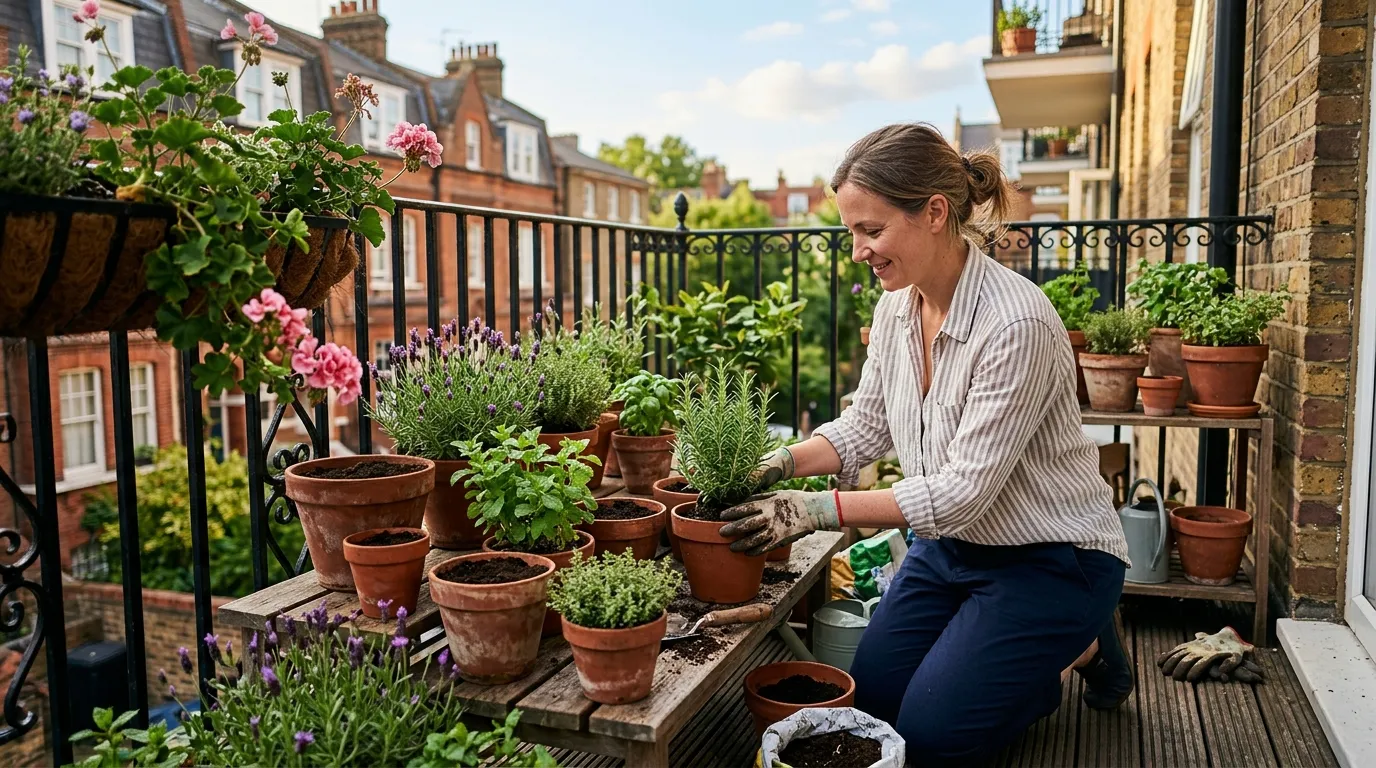 Starting with a single container costs under fifteen pounds and produces mental health benefits from day one.
If you are new to gardening entirely, our gardening for beginners guide covers soil types, tools, and first plants in detail. For those interested in growing food, our vegetable growing guide is the natural next step.
If you or someone you know is struggling with mental health, the Samaritans are available 24 hours a day on 116 123. Mind’s information line is available on 0300 123 3393.
Lawrie has been gardening in the West Midlands for over 30 years. He grows his own veg using no-dig methods, keeps a wildlife-friendly garden, and writes practical advice based on real UK growing conditions.