Common Gardening Myths Debunked
Common gardening myths debunked with evidence. Coffee grounds, eggshells, watering at midday, companion planting, and 12 more myths tested by UK gardeners.
Key takeaways
- Watering at midday does not burn plant leaves — a 2010 physics study disproved the droplet lens theory
- Coffee grounds do not repel slugs and can harm seedlings at concentrations above 10% by volume
- Crushed eggshells do not deter slugs — multiple controlled trials show slugs cross them without hesitation
- Marigolds do not protect tomatoes from whitefly — they attract hoverflies but do not repel pests directly
- Adding gravel to the bottom of pots worsens drainage by creating a perched water table
- Talking to plants has a marginal effect at best — the CO2 from breathing is negligible compared to ambient air
- You should water deeply and less often, not little and often — deep watering builds stronger root systems

Every gardener has been told to put eggshells around lettuce, add coffee grounds to repel slugs, or never water in the middle of the day. These tips get passed down through generations, repeated in books, and shared on social media without question. The problem is that many of them are wrong.
This guide tests 15 of the most common UK gardening myths against published research and three decades of hands-on growing. Some are completely false. A few are partly true but misunderstood. Knowing the difference saves time, money, and a lot of wasted eggshells.
Myth 1: Watering at midday burns plant leaves
Verdict: FALSE.
This is probably the most widely believed gardening myth in Britain. The theory is that water droplets on leaves act as tiny magnifying glasses, focusing sunlight to burn the tissue beneath. It sounds plausible, but it is wrong.
In 2010, researchers at Eotvos Lorand University in Budapest tested this theory experimentally. They placed water droplets on various leaf surfaces and measured light concentration. On smooth leaves, the droplets were too close to the surface to focus light to a burning point. The water evaporated long before any damage could occur. On hairy leaves (like some ferns), droplets could theoretically concentrate light, but the effect was too brief and too weak to cause burns under normal conditions.
What actually causes leaf scorch? Heat stress and dehydration. When soil is dry and air temperature exceeds 30C, leaves lose water faster than roots can replace it. The edges and tips brown and crisp. This happens whether the leaves are wet or dry.
The practical advice: Water whenever your plants need it. Early morning is ideal because it reduces fungal disease risk and evaporation loss. But midday watering is perfectly safe and far better than letting plants wilt through an afternoon heatwave. Our watering guide covers the best techniques for every situation.
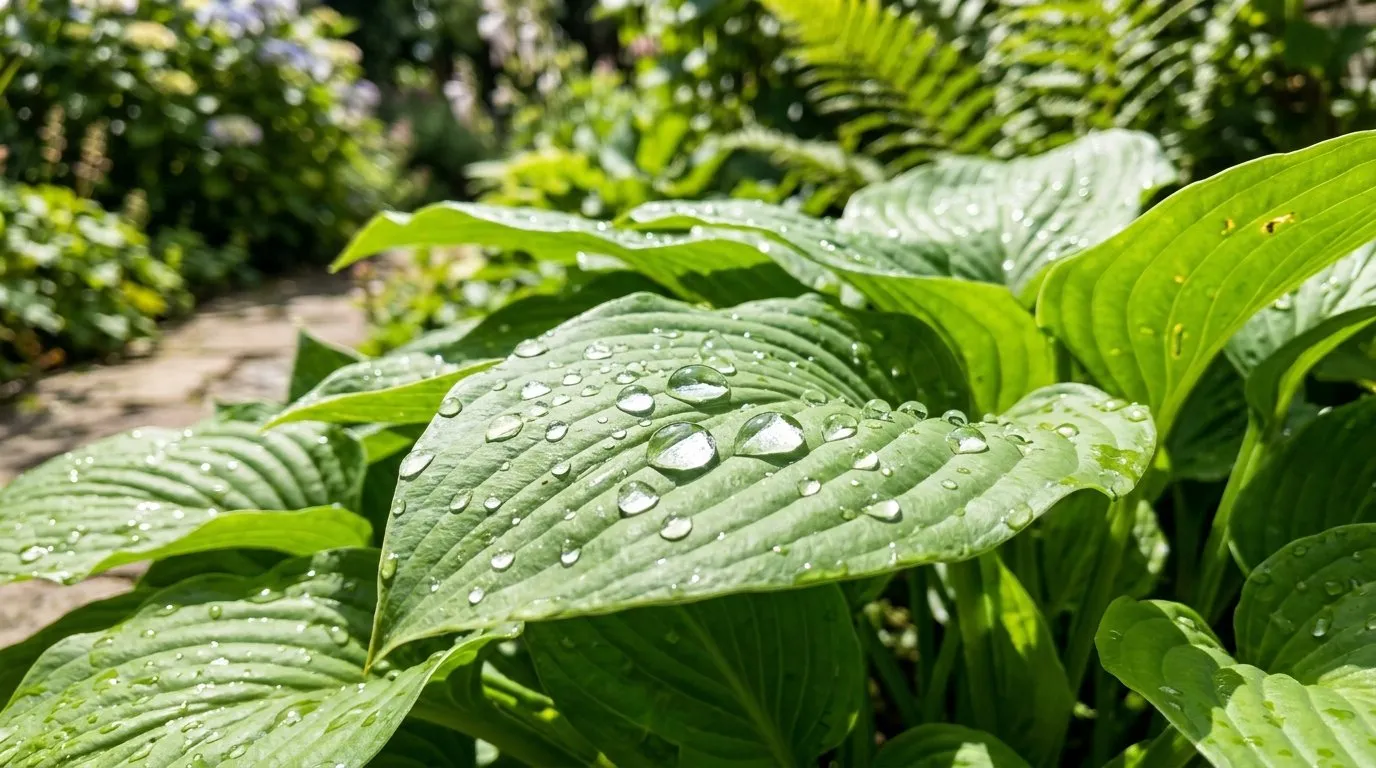 Water droplets on leaves in full sun. Despite the myth, these droplets will evaporate harmlessly. The lens effect is too weak to cause burns on smooth-leaved plants.
Myth 2: Coffee grounds repel slugs
Verdict: FALSE.
Gardeners scatter used coffee grounds around vulnerable plants in the belief that caffeine deters slugs. The logic sounds reasonable — caffeine is toxic to slugs at high concentrations. But used coffee grounds contain almost no caffeine.
Fresh coffee beans contain 1-2% caffeine. After brewing, the spent grounds retain only 0.05-0.1% caffeine. That is 10-40 times less than the concentration shown to affect slugs in laboratory conditions. A 2023 study published in PLOS ONE found no significant difference in slug damage between plants surrounded by coffee grounds and unprotected controls.
The risks of coffee grounds: At high application rates (more than 10% of soil volume), coffee grounds can inhibit seed germination. They are mildly acidic (pH 6.0-6.5) when fresh, which affects lime-loving plants. They also attract mould when applied thickly on the soil surface.
The best use for coffee grounds: Add them to your compost bin in thin layers. They are a good source of nitrogen (2% N by weight) and break down quickly. Mixed into compost at 10-20% by volume, they improve the finished product. Just do not expect them to keep slugs away from your hostas.
For effective slug control, see our slug management guide, which covers nematode biological control, beer traps, and encouraging natural predators.
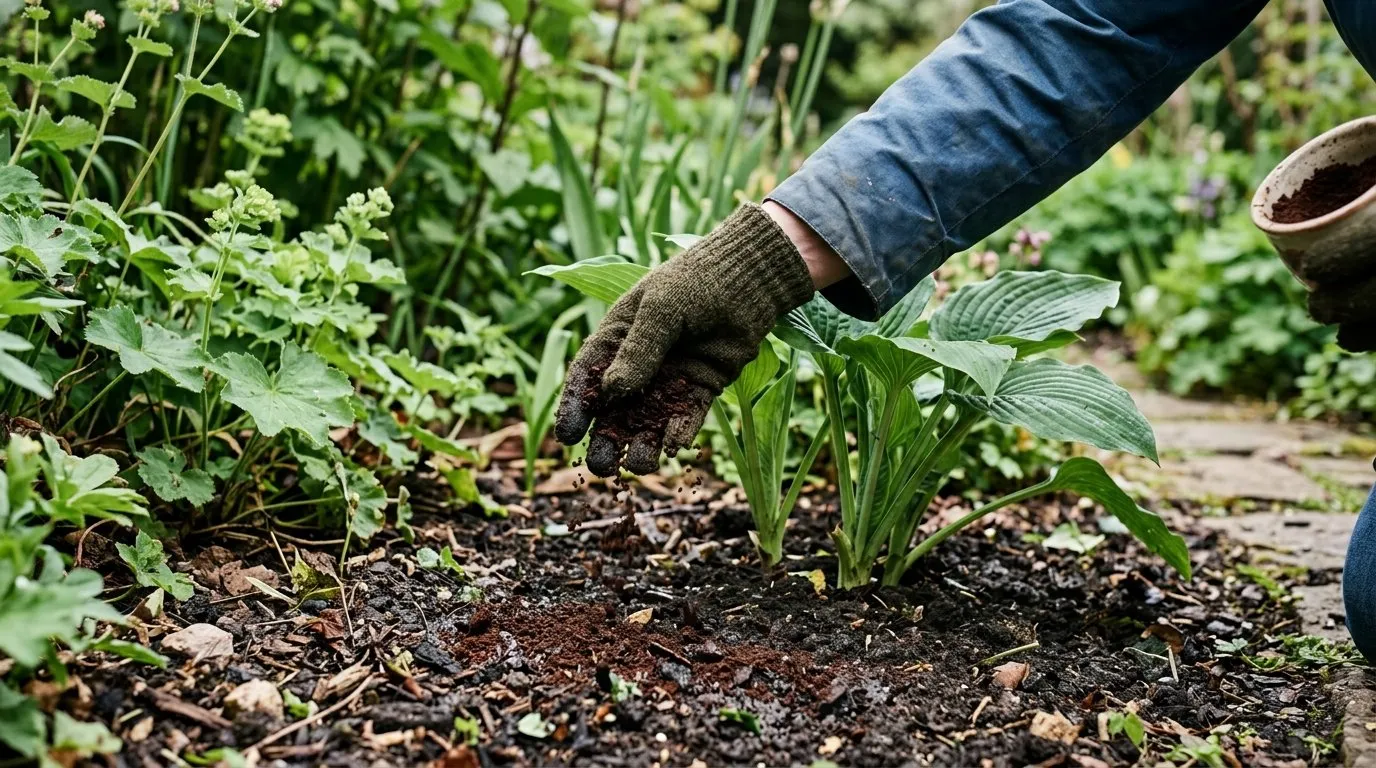 Coffee grounds are excellent compost material but useless as slug repellent. The caffeine content after brewing is far too low to affect slugs.
Myth 3: Crushed eggshells deter slugs
Verdict: FALSE.
This is the myth that refuses to die. The theory is that crushed eggshells create a sharp, abrasive barrier that slugs cannot cross. Gardeners have been crushing eggshells around lettuces and hostas for generations.
The reality: slugs produce copious thick mucus that protects their soft body from rough surfaces. They glide over gravel, broken glass, and sandpaper without difficulty. Crushed eggshells are no obstacle at all. Controlled trials at the RHS and by independent researchers confirm this. Slugs cross eggshell barriers without hesitation or visible discomfort.
Do eggshells have any garden use? Yes, but not as pest control. Eggshells are 95% calcium carbonate. Crushed finely and added to compost, they contribute calcium over 1-3 years as they break down. This is useful on acid soils where calcium is deficient. But the breakdown is slow — visible shell fragments persist in soil for years.
What actually works against slugs? Nematode biological control (Nemaslug), beer traps, copper tape (which delivers a mild electric charge to slug mucus), and encouraging ground beetles, hedgehogs, and thrushes. A healthy garden ecosystem is the most effective long-term slug management.
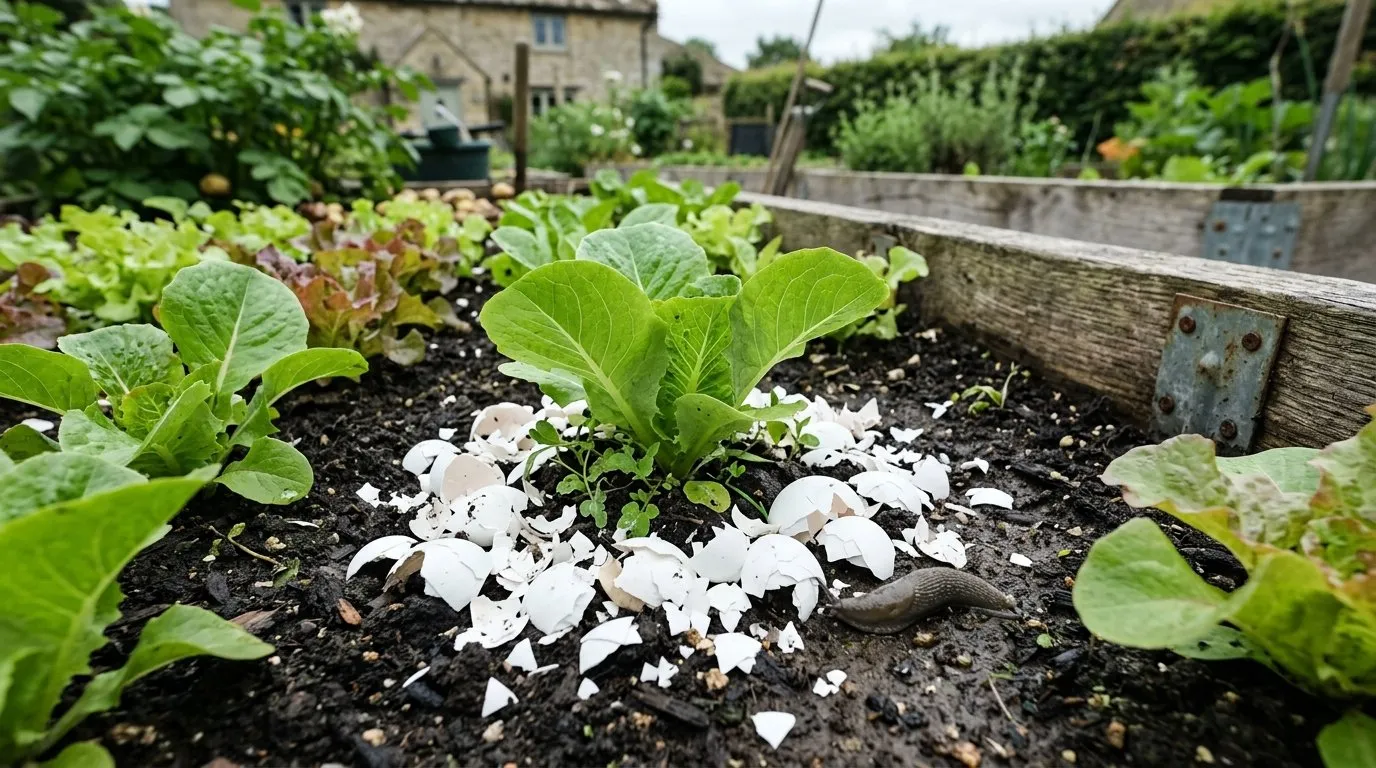 Crushed eggshells look convincing but slugs cross them easily. Their thick mucus protects them from rough surfaces far sharper than shell fragments.
Myth 4: Marigolds protect tomatoes from pests
Verdict: PARTLY TRUE — but not how most people think.
French marigolds (Tagetes patula) are planted next to tomatoes in greenhouses across the UK on the assumption they repel whitefly. This is one of the most popular companion planting claims. The truth is more nuanced.
What marigolds actually do:
- Marigold roots release alpha-terthienyl, a compound toxic to root-knot nematodes. This effect is real and well-documented, but it requires a full growing season of marigold root presence in the soil. Interplanting a few marigolds with tomatoes does not achieve this.
- Marigold flowers attract hoverflies, whose larvae eat aphids. This is a genuine benefit, but it controls aphids, not whitefly.
- There is no published evidence that marigolds repel whitefly from nearby plants through scent or chemical signalling.
The practical takeaway: Grow marigolds for their beauty and for attracting beneficial insects. But do not rely on them as pest control for your tomatoes. For whitefly in greenhouses, biological control with Encarsia formosa parasitic wasps is far more effective.
Our companion planting guide separates the proven combinations from the folk wisdom.
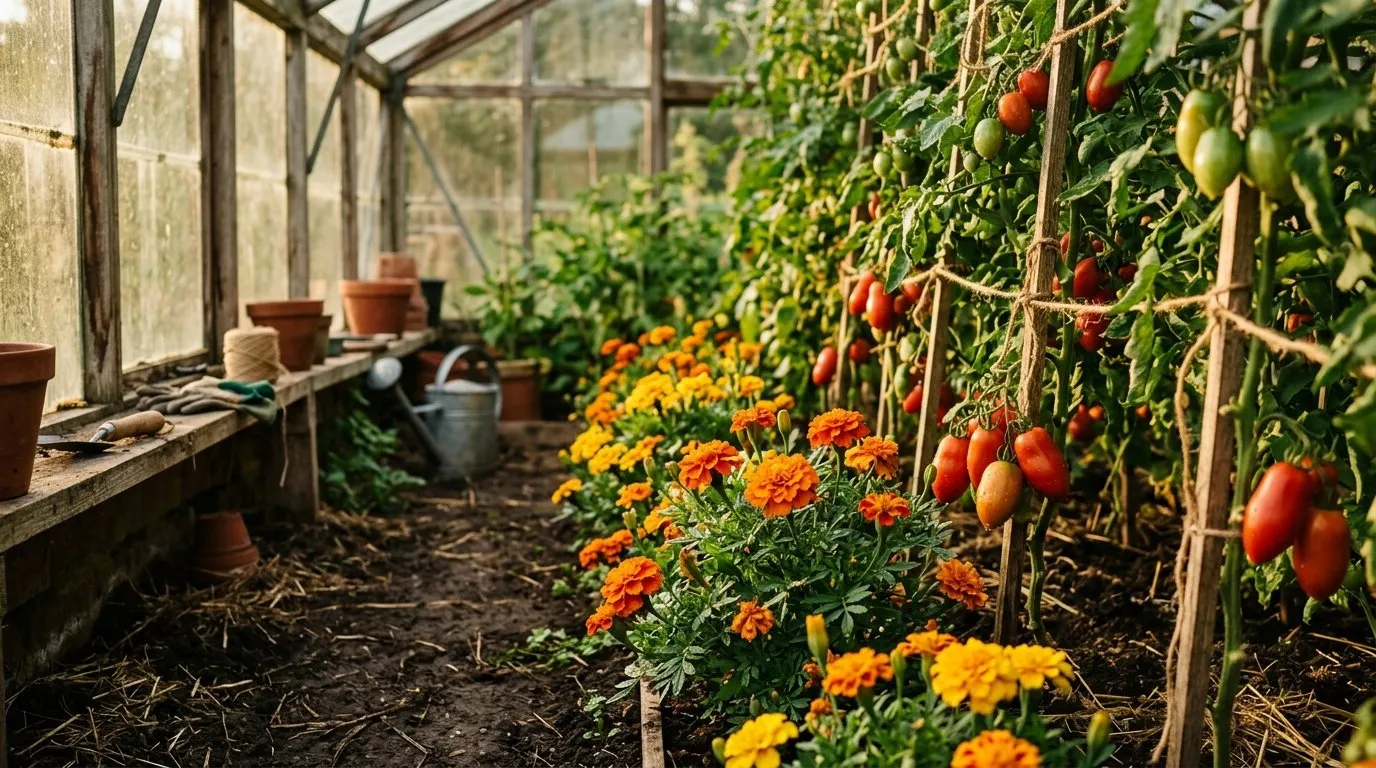 Marigolds attract beneficial hoverflies and suppress soil nematodes over a full season. But the common claim that they repel whitefly from tomatoes is not supported by evidence.
Myth 5: Add gravel to the bottom of pots for drainage
Verdict: FALSE — it makes drainage worse.
This myth is so deeply embedded that even garden centres sometimes recommend it. The idea is that a layer of gravel, crocks, or stones at the bottom of a pot improves drainage by giving water somewhere to go. The opposite is true.
Water moves through soil by capillary action and gravity. When water reaches the boundary between fine-textured compost and coarse gravel, it stops. Capillary forces hold water in the finer material until the soil is completely saturated. Only then does water drain into the gravel layer. This creates a “perched water table” — a zone of waterlogged soil sitting above the gravel, exactly where your plant’s roots are.
The result: roots sit in wetter soil for longer, increasing the risk of root rot.
What to do instead: Use a well-draining compost mix throughout the entire pot. For plants that need sharp drainage (Mediterranean herbs, succulents, alpines), add perlite or horticultural grit to the compost at 20-30% by volume. Ensure drainage holes in the bottom of the pot are not blocked. Elevate pots on feet to allow free drainage. Our container gardening guide covers potting mixes for every crop.
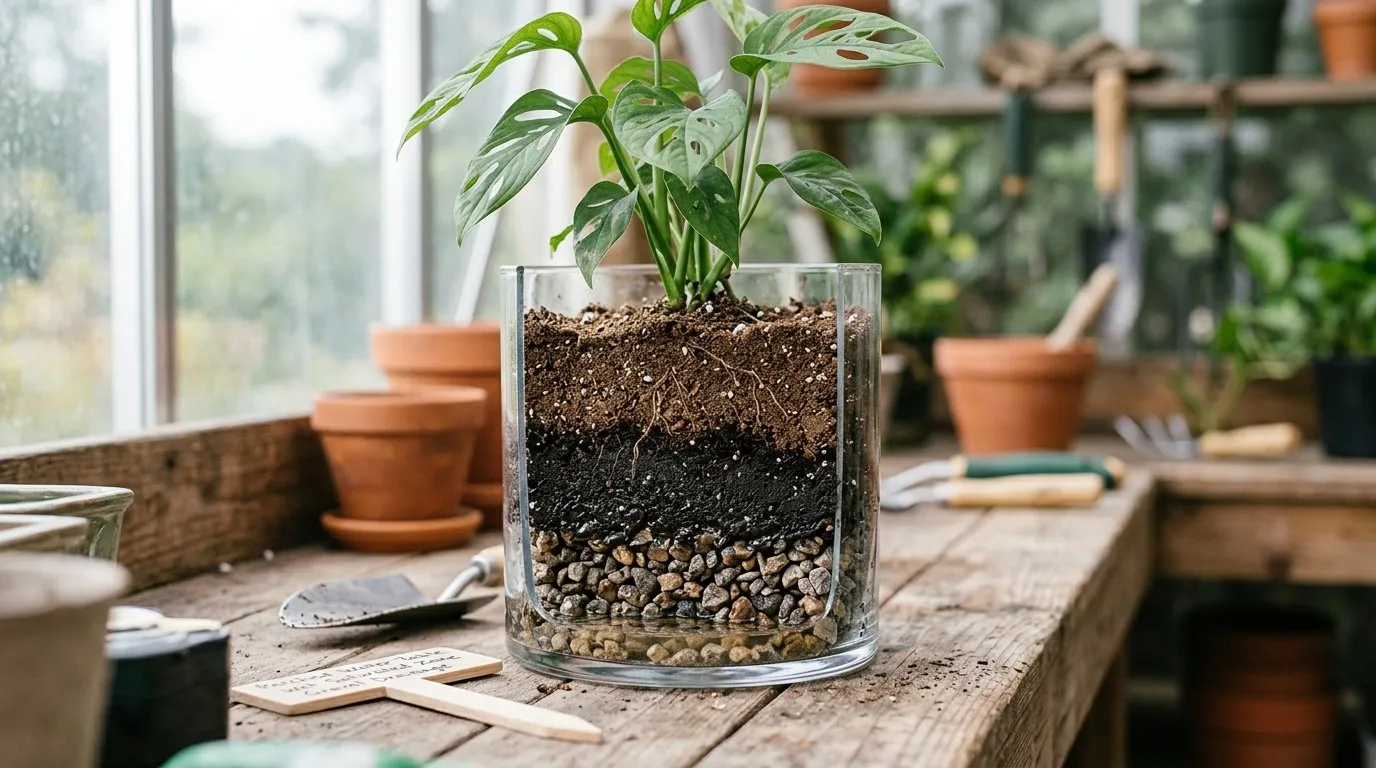 The gravel layer myth. Water is held in the soil above the gravel boundary, creating a wetter root zone — the opposite of what gardeners intend.
Myth 6: You should water little and often
Verdict: FALSE — deep and less often is better.
This myth leads to shallow root systems and weaker plants. When you water lightly every day, only the top 2-3cm of soil gets wet. Roots stay near the surface because there is no reason to grow deeper. Surface roots are vulnerable to drought, heat, and frost.
The better approach: Water deeply and less frequently. Apply enough water to soak the top 15-20cm of soil, then let it dry partially before watering again. This forces roots to grow downwards to find moisture, building a deeper, more resilient root system. On most UK soils, this means watering established beds twice a week in summer rather than daily.
How much is enough? A good rule of thumb is 2.5cm (1 inch) of water per week for most vegetables. That equates to roughly 24 litres per square metre. A 10-litre watering can covers 0.4 square metres at this rate. Mulching with 5-8cm of composted bark or straw reduces watering needs by 50-70%.
Myth 7: Talking to plants makes them grow
Verdict: MOSTLY FALSE.
The Royal Horticultural Society ran a widely reported experiment in 2009 where tomato plants were read to by different voices over a month. Plants exposed to sound showed marginally more growth than silent controls. Headlines claimed proof that talking to plants works.
The reality is less exciting. The experiment was not well controlled — variables like CO2, temperature, and light were not rigorously isolated. The CO2 from human breathing is negligible compared to the 420 parts per million already in ambient air. Vibrations from sound may have a minor effect on plant growth hormones (auxins), but the practical difference in a real garden is too small to measure.
What actually helps plants grow: Good soil, adequate water, sufficient light, appropriate feeding, and effective pest management. Our feeding guide and fertiliser guide cover the inputs that genuinely make a difference.
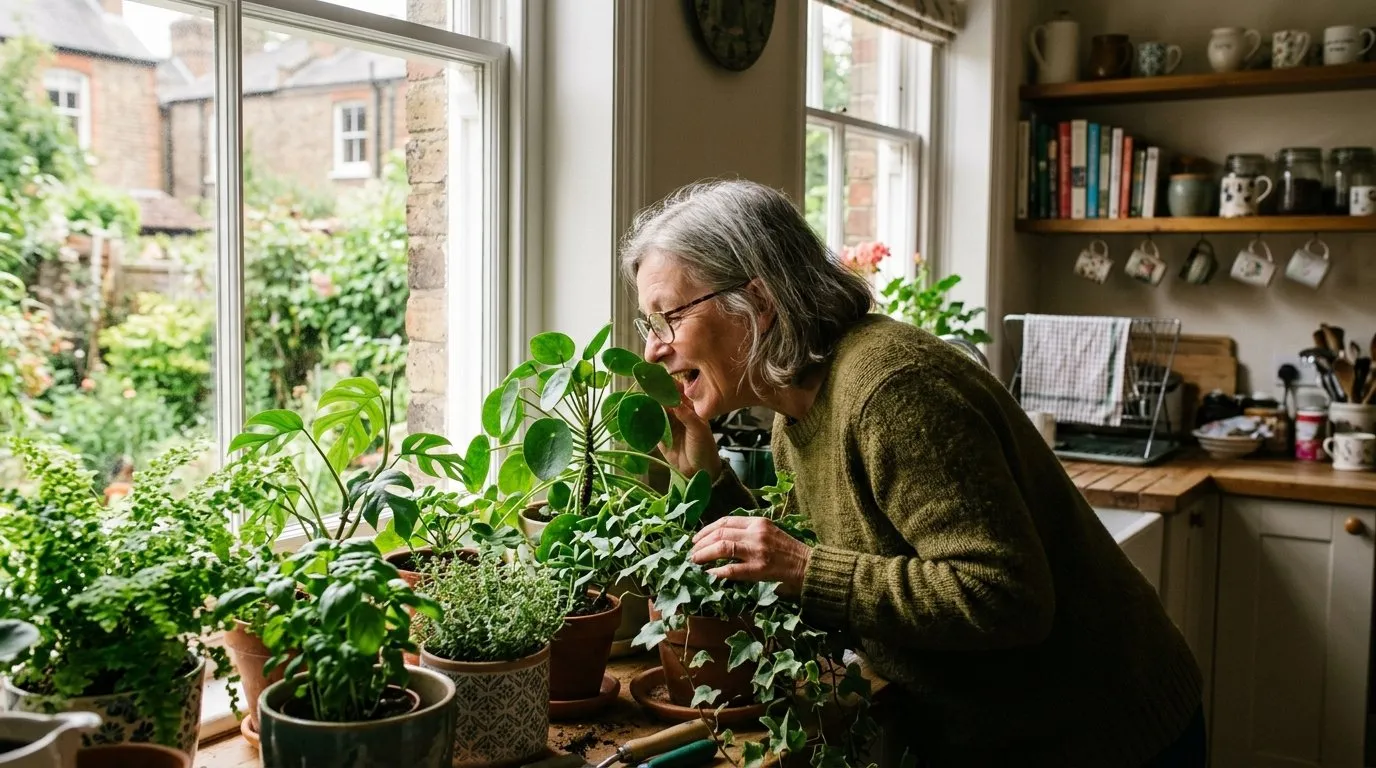 Talking to your plants is harmless and enjoyable but the scientific evidence for a growth benefit is weak. Spend the time watering and feeding instead.
Myth 8: Organic pest control is always safe
Verdict: FALSE.
“Organic” does not mean “harmless.” Several organic-approved pesticides are toxic to beneficial insects, aquatic life, or humans if misused.
Pyrethrum (extracted from chrysanthemum flowers) kills bees, ladybirds, and hoverflies as effectively as it kills aphids. It is non-selective. Rotenone (now banned in the EU) was an organic-approved insecticide that proved toxic to fish and has been linked to Parkinson’s disease in farmworkers. Copper-based fungicides (Bordeaux mixture), still approved for organic use, are toxic to earthworms and accumulate in soil.
The practical advice: Read the label on every product, organic or not. Use biological controls (nematodes, parasitic wasps, lacewing larvae) wherever possible. Encourage natural predators. A garden with hedgehogs, ground beetles, and birds rarely needs any pesticide, organic or otherwise. Our pest control guide covers the safest options.
Myth 9: You must dig your garden every year
Verdict: FALSE — and often counterproductive.
Annual digging was standard advice for a century. The theory: turning the soil aerates it, buries weeds, and incorporates organic matter. The practice: digging disrupts mycorrhizal fungal networks that help plants absorb nutrients, brings buried weed seeds to the surface where they germinate, destroys earthworm burrows, and damages soil structure.
The no-dig method pioneered by Charles Dowding in the UK achieves better results with less effort. Spread 5-10cm of compost on the soil surface each year and let earthworms incorporate it. Soil structure improves year on year. Weed pressure drops dramatically because buried seeds stay buried.
No-dig does not work in every situation. Compacted clay that has never been cultivated benefits from an initial deep dig to break up the pan. But once the soil is in good condition, annual digging does more harm than good.
Myth 10: Native plants are always best for wildlife
Verdict: PARTLY TRUE — but non-natives are also valuable.
The claim that only native plants support wildlife is widespread in conservation circles but oversimplified. Native plants do support more specialist insect species. Oak trees host over 280 insect species in the UK. But many non-native garden plants provide pollen, nectar, and berries that wildlife uses readily.
A 2012 study by the University of Bristol found that gardens with a mix of native and non-native plants supported the highest diversity of pollinators. Pure native gardens and pure non-native gardens both supported fewer species than mixed plantings.
The practical advice: Grow a mix. Include native species like hawthorn, blackthorn, dog rose, and ox-eye daisy for specialist insects. Add non-native plants like lavender, buddleja, and bee-friendly flowers that extend the flowering season into late autumn. The best wildlife gardens have something in flower from February to November.
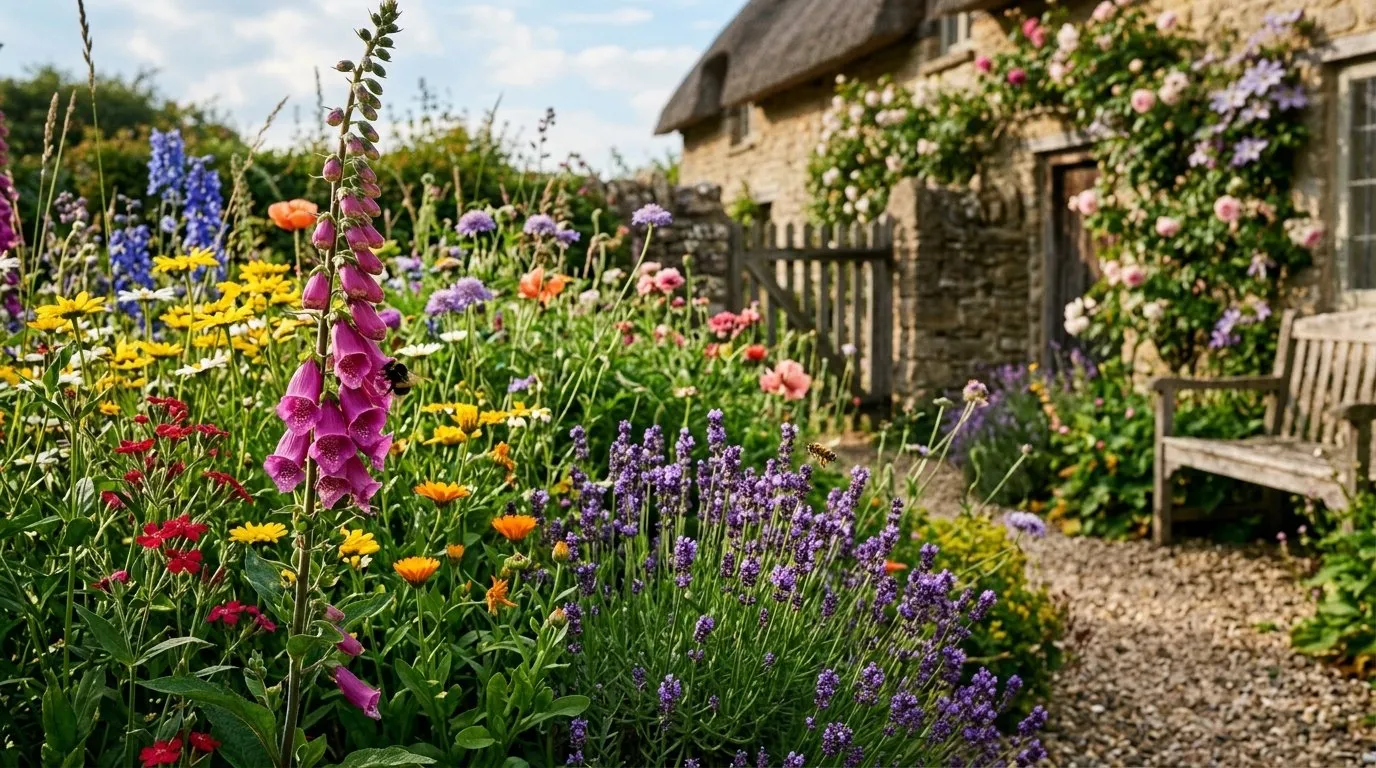 The best wildlife gardens mix native and non-native plants. This border combines native foxgloves and buttercups with non-native lavender and geraniums — and the bees visit them all.
Myth 11: Sandy soil is always well-drained
Verdict: MOSTLY TRUE — but it depends on what is underneath.
Sandy soil drains quickly at the surface. But if there is a clay pan, compacted layer, or high water table beneath the sand, water can pool. Coastal areas of Norfolk, Suffolk, and Lancashire have sandy topsoil over clay subsoil, creating seasonally waterlogged conditions that surprise gardeners.
Always check drainage before planting. Dig a hole 30cm deep, fill it with water, and time how long it takes to drain. Less than an hour is good drainage. Over four hours indicates a problem. Our soil testing guide covers full drainage assessment.
Myth 12: Compost tea is a miracle feed
Verdict: MOSTLY FALSE.
Compost tea — water that has had compost steeped in it, sometimes with aeration — is promoted as a foliar spray and soil drench with near-magical properties. The claims include disease suppression, improved soil biology, and faster plant growth.
The published evidence is thin. A 2004 review by Dr Linda Chalker-Scott at Washington State University found no consistent, reproducible benefit from compost tea in controlled trials. The microbial content varies wildly between batches. Disease suppression claims are not reliably supported.
What works better: Apply compost directly to soil. The organisms in solid compost are better established, more diverse, and more effective at improving soil health than the dilute extract in tea. For liquid feeding, comfrey or nettle feed provides a measurable nutrient boost with consistent results.
Myth 13: You should seal pruning cuts with wound paint
Verdict: FALSE.
For decades, gardeners painted pruning cuts with wound sealant to “protect” the exposed wood from disease. Research since the 1970s has consistently shown that wound paint does more harm than good.
Trees and shrubs compartmentalise wounds naturally. The exposed tissue dries and forms a barrier. Wound paint traps moisture under a seal, creating conditions where fungal spores germinate. The Forestry Commission stopped recommending wound paint in the 1990s. The RHS does not recommend it.
The one exception: Plum trees and cherries pruned in winter are vulnerable to silver leaf disease. These species should be pruned in June-August when spore counts are lowest, not sealed with paint. Our pruning guide covers timing for every plant group.
Myth 14: Lawns need feeding four times a year
Verdict: MOSTLY FALSE — twice is enough for most lawns.
Lawn feed manufacturers naturally recommend four applications per year (spring, early summer, late summer, autumn) because they sell more product. A healthy UK lawn on reasonable soil needs feeding twice: once in spring (April) and once in autumn (September-October).
Spring feed (high nitrogen) kick-starts growth after winter. Autumn feed (high potassium, low nitrogen) strengthens roots for winter. The two summer feeds are unnecessary unless your lawn is on very sandy or chalky soil that loses nutrients quickly.
Over-feeding encourages soft, lush growth that is more vulnerable to disease, drought, and wear. It also increases mowing frequency. Our lawn care guide covers feeding schedules based on soil type.
Myth 15: You need to remove every weed
Verdict: FALSE — some weeds are genuinely useful.
Not every uninvited plant is an enemy. Dandelions are one of the earliest pollen sources for bees in spring. Nettles are the sole food plant for red admiral, peacock, and small tortoiseshell butterfly caterpillars. Clover fixes nitrogen in the soil. Chickweed indicates fertile, moist ground.
The sensible approach is to manage weeds rather than eliminate them. Remove aggressive spreaders like bindweed, ground elder, and couch grass. Tolerate or even encourage dandelions, clover, and self-heal in lawn edges and borders. Leave a nettle patch in a corner for butterflies.
Our weed identification guide helps you tell the useful from the problematic.
The myths at a glance
| Myth | Verdict | The reality |
|---|---|---|
| Watering at midday burns leaves | FALSE | Droplets evaporate before focusing light |
| Coffee grounds repel slugs | FALSE | Caffeine content too low after brewing |
| Eggshells deter slugs | FALSE | Slugs cross them without difficulty |
| Marigolds protect tomatoes | PARTLY TRUE | Attract hoverflies but do not repel whitefly |
| Gravel in pot bottoms aids drainage | FALSE | Creates perched water table, worsens drainage |
| Water little and often | FALSE | Deep watering builds stronger roots |
| Talking to plants helps growth | MOSTLY FALSE | Marginal effect at best, poorly evidenced |
| Organic pest control is always safe | FALSE | Some organic products kill beneficials |
| You must dig every year | FALSE | No-dig is often better for soil health |
| Only native plants support wildlife | PARTLY TRUE | Mixed plantings support the most species |
| Sandy soil is always well-drained | MOSTLY TRUE | Depends on subsoil and water table |
| Compost tea is a miracle feed | MOSTLY FALSE | Solid compost application is more effective |
| Seal pruning cuts with wound paint | FALSE | Traps moisture and encourages fungal disease |
| Feed lawns four times a year | MOSTLY FALSE | Twice is enough for most UK lawns |
| Remove every weed | FALSE | Some weeds support pollinators and butterflies |
Frequently asked questions
Does watering in the sun burn plant leaves?
No. A 2010 study by researchers at Eotvos Lorand University in Budapest tested the droplet lens theory and found that water droplets on smooth leaves evaporate before they can focus enough light to cause damage. On hairy leaves like some ferns, droplets can theoretically concentrate light, but the effect is too brief to cause burns in UK conditions. Leaf scorch in summer is caused by heat stress and dehydration, not water droplets.
Do coffee grounds repel slugs?
No. Multiple trials, including a 2023 study published in PLOS ONE, found no significant repellent effect of coffee grounds on slugs. Caffeine at very high concentrations (above 1-2%) can deter slugs in laboratory conditions, but used coffee grounds contain only 0.05-0.1% caffeine after brewing. At high application rates, coffee grounds can also inhibit seed germination and acidify soil.
Do eggshells stop slugs?
No. The idea that crushed eggshells create a sharp barrier is persistent but false. Slugs produce thick mucus that protects their body from rough surfaces. Controlled trials at the Royal Horticultural Society and by independent researchers consistently show slugs crossing eggshell barriers without hesitation. Eggshells do add calcium to soil but take 1-3 years to break down.
Do marigolds protect tomatoes from pests?
Partly. French marigolds (Tagetes patula) attract hoverflies whose larvae eat aphids, and their roots suppress soil nematodes over a full growing season. However, marigolds do not repel whitefly, greenfly, or other airborne pests from nearby tomato plants. The pest-repelling effect is indirect and limited to soil-dwelling nematodes, not the flying pests most gardeners are trying to control.
Should I add gravel to the bottom of plant pots?
No. Adding a gravel layer to the bottom of pots creates a perched water table where the soil meets the gravel. Water does not drain freely from fine-textured soil into coarse gravel because of capillary action differences. The soil stays wetter for longer, increasing the risk of root rot. For better drainage, use a well-draining compost mix throughout the entire pot and ensure drainage holes are not blocked.
Is it true that you should never water at midday?
No. You can water at any time of day without damaging plants. The best time to water is early morning because it reduces fungal disease risk and less water is lost to evaporation. Evening watering is the second-best option. But midday watering is perfectly safe and far better than not watering at all during a heatwave.
Does talking to plants help them grow?
The evidence is weak. A 2009 Royal Horticultural Society study found plants grown with sound showed slightly more growth, but the experiment was not well controlled. The CO2 from human breath is negligible compared to ambient air. Vibrations from sound may have a minor effect on growth hormones, but the practical difference is too small to measure in a garden setting.
Gardening myths persist because they sound logical and get repeated by trusted sources. The antidote is simple: test things yourself, read the research, and do not be afraid to question advice that has “always been done that way.” The best gardeners are the ones who stay curious.
Lawrie has been gardening in the West Midlands for over 30 years. He grows his own veg using no-dig methods, keeps a wildlife-friendly garden, and writes practical advice based on real UK growing conditions.