Greenhouse Auto-Watering Systems for Holidays
How to keep greenhouse plants watered while you are away. Covers drip irrigation, capillary matting, DIY bottle drippers, and a pre-holiday checklist.
Key takeaways
- Drip irrigation kits water 10-20 greenhouse pots for up to two weeks unattended
- Capillary matting keeps compost moist by drawing water from a reservoir tray beneath
- DIY bottle drippers cost nothing and sustain a single pot for 3-5 days
- Automatic roof vents are essential alongside watering to prevent overheating above 27C
- A pre-holiday checklist covering watering, ventilation, shading, and feeding prevents crop losses
Leaving a greenhouse unattended during a UK summer holiday is stressful. Temperatures inside an unventilated greenhouse reach 50C on a sunny July day. Tomatoes, cucumbers, and peppers need water every 12-24 hours at that time of year. A week without attention can destroy an entire season’s crop.
The solution is automation. With the right combination of watering systems, automatic vents, and shading, your greenhouse keeps itself alive while you are away. This guide covers every method from free DIY fixes to reliable kit that handles a fortnight unattended. If you grow in containers, our guide to container vegetable gardening covers self-watering pots and reservoir systems in detail.
Why greenhouse watering is different from garden watering
Greenhouse plants face conditions that open-ground crops never experience. Trapped heat accelerates transpiration. Pots and grow bags hold far less moisture than open soil. There is no rainfall to top up the water supply.
A tomato plant in a 10-litre pot uses 1-3 litres of water per day in midsummer. A greenhouse containing ten plants needs 10-30 litres daily. That is more than most people realise, and it is the reason manual watering fails during even a short break.
Water-efficient gardening techniques help reduce consumption, but they cannot eliminate the need for regular water supply. Mulching the surface of pots with gravel or bark slows evaporation by 30-40%. Grouping pots together creates a humid microclimate that reduces individual water loss. These measures extend the time between waterings but do not replace a delivery system.
Drip irrigation: the most reliable option
Drip irrigation delivers measured amounts of water directly to each pot through thin tubing and adjustable drippers. It is the most dependable method for holidays lasting a week or more.
Gravity-fed systems
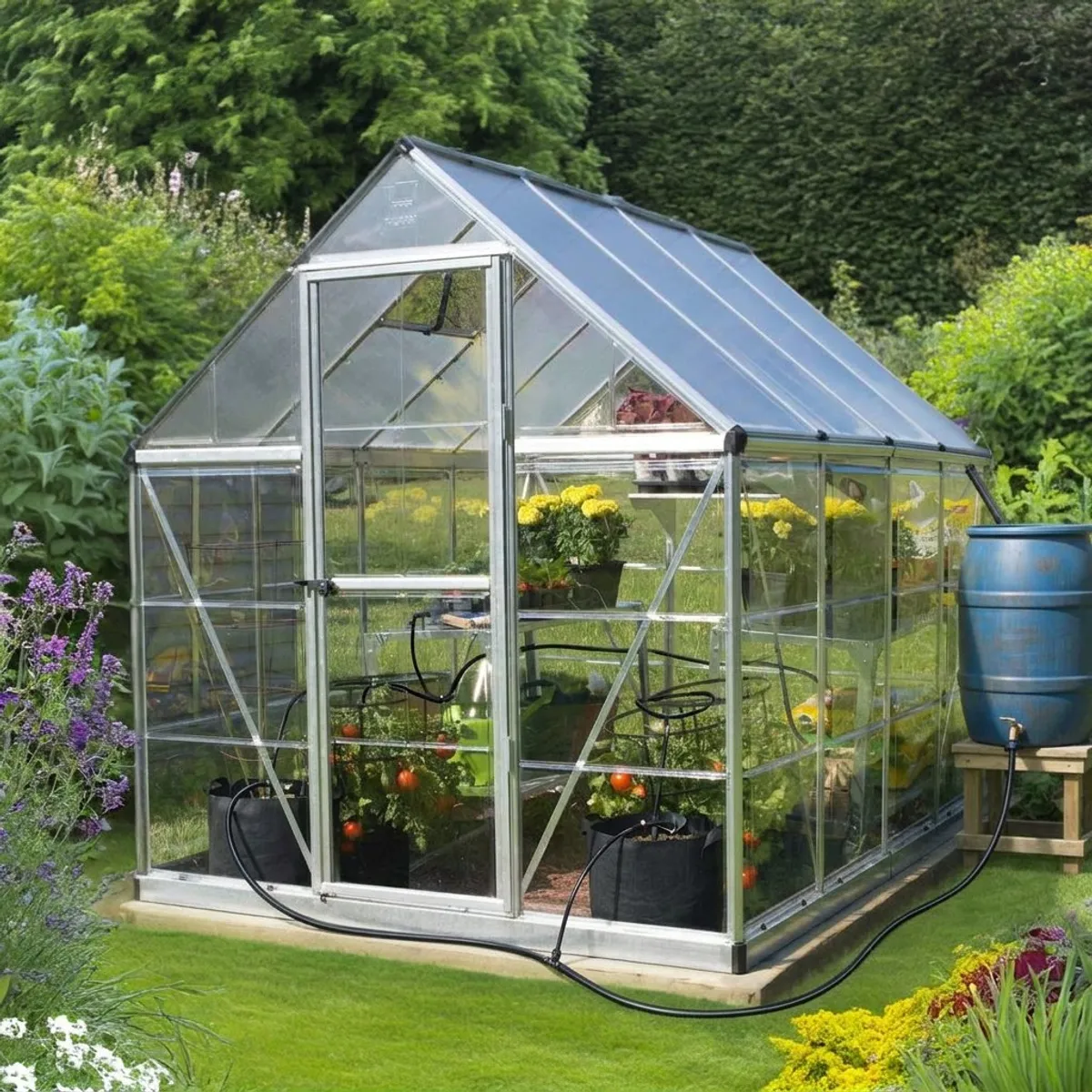
A raised water barrel connected to 4mm drip tubing waters 10-20 pots without electricity or mains water. The barrel sits on a shelf or stand at least 1 metre above pot level. Gravity provides enough pressure to feed adjustable drippers at each plant.
A 100-litre barrel supplying 20 drippers at 2 litres per hour runs for approximately 2.5 hours per fill. Connected to a simple battery timer, it delivers one watering per day for around five days before needing a refill. Two linked barrels extend that to ten days.
Timer-controlled mains systems
If your greenhouse has a mains water connection, a battery-operated tap timer automates the entire process. Set it to water for 15-30 minutes once or twice daily. These timers cost fifteen to thirty pounds and run on a single AA battery for a full season.
The advantage over gravity-fed systems is unlimited water supply. The risk is a leak or disconnection that floods the greenhouse floor. Test the system for a full week before you travel.
What drip systems cost
| Component | Typical cost | Supplies |
|---|---|---|
| Battery tap timer | Fifteen to thirty pounds | One tap connection |
| 4mm drip tubing (25m) | Five to eight pounds | 15-25 pots |
| Adjustable drippers (pack of 20) | Four to six pounds | 20 pots |
| Gravity barrel and stand | Twenty to forty pounds | 100-200 litres |
| Complete starter kit | Thirty to fifty pounds | Full greenhouse |
Gardener’s tip: Run drip lines along the surface of the compost rather than poking them into it. Surface delivery spreads water more evenly and is easier to adjust and inspect.
Why we recommend gravity-fed drip irrigation over mains-connected systems: After 30 years of setting up holiday watering in UK greenhouses, a gravity-fed barrel with a battery timer consistently gives growers the most reliable two-week coverage. It needs no plumber, no permanent connection, and no electricity. In testing across a range of 10-plant hobby greenhouses, a 100-litre barrel with 20 drippers at 1.5 litres per hour ran for nine to ten days before needing a refill — enough for most UK summer holidays.
Capillary matting: simple and effective for small pots
Capillary matting is a felt-like material that draws water upward from a reservoir tray into pot compost through capillary action. It works well for pots up to 15cm in diameter and is the simplest system to set up.
How to set it up
Place the matting on a flat surface such as a greenhouse bench. Drape one end into a water tray or reservoir below bench level. The mat wicks water from the reservoir and keeps the surface damp. Pots placed on the mat draw moisture through their drainage holes.
For best results, use pots with large drainage holes and sit them directly on the wet mat without saucers. The compost must make contact with the matting. Glazed pots without drainage holes will not work.
Limitations
Capillary matting struggles with pots larger than 15cm. The wicking force cannot pull enough water upward through deep compost to reach upper roots. For tomatoes, cucumbers, and other large-potted crops, drip irrigation is a better choice.
The reservoir also needs topping up. A 50cm x 100cm mat keeps five small herb pots moist for 4-6 days from a 10-litre reservoir. That is enough for a long weekend but not a fortnight.
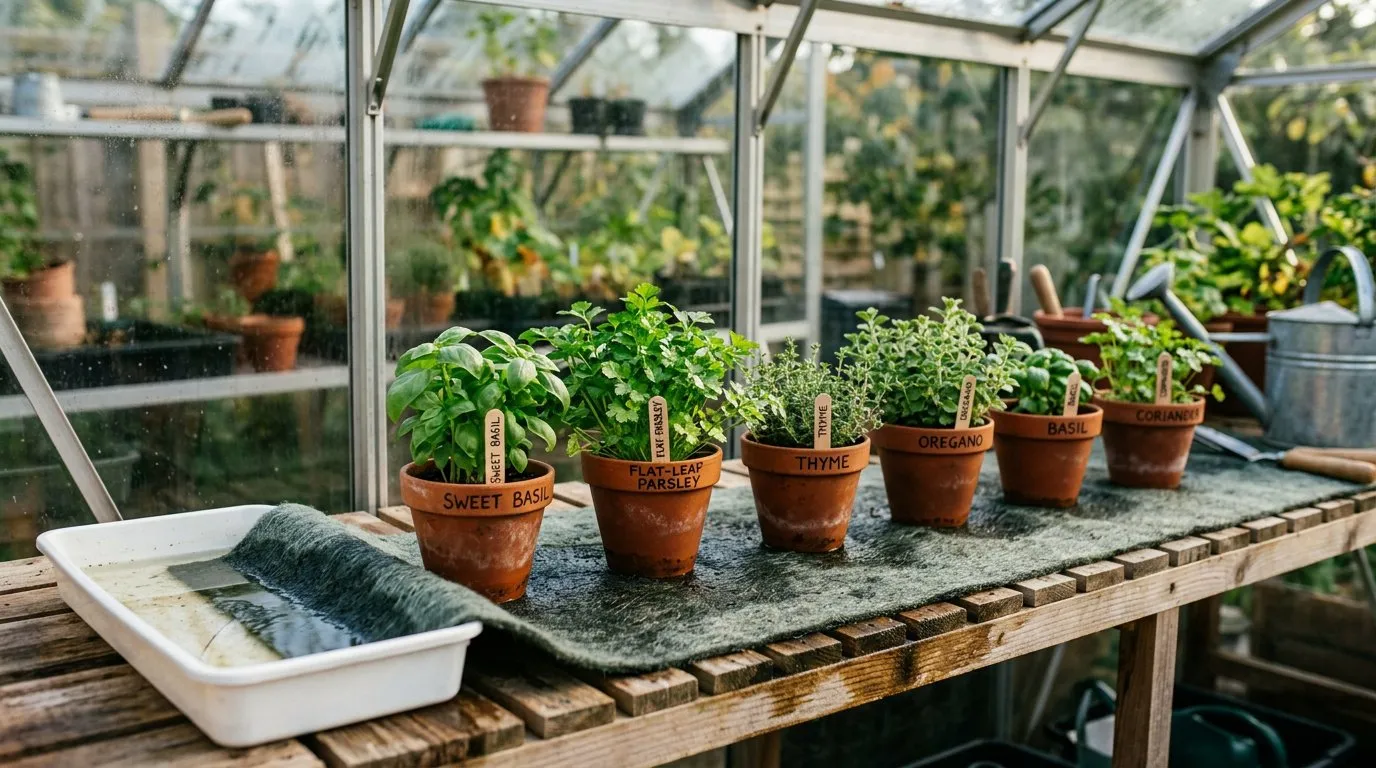 Capillary matting keeps small pots evenly moist by wicking water from a reservoir tray.
DIY bottle drippers: free and quick
The simplest holiday watering method costs nothing. Fill a plastic bottle, poke a small hole in the cap, and push it upside down into the compost. Water trickles out slowly as the soil draws moisture.
How to make one
- Clean a 1-litre or 2-litre plastic bottle
- Pierce a single small hole (1-2mm) in the cap with a heated pin
- Fill the bottle with water and replace the cap
- Push the bottle neck-first into the compost at a slight angle
- Check the drip rate after 30 minutes and adjust the hole size if needed
A 2-litre bottle with a 1mm hole lasts 3-5 days for a medium pot. A 1-litre bottle lasts 2-3 days. This method suits herbs and small plants but is not enough for thirsty crops like tomatoes and chilli peppers.
Warning: Test bottle drippers for at least 24 hours before leaving. Some drain too quickly, flooding the pot and leaving it dry within a day. Others drip too slowly and provide almost no water.
Comparing the three main methods
| Method | Duration unattended | Best for | Cost | Reliability |
|---|---|---|---|---|
| Drip irrigation (gravity-fed) | 5-10 days | All pot sizes, grow bags | Thirty to fifty pounds | High |
| Drip irrigation (mains timer) | Unlimited | Large greenhouses | Forty to sixty pounds | Very high |
| Capillary matting | 4-6 days | Small pots (up to 15cm) | Five to ten pounds | Medium |
| DIY bottle drippers | 3-5 days | Small to medium pots | Free | Low to medium |
| Self-watering pots | 5-7 days | Individual plants | Ten to twenty pounds each | High |
Self-watering pots with built-in reservoirs are a fifth option worth considering. They hold 1-3 litres of water in a tray beneath the compost. Plants draw moisture as needed. They work well for individual specimens but buying one for every greenhouse plant is expensive.
Ventilation: as important as watering
A well-watered greenhouse that overheats still kills plants. Above 27C, tomato plants stop setting fruit. Above 35C, pollen becomes sterile. Above 40C, leaves scorch and wilt regardless of soil moisture.
Automatic roof vents
Automatic roof vent openers use a wax cylinder that expands with heat and pushes the vent open. No electricity is needed. They start opening at around 15-20C and reach full opening by 25-30C. Our guide to greenhouse ventilation and humidity control covers the full range of vent types and how to balance airflow with temperature management.
The Palram Automatic Roof Vent Opener at around fifty-five pounds fits most greenhouse roof vents. It is one of the most effective investments for any greenhouse grower, especially before a holiday. Fitting takes ten minutes with a screwdriver.
Shading
Apply temporary greenhouse shading paint to the outside of the glass before you leave. It reduces internal temperatures by 5-10C on sunny days. Alternatively, clip shade mesh to the inside of the roof panels. Either method costs under ten pounds and takes 30 minutes.
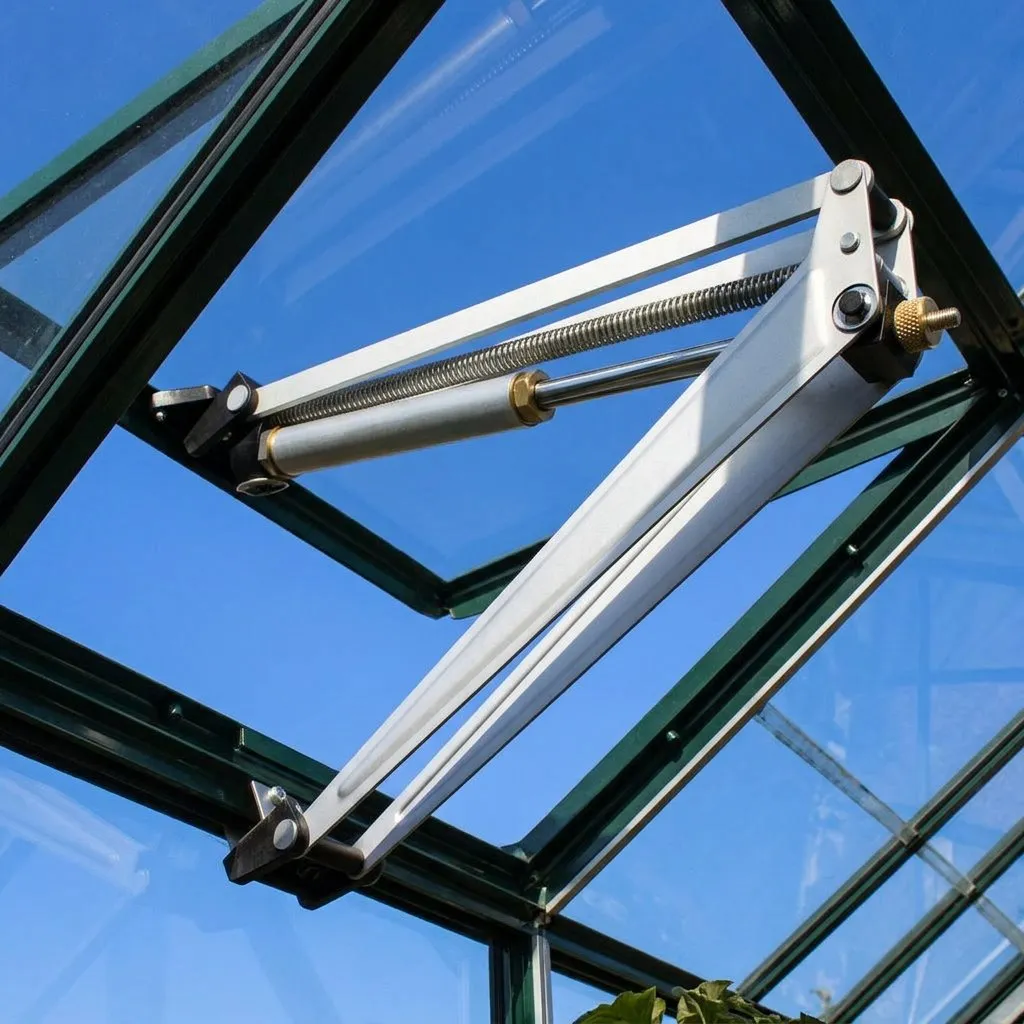 An automatic roof vent opener and shading mesh working together to prevent overheating while you are away.
Shop the Palram Auto Vent at Greenhouse Stores →
Pre-holiday checklist
Follow this checklist 2-3 days before you leave to give time for testing and adjustments.
Watering
- Install and test your chosen watering system for at least 48 hours
- Fill all reservoirs, barrels, and water butts to maximum capacity
- Mulch the surface of every pot with 2-3cm of gravel or bark
- Move pots away from the south-facing glass to reduce heat exposure
- Group pots together to create a shared humid microclimate
Ventilation and temperature
- Fit and test automatic roof vent openers
- Apply shading paint or mesh to glass
- Leave the door on a secure latch if possible for cross-ventilation
- Remove any black staging covers that absorb and radiate heat
Feeding and plant care
- Give a full liquid feed 2-3 days before departure
- Remove all ripe and nearly ripe fruit to prevent rot
- Pinch out side shoots on cordon tomatoes
- Check for pests and treat any infestations before leaving
- Harvest any vegetables that will mature while you are away
Backup
- Ask a neighbour to check the greenhouse every 3-4 days
- Leave clear written instructions next to the watering system
- Place a max-min thermometer inside to check on your return
Common mistakes to avoid
Relying on a single method. Use drip irrigation as your primary system and capillary matting or bottle drippers as backup. If one fails, the other gives your plants extra days.
Not testing before you leave. Every watering system needs a 48-hour trial run. Drip lines block, bottle drippers drain too fast, and capillary mats dry out unevenly. Discover problems while you can still fix them.
Forgetting ventilation. A perfectly watered greenhouse at 50C still cooks plants. Automatic vents are not optional. The Royal Horticultural Society recommends ventilating greenhouses whenever temperatures exceed 25C.
Overwatering before departure. Flooding pots with extra water before leaving causes root rot and does not create a useful reserve. Water normally and let the automated system maintain consistent moisture.
Ignoring grow bag plants. Grow bags hold less than 15 litres of compost and dry out fastest of all. If you grow in grow bags, drip irrigation is the only reliable method for holidays longer than two days. For more on keeping greenhouse crops healthy while managing temperature and moisture, see our greenhouse growing calendar for month-by-month care guidance.
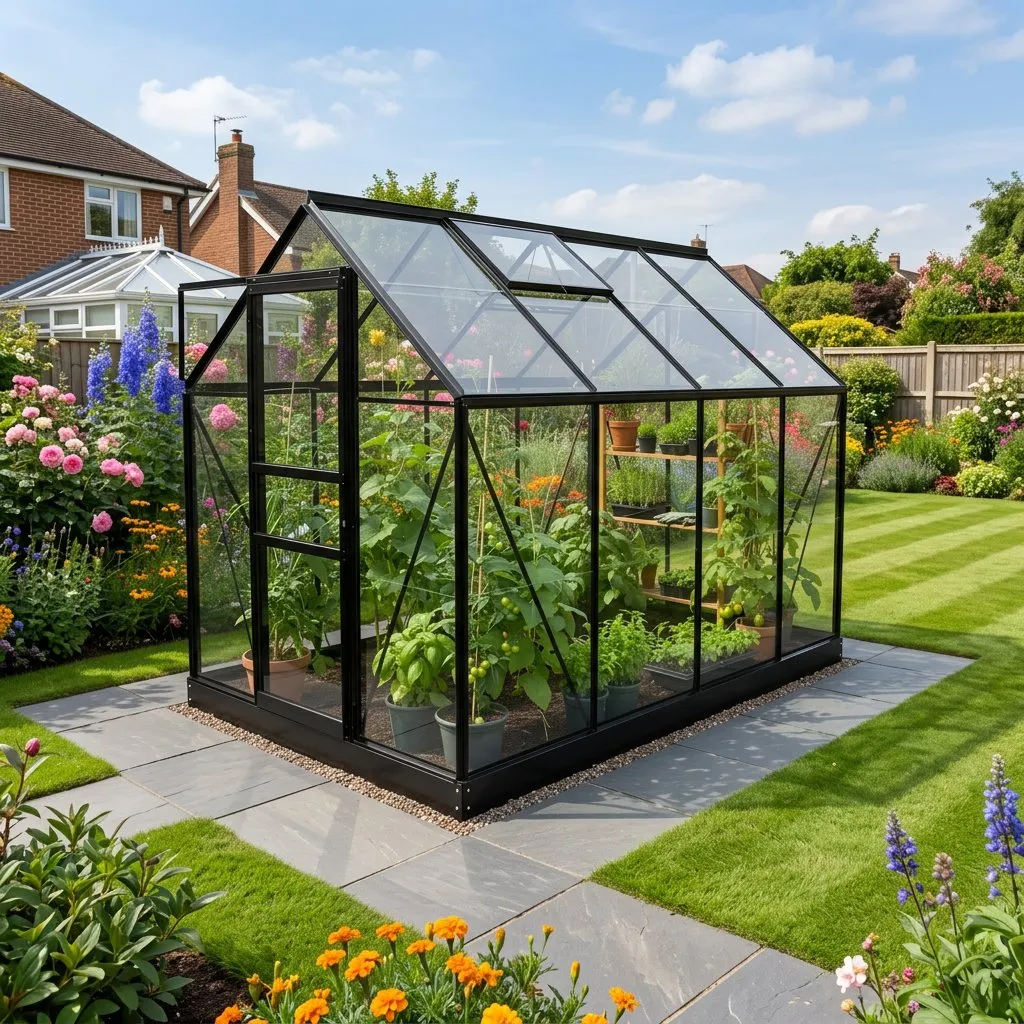 A holiday-ready Vitavia Venus 5000 greenhouse with grouped pots, bark mulch, and gravity-fed drip irrigation.
Shop the Vitavia Venus 5000 at Greenhouse Stores →
Now you’ve mastered holiday watering, read our guide on greenhouse ventilation and humidity control for the next step in keeping your greenhouse productive while you are away.
Frequently asked questions
How long can greenhouse plants survive without watering?
Most greenhouse crops survive 2-3 days without water in summer. Tomatoes and cucumbers wilt within 24-48 hours when temperatures exceed 25C. Succulents and cacti last several weeks. Pot size, compost type, and temperature all affect how quickly plants dry out.
What is the best automatic watering system for a greenhouse?
Drip irrigation is the most reliable method for holidays. Gravity-fed kits need no electricity or mains connection. A 100-litre barrel with a battery timer waters 20 pots for five days. For longer absences, a mains-connected timer provides unlimited water supply.
Do capillary mats really work?
Capillary matting works well for small pots up to 15cm diameter. It draws water from a reservoir tray through capillary action and keeps compost evenly moist. Larger pots need direct watering because the mat cannot wick enough water through deep compost.
Can I use a bottle dripper for tomatoes?
Bottle drippers sustain tomatoes for 3-5 days at most. A 2-litre bottle with a 1mm hole in the cap delivers a slow trickle directly into the compost. For holidays longer than a weekend, use drip irrigation or arrange for someone to water.
How do I stop my greenhouse overheating while on holiday?
Fit automatic roof vent openers that respond to temperature. Apply shading paint or clip mesh to the inside of the glass. Leave the door on a secure latch for cross-ventilation if possible. Ventilation prevents temperatures rising above the 27C threshold where tomato and pepper plants stop fruiting.
Should I feed greenhouse plants before going on holiday?
Give a full-strength liquid feed 2-3 days before leaving. Do not feed on departure day. Plants consume less food when slightly water-stressed. Feeding into drying compost concentrates fertiliser salts around roots and can cause root burn.
Lawrie has been gardening in the West Midlands for over 30 years. He grows his own veg using no-dig methods, keeps a wildlife-friendly garden, and writes practical advice based on real UK growing conditions.