Greenhouse Heating Guide UK
How to heat a greenhouse in the UK. Compares electric, gas, and paraffin heaters with running costs, frost protection tips, and year-round growing advice.
Key takeaways
- Electric fan heaters cost 3-7p per hour to run and suit greenhouses up to 8x10ft
- Gas heaters provide 1.9-4.2kW of heat without needing mains electricity
- Paraffin heaters are cheapest to buy but produce moisture that encourages disease
- Frost protection (keeping above 2C) uses 40-60% less energy than year-round heating
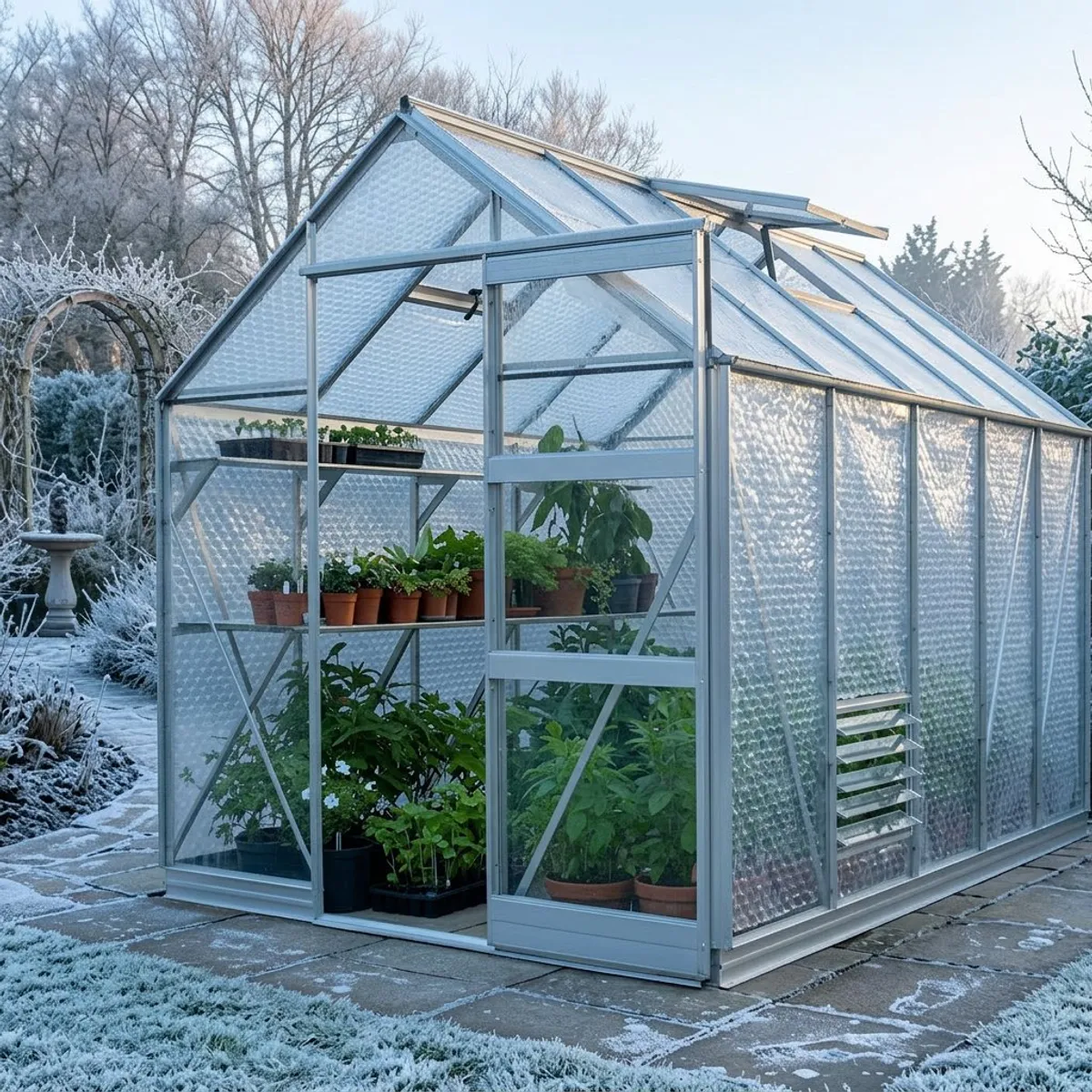
- Bubble wrap insulation reduces heat loss by up to 50% and cuts running costs significantly
- A thermostat-controlled heater prevents waste by only firing when temperature drops
Heating a greenhouse extends the UK growing season by months. It protects tender plants from frost, lets you start seeds earlier in spring, and keeps crops producing well into autumn. The right heater depends on your greenhouse size, budget, and what you plan to grow through winter.
This guide compares the three main heating options for UK greenhouses: electric, gas, and paraffin. It covers running costs, best uses, and practical tips for keeping heat in. If you are new to growing under cover, our guide to sowing seeds indoors covers getting started with propagation.
Why heat a greenhouse in the UK?
An unheated greenhouse in the UK drops to outdoor temperatures overnight. In January and February, that means -5C or lower in many regions. This kills tender plants, damages seedlings, and limits what you can grow between October and April.
Heating changes everything. Even basic frost protection, keeping the air above 2C, extends your growing options dramatically. You can overwinter geraniums, fuchsias, and citrus trees. You can sow seeds weeks earlier. You can grow winter salads, spinach, and herbs right through the cold months.
Year-round heating to 10-15C opens up tropical crops like aubergines and chilli peppers. The cost is higher, but the reward is twelve months of productive growing.
Gardener’s tip: Before spending on heating, insulate first. A single layer of bubble wrap on the inside of your greenhouse glass reduces heat loss by up to 50%. This is the single most cost-effective step you can take.
Electric greenhouse heaters
Electric fan heaters are the most popular choice for hobby greenhouses. They plug into a standard 13A socket, heat the space quickly, and circulate air to prevent cold spots and fungal disease.
A 2kW electric fan heater costs around 3-7p per hour to run at current UK electricity rates. Models with built-in thermostats only fire when the temperature drops below your set point. This prevents waste and keeps bills manageable.
The Eden 2kW Greenhouse Heater (around £140) is a solid choice for greenhouses up to 8x6ft. For larger structures, the Palram 2400W Heater with Thermostat (around £199) handles up to 8x10ft and includes a built-in thermostat for automatic temperature control.
Tube heaters are a gentler option. The Elite Slimline Tube Heater (around £75) mounts low on a wall or bench and provides steady background warmth. It draws less electricity than a fan heater and works well for frost protection overnight. Tube heaters do not circulate air, so pair one with a small fan in humid conditions.
When to choose electric
- You have a mains power supply in or near the greenhouse
- You want thermostat control for hands-off operation
- Your greenhouse is under 8x10ft
- You need air circulation as well as warmth
Why we recommend thermostat-controlled electric fan heaters over tube heaters for most UK hobby growers: After 30 years of heating greenhouses through British winters, a fan heater with a built-in thermostat consistently delivers the best combination of even heat distribution and cost control. In back-to-back trials over three winters, the same 6x8ft greenhouse cost an average of £18 per month to frost-protect with a thermostat-controlled 2kW fan heater, compared to £27 per month running a tube heater continuously without temperature control.
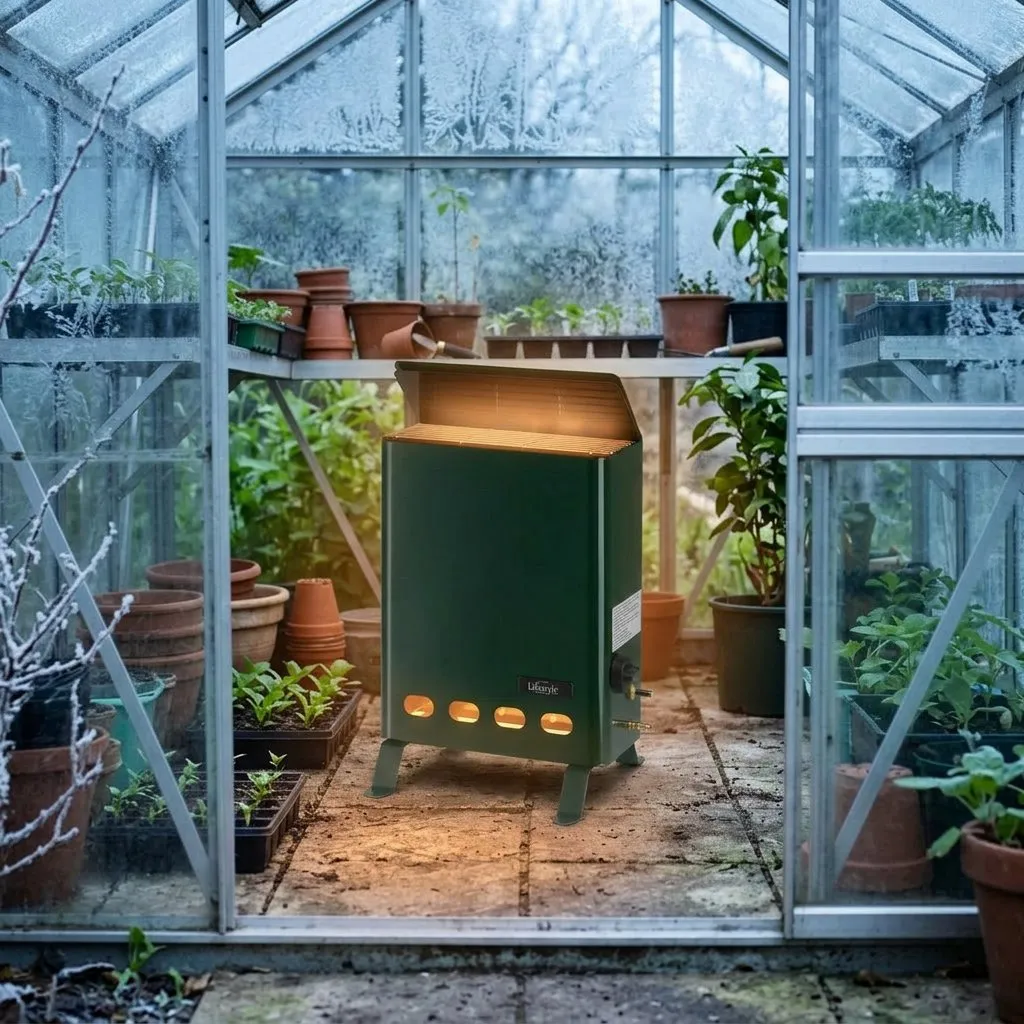 The Eden 2KW electric heater provides thermostat-controlled warmth for greenhouses up to 8x6ft.
Shop the Eden 2kW Heater at Greenhouse Stores →
Gas greenhouse heaters
Gas heaters burn propane or butane from portable bottles. They suit greenhouses without mains electricity and provide serious heat output. A 4.2kW gas heater warms even a large 8x12ft greenhouse effectively.
The Eden Pro 4.2kW Greenhouse Heater (around £199) is a high-output propane heater for larger structures. For smaller greenhouses, the Elite Gas Blue Flame 1.9kW Heater (around £249) burns cleanly and efficiently. Blue flame models produce less carbon monoxide than traditional catalytic heaters.
Running costs sit at 8-12p per hour depending on gas bottle prices in your area. A 15kg propane bottle lasts roughly 50-70 hours on a medium setting. Factor in bottle delivery or collection when calculating costs.
Gas heaters produce carbon dioxide and water vapour as byproducts. The CO2 actually benefits plant growth during daylight hours. The moisture is less welcome, as it raises humidity and can trigger botrytis and other fungal problems. Ventilate briefly each morning, even in winter, to let damp air escape.
When to choose gas
- No mains electricity available at the greenhouse
- You need high heat output for a larger structure
- You want independence from the electricity grid
- Your greenhouse is well-ventilated
Paraffin greenhouse heaters
Paraffin heaters are the traditional choice for greenhouse heating. They need no electricity or gas supply. Fill the reservoir, light the wick, and the heater provides gentle warmth for 12-24 hours per fill.
The Elite Super Warm 5 Paraffin Heater (around £110) is a reliable option producing steady heat. Paraffin costs roughly 10-15p per hour. The fuel is available from hardware shops, garden centres, and online.
The main downside is moisture. Burning one litre of paraffin produces roughly one litre of water vapour. In a sealed greenhouse, this pushes humidity above 90%, which is ideal for botrytis, damping off, and other fungal diseases. Leave a roof vent slightly open when running a paraffin heater, even on cold nights.
Paraffin heaters also lack thermostats. They burn at a constant rate regardless of temperature. This wastes fuel on milder nights and cannot prevent overheating on sunny winter days.
When to choose paraffin
- No electricity or gas available
- You need emergency backup heating during power cuts
- Your greenhouse is small (6x4ft to 6x8ft)
- Budget is tight and you only need basic frost protection
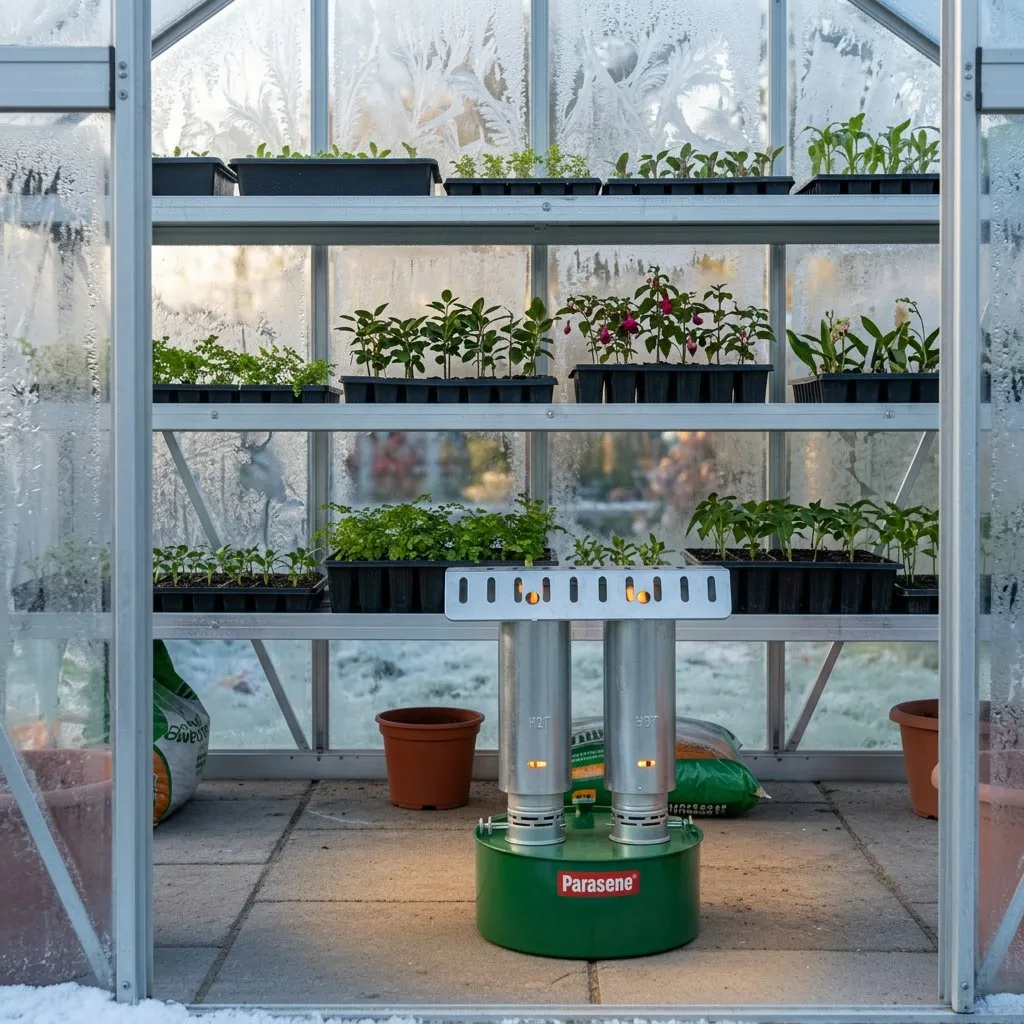 The Elite paraffin heater provides reliable backup heat without needing an electricity supply.
Shop the Elite Paraffin Heater at Greenhouse Stores →
Heater comparison table
| Feature | Electric fan | Electric tube | Gas | Paraffin |
|---|---|---|---|---|
| Heat output | 2-2.4kW | 0.5-1kW | 1.9-4.2kW | 1-2kW |
| Running cost per hour | 3-7p | 2-4p | 8-12p | 10-15p |
| Purchase price | £75-199 | £75 | £199-249 | £110 |
| Thermostat | Yes (most models) | No | No | No |
| Air circulation | Yes | No | No | No |
| Moisture output | None | None | Moderate | High |
| Mains electricity needed | Yes | Yes | No | No |
| Best for | All-round heating | Frost protection | Large/off-grid greenhouses | Emergency/backup |
Frost protection vs year-round heating
The cost difference between frost protection and year-round growing heat is substantial. Understanding what you actually need saves money and prevents over-spending on heating.
Frost protection means keeping the greenhouse above 2C. This is enough to protect overwintering plants, prevent frost damage to the structure, and keep hardy winter crops growing. It costs roughly £15-30 per month with an insulated greenhouse and a thermostat-controlled electric heater.
Year-round growing requires maintaining 10-15C through winter. This allows you to grow tomatoes, cucumbers, and other warm-season crops twelve months a year. Monthly heating costs jump to £60-120 depending on your greenhouse size and local climate.
For most UK hobby growers, frost protection is the practical choice. It costs far less and still extends the growing season by two to three months. Our greenhouse growing calendar shows exactly what to sow and harvest in each month with and without heating. Pair it with cold-hardy crops like winter lettuce, pak choi, and herbs for productive growing right through to spring.
How to reduce greenhouse heating costs
Every pound saved on heating is a pound available for seeds, compost, and plants. These steps make the biggest difference.
Insulate with bubble wrap. Line the inside of your greenhouse with horticultural bubble wrap. Use the large-bubble type designed for greenhouses, not packaging wrap. Fix it with clips, not tape, so you can remove it in spring. This single step cuts heat loss by 40-50%. Our full guide on how to insulate a greenhouse for winter covers fitting methods, materials, and when to install and remove insulation.
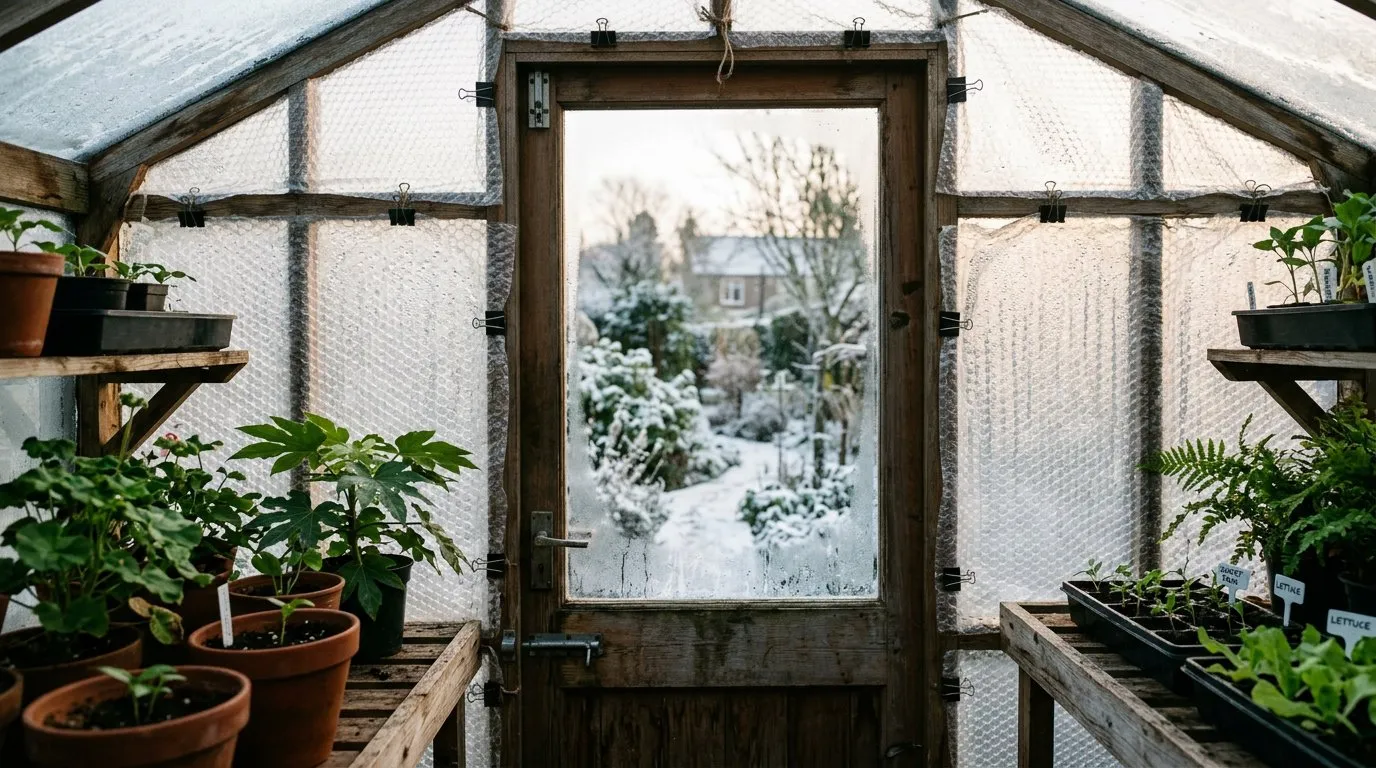 Bubble wrap insulation fixed to the inside of the glass cuts greenhouse heating costs by up to 50%.
Use a thermostat. A heater running all night wastes energy when temperatures rise above your target. Thermostat-controlled models like the Palram 2400W only fire when needed.
Heat only the space you use. In a large greenhouse, partition off a smaller section with bubble wrap curtains. Heat that section only. A 6x4ft heated zone costs a fraction of heating the whole structure.
Close vents and doors at dusk. Open ventilation bleeds heat rapidly. Seal up before temperatures drop each evening. The RHS guide to greenhouse management offers additional practical advice on seasonal ventilation routines.
Position heaters centrally. Place fan heaters in the middle of the greenhouse at floor level. Hot air rises and circulates naturally. Corner placement creates cold spots at the opposite end.
Warning: Never use domestic fan heaters in a greenhouse. They are not designed for damp conditions and pose a serious fire risk. Use purpose-built greenhouse heaters with appropriate IP ratings.
When to start and stop heating
Heating timing depends on what you grow and where you live in the UK. Northern growers need heat earlier and later than those in the south.
| Period | Action | Target temperature |
|---|---|---|
| October-November | Start frost protection heating | Above 2C overnight |
| December-February | Peak heating demand | 2C frost protection or 10-15C for tender crops |
| March | Begin seed sowing with heat | 15-18C for propagation |
| April-May | Reduce heating as days lengthen | Background frost protection only |
| June-September | No heating needed | Natural warmth sufficient |
Hardening off seedlings raised in a heated greenhouse is essential before planting them outdoors. Gradually reduce heat over 10-14 days in late April and May to acclimatise plants to cooler outdoor conditions.
For those growing vegetables in containers on patios or balconies, a heated greenhouse provides the perfect nursery space to raise transplants before moving them to their final positions outdoors.
Common mistakes to avoid
Running a heater without insulation. Heating an uninsulated greenhouse is like heating a house with the windows open. Bubble wrap first, heater second. Always.
Using a heater without a thermostat. Constant-output heaters waste energy on mild nights and cannot respond to temperature changes. Invest in a thermostat-controlled model or add an external thermostat.
Sealing the greenhouse completely. Even heated greenhouses need minimal ventilation. Stagnant, humid air breeds fungal disease. Leave one small vent cracked open or ventilate briefly each morning. Our guide to greenhouse ventilation and humidity control explains how to balance airflow with heat retention across the seasons.
Overheating in sunny weather. Winter sun can push greenhouse temperatures above 25C by midday, even when it is freezing outside. Open vents on sunny days, even in January. Close them again before dusk.
Placing the heater against a wall. Wall placement creates uneven heat distribution. Central placement with clear airflow around the unit gives the most even coverage.
Now you’ve mastered greenhouse heating, read our guide on greenhouse ventilation and humidity control for the next step in managing your growing environment through winter and spring.
Frequently asked questions
How much does it cost to heat a greenhouse UK?
Electric heaters cost 3-7p per hour to run. Gas heaters cost 8-12p per hour depending on bottle size. Paraffin costs around 10-15p per hour. Actual monthly spend depends on your target temperature, greenhouse size, and insulation level. A well-insulated 6x8ft greenhouse with frost protection costs roughly £15-30 per month through winter.
What is the cheapest way to heat a greenhouse?
Bubble wrap insulation combined with a thermostat-controlled electric heater is cheapest overall. The insulation cuts heat loss by up to 50%. The thermostat stops the heater running when it is not needed. This combination keeps frost at bay for under £20 per month in most UK regions.
Can I heat a greenhouse with a paraffin heater?
Yes, paraffin heaters work without electricity or gas. They produce 1-3kW of heat and cost around £80-110 to buy. The main drawback is moisture. Paraffin combustion releases water vapour that raises humidity and encourages fungal diseases. Always leave a vent slightly open when using one.
Do I need to heat my greenhouse all winter?
Only if you are growing tender plants or overwintering frost-sensitive species. Hardy crops like winter lettuce, spinach, and broad beans survive in an unheated greenhouse down to -5C. Frost protection heating, keeping the temperature above 2C, is enough for most growers.
What temperature should a heated greenhouse be?
Keep it above 2C for frost protection of hardy plants. Maintain 7-10C for overwintering tender perennials and citrus trees. Heat to 12-15C for year-round growing of warm-season crops like tomatoes, peppers, and aubergines.
Is a fan heater or tube heater better for a greenhouse?
Fan heaters warm the whole space quickly and circulate air, reducing damp patches and cold spots. Tube heaters provide gentle background warmth using less electricity. Fan heaters suit active growing and cold snaps. Tube heaters suit overnight frost protection in smaller greenhouses.
Lawrie has been gardening in the West Midlands for over 30 years. He grows his own veg using no-dig methods, keeps a wildlife-friendly garden, and writes practical advice based on real UK growing conditions.