How to Dry and Store Herbs at Home
Practical guide to drying and storing herbs from your garden. Covers air drying, oven drying, freezing, and making herb salts, oils, and vinegars.
Key takeaways
- Harvest herbs for drying mid-morning when essential oil concentration peaks
- Air drying takes seven to fourteen days and suits woody herbs like rosemary and thyme
- Oven drying at 50 degrees Celsius works for all herbs in two to four hours
- Freeze basil, parsley, and chives in ice cube trays for the best flavour retention
- Store dried herbs in airtight glass jars away from light for up to twelve months
- Herb salt made with coarse sea salt and fresh herbs lasts up to two years
A summer herb garden produces far more than you can use fresh. Drying and storing that surplus means you have home-grown herbs through winter without spending two pounds a jar at the supermarket. After thirty years of growing herbs, I have tried every preservation method going. Some work brilliantly. Others waste good herbs.
This guide covers the practical methods that actually deliver results: air drying, oven drying, freezing, and making herb preserves. For growing advice, see our full guide to growing herbs in the UK.
When to harvest herbs for drying
Timing your harvest correctly makes the difference between dried herbs with real flavour and dusty green flakes with none.
Pick herbs mid-morning. Wait for the dew to dry but harvest before the midday sun. Essential oils concentrate in the leaves during cool morning hours and start to evaporate in strong heat. This narrow window gives you the most aromatic harvest.
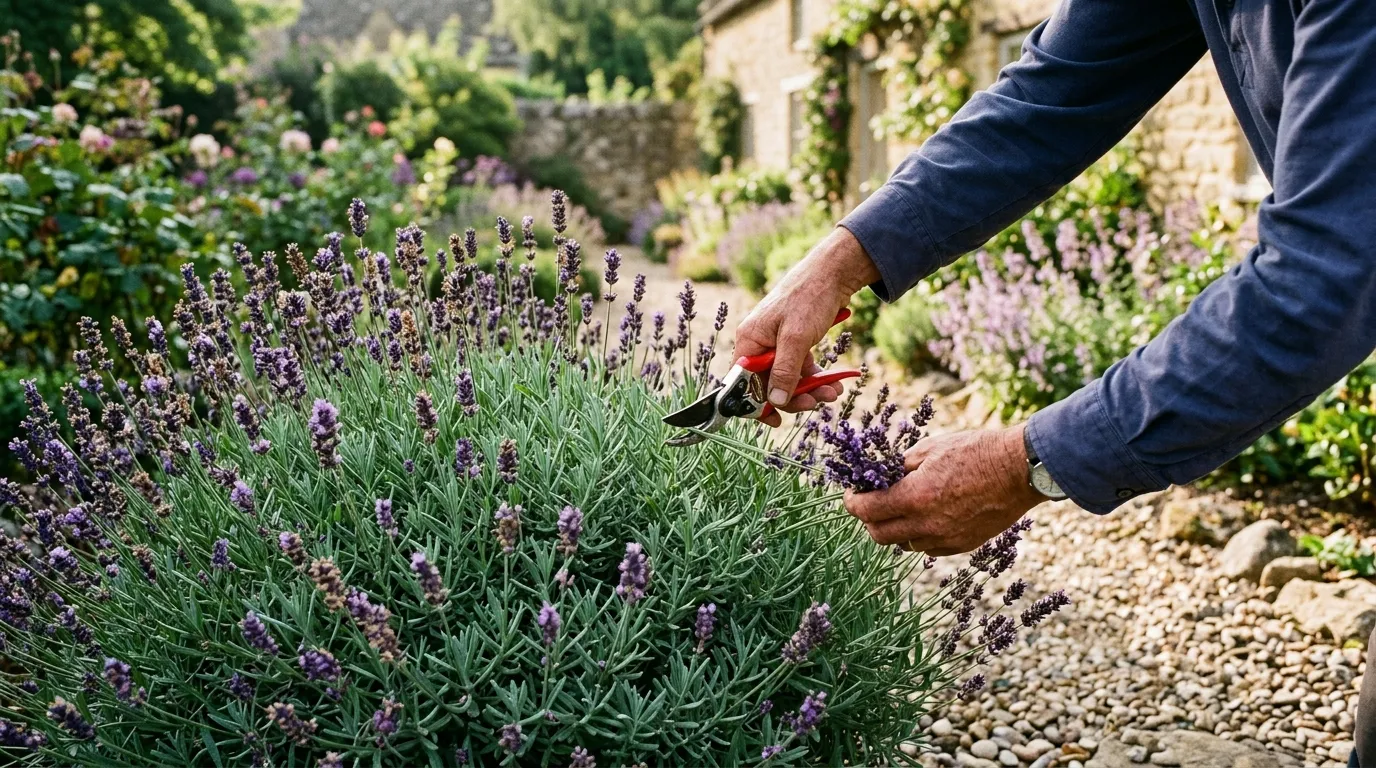
Harvest before the plant flowers. Once a herb bolts, it redirects energy from leaf production to seed production. The leaves lose intensity. If flower buds appear on basil, pinch them out immediately to extend the harvest window.
Cut stems rather than picking individual leaves. A 15cm stem with leaves attached is easier to handle and dries more evenly than loose leaves. Use sharp scissors or secateurs for a clean cut that heals quickly. Never strip more than a third of any plant at once.
How to air dry herbs
Air drying is the oldest and simplest method. It costs nothing, needs no equipment, and produces excellent results with woody herbs.
Which herbs air dry well
Woody, low-moisture herbs are ideal for air drying. Rosemary, thyme, oregano, sage, bay, and marjoram all air dry beautifully. Their stiff leaves and low water content mean they dry before mould can set in.
Soft, high-moisture herbs like basil, parsley, and coriander are poor candidates for air drying. They turn black or develop mould before drying fully. Freeze these instead.
Step-by-step air drying
- Gather stems into small bundles of five to eight stems each
- Tie the bundle at the cut end with string or an elastic band
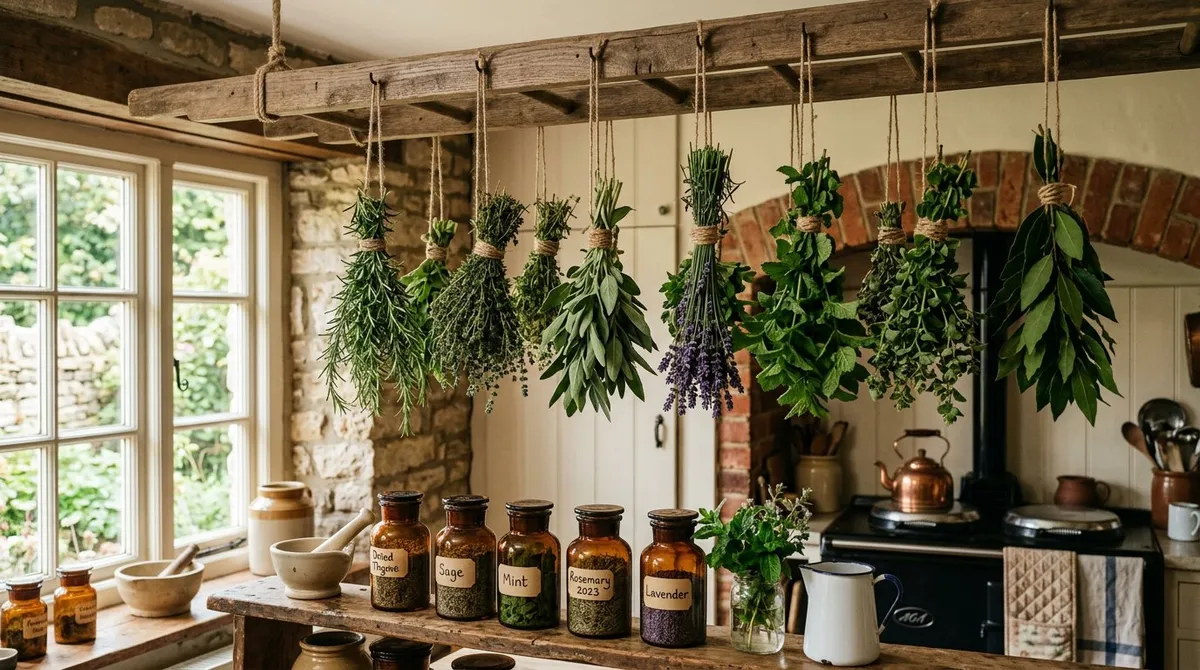
- Hang upside down in a warm, dry, well-ventilated room
- Keep out of direct sunlight, which bleaches colour and destroys oils
- Allow seven to fourteen days until leaves crumble when touched
- Strip leaves from stems and store in airtight jars
A warm airing cupboard, utility room, or covered porch works well. Avoid kitchens and bathrooms where steam raises humidity. Good air circulation is essential to prevent mould.
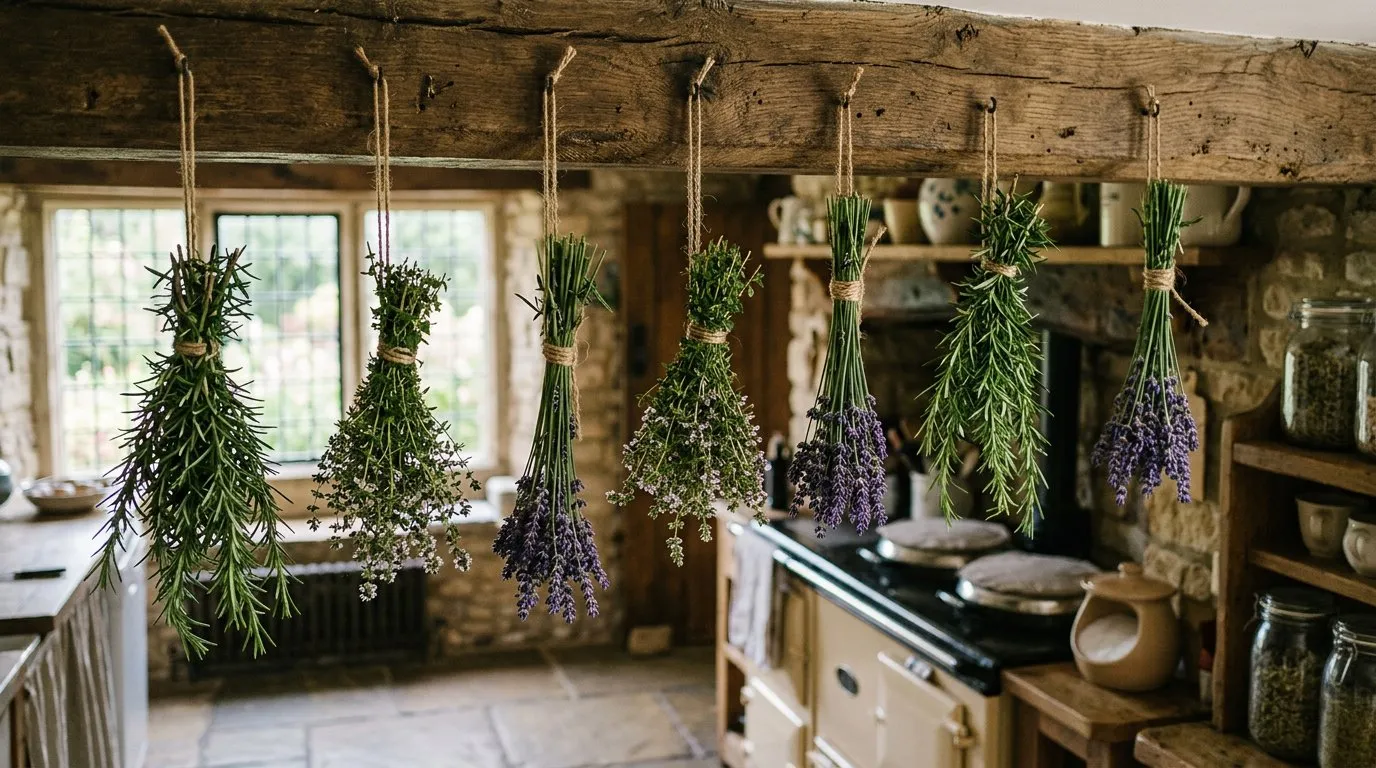
Bundles of rosemary, thyme, and lavender hanging upside down from a farmhouse beam — the simplest herb drying method.
Paper bag method
For a neater approach, place each bundle inside a paper bag with small holes punched in the sides. Tie the bag around the stems and hang as normal. The bag catches falling leaves and protects from dust while still allowing airflow.
How to oven dry herbs
Oven drying is faster than air drying and works for all herb types, including the soft-leaved varieties that struggle with air drying.
Method
Set your oven to its lowest temperature. Ideally 50 degrees Celsius, and no higher than 70 degrees. Spread single leaves or short sprigs on a baking tray lined with parchment paper. Leave the oven door slightly ajar to let moisture escape.
Check every 30 minutes. Most herbs take two to four hours. Leaves are ready when they crumble easily between your fingers but have not turned brown. Brown, crispy herbs have been overcooked and lost their essential oils.
Oven drying tips
Dry different herbs on separate trays because drying times vary. Thyme leaves dry faster than sage leaves. Remove trays as each herb finishes rather than waiting for the slowest one. Fan ovens dry herbs more evenly than conventional ovens because the circulating air removes moisture from all sides.
Drying herbs in a dehydrator
A food dehydrator set to 35 to 45 degrees Celsius produces the most consistent results of any drying method. The controlled temperature and constant airflow mean herbs dry evenly without hot spots or over-cooking.
Spread herbs in a single layer on each tray. Run the dehydrator for two to six hours depending on the herb. Check after two hours and remove anything that crumbles cleanly. Dehydrators cost from twenty to fifty pounds and pay for themselves within a season if you dry herbs, fruit, and vegetables regularly.
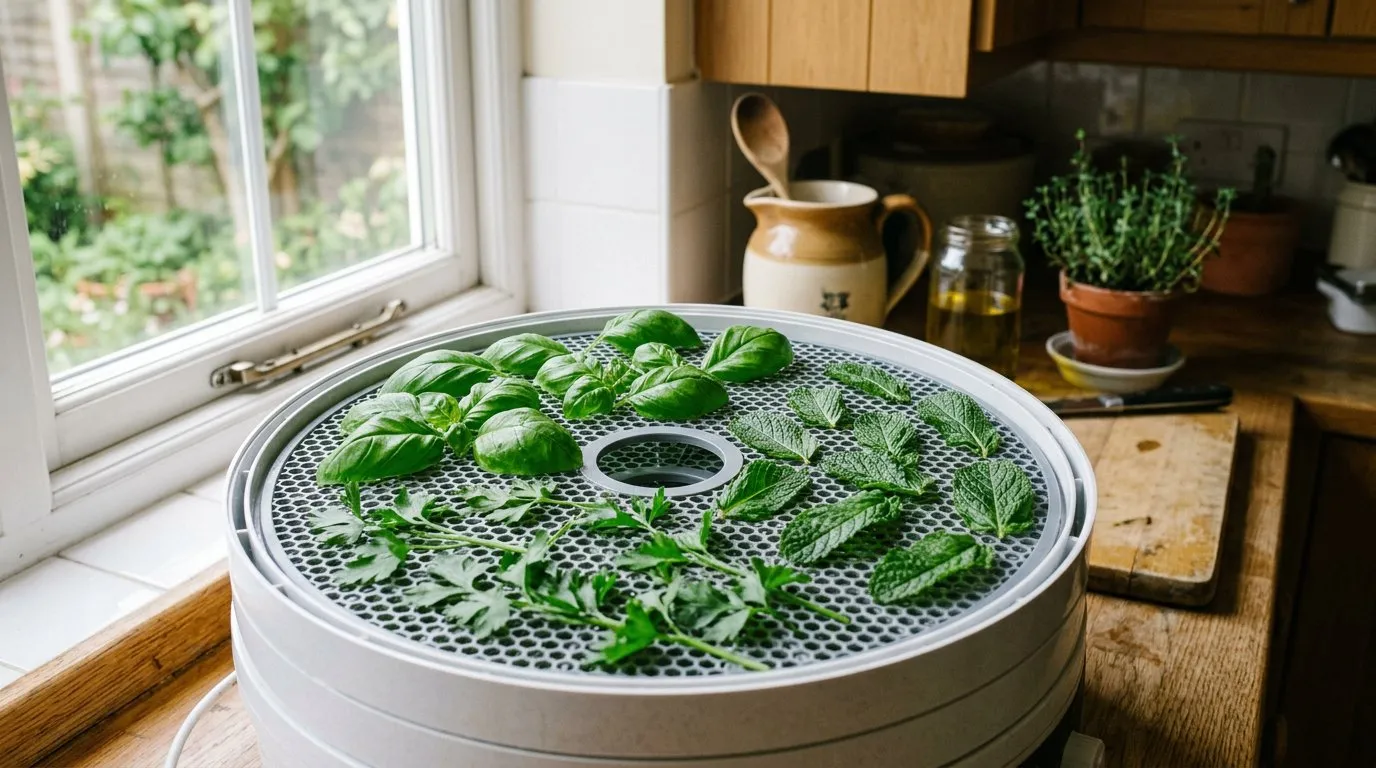
Fresh basil, parsley, and mint leaves spread on a dehydrator tray ready for low-temperature drying.
Freezing herbs in ice cubes
Freezing is the best method for preserving basil, parsley, chives, coriander, and mint. These soft-leaved herbs lose colour and flavour when dried but keep both when frozen.
Ice cube tray method
Chop fresh herbs finely. Pack each compartment of an ice cube tray two-thirds full with chopped herbs. Top up with cold water or olive oil. Freeze until solid, then pop the cubes into a labelled freezer bag.
Water-based cubes suit herbs going into soups, stews, and sauces. Oil-based cubes are better for herbs destined for pasta sauces, stir-fries, and marinades. Each cube equals roughly one tablespoon of fresh herbs.
Flat-freezing method
Spread whole or roughly chopped herbs on a baking tray lined with parchment. Freeze for two hours until solid. Transfer to a freezer bag and squeeze out the air. This method keeps herbs loose so you can grab a pinch without defrosting the whole batch.
Frozen herbs last up to six months in a standard freezer. They lose their crisp texture on thawing but retain full flavour. Use them directly from frozen in cooked dishes. Do not refreeze thawed herbs.
Herb drying method comparison
| Herb | Best method | Drying time | Shelf life | Flavour retention |
|---|---|---|---|---|
| Rosemary | Air dry | 7-10 days | 12 months | Excellent |
| Thyme | Air dry | 7-10 days | 12 months | Excellent |
| Oregano | Air dry | 7-14 days | 12 months | Excellent |
| Sage | Oven dry | 2-3 hours | 10 months | Very good |
| Bay | Air dry | 14-21 days | 24 months | Excellent |
| Basil | Freeze | Instant | 6 months | Very good |
| Parsley | Freeze | Instant | 6 months | Good |
| Chives | Freeze | Instant | 6 months | Good |
| Coriander | Freeze | Instant | 4 months | Good |
| Mint | Freeze | Instant | 6 months | Very good |
| Dill | Freeze | Instant | 4 months | Good |
| Tarragon | Oven dry | 2-4 hours | 8 months | Good |
Woody herbs with tough leaves and low moisture always dry better than soft herbs. If a herb wilts quickly after picking, freeze it instead.
Why we recommend the ice cube tray method for basil and parsley: After 30 years of preserving herbs, freezing in olive oil ice cubes consistently delivers better flavour retention than any drying method for soft-leaved herbs. In a taste comparison over three winters, frozen basil cubes retained around 80% of fresh flavour intensity after six months, while oven-dried basil dropped to under 40% within the same period. Oil-based cubes also go straight from freezer to pan without defrosting.
Making herb salt and herb oil
Preserving herbs in salt or oil extends their usefulness and creates ingredients with concentrated flavour. Both make excellent gifts from the garden.
Herb salt
Mix four parts coarse sea salt with one part finely chopped fresh herbs. Rosemary salt, thyme salt, and sage salt all work beautifully. Spread the mixture on a baking tray and leave in a warm place for 48 hours until fully dry. Stir occasionally to break up clumps.
Store in airtight jars. Herb salt lasts up to two years because the salt acts as a natural preservative. Use it on roast vegetables, grilled meat, eggs, and bread. A jar of home-made rosemary salt costs pennies and beats anything from a delicatessen.
Herb-infused oil
Use dried herbs only. Fresh herbs contain moisture that creates conditions for botulism in oil. Pack a clean glass jar one-third full with dried rosemary, thyme, or chilli flakes. Fill with a mild olive oil. Seal and store in a cool, dark place for two to four weeks. Shake the jar daily. Strain through muslin into a clean bottle and use within three months.
The Food Standards Agency recommends using infused oils within one month of opening to minimise food safety risks.
Herb vinegar
Fill a clean glass jar halfway with fresh herbs. Bruise the leaves slightly with a wooden spoon. Cover with white wine vinegar or cider vinegar. Seal and store in a dark cupboard for two to four weeks. Strain and decant into a clean bottle.
Tarragon vinegar is the classic choice for dressings and sauces. Mint vinegar pairs with lamb and salads. Herb vinegars last up to twelve months because the acidity prevents bacterial growth.
How long do dried herbs last
Dried herbs do not last forever. They gradually lose essential oils and flavour over time. Proper storage slows this process but cannot stop it entirely.
| Storage method | Expected shelf life |
|---|---|
| Airtight glass jar, dark cupboard | 6-12 months |
| Sealed plastic bag | 3-6 months |
| Open container on kitchen shelf | 1-3 months |
| Herb salt in sealed jar | Up to 24 months |
| Frozen herbs in freezer bag | 4-6 months |
| Herb oil (dried herbs) | 3 months |
| Herb vinegar | 12 months |
Test older dried herbs by rubbing a pinch between your fingers and smelling. If the scent is weak or musty, replace them. Good dried herbs should smell nearly as strong as the fresh version.
Store all dried herbs in airtight glass jars in a dark cupboard. Avoid clear containers on open shelves. Light degrades colour and flavour within weeks. Keep jars away from the cooker because heat and steam shorten shelf life dramatically.
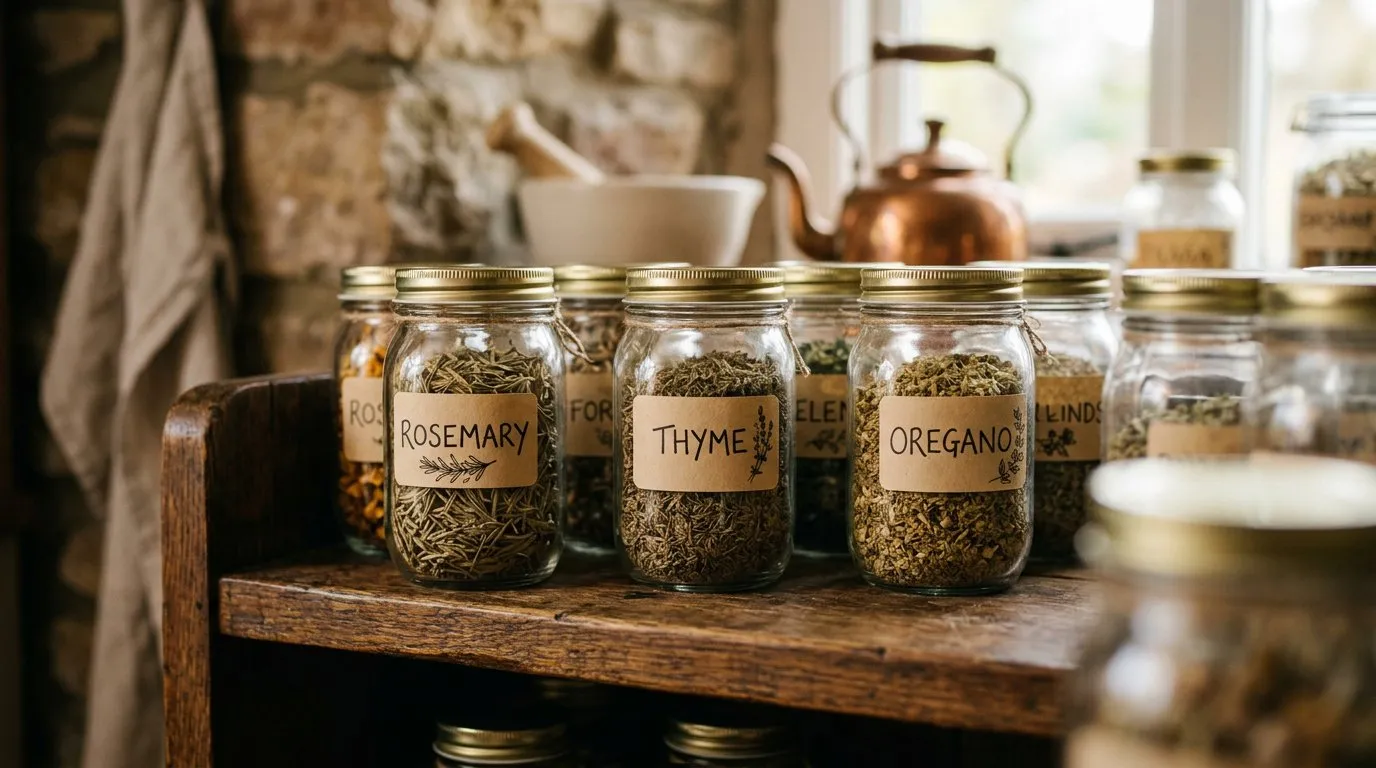
Labelled glass jars of dried rosemary, thyme, and oregano stored on a kitchen shelf — airtight lids keep flavour locked in.
Label every jar with the herb name and the month you dried it. This simple habit prevents the mystery jar problem that haunts every kitchen cupboard by February.
Tips from thirty years of herb drying
A few lessons I have learned the hard way over three decades of preserving herbs.
Dry herbs whole where possible. Crushed or chopped herbs lose essential oils through the cut surfaces during drying. Strip leaves from stems after drying, not before. Crumble just before use.
Never wash herbs before drying unless absolutely necessary. Water on the leaf surface encourages mould. If you must wash, pat completely dry with kitchen paper and leave on a rack for an hour before starting.
Grow more than you need. A single rosemary bush produces enough dried rosemary for a year. Plant extra parsley, thyme, and sage specifically for drying. Herbs grown in containers produce smaller yields, so account for this when planning.
Dry in small batches. Processing a large harvest all at once leads to uneven drying and wasted herbs. Work through the herb garden over several dry mornings in July and August.
Taste-test your results. Home-dried herbs should be noticeably more flavourful than shop-bought dried herbs. If yours are not, you are either harvesting too late, drying too hot, or storing poorly. Adjust your method and try again.
Now you’ve mastered drying and storing herbs, read our guide on how to create a herb garden to grow a surplus worth preserving in the first place.
Frequently asked questions
How long do dried herbs last?
Dried herbs last six to twelve months in airtight jars. Woody herbs like rosemary retain flavour longest at around twelve months. Delicate herbs like parsley fade in six months. Test by rubbing between your fingers. If the scent is weak, they need replacing.
Is it better to dry or freeze herbs?
Freezing preserves fresh flavour and colour better for soft herbs. Basil, parsley, chives, and coriander all freeze well in ice cube trays. Drying concentrates flavour and suits woody herbs like rosemary, thyme, and oregano. Use both methods to preserve your full harvest.
Can you dry herbs in a microwave?
Yes, microwave drying works for small batches. Place herbs between two sheets of kitchen paper. Microwave in 30-second bursts on medium power. Check between bursts. Leaves should crumble but not turn brown. Most herbs take two to four minutes total.
What is the best way to store dried herbs?
Airtight glass jars in a dark cupboard give the longest shelf life. Avoid clear jars on open shelves because light destroys flavour rapidly. Keep jars away from heat and steam. Label every jar with the herb name and drying date.
When should I harvest herbs for drying?
Harvest mid-morning after dew lifts but before midday sun. Essential oils peak during this window. Pick before flowering for the strongest flavour. Once herbs bloom, leaf flavour drops as the plant focuses on seed production.
Can I dry herbs in an air fryer?
Yes, set the air fryer to 50 degrees Celsius or its lowest setting. Spread herbs in a single layer in the basket. Check every 15 minutes. Most herbs dry in 30 to 60 minutes. The circulating hot air produces evenly dried results faster than a conventional oven.
How do I make herb-infused oil safely?
Always use dried herbs, never fresh, to prevent botulism risk. Fill a jar one-third full with dried herbs and top with olive oil. Seal and store in a dark place for two to four weeks, shaking daily. Strain and use within three months.
Lawrie has been gardening in the West Midlands for over 30 years. He grows his own veg using no-dig methods, keeps a wildlife-friendly garden, and writes practical advice based on real UK growing conditions.