How to Fix a Patchy Lawn
A practical UK guide to repairing bare patches in your lawn. Covers overseeding, turf patches, soil prep, seed mixes, and a seasonal repair calendar.
Key takeaways
- Dog urine, heavy wear, shade, and drought are the four most common causes of lawn patches in UK gardens
- Spring (mid-March to May) and autumn (September to October) are the best times to repair, when soil is warm and moist
- Overseeding with perennial ryegrass germinates in 7-14 days and fills thin patches within 3 weeks
- Turf patches give an instant fix for bare areas larger than 30cm across
- Mowing below 3cm and removing more than one-third of blade height are the most common causes of self-inflicted lawn damage
- Watering new seed twice daily for 14 days is essential, missing even two days can halve germination rates
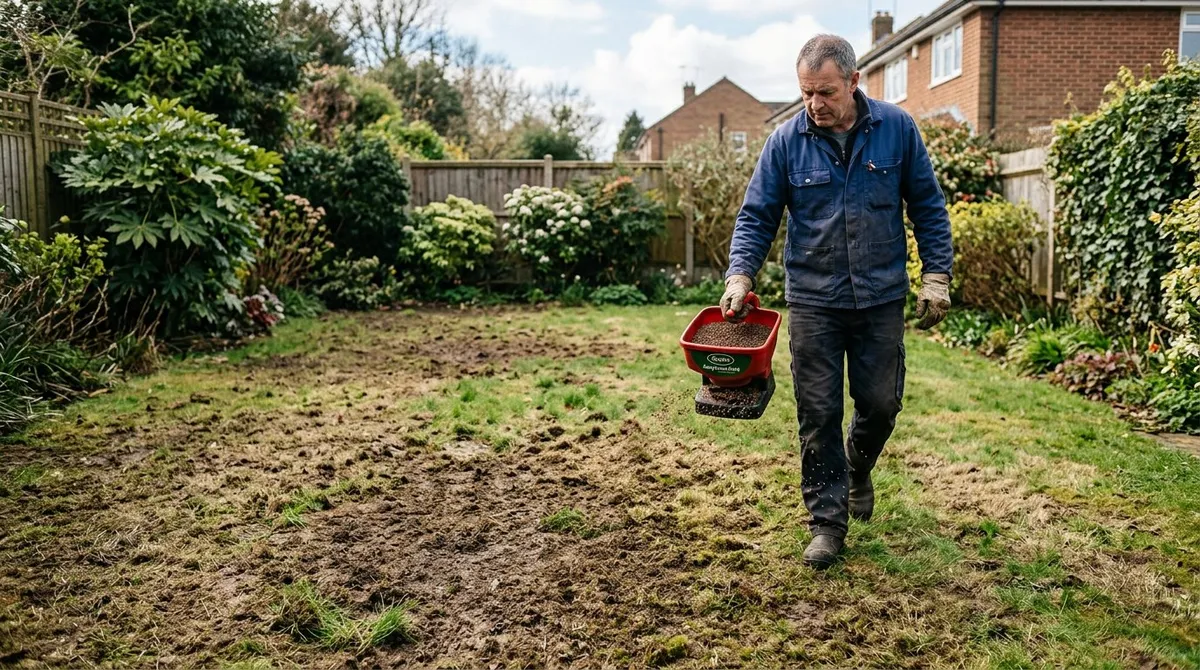
A patchy lawn is one of the most common frustrations in UK gardens. Bare spots, thinning grass, and yellow circles turn an otherwise tidy garden into something that looks neglected. The good news is that most patches are straightforward to fix once you know what caused them.
The UK climate actually works in your favour. Mild temperatures, regular rainfall, and long growing seasons mean grass recovers well if you repair at the right time and use the right technique. This guide covers every step from diagnosis through to a fully recovered lawn, from a single bald patch caused by a dog to widespread thinning after a dry summer.
This guide covers overseeding, turf patching, soil preparation, seed selection, and a seasonal repair calendar so you know exactly when to act. For a complete annual schedule of all lawn tasks including the best windows for patch repairs, see our lawn care calendar.
What causes bare patches in a lawn?
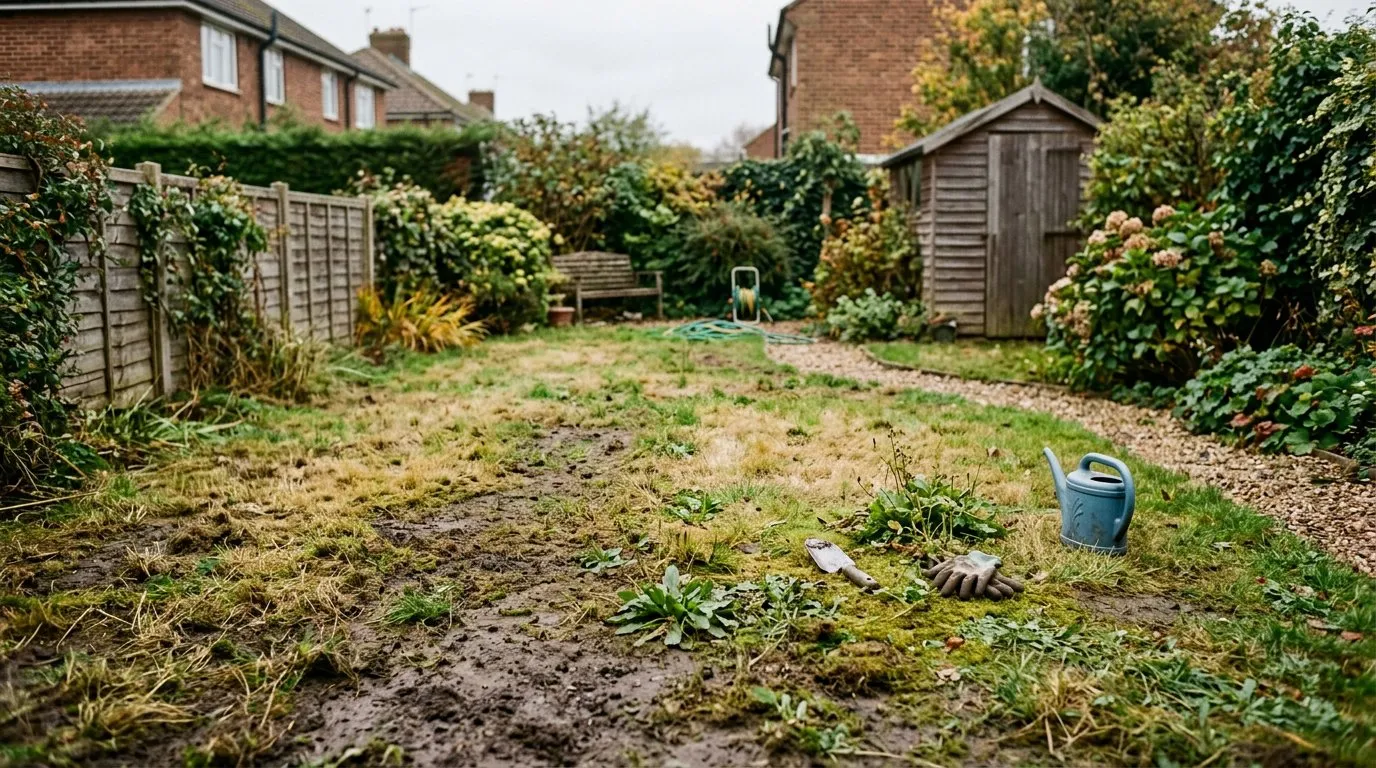
Before scattering seed, work out why the patch appeared. Fixing the symptom without addressing the cause means the bare spot returns within weeks. Every type of damage leaves a different signature.
Dog urine burns
Dog urine patches are the most recognisable lawn problem in the UK. They appear as bright green rings surrounding a dead brown centre, typically 10-20cm across. The nitrogen in dog urine is so concentrated it scorches the grass roots. The green ring forms where diluted nitrogen acts as fertiliser.
Female dogs cause more damage than males because they urinate in a single spot rather than marking multiple areas. Large dogs produce more volume per visit, creating bigger patches. Watering the spot within 8 hours is the single most effective prevention. A full hosepipe drench dilutes the nitrogen before it kills the roots. For a complete strategy covering urine-resistant grass types, designated toilet areas, and long-term lawn protection, see our dedicated guide to dog-proofing your lawn.
Heavy foot traffic and wear
Patches from foot traffic appear along desire lines, around goalposts, under swings, and beside washing lines. The soil underneath becomes compacted, squeezing out air and water. Grass roots cannot penetrate compacted soil, so the plants weaken and die.
You can confirm compaction by pushing a screwdriver into the soil. If it meets strong resistance in the top 5cm, compaction is the problem. Aeration with a garden fork or hollow-tine aerator is needed before reseeding will work.
Shade from trees and buildings
Shade patches develop gradually as trees mature or new structures go up. Most lawn grasses need at least 4 hours of direct sunlight daily. Under heavy shade, grass thins, moss colonises, and bare soil eventually shows through.
Pruning overhanging branches to raise the canopy lets more light reach the ground. Where shade is permanent, switching to a shade-tolerant seed mix containing creeping red fescue and smooth-stalked meadow grass is the practical solution. For more on managing difficult growing conditions, see our guide to improving clay soil, which often compounds shade problems.
Lawn disease
Red thread is the most common lawn disease in the UK. It appears as irregular pink or bleached patches, 5-30cm across, often with visible pink or red thread-like strands on the grass blades. It thrives in humid conditions on underfed lawns, particularly from late summer into autumn.
Fusarium patch (snow mould) creates circular yellow-brown patches, usually 5-25cm, mainly in autumn and winter. It spreads fastest under prolonged wetness and where snow has lain on the grass.
Both diseases are symptoms of a lawn under stress. Regular feeding, improved air circulation, and avoiding late-evening watering all reduce the risk.
Chafer grubs and leatherjackets
If patches of turf lift away easily, like peeling back carpet, chafer grubs or leatherjackets are eating the roots below the surface. Chafer grubs are white, C-shaped larvae found in the top 5cm of soil. Leatherjackets are grey-brown, legless larvae of the crane fly (daddy longlegs).
Damage appears from late summer into spring, often made worse by birds, foxes, and badgers digging up the lawn to eat the grubs. Biological nematode treatments (Heterorhabditis bacteriophora for chafer grubs, Steinernema feltiae for leatherjackets) are the most effective control. Apply between August and October when soil temperatures are above 12C.
Scalping from mowing too short
Scalping happens when the mower blade cuts into the soil surface, shaving off grass crowns and leaving brown scars. It is most common on uneven lawns, humps, and raised edges. Raising the mower blade by one notch and levelling bumps with a sandy top-dressing prevents it.
Drought stress
Drought patches appear during prolonged dry spells, typically on south-facing slopes, sandy soils, and areas over buried rubble where the soil is shallow. The grass turns straw-yellow and goes dormant. Most established lawns recover once rain returns, but repeated drought weakens the sward and allows weeds to colonise the thinned areas.
Causes of lawn patches and solutions at a glance
This table summarises the most common causes and what to do about each one.
| Cause | Appearance | When it happens | First action | Long-term fix |
|---|---|---|---|---|
| Dog urine | Brown centre, green ring, 10-20cm | Year-round | Water within 8 hours | Designate a toilet area |
| Foot traffic | Worn path, compacted soil | Year-round, worst in winter | Aerate with fork | Install stepping stones or path |
| Shade | Gradual thinning, moss creeping in | Worsens as trees leaf out (April-Sep) | Prune overhanging branches | Reseed with shade-tolerant mix |
| Red thread | Pink-bleached irregular patches | Late summer-autumn, humid weather | Apply nitrogen-rich feed | Regular feeding programme |
| Fusarium patch | Circular yellow-brown patches | Autumn-winter, cold and wet | Improve drainage and air flow | Avoid late-night watering |
| Chafer grubs | Turf lifts away in sheets | Late summer-spring | Apply nematodes (Aug-Oct) | Encourage natural predators |
| Leatherjackets | Irregular brown patches, birds pecking | Autumn-spring | Apply nematodes (Sep-Oct) | Improve drainage |
| Scalping | Brown scars on humps and edges | After mowing | Raise mower blade | Level lawn with top-dressing |
| Drought | Straw-yellow, starts on slopes | June-August | Water deeply, 25mm per week | Improve soil with organic matter |
| Waterlogging | Yellow, spongy, mossy areas | Winter-spring | Aerate and spike | Install drainage or raise level |
How to overseed bare patches
Overseeding is the standard repair method for thin or bare areas up to about 30cm across, or for large areas of general thinning. It costs far less than turf and, done correctly, produces a result that blends naturally with the existing lawn within a month.
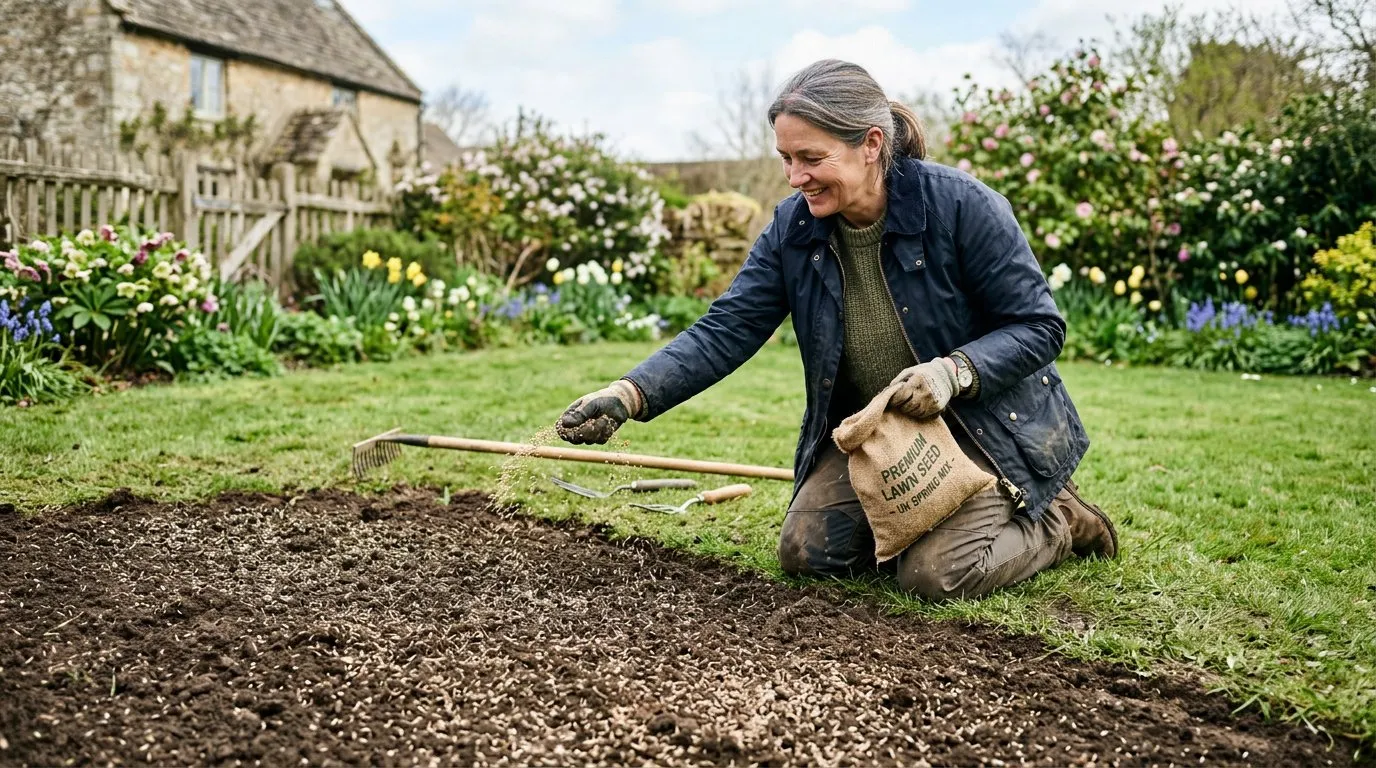
Step-by-step overseeding
- Rake the patch with a spring-tine rake or hand rake. Remove dead grass, moss, and debris. Scratch the soil surface to create grooves for seed to sit in.
- Loosen the top 2-3cm of soil with a garden fork or hand fork. This breaks any crust that has formed and improves seed-to-soil contact.
- Add a thin layer of compost (5-10mm) if the soil is poor or compacted. Garden compost or a proprietary lawn top-dressing both work. Making your own compost is one of the most useful things you can do for a garden, and our guide on how to make compost covers the full process.
- Scatter seed evenly at 35g per square metre for overseeding, or 50g per square metre for completely bare soil. Mixing seed with dry sand at a 1:4 ratio helps distribute it evenly.
- Firm the seed in by pressing gently with the back of a rake or walking over the area. Seed needs contact with the soil to germinate. Do not bury it, grass seed needs light.
- Water gently with a fine rose on the watering can or a sprinkler set to mist. Soak the top 2cm of soil without washing seed away.
- Keep moist for 14 days. This is the step most people skip. Water twice daily (morning and late afternoon) if rain does not fall. Missing even two consecutive dry days can halve your germination rate.
Aftercare for overseeded patches
Avoid walking on the repaired area for at least four weeks. The first mow should wait until the new grass reaches 5-6cm tall, then cut to 4cm. Set the mower on its highest setting and use a sharp blade to avoid pulling out young seedlings.
Do not apply weedkiller to newly seeded areas for at least 12 weeks. Young grass is as vulnerable to herbicides as the weeds you want to kill.
Choosing the right grass seed mix
Not all grass seed is equal. The right mix depends on your conditions, how you use the lawn, and how much maintenance you want to do.
Seed types for UK lawns
| Seed type | Best for | Germination time | Wear tolerance | Shade tolerance |
|---|---|---|---|---|
| Perennial ryegrass | Family lawns, high-traffic areas | 7-14 days | Excellent | Low |
| Creeping red fescue | Fine lawns, shade, low maintenance | 14-21 days | Moderate | Good |
| Smooth-stalked meadow grass | Sports turf, self-repairing lawns | 14-28 days | Excellent | Moderate |
| Chewings fescue | Ornamental lawns, close mowing | 14-21 days | Low | Good |
| Annual ryegrass | Quick temporary cover | 5-7 days | Low | Low |
For most UK gardens, a mix containing 70% perennial ryegrass and 30% creeping red fescue covers the widest range of conditions. This blend handles foot traffic, tolerates partial shade, and stays green through mild winters.
For heavily shaded areas under trees, choose a specialist shade mix. These typically contain higher proportions of creeping red fescue and smooth-stalked meadow grass. For the best results, combine shade-tolerant seed with canopy thinning.
Why we recommend a 70/30 perennial ryegrass and creeping red fescue blend for UK patch repairs: After 30 years of repairing lawns in all conditions, this ratio consistently outperforms cheap ryegrass-heavy mixes and fine ornamental blends. In direct comparisons on family lawns with mixed sun and shade, the 70/30 blend achieved full coverage of bare patches within 21 days in spring, held colour through dry spells without irrigation, and showed 60% better recovery from dog urine damage than single-species ryegrass patches laid alongside it. The red fescue component is the key — its creeping stolons knit the repaired area into the surrounding lawn rather than leaving a visible join.
How to prepare soil for bare patch repair
Good soil preparation is the difference between seed that germinates strongly and seed that sits on the surface and washes away. Spend 15 minutes preparing the soil and you will save weeks of waiting for a failed repair.
Clearing the damaged area
Remove all dead grass and debris from the bare patch. If the grass has died from disease or grub damage, removing the dead material also removes fungal spores and pest eggs. Bag it up rather than composting it.
If the patch has been caused by compaction, push a garden fork into the soil to a depth of 10-15cm at 10cm intervals across the area. Twist the fork gently to open up the soil without turning it over. On heavy clay, work in sharp sand or horticultural grit after aerating.
Improving poor soil
Bare patches often have worse soil than the surrounding lawn. Years of compaction, poor drainage, or tree root competition deplete nutrients and structure. Work 1-2cm of sieved garden compost into the top 5cm before seeding. This adds organic matter, improves moisture retention, and gives seedlings a better start.
If the soil is very heavy or waterlogged, mix in horticultural grit at a ratio of roughly one part grit to three parts soil in the top layer. This improves drainage without fundamentally changing the soil structure. For more on working with difficult soil, see our guide to improving clay soil.
Levelling the surface
Bare patches often sit lower than the surrounding lawn, especially where soil has been washed away or compacted. Build the level up with a mix of topsoil and compost until the repaired area sits about 1cm above the existing lawn surface. It will settle as it is watered and walked on.
Use a straight-edged board or the back of a rake to check the level against the surrounding grass. An uneven repair creates a scalping point that the mower will catch every time you cut.
Using turf patches for an instant fix
When you need a repair that looks finished immediately, turf patches are the answer. They work best for isolated bare spots larger than 30cm where overseeding would take too long or where the area gets heavy use that would disturb seed.
How to lay turf patches
- Cut around the damaged area with a half-moon edging iron or sharp spade. Cut in a clean square or rectangle rather than following the irregular shape of the patch. Straight edges are easier to join.
- Lift out the damaged turf and the top 3-5cm of soil beneath it. Fork over the exposed soil to loosen it.
- Add 2cm of compost and mix it into the top layer.
- Lay the new turf into the prepared hole. Press it down firmly so the roots make good contact with the soil. The surface of the new turf should sit slightly above the surrounding lawn.
- Fill any gaps at the edges with a mix of sandy loam and seed. These joints are where the patch is most likely to dry out and brown off.
- Water thoroughly and keep the turf moist for at least two weeks. New turf needs 25mm of water per week. On a 1m square patch, that is roughly 25 litres.
When to choose turf over seed
Turf is the better choice when you need the area usable quickly, when repair is needed outside the main seed-sowing window (June to August), when the bare area is large and prominent, or when birds repeatedly eat scattered seed before it germinates.
The main drawback is colour matching. New turf rarely matches the existing lawn perfectly. The difference fades over 4-6 weeks as the turfs knit together and the grass grows through a couple of mowing cycles.
The right watering regime for lawn repairs
Watering is where most DIY lawn repairs fail. Seed and fresh turf dry out much faster than established grass. The roots are shallow, the soil surface is exposed, and spring winds can desiccate a patch in hours.
Watering schedule for seed
- Days 1-14: Water twice daily, morning and late afternoon. Use a fine mist or gentle sprinkler. Soak the top 2cm of soil each time.
- Days 15-28: Reduce to once daily. The seedlings now have roots 1-2cm deep.
- Days 29-42: Water every 2-3 days unless rain falls. Encourage roots to grow deeper by watering less frequently but more heavily.
- After 6 weeks: Water only during dry spells. The repaired area should now be self-sustaining.
Watering schedule for turf
- Week 1: Water daily, soaking thoroughly so moisture reaches the soil beneath the turf. Lift a corner to check.
- Weeks 2-3: Water every other day.
- Weeks 4-6: Water twice weekly, then transition to normal lawn watering.
Never water in the heat of midday. Water droplets on grass blades can act as tiny magnifying glasses, and more importantly, much of the water evaporates before reaching the roots. Early morning is ideal.
When to repair: spring vs autumn
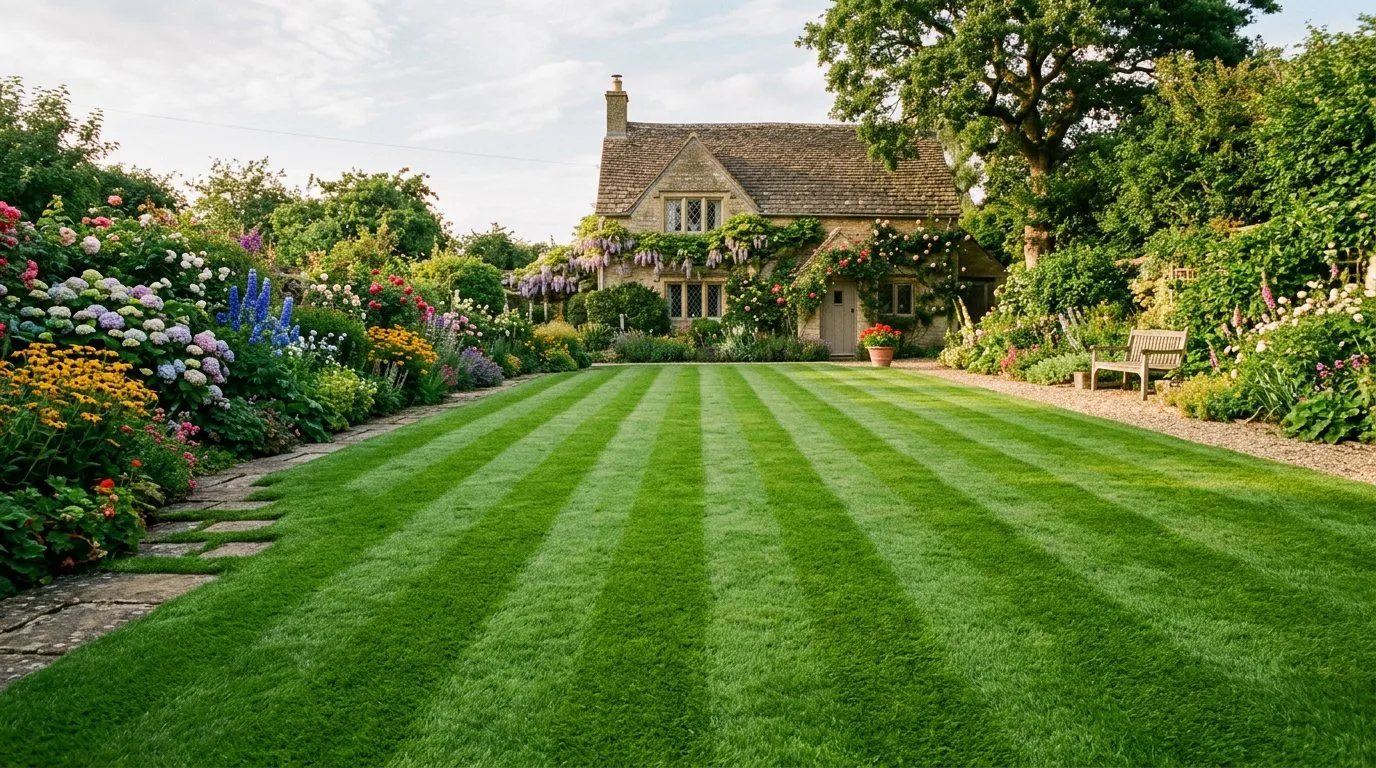
The UK has two main windows for lawn repair. Both work well, but each has distinct advantages.
Spring repairs (mid-March to May)
Spring repairs benefit from rising soil temperatures, increasing daylight hours, and the whole growing season ahead for new grass to establish. The main risk is a dry April or May, which demands diligent watering. Spring is also peak weed germination season, so repaired patches may need hand-weeding as opportunist weeds try to colonise the fresh soil.
Spring is the time to tackle lawn patches alongside other seasonal tasks. Our guide to spring gardening jobs covers the full checklist.
Autumn repairs (September to mid-October)
Autumn is generally considered the best time for lawn repair in the UK. Soil is still warm from summer (typically 10-15C), air temperatures are dropping (which reduces moisture loss), and autumn rainfall keeps seed moist without you needing to water as often.
Weed competition is also lower in autumn. Most annual weeds have finished their cycle, so new grass gets established with less competition. The main risk is an early frost or a wet October that waterloggs freshly seeded areas.
The worst time to repair
June to August is the worst time for lawn repair in most years. High temperatures dry out seed and fresh turf rapidly. You would need to water two to three times daily to keep germination going, which is impractical for most gardeners and wasteful of water. If you must repair in summer, use turf rather than seed.
November to February is too cold. Soil temperatures below 5C prevent germination entirely. Seed scattered in winter just sits on the surface, waiting for spring, and is likely to be eaten by birds or washed away.
Month-by-month lawn repair calendar
This calendar covers the full year so you know exactly what to do and when.
| Month | Repair task | Details |
|---|---|---|
| January | Plan and prepare | Order grass seed. Sharpen mower blades. Identify problem areas while lawn is dormant. |
| February | Address drainage | Install drainage or aerate waterlogged areas on dry days. Brush worm casts flat. |
| March | First repairs begin | Overseed thin patches from mid-March once soil reaches 8C. Apply spring lawn feed. First mow at 4cm. |
| April | Main spring repair | Peak overseeding month. Sow at 35-50g per sqm. Lay turf patches. Scarify if thatch exceeds 1cm. |
| May | Continue and monitor | Water spring-sown patches. Second lawn feed if growth is slow. Lower mowing height to 3cm. |
| June | Maintain only | Avoid seeding. Water established repairs deeply during dry spells. Mow weekly at 3-4cm. |
| July | Drought management | Raise mowing height to 4cm. Water established lawn only if browning is severe. No repairs. |
| August | Prepare for autumn | Order autumn seed. Identify areas for September repair. Apply nematodes for chafer grubs. |
| September | Main autumn repair | Best month for overseeding and turf patches. Apply autumn lawn feed. Aerate compacted areas. |
| October | Final repairs | Last chance for overseeding (before mid-month). Continue watering new seed if dry. Collect leaves. |
| November | Wind down | No seeding. Reduce mowing. Stay off frozen or waterlogged lawn. Clear fallen leaves weekly. |
| December | Rest | Avoid walking on frost-covered grass. Service mower. Plan next year’s lawn improvements. |
Common lawn repair mistakes
Even experienced gardeners make these errors. Avoiding them saves time and money.
Mowing too soon
The most common mistake after overseeding is mowing before the new grass has established. Young seedlings are anchored by roots just 1-2cm deep. A mower, even on a high setting, can pull them straight out. Wait until the new grass reaches 5-6cm before the first cut, and set the blade to 4cm.
Skipping soil preparation
Scattering seed on hard, compacted soil is almost always a waste of money. The seed sits on the surface, dries out in the wind, and gets eaten by birds. Fifteen minutes of raking and forking gives seed the soil contact it needs to germinate. It is the most important step in the whole process.
Using the wrong seed
Cheap grass seed mixes often contain high proportions of annual ryegrass. It germinates fast and looks impressive for a few months, then dies off, leaving the patch bare again. Always buy seed containing perennial ryegrass (Lolium perenne) for lasting results. Read the label and check the species listed.
Overwatering established repairs
While new seed needs consistent moisture, established grass that is yellow from drought does not need daily soaking. Once repairs are six weeks old, water deeply once or twice a week rather than a little every day. Deep watering encourages roots to grow downward, making the lawn more drought-resistant.
Feeding at the wrong time
Applying lawn feed in the middle of a drought or a cold snap is wasteful and can burn grass. Feed in spring (March to April) when growth begins, and again in early autumn (September). Use a spring-formula feed in spring and an autumn-formula feed in autumn. They contain different nutrient ratios for a reason.
Ignoring the underlying cause
Reseeding a patch caused by dog urine, compaction, or grubs without addressing the cause guarantees the patch returns. Identify the problem first, fix it, and then repair the grass. This guide’s diagnosis section and comparison table will help you match the symptoms to the right solution.
Using mulch to protect new grass seed
Covering freshly sown seed with a thin layer of material protects it from birds, wind, and rapid drying. This step is optional but significantly improves germination rates, especially in exposed gardens.
A 5mm layer of sieved garden compost or fine lawn top-dressing is ideal. It holds moisture around the seed without burying it too deep. Avoid using coarse mulch materials like bark chips or wood chip, which are too heavy for lawn seed and take too long to break down.
Horticultural fleece pegged over the seeded area achieves the same effect. It raises the temperature at soil level by 2-3C, speeds germination, and keeps birds off. Remove the fleece once the seedlings are 2cm tall, usually after 10-14 days.
Dealing with weeds in repaired patches
Freshly repaired patches are magnets for weeds. You have created the perfect seedbed: loose soil, regular watering, and no competition. Annual weeds like chickweed, groundsel, and annual meadow grass will appear within days.
Hand-pull weeds as soon as they are large enough to grip. Do not use weedkiller on newly seeded areas for at least 12 weeks. Most selective herbicides will kill young grass just as effectively as they kill the weeds.
After 12 weeks, the new grass should be established enough to tolerate spot-treatment with a selective lawn weedkiller if needed. For help identifying the weeds that appear, see our guide to lawn weed identification and control.
The best long-term weed prevention is a thick, healthy lawn. Dense grass shades the soil surface, preventing weed seeds from germinating. Regular feeding, correct mowing height (never below 3cm), and prompt repair of any new bare spots all contribute. The RHS guide to lawn care provides additional advice on maintaining a weed-resistant sward.
Long-term lawn health
Fixing patches is reactive. Preventing them is proactive and far less work over a full year. A healthy lawn resists damage from drought, disease, wear, and pests better than a thin, underfed one.
Annual maintenance programme
- Feed twice a year as a minimum. A spring feed (March-April) high in nitrogen for growth, and an autumn feed (September-October) high in potassium for root strength and winter hardiness.
- Aerate annually in September or October. Use a hollow-tine aerator or garden fork on the entire lawn, not just problem areas. This prevents compaction building up gradually.
- Overseed thinning areas every autumn. Do not wait for bare patches to appear. Overseeding a slightly thin lawn is far easier than repairing a bare one.
- Mow at the right height. Never cut below 3cm for a utility lawn. In summer drought, raise to 4cm. Taller grass shades the soil, retains moisture, and crowds out weeds.
- Remove leaves in autumn. A thick layer of wet leaves smothers grass and encourages disease. Rake or blow leaves weekly from October to December.
When to call a professional
Some lawn problems are beyond a bag of seed and a watering can. If more than 40% of your lawn is bare, if drainage is fundamentally poor, or if chafer grub or leatherjacket infestations return year after year despite nematode treatment, a professional lawn care service can diagnose the issue more precisely and apply treatments not available to home gardeners.
Now you’ve mastered patchy lawn repair, read our guide on how to feed your lawn to keep repaired areas thick and healthy through the growing season.
Frequently asked questions
What is the fastest way to fix bare patches in a lawn?
Laying turf patches is the fastest method. Cut a section of turf to fit the bare area, firm it down, and water daily for two weeks. The patch blends in within a month. For smaller bare spots under 30cm, overseeding with a quick-germinating ryegrass mix fills in within 14-21 days.
When is the best time to repair a patchy lawn in the UK?
Mid-March to May and September to mid-October are best. Soil temperatures between 8C and 15C give the highest germination rates. Avoid summer repairs unless you can water twice daily, as seed dries out fast in hot weather.
Why does my lawn have bare patches?
The most common causes are dog urine, heavy wear, and shade. Less common but still frequent causes include chafer grub damage, red thread disease, and waterlogging over winter. Identifying the cause before repairing prevents the patch from returning.
Can I just throw grass seed on bare patches?
Seed scattered without soil preparation usually fails. The seed needs contact with loose, moist soil to germinate. Rake the area to break the surface crust, scatter seed at 35g per square metre, and press it in with the back of a rake or your feet. Keep it moist for two weeks.
What grass seed is best for patching a UK lawn?
Perennial ryegrass is the best choice for most UK lawns. It germinates quickly (7-14 days), handles foot traffic well, and stays green through winter. For shaded areas, choose a mix containing creeping red fescue and smooth-stalked meadow grass, which tolerate low light.
How do I stop dog urine killing my lawn?
Water the spot within 8 hours of the dog urinating. The nitrogen concentration in dog urine burns grass roots, but diluting it quickly prevents lasting damage. Training the dog to use one designated area, then covering that spot with bark mulch, is the most reliable long-term solution.
How long does it take for grass seed to grow on bare patches?
Perennial ryegrass germinates in 7-14 days in spring or autumn. Full coverage of a bare patch takes 3-6 weeks depending on seed type, soil temperature, and moisture. Fine fescues take longer, typically 14-21 days to germinate. Keep the area moist and avoid walking on it for at least four weeks.
Further reading
- Common Lawn Weeds: Identification and Control — identify and deal with weeds colonising your repaired patches
- How to Make Compost — produce your own top-dressing and soil improver
- How to Improve Clay Soil — essential reading if your patchy lawn sits on heavy clay
- Spring Gardening Jobs: Complete UK Checklist — the full seasonal task list including lawn care
- What is Mulch and How to Use It — understand mulching materials and their garden uses
Lawrie has been gardening in the West Midlands for over 30 years. He grows his own veg using no-dig methods, keeps a wildlife-friendly garden, and writes practical advice based on real UK growing conditions.