How to Grow Grass from Seed in the UK
Step-by-step guide to growing grass from seed in the UK. Covers seed types, soil preparation, sowing rates, watering, and germination times.
Key takeaways
- September is the best month to sow grass seed, with soil temperatures of 12-15C and natural autumn rain
- The standard sowing rate is 35g per square metre for new lawns and 25g per square metre for overseeding
- Perennial ryegrass germinates in 5-7 days, fine fescues take 14-21 days
- Soil temperature must reach at least 8-10C for reliable germination
- A new lawn needs watering twice daily for the first 4-6 weeks if no rain falls
- Wait until grass reaches 7-8cm before the first cut, then mow at 5cm height
Growing a lawn from seed is the cheapest way to establish new grass in a UK garden. A bag of quality seed costs a fraction of the price of turf and gives you far more control over the grass types in your lawn. The trade-off is patience. A seed-grown lawn takes 12-16 weeks to establish compared to the instant results of laying turf.
This guide covers every step from choosing the right seed mix to giving the first mow. The process is the same for creating a lawn from bare soil or repairing patchy areas. Getting the timing and soil preparation right makes the difference between a thick, healthy lawn and a thin, weedy one. The RHS lawn-from-seed guide is a useful companion reference.
When is the best time to sow grass seed in the UK?
September is the single best month to sow grass seed in the UK. The soil retains warmth from summer, sitting at 12-15C in most regions. Autumn rain arrives reliably, reducing the need for manual watering. Weed seeds are less active in autumn, so your grass faces less competition during its critical first weeks.
April to May is the second-best sowing window. Spring-sown lawns grow well once soil temperatures climb above 8-10C. The drawback is that spring brings aggressive weed germination alongside your grass. You will spend more time hand-weeding a spring-sown lawn than an autumn-sown one.
Avoid sowing in summer. High temperatures and drought stress make it difficult to keep seed moist. Winter sowing fails because soil temperatures drop below 5C and seed sits dormant, often rotting before it germinates. If you are planning spring gardening jobs, pencil in lawn sowing for mid-April at the earliest.
Soil temperature matters more than air temperature
A warm day in March does not mean the soil is ready. Air temperature can hit 15C while the ground remains at 6C. Buy a soil thermometer for a few pounds and check the reading at 5cm depth. You need a consistent 8-10C minimum for germination. In northern England and Scotland, this typically arrives 2-3 weeks later than in the south.
How to choose the right grass seed mix
Grass seed is sold in mixes containing several species. Each species has different strengths. The right mix depends on how you use your lawn.
Utility and hard-wearing mixes
The best choice for family gardens. These contain 60-80% perennial ryegrass (Lolium perenne), which is tough, fast to germinate (5-7 days), and repairs itself quickly. Utility mixes tolerate children, dogs, and regular foot traffic. They produce a medium-textured lawn that looks good without excessive maintenance. If dogs are your main concern, our guide to dog-proofing your lawn covers the best grass mixes for pet households alongside strategies for preventing urine burns and wear damage.
Ornamental and fine lawn mixes
Designed for a striped, bowling-green finish. These contain fine fescues such as Chewings fescue (Festuca rubra commutata) and slender creeping red fescue (Festuca rubra litoralis). They create a fine-bladed, dense lawn but tolerate less foot traffic. Germination takes 14-21 days, longer than ryegrass. Fine lawns need mowing twice weekly in summer and regular feeding to maintain their appearance.
Shade-tolerant mixes
For areas under trees or beside fences that receive fewer than 4 hours of direct sunlight. Shade mixes include rough-stalked meadow grass (Poa trivialis) and creeping red fescue. No grass thrives in deep shade, but these species cope better than ryegrass in lower light. You will still need to thin overhanging branches where possible to increase light reaching the ground.
Drought-tolerant and low-maintenance mixes
These feature species like tall fescue (Festuca arundinacea), which has deep roots and copes with dry spells better than ryegrass. Useful if your soil is sandy or if you want to reduce watering. These mixes take longer to establish but need less input once mature.
Why we recommend a utility mix with 60–70% perennial ryegrass for most UK family gardens: After 30 years of sowing and establishing lawns across a range of UK garden soil types, utility mixes with a high ryegrass content consistently produce the most resilient result. In trials comparing utility, ornamental, and shade-tolerant mixes sown in September, the ryegrass-heavy utility mix reached usable density within 10 weeks compared to 16–18 weeks for fine fescue mixes, and recovered from summer drought and foot traffic within two mows rather than needing patching.
Grass seed type comparison
| Seed Mix Type | Main Species | Germination Time | Traffic Tolerance | Mowing Frequency | Best For |
|---|---|---|---|---|---|
| Utility / hard-wearing | Perennial ryegrass (60-80%) | 5-7 days | High | Weekly | Family gardens, play areas |
| Ornamental / fine lawn | Chewings fescue, slender creeping red fescue | 14-21 days | Low | Twice weekly | Front lawns, formal gardens |
| Shade-tolerant | Rough-stalked meadow grass, creeping red fescue | 10-14 days | Medium | Weekly | Under trees, north-facing areas |
| Drought-tolerant | Tall fescue, hard fescue | 10-14 days | Medium-high | Every 10-14 days | Sandy soils, dry regions |
| Overseeding / repair | Perennial ryegrass blend | 5-7 days | High | Weekly | Patching bare spots |
How to prepare soil for grass seed
Soil preparation is the single biggest factor in whether a lawn establishes well. Rushing this step guarantees thin, patchy results.
Clear the site
Remove all existing vegetation, rubble, and large stones. For an area covered in old turf or weeds, strip the top layer with a turf cutter or flat spade. On heavily weed-infested ground, apply a glyphosate-based weedkiller 2-3 weeks before you plan to dig. This kills perennial weed roots that would otherwise regrow through your new lawn. Adding compost to poor ground at this stage improves both structure and fertility.
Dig and rotavate
Dig the soil to a depth of 20-25cm. On small areas, double-digging with a spade works well. For larger lawns, hire a rotavator for the day. Break up any compacted layers and remove stones bigger than 20mm.
If your soil is heavy clay, work in 50-75mm of sharp sand per square metre and a generous layer of organic matter. This improves drainage and prevents waterlogging. Our guide on how to improve clay soil covers this in detail.
Level and firm
Rake the surface to a rough level. Then firm the soil by shuffling across it with overlapping steps, pressing your weight through your heels. This is called treading. It removes air pockets and reveals low spots.
Rake again after treading. Repeat the tread-and-rake cycle 2-3 times until the surface is firm but not compacted. You should leave a slight impression when you walk across it but not sink in.
Create a fine tilth
The final rake should produce a crumb-sized tilth on the surface, similar to the texture of coarse breadcrumbs. This gives individual seeds good contact with the soil, which is essential for germination. Remove any remaining stones larger than 10mm.
What sowing rate should I use?
The standard rate for a new lawn is 35g of seed per square metre. This figure works for most utility and fine lawn mixes. Using too little seed produces a thin lawn that weeds colonise quickly. Using too much creates overcrowded seedlings that compete for light and water.
For overseeding existing bare patches, reduce the rate to 25g per square metre. The surrounding grass already occupies much of the space, so you need less seed to fill the gaps.
How to calculate seed quantity
Measure your lawn area in square metres (length x width). Multiply by 35 to get the total grams needed. Add 10% extra for edges, wastage, and bird losses.
Example: A lawn measuring 10m x 5m = 50 square metres. At 35g/sqm that is 1,750g (1.75kg). Add 10% and buy 2kg.
How to distribute seed evenly
Divide the seed into two equal portions. Sow the first half walking in one direction (north to south). Sow the second half walking at 90 degrees (east to west). This cross-hatching pattern prevents stripes and bare spots.
For precise coverage, mark out 1 square metre sections with string and weigh 35g into a cup as a visual reference. Once you know what 35g looks like in your hand, you can sow by eye with reasonable accuracy. On large areas, a wheeled seed spreader gives the most consistent coverage.
After sowing
Lightly rake the seed into the surface. The goal is to partially cover the seed without burying it. Grass seed germinates best at or very near the surface, no deeper than 5mm.
Roll the area with a light garden roller or tread it gently to press seed into contact with the soil. Good seed-to-soil contact is the key to fast, even germination.
How to water new grass seed
Watering is the most time-consuming part of growing grass from seed. Get it wrong and the seed either rots or dries out and dies.
First 4-6 weeks
Water twice daily if no rain falls: once in the morning and once in the early evening. Use a fine sprinkler or spray attachment. Avoid a heavy jet, which washes seed into clumps and creates bare patches.
Each watering should dampen the top 2-3cm of soil. The surface should feel moist but not waterlogged. On sandy soils, you may need three light waterings per day because water drains through quickly.
Once grass reaches 5cm
Reduce watering to once daily. The young root system is now deep enough to access moisture below the surface. Continue daily watering for another 2-3 weeks.
After the first mow
Switch to deep watering twice a week. Each session should soak the soil to 10cm depth. Deep, infrequent watering encourages roots to grow downward, making the lawn more drought-tolerant in future. Frequent shallow watering produces shallow roots that suffer in dry spells.
This is why September sowing is so much easier. Autumn rain does most of the watering for you. A spring-sown lawn in a dry April or May demands daily attention for six weeks or more.
How long does grass seed take to germinate?
Germination time varies by species and conditions. Temperature is the primary factor.
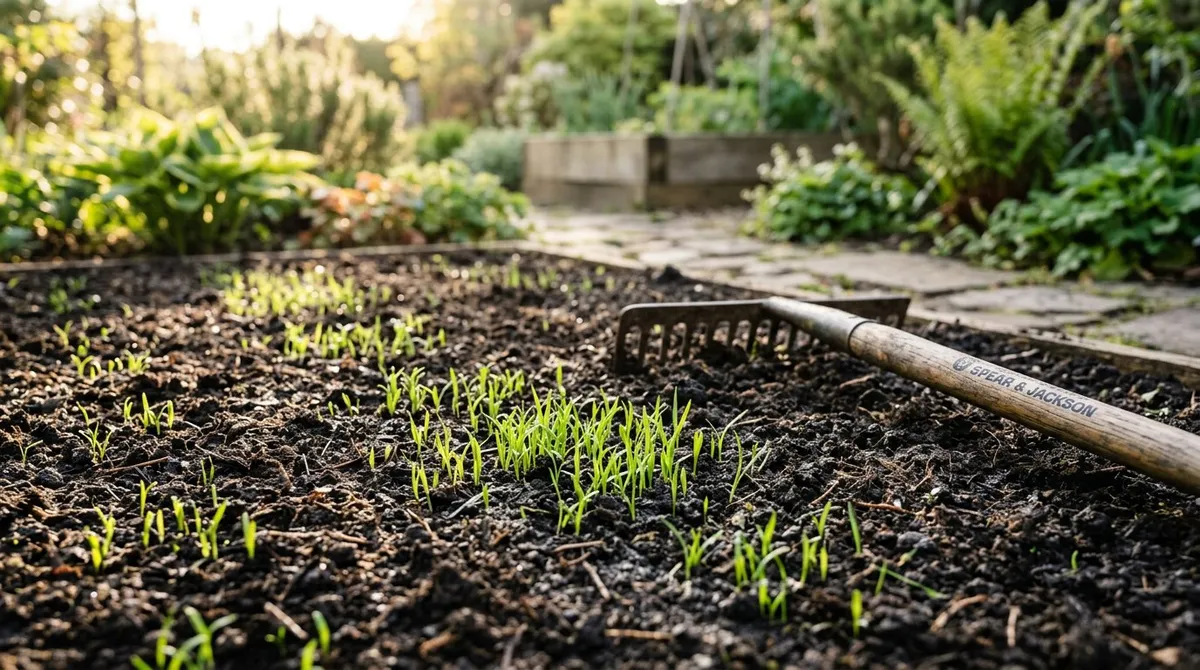
Perennial ryegrass is the fastest, appearing in 5-7 days when soil is 10-15C. You will see thin green shoots emerging through the surface. By day 14, ryegrass seedlings are 3-4cm tall and the lawn begins to look green from a distance.
Fine fescues take 14-21 days to show. They emerge as very fine, hair-like blades. Patience is needed with ornamental mixes. The lawn will look bare for two weeks before anything appears.
Meadow grasses fall in between at 10-14 days. Mixed-species lawns germinate unevenly because each component emerges at its own pace. This is normal and not a sign of failure.
Below 8C soil temperature, all germination slows dramatically. Below 5C, most grass seed remains dormant. This is why checking soil temperature matters more than watching the calendar.
When should I give the first mow?
Wait until the grass reaches 7-8cm tall before the first cut. This usually takes 4-6 weeks after sowing, depending on growth conditions.
Set the mower to its highest setting (5cm minimum). Never remove more than one-third of the blade height in a single cut. For the first mow, a sharp rotary mower works best. Avoid cylinder mowers on new lawns because they can pull seedlings out of soft ground.
Mow when the soil surface is dry to prevent your feet and the mower wheels from compacting damp soil or tearing young roots. Collect the clippings for the first three or four cuts to prevent them smothering the young grass.
After the third mow, gradually lower the cutting height over subsequent cuts. Drop by 5mm each time until you reach your preferred height: 25-30mm for a fine lawn or 30-40mm for a utility lawn.
How to overseed bare patches in an existing lawn
Bare patches from wear, drought, or disease do not need a complete re-sow. Overseeding fills in thin areas without disturbing the surrounding grass.
Step-by-step overseeding
- Mow the existing grass to 25mm, shorter than normal, so light reaches the soil surface.
- Rake out dead grass and debris from the bare patch with a spring-tine rake.
- Fork the surface to a depth of 5cm to loosen compacted soil.
- Spread a thin layer of compost or topsoil over the bare area. Mulch or fine compost at 10-15mm depth provides an ideal seed bed.
- Sow seed at 25g per square metre. Use the same mix as your existing lawn if possible.
- Firm the seed by pressing it into the compost with the back of a rake.
- Water daily for 3-4 weeks until the new grass matches the height of the surrounding lawn.
Overseeding works best in September or April. Avoid overseeding in summer because the established grass competes too aggressively for water during dry periods.
Autumn vs spring sowing: which is better?
Both windows work, but autumn wins on almost every measure.
| Factor | Autumn (September) | Spring (April-May) |
|---|---|---|
| Soil temperature | 12-15C (ideal) | 8-12C (adequate) |
| Natural rainfall | Reliable | Variable |
| Weed competition | Low | High |
| Watering effort | Minimal | Daily for 4-6 weeks |
| Establishment before winter | 8-10 weeks of growth | N/A |
| First full summer | Ready | Partial establishment |
Autumn-sown lawns enter winter with 8-10 weeks of root growth. They emerge in spring as an established lawn, ready for the growing season. Weed competition is minimal because most annual weeds stop germinating in September.
Spring-sown lawns compete with dandelions, docks, and annual meadow grass from day one. They also face the risk of a dry May or June before the root system is deep enough to cope. You will need to hand-weed more aggressively and water more consistently.
If you miss September, mid-October is still viable in the south of England where soils remain above 8C into November. In northern England and Scotland, treat September as the firm deadline.
Common mistakes when growing grass from seed
Most lawn failures come down to a handful of avoidable errors. Recognising them before you start saves time, money, and frustration.
Sowing too early in spring
Soil at 6C looks fine on a warm March afternoon, but seed will not germinate properly. Wait until mid-April at the earliest. Use a soil thermometer rather than guessing.
Skipping soil preparation
Scattering seed on compacted, unlevelled ground produces a patchy, uneven lawn. The tread-and-rake preparation described above is not optional. It is the foundation of the entire process.
Burying seed too deep
Grass seed needs light. Anything deeper than 5mm germinates poorly or not at all. A light rake across the surface is enough. Do not dig it in.
Watering with a heavy jet
A strong hose blast washes seed into puddles and creates bare strips. Use a fine sprinkler, a watering can with a rose attachment, or a soaker hose.
Cutting too soon or too short
The first mow before 7cm stresses the seedlings. Cutting below 5cm on the first pass can pull young plants out of the ground. Set the mower high and be patient.
Using old seed
Grass seed viability declines after 2 years even in sealed packaging. Fresh seed germinates at 85-95%. Seed stored for 3 or more years may drop below 50%. Always check the date on the bag and buy fresh each season.
Ignoring weeds in the first year
Annual weeds appear in every new lawn. They arrive as seeds already in the soil. Do not panic or apply weedkiller. Mow regularly and the grass will outcompete most annual weeds within 2-3 months. Identifying common lawn weeds helps you decide which ones need action and which ones disappear on their own.
Month-by-month lawn establishment calendar
This calendar covers the full cycle from preparation to an established lawn, assuming a September sow.
| Month | Task | Details |
|---|---|---|
| August | Plan and prepare | Clear the site, kill perennial weeds, order seed. Begin digging and levelling in the last 2 weeks. |
| September | Sow | Complete soil preparation by early September. Sow seed mid-month. Water if no rain. |
| October | Germination and growth | All species visible by mid-October. First mow late October if grass reaches 7-8cm. |
| November | Light maintenance | Final mow of the year if weather allows. Remove fallen leaves weekly. Do not walk on frosty grass. |
| December - February | Rest | No mowing. Avoid walking on the lawn in frost or waterlogged conditions. |
| March | Resume mowing | First cut at 5cm height. Apply spring lawn feed when soil reaches 8-10C. |
| April | Increase mowing | Mow weekly at 4cm. Spot-treat any broadleaf weeds that survived winter. |
| May | Establish routine | Mow weekly or fortnightly at your preferred height. The lawn is now fully established. |
| June onward | Full use | Lawn ready for normal family use. Water deeply in dry spells. Feed in June and September. |
For spring sowing, shift all tasks forward: prepare in March, sow in mid-April, and expect establishment by mid-July.
Feeding a new lawn
Do not apply fertiliser at sowing time. Young seedlings are sensitive to high nutrient concentrations, which can scorch roots and kill the grass before it establishes.
Wait 6-8 weeks after germination before the first feed. Use a gentle, balanced fertiliser with equal parts nitrogen, phosphorus, and potassium (look for an NPK ratio close to 10-10-10). Apply at the rate stated on the packet, never more.
From the second year, follow a standard lawn feeding programme:
- March/April: Spring feed high in nitrogen (e.g. 12-4-4) to promote green growth.
- June: Mid-season feed to sustain growth through summer.
- September/October: Autumn feed high in potassium (e.g. 4-4-12) to harden grass before winter.
Troubleshooting: patchy germination and thin areas
Even with perfect preparation, patches sometimes appear thin. Here is how to diagnose and fix the most common causes.
Birds eating seed: Cover the sown area with fine netting or garden fleece pegged at the edges. Remove once seedlings reach 3cm. Alternatively, use treated seed coated with bird deterrent (available from most garden centres).
Uneven watering: Sprinklers often miss edges and corners. Walk the area after watering and hand-water any dry spots. Dry patches show up as lighter-coloured soil that has not darkened with moisture.
Poor seed-to-soil contact: If seed sits on top of loose, fluffy soil without firm contact, it dries out and fails. Re-firm the area by treading and re-seed the thin patches at 25g per square metre.
Shade from buildings or fences: Grass grows slowly in shade. Switch to a shade-tolerant mix for these areas and accept that coverage will be thinner than in full sun. Trim overhanging plants to maximise the light available.
Waterlogged soil: Standing water drowns seed and seedlings. If puddles persist for more than 2 hours after rain, you have a drainage problem. Fork the area deeply, work in sharp sand, and consider installing a simple land drain in persistently wet sections.
Long-term lawn care after establishment
Once your lawn is established, regular maintenance keeps it thick and healthy.
Mow weekly during the growing season (March to October). Adjust frequency based on growth rate. In a wet, warm June the grass may need cutting twice a week.
Feed three times per year as described above. Consistent feeding prevents the lawn from thinning and gives weeds less opportunity to establish.
Scarify in autumn to remove thatch buildup. A thin layer of dead grass and moss accumulates at the soil surface. Left unchecked, it blocks water and nutrients from reaching the roots. Rake it out annually with a spring-tine rake or powered scarifier.
Aerate compacted areas each autumn by spiking with a garden fork at 15cm intervals. This is especially important on clay soils or areas with heavy foot traffic.
Overseed thin areas each September to maintain thick coverage. A light scatter of seed at 15-20g per square metre keeps the lawn dense and prevents weeds from finding bare soil to colonise.
With the right seed, proper preparation, and good timing, a seed-grown lawn delivers results that match or beat a turfed lawn within a single growing season. The upfront effort pays off in a lawn that is perfectly suited to your garden’s conditions and costs a fraction of the price.
Now you’ve mastered growing grass from seed, read our guide on identifying and controlling lawn weeds for the next step in keeping your new lawn thick, healthy, and weed-free through its first growing season.
Lawrie has been gardening in the West Midlands for over 30 years. He grows his own veg using no-dig methods, keeps a wildlife-friendly garden, and writes practical advice based on real UK growing conditions.