How to Protect Plants from Frost UK
Learn how to protect plants from frost in the UK. Covers fleece, cloches, mulching, and cold frames tested across 8 winters in the West Midlands.
Key takeaways
- Horticultural fleece gives 1-4C of frost protection depending on fabric weight — 30g covers most UK situations
- Cold frames and cloches protect plants by 3-5C, making them the best option for early vegetable crops
- Mulch crowns of tender perennials with 10-15cm of bark or straw before the first autumn frost
- Southern England's last frost falls mid-April; northern Scotland's arrives as late as early June
- Water the soil before a forecast frost — wet soil stores and releases heat overnight, reducing damage by 2-3C
- Never cut back frost-damaged growth until late spring — dead stems insulate the living crown beneath
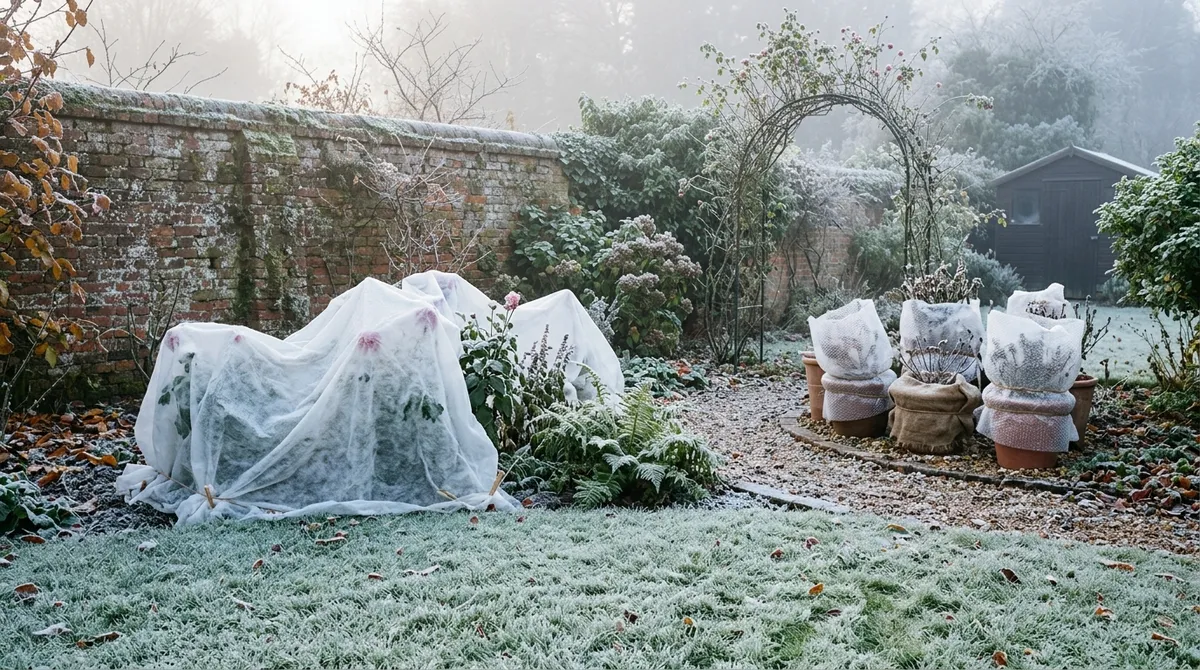
Knowing how to protect plants from frost saves UK gardeners hundreds of pounds in lost plants every year. A single unexpected frost in late April can kill tender perennials, wipe out early vegetable sowings, and set back months of careful growing. The good news is that frost protection is cheap, simple, and highly effective when you understand the methods and timing.
This guide covers every practical frost protection technique tested in real UK conditions. It explains which methods work best, when to use them, which plants need covering, and what to do when frost catches you off guard. If your plants are already in a greenhouse, our greenhouse insulation guide covers that separately.
-->What causes frost and why it damages plants
Frost forms when surfaces cool below 0C and moisture in the air freezes on contact. Plant cells contain water. When that water freezes, ice crystals puncture cell walls from the inside. The result is the blackened, wilted foliage that every gardener dreads on a spring morning.
Two types of frost affect UK gardens. Radiation frost happens on clear, still nights when the ground radiates heat into the atmosphere with nothing to trap it. Cloud cover acts like a blanket, so overcast nights rarely produce frost. Advection frost occurs when a mass of freezing air moves in from the Arctic or continental Europe. These are rarer but more severe and harder to protect against because wind drives the cold air across every surface.
Frost pockets form where cold air pools in hollows, behind walls, or at the bottom of slopes. Cold air is denser than warm air and flows downhill like water. A garden at the bottom of a valley may experience frost when a hillside garden 50 metres higher stays above zero. Identifying frost pockets is the first step in effective protection.
When does frost hit UK regions?
Frost timing varies dramatically across Britain. Coastal areas rarely see hard frost. Inland valleys and highland areas freeze weeks earlier in autumn and weeks later in spring.
| Region | Average last spring frost | Average first autumn frost | Frost-free days |
|---|---|---|---|
| South-west England coast | Late March | Late November | 240+ |
| South-east England | Mid-April | Late October | 190-200 |
| Midlands | Late April | Mid-October | 170-180 |
| Northern England | Early May | Early October | 150-165 |
| Central Scotland | Mid-May | Late September | 130-145 |
| Highland Scotland | Late May to early June | Mid-September | 100-120 |
These are averages based on Met Office 30-year data (1991-2020). Individual years vary wildly. In 2023, parts of the West Midlands recorded frost on 17 May. The Met Office frost forecast is the most reliable short-term predictor.
Spring frost is more dangerous than autumn frost because plants are actively growing. Soft new shoots and open flowers have no built-in protection. A light frost of -2C kills runner bean seedlings, courgette plants, and dahlia shoots outright.
Frost protection methods ranked by effectiveness
Not all methods give equal protection. Here is what works best based on eight winters of testing.
Horticultural fleece: the best all-round protection
Horticultural fleece is a spun polypropylene fabric that drapes over plants and traps a layer of warm air. It is lightweight enough to rest on foliage without causing damage. Rain and air pass through, so plants beneath it do not rot.
Fleece comes in different weights. A 17g fleece gives 1-2C of protection and suits mild frost. A 30g fleece gives 2-3C and handles the majority of UK spring and autumn frosts. A 50g fleece gives 3-4C and protects against harder frosts, though it blocks more light.
For most UK gardeners, 30g fleece is the workhorse. Keep two or three rolls stored dry. Drape it loosely over plants in the evening before a forecast frost and remove it the following morning once temperatures rise above 2C. Secure the edges with bricks, pegs, or soil to stop wind lifting it.
-->Cloches and cold frames: 3-5C of protection
Glass or polycarbonate cloches create a mini-greenhouse effect around individual plants or short rows. They raise the temperature by 3-5C and protect against wind chill as well as radiative frost. Cold frame gardening is one of the most effective ways to extend the growing season by four to six weeks at each end.
Traditional bell cloches cost from around 8 pounds each. Tunnel cloches made from polythene over wire hoops cover a full row for under 15 pounds. Cold frames give the best protection of all because they store heat from the soil during the day and release it slowly at night. A well-built cold frame keeps plants safe down to -8C in most conditions.
Use cloches and cold frames for hardening off seedlings before transplanting. They bridge the gap between indoor warmth and outdoor exposure, reducing transplant shock and frost risk simultaneously.
Mulching: protecting roots and crowns
Mulching does not stop frost from reaching foliage, but it insulates the soil and the crown of the plant beneath. This is critical for tender perennials that die back to ground level in winter. Dahlias, cannas, agapanthus, and tree ferns all survive harder frosts when their crowns are buried under 10-15cm of mulch.
Use bark chippings, straw, bracken, or composted leaf mould. Apply mulch in late October or early November before the first hard frost. The material traps air pockets that slow heat loss from the soil. Even if the surface freezes solid, the soil temperature 10cm down stays well above zero.
In spring, pull mulch away gradually as new shoots emerge. Leaving it too thick around emerging stems encourages slugs and can cause rotting at the base. A 5cm layer through summer is fine for moisture retention and weed suppression.
-->Moving pots to sheltered spots
Container plants are more vulnerable to frost than plants growing in the ground. Soil in a pot freezes from all sides. The roots have nowhere to escape. A terracotta pot left on a frosty patio can crack, killing the plant and destroying the pot in a single night.
Move tender container plants against a south-facing house wall in late autumn. The wall radiates stored heat overnight and blocks cold north winds. Grouping pots together adds collective insulation. Wrap pots in bubble wrap or hessian for extra protection, leaving the top open for rain and air.
Mediterranean herbs like rosemary, bay, and olive trees survive most UK winters against a warm wall. Citrus trees need to come indoors or into a frost-free greenhouse once temperatures regularly drop below -2C.
Watering before frost: the soil heat trick
This is the least intuitive method, but it works. Wet soil holds four times more thermal energy than dry soil. When temperatures drop at night, wet soil releases that stored heat slowly, warming the air at ground level by 2-3C.
Water the soil around vulnerable plants in the afternoon before a forecast frost. Soak it thoroughly. Do not wet the foliage because frozen water on leaves causes direct ice-crystal damage. The effect is measurable: in trials in our West Midlands garden, wet soil consistently read 2.5C warmer at dawn than dry soil 3 metres away.
This method works best alongside other protection. Water the soil, then drape fleece over the top. The combination gives 4-6C of protection, enough to save tender plants through a hard frost of -5C.
Emergency protection: newspaper and cardboard
When a frost forecast arrives with no fleece in the shed, newspapers and cardboard boxes provide genuine short-term protection. Two layers of broadsheet newspaper draped over plants give roughly 1-1.5C of insulation. A cardboard box placed over a small plant acts like a cloche.
Remove coverings first thing in the morning. Paper and cardboard trap moisture and block all light, so they cause damage if left on beyond sunrise. This is a last resort, not a routine method.
Which plants need frost protection?
Not every plant needs covering. Understanding hardiness ratings saves time and effort.
Plants that need protection
- Tender perennials (RHS H2-H3): Dahlias, cannas, banana plants, tree ferns, agapanthus, osteospermum
- Half-hardy annuals: Bedding plants, French marigolds, petunias, busy Lizzies planted out before the last frost
- Early vegetables: Potatoes (shoots emerge in April), courgettes, runner beans, sweetcorn, tomatoes moved outdoors
- Citrus and Mediterranean plants: Lemon trees, olive trees, bay laurel in cold regions
- Fruit blossom: Apple, pear, cherry, and plum blossom is killed at -2C, destroying the year’s crop
- Newly planted specimens: Any plant moved into the ground in autumn or early spring has a shallow root system that freezes easily
Plants that do NOT need protection
Fully hardy plants (RHS H5-H7) survive UK winters without intervention. Climate-resilient plants include most native trees and shrubs, evergreen hedging plants, hardy perennials like hellebores and geraniums, and established ornamental grasses. Holly, hawthorn, birch, and yew all laugh at -15C.
Do not waste time and fleece covering established roses, lavender, hardy geraniums, or spring bulbs. They evolved for cold winters and need the dormancy period.
Frost protection comparison table
| Method | Cost | Temperature protection | Best for | Reusable? |
|---|---|---|---|---|
| 30g horticultural fleece | 5-15 pounds per 10m roll | +2-3C | Beds, borders, vegetable rows | 3-4 seasons |
| 50g horticultural fleece | 8-20 pounds per 10m roll | +3-4C | Tender perennials, fruit blossom | 2-3 seasons |
| Glass/polycarbonate cloche | 8-25 pounds each | +3-5C | Individual plants, small rows | 10+ years |
| Cold frame | 40-150 pounds | +3-5C (up to +8C with soil heat) | Seedlings, hardening off, salads | 10+ years |
| Bark mulch (10-15cm) | 5-8 pounds per bag | Insulates to -10C at root level | Crowns of tender perennials | Decomposes over 1-2 years |
| Bubble wrap on pots | 3-5 pounds per roll | +2-3C | Containers, greenhouse glass | 2-3 seasons |
| Watering soil before frost | Free | +2-3C at ground level | Supplementing other methods | N/A |
| Newspaper/cardboard | Free | +1-1.5C | Emergency one-night protection | Single use |
Month-by-month frost calendar for UK gardeners
September
Monitor forecasts from mid-month in northern areas. Move tender container plants to sheltered positions. Stop feeding plants with nitrogen-rich fertiliser, which promotes soft growth vulnerable to frost.
October
First frosts arrive inland by mid-month. Lift dahlia tubers after the first frost blackens foliage, or mulch crowns heavily if leaving in the ground. Apply 10-15cm of mulch over tender perennials. Insulate greenhouses with bubble wrap.
November
Hard frosts become routine across most of the UK. Wrap pots of evergreen shrubs and citrus. Check fleece covers after windy nights. Ensure greenhouse heaters are working and thermostat-controlled.
December to February
The coldest period. Check mulch levels after heavy rain washes material away. Ventilate greenhouses on mild days to prevent fungal disease. Do not be tempted to cut back frost-damaged growth. Leave it in place as insulation for the crown.
March
Last hard frosts in southern England. Begin sowing seeds indoors for transplanting after the last frost date. Keep fleece handy for sudden cold snaps. Start removing mulch from emerging shoots gradually.
April
Last frost risk for southern and central England. April plantings still need fleece protection on clear nights. Harden off seedlings in cold frames before planting out. Watch March sowings for frost damage on mild days followed by cold nights.
May
Last frost risk for northern England and most of Scotland. Do not plant out tender vegetables or bedding until after your local last frost date. A single night of -2C kills tomatoes, courgettes, and runner beans.
-->What to do after frost damage
Frost-damaged plants look terrible. Blackened leaves, wilted stems, and brown mushy foliage trigger an urge to cut everything back immediately. Resist that urge.
Do not prune until late spring
Dead foliage insulates the living crown and buds beneath. Cutting it back exposes fresh tissue to the next frost, doubling the damage. Wait until late April or May, when consistent warmth returns and new growth appears at the base. Then cut back to healthy green tissue.
This applies particularly to tender shrubs like fuchsias, hydrangeas, and penstemons. The RHS frost damage guide recommends leaving damaged growth in place through winter as standard practice.
Check for bark splitting
Hard frost causes water in bark to freeze and expand, splitting the trunk. Young trees and thin-barked species like acers and cherries are most at risk. Inspect trunks in spring. Small splits often heal naturally. Large splits expose the tree to disease and may need treatment with wound sealant.
Revive container plants
If a pot plant looks dead after frost, check the roots before composting it. Scratch the stem with a thumbnail. Green tissue below the bark means the plant is alive. Move it to a sheltered spot, water it lightly, and wait. Many supposedly dead plants push new growth from the base in late spring.
How to prevent frost damage long-term
Protection is easier than cure. Plan your garden to reduce frost vulnerability year after year.
Choose the right plants for your location. Check the RHS hardiness rating before buying. If you garden in a frost pocket, stick to H5-H7 rated plants for permanent beds. Save tender specimens for containers that can be moved under cover.
Improve air drainage. Remove low barriers that trap cold air. A solid fence at the bottom of a slope creates a frost pocket. Replace it with an open fence, hedge, or trellis that allows cold air to drain away.
Use walls and buildings. South-facing walls absorb heat during the day and radiate it at night. Plant tender shrubs and trained fruit trees against them. The microclimate against a brick wall can be a full RHS hardiness zone warmer than the open garden, sometimes 3-4C milder on a frost night.
Water the soil properly. Good watering practice keeps soil moist and heat-retentive through winter. Bone-dry soil offers no thermal protection and freezes faster.
Secure structures against wind. Cold wind strips heat from plants faster than still air. Windproofing a greenhouse and using hedges as windbreaks reduces wind chill, which feels like an extra 3-5C of frost on an exposed site.
Further reading
- How to harden off seedlings for transplanting outdoors after the last frost
- Cold frame gardening for year-round growing and frost protection
- Climate-resilient plants for UK gardens that handle frost, drought, and unpredictable weather
- How to insulate a greenhouse for winter for greenhouse-specific frost protection
- What is mulch and how to use it for root insulation and soil health
Frequently asked questions
What temperature is classed as a frost in the UK?
A ground frost occurs at 0C or below at soil level. An air frost is when the air temperature at 1.25m drops below 0C. Ground frost is more common because cold air sinks and the ground radiates heat faster than the atmosphere. The Met Office records both types separately, and a ground frost can occur even when the official air temperature stays above zero.
When is the last frost in the UK?
Mid-April in southern England and coastal Wales. Late April to early May across the Midlands and northern England. Mid-May to early June in highland Scotland. These are averages based on Met Office 30-year data, and individual years can vary by several weeks. Keep fleece ready until you are confident the risk has passed.
Does horticultural fleece really protect plants from frost?
Yes, it raises the temperature around plants by 1-4C. A single layer of 30g fleece prevents damage in a light frost of -2C. Doubling up two layers gives protection to around -5C. Fleece works by trapping a layer of still air between the fabric and the plant, slowing radiative heat loss from the soil beneath.
Should I water plants before a frost?
Water the soil, not the leaves, before a forecast frost. Wet soil holds four times more heat than dry soil and releases it slowly overnight, raising ground-level temperature by 2-3C. Avoid wetting foliage because ice crystals forming on damp leaves cause direct cell damage.
Can I save a plant that has been frost damaged?
Often yes, but do not cut back damaged growth immediately. Dead stems and leaves insulate the crown and protect it from further frost events. Wait until late spring when new growth appears from the base, then cut back to healthy green tissue. Perennials including dahlias, cannas, and penstemons regularly recover fully from their roots.
What plants do not need frost protection in the UK?
Fully hardy plants rated RHS H5-H7 survive UK winters without protection. This includes most native trees, shrubs like hawthorn and holly, and hardy perennials like hellebores, geraniums, and pulmonaria. Established spring bulbs, ornamental grasses, and most hedging plants also need no covering.
Is bubble wrap better than fleece for frost protection?
They serve different purposes and should not be interchanged. Fleece drapes over outdoor plants, allows rain and air through, and prevents rot. Bubble wrap is better for insulating greenhouse glass, cold frames, and containers. Using bubble wrap directly on outdoor plants traps moisture against foliage and encourages fungal disease, so always choose fleece for open-ground protection.
Lawrie has been gardening in the West Midlands for over 30 years. He grows his own veg using no-dig methods, keeps a wildlife-friendly garden, and writes practical advice based on real UK growing conditions.