How to Prune Shrubs in the UK
Step-by-step UK guide to pruning shrubs. Covers timing by pruning group, tools, renovation pruning for overgrown plants, and common mistakes to avoid.
Key takeaways
- Group 1 shrubs (buddleja, hydrangea paniculata) are pruned hard in February-March before new growth
- Group 2 shrubs (forsythia, philadelphus, weigela) are pruned right after flowering finishes
- Group 3 shrubs (evergreens, daphne, witch hazel) need only light tidying and dead removal
- Use sharp bypass secateurs for stems up to 15mm, loppers for 15-35mm, and a pruning saw above 35mm
- Renovation pruning saves overgrown shrubs: cut to 30-60cm above ground in late winter
- Always cut to just above an outward-facing bud at a 45-degree angle sloping away from the bud
- Never prune spring-flowering shrubs in winter or you remove all the flower buds
Pruning keeps shrubs healthy, flowering, and in proportion with the garden. It removes dead and diseased wood, encourages strong new growth, and controls size. Yet more shrubs are damaged by bad pruning than by not pruning at all.
The key is timing. Prune at the wrong time and you cut away next season’s flowers. This guide explains the three pruning groups for UK shrubs, the correct tools and cutting technique, renovation pruning for neglected plants, and the common mistakes that ruin an otherwise good shrub. If you grow roses, see our dedicated rose pruning guide for the specific technique.
Why prune shrubs?
Unpruned shrubs accumulate dead wood that harbours disease. Old stems flower less and produce smaller blooms. The centre of the plant becomes congested, blocking light and airflow. This creates ideal conditions for fungal infections like coral spot, grey mould, and powdery mildew.
Pruning stimulates the plant to produce vigorous new shoots. Young wood flowers more freely, produces stronger foliage, and gives the shrub a better shape. Removing one-third of the oldest stems each year keeps the plant in a cycle of continuous renewal. A well-pruned shrub lives longer, flowers harder, and stays the right size for its position.
Regular pruning also prevents shrubs from outgrowing their space. A philadelphus left unpruned for five years becomes a leggy, 4m mass of tangled stems with flowers only at the top. The same plant pruned annually after flowering stays compact at 2-2.5m with blooms at eye and nose level.
The three pruning groups
Every garden shrub falls into one of three timing groups based on when it flowers and which wood carries the flower buds. Get this right and everything else follows.
Group 1: prune hard in late winter
These shrubs flower on new wood produced in the current growing season. Because the flower buds have not yet formed when you prune, cutting hard in late February to March does no damage. In fact, hard annual pruning produces the strongest new shoots and the best flowers.
When to prune: Late February to mid-March, just as buds begin to swell.
How to prune: Cut all stems back to a low framework 30-60cm above ground level. On established plants, cut to just above the previous year’s framework of stubby stubs. New shoots emerge from these stubs and flower the same summer or autumn.
Examples: Buddleja davidii (butterfly bush), Hydrangea paniculata, Hydrangea arborescens, hardy fuchsia, lavatera, Spiraea japonica, Sambucus (elder — for foliage colour), and Cornus alba and C. sanguinea (dogwood — for coloured winter stems).
Buddleja davidii is the classic Group 1 shrub. Left unpruned, it becomes a gaunt 4m skeleton with small flower panicles at the tips. Pruned hard to 60cm in March, it pushes out 1.5-2m of new growth topped with 30cm flower spikes that attract every butterfly in the neighbourhood. The difference is dramatic. For a garden full of pollinators alongside buddleja, see our guide to spring gardening jobs.
Group 2: prune after flowering
These shrubs flower on wood produced the previous year. The flower buds formed last summer and autumn, sitting dormant through winter until they open in spring or early summer. If you prune in winter, you cut off every one of those buds and get no flowers at all.
When to prune: Immediately after flowering finishes, giving the plant the maximum time to grow new flowering wood before winter.
How to prune: Cut the flowered stems back to a strong pair of buds or a vigorous side shoot lower down. Remove one-third of the oldest stems at ground level each year to promote fresh growth from the base. This is the one-third renewal method.
Examples: Forsythia, philadelphus (mock orange), weigela, deutzia, kolkwitzia (beauty bush), ribes (flowering currant), kerria, Spiraea x vanhouttei, and spring-flowering ceanothus.
Philadelphus is a good example of how this works in practice. It flowers in June on stems that grew the previous year. As the last petals drop in July, cut each flowered stem back to a strong side shoot. Remove two or three of the thickest, oldest stems at the base to let light and air into the centre. New shoots grow through summer and autumn, forming the flower buds that open the following June.
Group 3: minimal pruning
These shrubs need little regular pruning. They grow slowly, flower on a permanent framework of branches, or are evergreens that lose shape if cut hard. Pruning is limited to removing dead, damaged, and diseased wood and lightly shaping if needed.
When to prune: Late spring (April to May) after the risk of hard frost has passed.
How to prune: Remove dead and crossing branches. Lightly trim to shape if the plant has become uneven. Do not cut into old, bare wood on evergreens unless the species is known to regenerate (yew, box, holly, and Portugal laurel do; most conifers do not).
Examples: Daphne, witch hazel (Hamamelis), magnolia, camellia, rhododendron, azalea, pieris, skimmia, viburnum tinus, and most slow-growing evergreens.
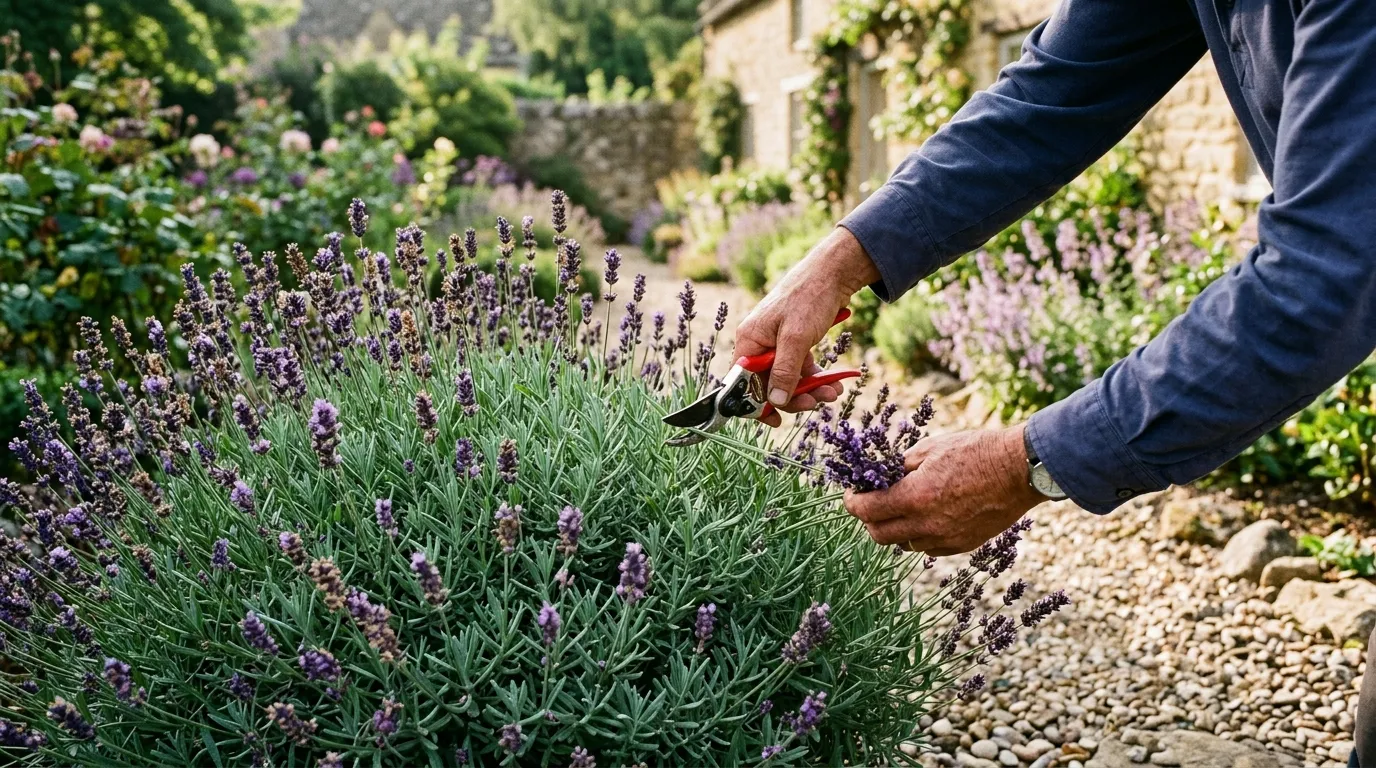
Lavender falls into a special category. It tolerates light annual clipping after flowering in August, cutting back to 2-3cm above the previous year’s growth. Never cut into old grey wood, as lavender does not regrow from bare stems. The same rule applies to broom (Cytisus) and heather (Calluna and Erica).
Pruning group comparison table
| Group | When to prune | Example shrubs | How much to cut | Flowers on |
|---|---|---|---|---|
| Group 1 | Late Feb-March | Buddleja, hardy fuchsia, Hydrangea paniculata, dogwood | Hard: to 30-60cm framework | New season’s wood |
| Group 2 | After flowering | Forsythia, philadelphus, weigela, deutzia, ribes | Flowered stems + 1/3 oldest at base | Previous year’s wood |
| Group 3 | Late spring (if needed) | Daphne, witch hazel, camellia, rhododendron, pieris | Light: dead, damaged, and shape only | Permanent framework |
| Special: lavender | After flowering (August) | Lavender, broom, heather | Trim spent flowers + 2-3cm growth. Never into old wood | Previous year’s growth |
Gardener’s tip: If you do not know which group a shrub belongs to, watch it for one full year. Note when it flowers and look at whether the flowers appear on new spring shoots or on stems that were there over winter. That tells you everything you need to know about timing.
Tools you need
Good tools make clean cuts that heal fast. Ragged cuts from blunt or unsuitable tools tear bark, expose sapwood, and invite infection.
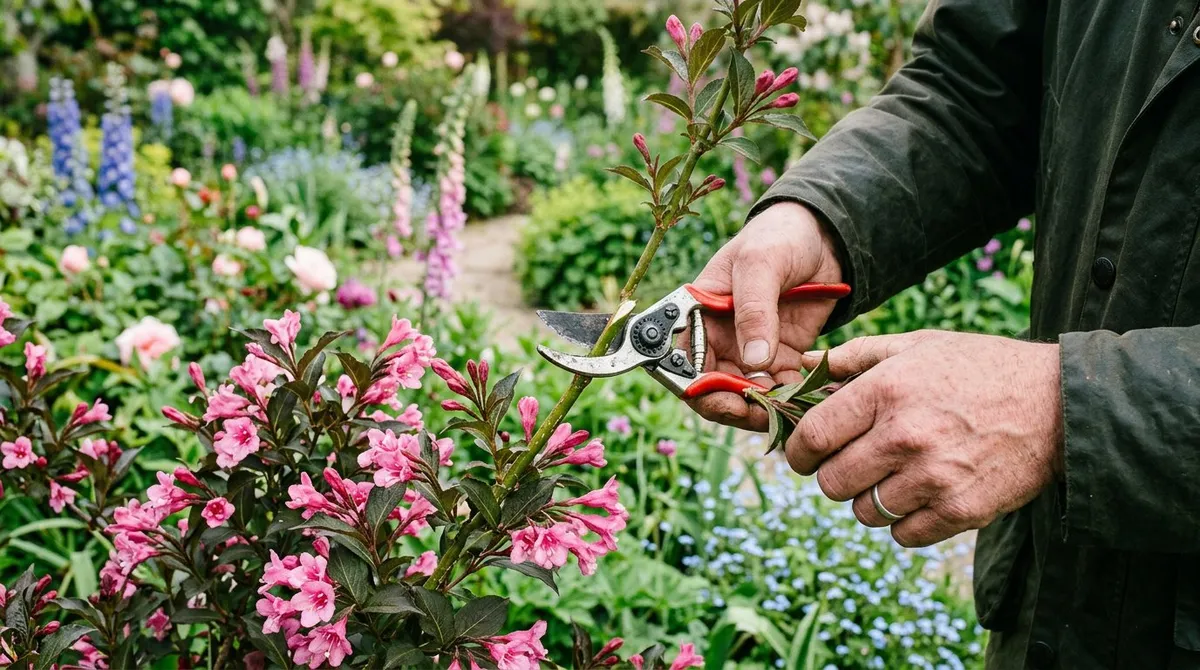
Bypass secateurs are the essential pruning tool. The curved cutting blade passes the flat anvil blade like scissors, making a clean, close cut. Use them for stems up to 15mm diameter. Felco 2 and Felco 6 (smaller hands) are the professional standard and last decades with regular sharpening. Budget options from Spear & Jackson and Darlac also work well. Avoid anvil secateurs for live wood; they crush stems.
Loppers extend your reach and cutting power for stems from 15mm to 35mm diameter. The long handles provide leverage. Bypass loppers give a cleaner cut than anvil types. Choose handles at least 50cm long. Telescopic-handled loppers are useful for reaching into dense shrub centres without getting scratched.
Pruning saw handles anything above 35mm. A folding pruning saw with a curved, coarse-toothed blade cuts on the pull stroke and fits in a back pocket. The Silky Gomboy 270 is excellent. Use it for renovation pruning and removing old framework branches. Never use a woodworking saw; the fine teeth clog with green wood.
Hedge shears are only for clipping formal hedging plants with small leaves, like box, privet, and yew. Do not use shears on large-leaved shrubs like laurel or hydrangea. The sliced leaves turn brown and look terrible for months. Use secateurs instead.
Keep all tools sharp. Sharpen secateur blades every few hours of use with a diamond file. Oil pivot points and wipe blades clean after every session. Sterilise with methylated spirit between plants when pruning diseased material.
Step-by-step pruning technique
This method applies to all three groups. The difference between groups is timing and how much you remove, not how you make the cuts.
Step 1: assess the shrub
Stand back and look at the overall shape. Identify dead wood (grey, brittle, no buds), diseased stems (canker, discolouration, fungal growth), and crossing branches that rub against each other. Note which stems flowered and which are the oldest (thickest bark, fewest leaves).
Step 2: remove dead, diseased, and damaged wood
Cut these out first, regardless of the time of year. Cut dead stems back to healthy wood or to ground level. Cut diseased stems at least 15cm below the visible infection into clean, white wood. Bag and bin diseased material rather than composting it.
Step 3: remove crossing and rubbing branches
Where two stems cross and rub, remove the weaker or less well-positioned one. Rubbing wounds create entry points for disease. Cut back to a junction with another branch or to the base of the plant.
Step 4: make renewal cuts
For Group 2 shrubs, remove one-third of the oldest stems at ground level each year. Identify the thickest, most bark-covered stems and cut them as close to the ground as possible. This opens the centre and encourages new basal growth.
Step 5: shorten flowered stems
For Group 1, cut all stems to the low framework. For Group 2, cut each flowered stem back to a strong bud or side shoot pointing outward from the centre. For Group 3, only trim for shape if necessary.
Step 6: make the cut correctly
Cut at a 45-degree angle, sloping away from the bud, positioned 5mm above an outward-facing bud. This directs new growth outward, keeping the centre open. A cut too close damages the bud. A cut too far above leaves a stub that dies back and rots. Practise on dead stems first until the angle and distance feel natural.
Renovation pruning for overgrown shrubs
A shrub that has been neglected for years looks beyond hope, but most deciduous shrubs recover well from hard cutting. Renovation pruning involves cutting the entire plant down to a low stump and allowing it to regrow from the base.
The best time for renovation pruning is late February to early March, just before the growing season. The shrub has maximum energy reserves and the full season ahead to regrow.
The hard method: Cut every stem to 30-60cm above ground level using loppers and a pruning saw. Apply a thick mulch of composted bark and a handful of blood, fish, and bone fertiliser around the base. Water weekly through the first summer if conditions are dry. New shoots emerge within 4-8 weeks. By autumn, the shrub typically reaches 1-1.5m. Select the 5-7 strongest, best-placed shoots and remove the rest. The shrub returns to full flowering within 2-3 years. This is a good task to schedule as part of your autumn gardening jobs planning.
The gradual method: If you are nervous about cutting everything at once, remove one-third of the oldest stems to ground level each year over three years. This is less traumatic and the shrub keeps some shape throughout. It works well for philadelphus, forsythia, and hydrangeas.
Shrubs that respond well to hard renovation
Buddleja, forsythia, philadelphus, viburnum, cotoneaster, escallonia, pyracantha, ribes, deutzia, weigela, dogwood (Cornus), elder (Sambucus), and hazel (Corylus).
Shrubs that do NOT tolerate hard renovation
Lavender, broom (Cytisus), heather (Calluna, Erica), ceanothus (evergreen types), cistus, and most conifers (except yew). These species do not produce new growth from old, bare wood. If they are overgrown, the only option is replacement.
Pruning specific popular shrubs
Hydrangeas
Mophead and lacecap hydrangeas (H. macrophylla) flower on old wood. Leave the dead flowerheads on over winter to protect the buds beneath. In March or April, cut each old flowerhead back to the first pair of fat, healthy buds below it. Remove one or two of the oldest stems at ground level. See our full hydrangea growing guide for detailed care advice.
Hydrangea paniculata and H. arborescens flower on new wood. Prune hard as Group 1 in March, cutting to a low framework. The harder you prune, the larger the flower panicles.
Buddleja
Cut every stem to 45-60cm in late February. Leave a framework of 4-6 stubby branches. Feed with a general fertiliser and mulch. Flowers appear in July on the new 1.5-2m stems. Deadhead spent flower spikes promptly to encourage a second flush into September.
Forsythia
Prune immediately after the yellow flowers fade in April. Cut each flowered stem back to a strong new shoot. Remove one-third of the oldest stems at the base. Do not clip forsythia with hedge shears, as this produces a tight ball of twigs with flowers only on the outside.
Roses
Roses have their own pruning rules. Hybrid teas and floribundas are pruned in late February to March. Shrub roses and climbers are pruned differently. See our complete rose pruning guide for the full method.
Why we recommend Felco 2 bypass secateurs for shrub pruning: After more than 30 seasons of pruning everything from forsythia to buddleja, the Felco 2 remains the most reliable tool for clean, close cuts on live wood. Across a full season’s pruning on a mixed shrub border, the replaceable blade stayed sharp through 200+ cuts without tearing bark — and the ergonomic grip reduced hand fatigue on long renovation sessions by a noticeable margin compared with budget bypass models.
Common pruning mistakes
Pruning at the wrong time
This is the number one error. Cutting a spring-flowering shrub in January removes all the flower buds. The plant grows back perfectly well, but you get no flowers that year. Always identify whether the shrub flowers on new or old wood before picking up the secateurs.
Shearing everything into balls
Hedge trimmers make quick work of a shrub, but they create a dense outer shell of twigs with a dead, hollow interior. Hand pruning with secateurs preserves the natural form and allows light into the centre. Only use shears on small-leaved formal hedging like box and privet.
Leaving stubs
Cutting 5-10cm above a bud or junction leaves a dead stub that rots downward. Rot can travel into the main stem and kill healthy wood. Always cut to just above a bud (5mm) or flush with the parent branch at the branch collar.
Removing too much at once
Taking off more than one-third of a shrub’s total growth in a single season stresses the plant and can trigger a flush of weak, whippy shoots called water sprouts. These are unproductive and spoil the shape. For large reductions, spread the work over 2-3 years using the gradual renovation method.
Not disinfecting tools
Moving from a diseased shrub to a healthy one without sterilising spreads fungal infections like silver leaf, coral spot, and canker. A quick wipe with methylated spirit between plants takes seconds and prevents expensive losses. For advice on flowering shrubs that resist common diseases, see our planting guide.
Month-by-month pruning calendar
| Month | What to prune |
|---|---|
| January | Dead, diseased, and damaged wood on any shrub. Winter stems of dogwood and willow for crafts. |
| February | Group 1 shrubs: buddleja, hardy fuchsia, lavatera, Hydrangea paniculata. Cut hard to framework. |
| March | Continue Group 1 pruning. Mophead hydrangeas: remove dead flowerheads to first fat buds. |
| April | Group 2 early spring shrubs after flowering: forsythia, flowering currant (Ribes), kerria. |
| May | Light shaping of Group 3 evergreens: camellia, rhododendron, pieris. Deadhead azaleas. |
| June | Group 2 shrubs after flowering: philadelphus, weigela, deutzia, kolkwitzia. |
| July | Summer-prune wisteria to 5-6 buds. Trim lavender after flowering. |
| August | Clip lavender and broom after flowering. Trim formal evergreen hedges. |
| September | Reduce tall shrubs by one-third to prevent wind rock over winter. |
| October | No major pruning. Plan renovation work for late winter. |
| November | Cut back dogwood (Cornus) stems to ground for coloured winter bark if not done in March. |
| December | No pruning except removing storm-damaged branches. Clean, sharpen, and oil all tools. |
Now you’ve mastered pruning shrubs, read our guide on how to prune roses in the UK for the next step.
Frequently asked questions
When should I prune my shrubs in the UK?
Timing depends on when the shrub flowers. Summer-flowering shrubs that bloom on new growth (buddleja, hardy fuchsia, Hydrangea paniculata) are pruned hard in late February to March. Spring-flowering shrubs that bloom on last year’s wood (forsythia, philadelphus, weigela) are pruned immediately after flowering. Evergreens and slow growers need only light tidying in late spring.
Can I prune shrubs in autumn?
Autumn pruning is generally a bad idea. Fresh cuts are vulnerable to frost damage through winter, and damp conditions encourage fungal infections to enter wounds. The exception is removing dead, diseased, or damaged material, which should be dealt with promptly at any time of year. Tall shrubs can be reduced by one-third in September to prevent wind rock, but leave the main pruning until late winter.
How hard can I cut back an overgrown shrub?
Most deciduous shrubs recover from renovation pruning to 30-60cm above ground. Do this in late February or March. Buddleja, forsythia, dogwood, philadelphus, and viburnum all respond strongly. For less vigorous species, spread the renovation over three years using the one-third method. Never hard-prune lavender, broom, heather, or most conifers, as they do not regrow from bare old wood.
What is the one-third pruning rule?
Remove one-third of the oldest stems at ground level each year. This renews the entire framework over a three-year cycle while maintaining the shrub’s shape and flower production throughout. It is the standard technique for multi-stemmed Group 2 shrubs like deutzia, philadelphus, weigela, and ribes. Select the thickest, most heavily barked stems for removal.
Should I prune hydrangeas in the UK?
It depends on the species. Hydrangea paniculata and H. arborescens flower on new wood. Prune hard in March to a low framework for the largest flower panicles. Mophead and lacecap hydrangeas (H. macrophylla) flower on the previous year’s growth. Leave dead flowerheads on over winter for frost protection, then cut to the first strong pair of buds in April. Never prune mopheads hard unless doing full renovation.
Why did my shrub not flower after pruning?
The most likely cause is pruning at the wrong time. If you pruned a spring-flowering shrub in winter, you removed all the buds that were set to flower. The plant will regrow and set new buds during summer, flowering normally the following year. To prevent this, always identify the pruning group before cutting. If unsure, wait and observe for one full year.
Do I need to seal pruning cuts?
No. Modern RHS guidance advises against wound sealants. Research shows sealed cuts trap moisture behind the barrier, creating conditions that favour decay fungi. Plants heal naturally by forming callus tissue at the wound edge. Make clean, angled cuts with sharp tools and let the plant do the rest.
How do I sterilise pruning tools?
Wipe blades with a cloth dampened in methylated spirit or a 10% household bleach solution. Do this between each plant when pruning diseased material, and always before starting work on a healthy plant after cutting anything infected. At the end of each session, wash blades with soapy water, dry thoroughly, and apply a thin coat of light machine oil to prevent rust.
Lawrie has been gardening in the West Midlands for over 30 years. He grows his own veg using no-dig methods, keeps a wildlife-friendly garden, and writes practical advice based on real UK growing conditions.