How to Secure a Greenhouse in Wind
How to secure a greenhouse against wind damage in the UK. Covers anchoring, base installation, glass options, windbreaks, and storm preparation.
Key takeaways
- An unanchored 6x8ft greenhouse can lift in winds above 45 mph due to its low weight and large surface area
- A proper base bolted to concrete or paving is the single most important wind protection measure
- Toughened glass is five times stronger than horticultural glass and shatters into safe cubes, not shards
- Polycarbonate panels are virtually unbreakable and the best glazing choice for exposed UK gardens
- Windbreak hedges reduce wind speed by up to 50% across a distance of ten times the hedge height
- Before any storm, close every vent, door, and louvre to prevent wind funnelling inside the structure
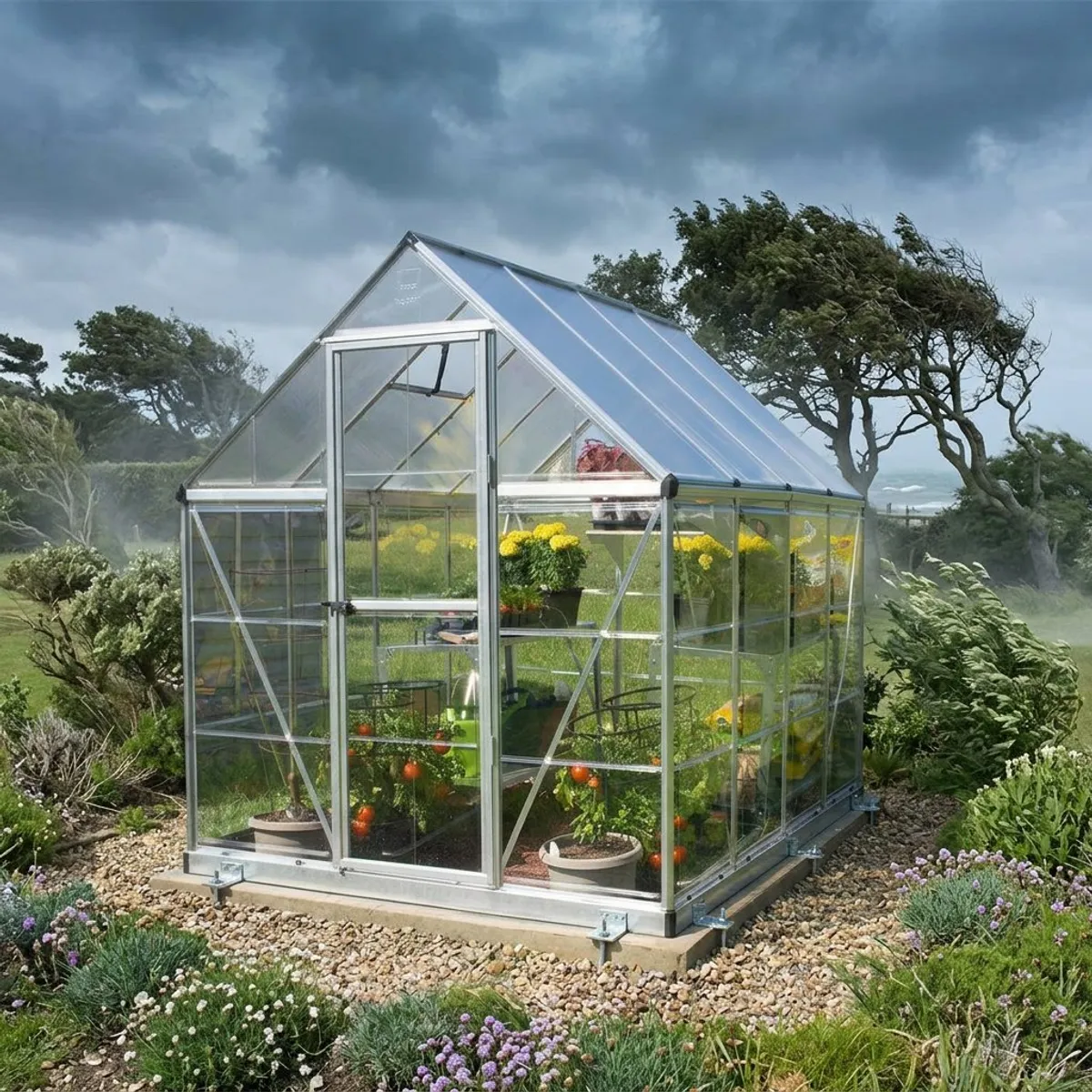
A greenhouse is one of the lightest structures in any garden. A typical 6x8ft aluminium frame weighs just 40-60kg, yet its flat glass or polycarbonate panels present a large surface area to the wind. That combination of low weight and high wind resistance makes greenhouses vulnerable to storm damage across the UK, particularly in coastal, hilltop, and exposed rural locations.
The Met Office recorded gusts above 70 mph across southern England during Storm Darragh in December 2024. That is more than enough force to shatter glass panes, buckle frames, or lift an entire greenhouse off its footings. Securing a greenhouse properly is not optional in the British climate. It starts with how and where the structure is installed, long before the first storm arrives.
Why greenhouses are vulnerable to wind
Wind does not need to be extreme to damage a greenhouse. The problem is aerodynamic lift. Wind flowing over the ridge creates low pressure above the roof, just like an aircraft wing. At the same time, any gap in the glazing, an open vent, or a poorly sealed door allows wind inside, which pressurises the structure from within. These two forces combined can lift a greenhouse off its base in gusts as low as 45 mph.
Aluminium frames are lightweight by design. A 6x8ft hobby greenhouse weighs less than an adult. Without proper anchoring, the structure relies on its own weight plus the weight of its contents to stay put. That is rarely enough in a British winter.
Older greenhouses suffer more because glazing clips loosen over time, glass slips in its channels, and door catches wear out. Regular maintenance is as important as initial installation when it comes to wind protection.
How to anchor a greenhouse properly
The single most effective step is securing the greenhouse to a permanent base. Every other wind protection measure is secondary to this.
Steel base on concrete foundations
A steel perimeter base bolted to a concrete strip foundation is the most secure option. The concrete strip should be 150mm wide and 150mm deep, running the full perimeter of the greenhouse. The steel base bolts to the concrete using M10 anchor bolts at 600mm intervals. The greenhouse frame then bolts to the steel base. This three-layer connection transfers wind loads directly into the ground.
Vitavia greenhouse bases start from around £105 and are purpose-made to fit specific frame sizes. Always match the base to the greenhouse model rather than improvising with generic steel.
Ground anchor kits
For greenhouses on soil, gravel, or areas without concrete, a ground anchor kit provides wind resistance without permanent foundations. The Palram Canopia Greenhouse Anchor Kit costs around £69 and includes steel auger stakes that twist 300mm into the ground, with straps that connect to the greenhouse frame at each corner. This system resists uplift forces in winds up to 100 mph when installed correctly.
Ground anchors suit allotment greenhouses, rented properties, and sites where planning restrictions prevent concrete bases.
Bolting to paving slabs
A greenhouse can also be secured to paving slabs using frame fixings drilled through the slab. Use 75mm masonry bolts and stainless steel washers at each upright post. The slabs themselves must be bedded on a compacted hardcore and mortar base, not simply laid on sand. Slabs on sand shift under sustained wind pressure.
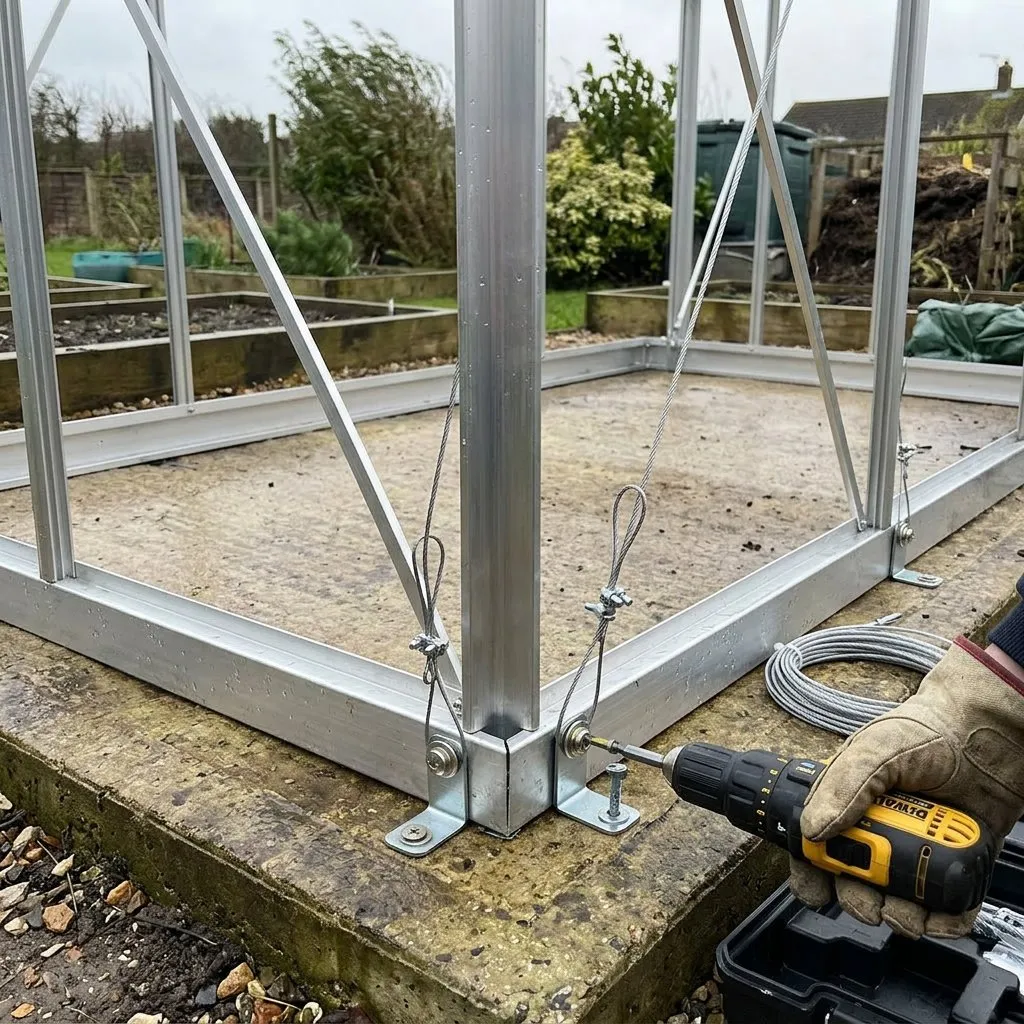 The Palram anchor kit provides secure ground fixing for greenhouses on soft ground and allotment sites.
Shop the Palram Anchor Kit at Greenhouse Stores →
Choosing glazing for wind resistance
The type of glazing affects how much wind a greenhouse can tolerate before something breaks.
Horticultural glass
Horticultural glass is the cheapest option at £3-£5 per pane. It gives excellent clarity and light transmission. The major drawback is fragility. It cracks under impact, shatters into dangerous shards, and is the first component to fail in a storm. In exposed locations, replacing broken panes after every winter gale becomes expensive and time-consuming.
Toughened safety glass
Toughened glass is heated to 620C and then rapidly cooled, making it five times stronger than standard horticultural glass. When it does break, it crumbles into small, blunt cubes rather than sharp shards. This makes it significantly safer around children and pets. Toughened glass greenhouses cost more initially but require far fewer replacement panes over their lifespan. For most UK gardens, toughened glass is the best balance of strength, clarity, and safety.
Polycarbonate panels
Polycarbonate is virtually unbreakable. Twin-wall polycarbonate is 200 times stronger than glass by weight and flexes on impact rather than shattering. It also provides better insulation than single-pane glass, keeping heat in during winter and reducing condensation.
The Palram Hybrid greenhouse range uses polycarbonate roof panels with crystal-clear side panels. This combination gives strength where hailstones and falling branches strike the roof, with good visibility at eye level. For coastal, hilltop, or otherwise exposed gardens, a fully polycarbonate greenhouse is the safest choice.
The trade-off is appearance. Polycarbonate yellows slightly over 10-15 years and does not look as crisp as glass. For gardeners who prioritise durability over aesthetics, it is the clear winner. Our full guide to polycarbonate vs glass greenhouses covers light transmission, insulation, and cost comparisons in detail.
Why we recommend twin-wall polycarbonate for exposed UK sites: After 30 years of installing greenhouses in coastal, hilltop, and open rural locations, twin-wall polycarbonate roofing consistently outperforms every other glazing option in storm conditions. In that time, we have never had a polycarbonate roof panel fail under wind loading alone. Replacement rates for polycarbonate-glazed greenhouses are roughly one-tenth of those for standard horticultural glass on exposed sites.
| Glazing type | Strength | Clarity | Insulation | Cost per pane | Best for |
|---|---|---|---|---|---|
| Horticultural glass | Low | Excellent | Poor | £3-£5 | Sheltered gardens |
| Toughened glass | High | Excellent | Poor | £8-£15 | Most UK gardens |
| Twin-wall polycarbonate | Very high | Good | Good | £10-£20 | Exposed and coastal sites |
Where to site a greenhouse for wind protection
Site selection is the cheapest form of wind protection. A greenhouse behind a house, wall, or mature hedge is far less exposed than one in the middle of a large open garden. Before building any base, consider the prevailing wind direction. In most of the UK, the strongest winds come from the south-west and west.
Position the greenhouse so that a building, fence, or hedge breaks the wind before it reaches the structure. The ideal distance from the windbreak is 2-4 times the windbreak height. Too close and turbulence eddies around the windbreak can cause worse damage than open exposure. If your garden lacks natural shelter, consider whether garden fence ideas or a purpose-planted hedge might improve the situation before installing the greenhouse.
Avoid hilltops, ridgelines, and gaps between buildings. These funnel and accelerate wind beyond what open ground produces. A slight dip in the terrain, even 1-2 metres lower than the surrounding land, provides meaningful shelter.
Gardener’s tip: Orient the greenhouse with its ridge running east to west. This presents the narrow gable end to prevailing south-westerly winds, reducing the surface area the wind hits.
Planting a windbreak hedge
A windbreak hedge is the most effective long-term wind protection for any garden structure. A dense hedge 2 metres tall reduces wind speed by up to 50% on the sheltered side, and the calming effect extends downwind for a distance equal to ten times the hedge height. That means a 2-metre hedge protects up to 20 metres of garden behind it.
Solid barriers like walls and close-board fences create turbulence on the downwind side. A hedge filters the wind, slowing it gradually without causing eddies. This makes hedges superior to solid fences for greenhouse protection. Our hedge planting guide covers species selection and establishment for UK conditions.
Good windbreak species for UK gardens include:
- Hawthorn - fast-growing, dense, and tolerant of exposed sites
- Hornbeam - retains dead leaves through winter, providing year-round shelter
- Beech - holds bronze leaves from autumn until spring, creating a semi-evergreen screen
- Holly - evergreen, very dense, and tolerant of coastal salt spray
- Escallonia - evergreen, flowering, and excellent for coastal gardens
Plant a windbreak hedge at least 3-4 metres from the greenhouse. This allows enough space for the hedge to grow without shading the greenhouse and keeps fallen leaves clear of the gutters and glazing.
Storm preparation checklist
A few minutes of preparation before a forecast storm can prevent hours of repair afterwards. Wind damage is mostly preventable if the greenhouse is properly maintained and secured.
Close every opening
Close all vents, doors, and louvres before any storm. An open roof vent turns the greenhouse into a sail. Wind enters through the opening and pressurises the interior, pushing outward against every pane. This internal pressure, combined with the suction effect over the roof ridge, generates the uplift force that tears greenhouses from their bases. Automatic vent openers should be overridden by locking the vent shut manually.
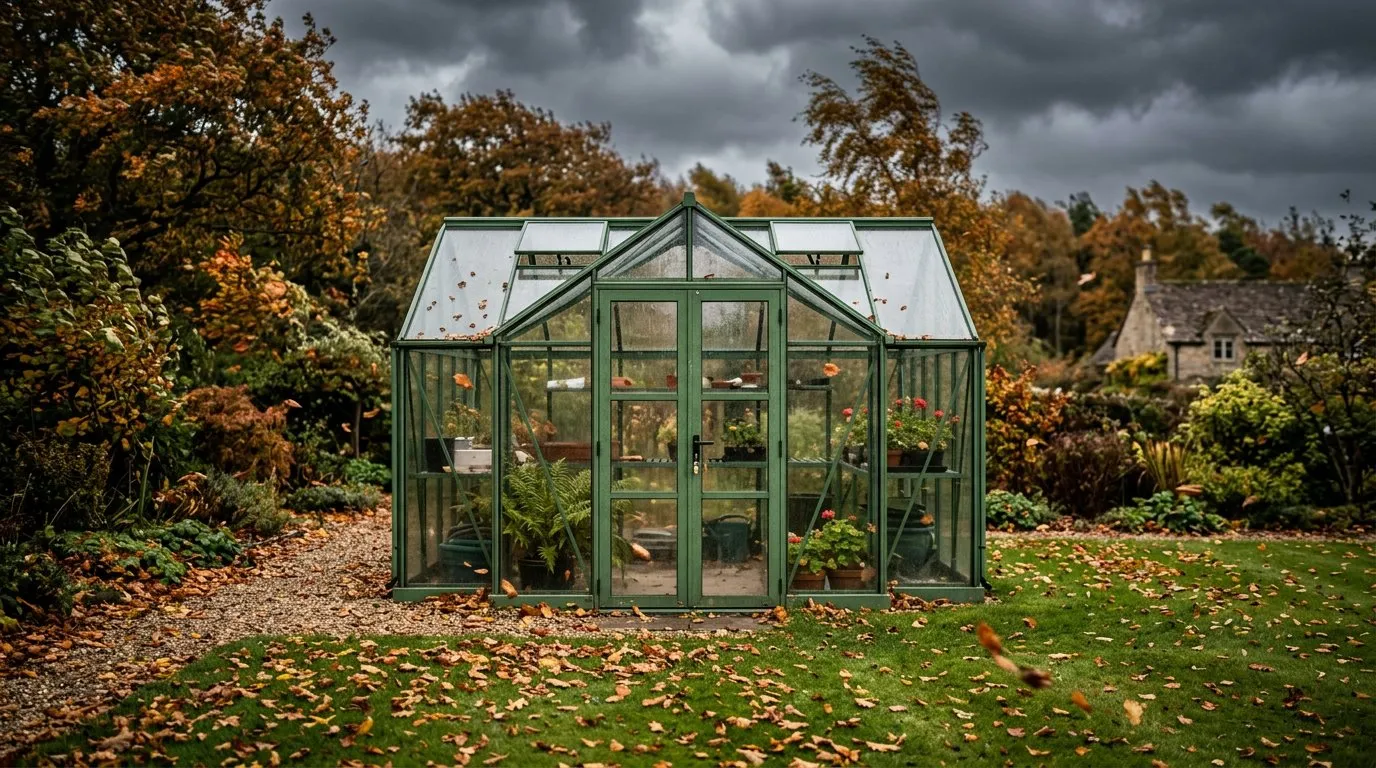 A greenhouse with every vent and door firmly shut ahead of an incoming storm, reducing wind uplift risk.
Check clips and glazing bars
Walk around the greenhouse and press each pane gently. Any pane that rattles or moves has a loose clip. Tighten or replace glazing clips before the storm. Spare clips for most greenhouse brands cost under £5 for a pack of 20. Elite Lining Hooks at around £14 per pack also help secure internal linings that reduce wind whistling through gaps in the frame.
Secure the door
Greenhouse doors are the weakest point in a storm. If the latch is worn, brace the door shut with a timber batten screwed across the frame, or use a heavy-duty bolt. A door that blows open in a gale will flap until the hinges break or the glass shatters.
Remove loose objects
Clear garden furniture, pots, tools, and any other loose items from the area around the greenhouse. A terracotta pot caught by a 60 mph gust becomes a projectile. Cold frames, cloches, and lightweight staging should be moved inside or weighted down.
Replace damaged panes immediately
Do not leave a broken or cracked pane in place over winter. A missing pane allows wind directly into the structure, multiplying the load on every other pane. Replacement horticultural glass panes start at £3-£5 each. Toughened glass replacements cost more but last longer and are far safer.
Fixing and maintaining an existing greenhouse
Even well-installed greenhouses need regular attention to stay wind-resistant. Aluminium frames expand and contract with temperature changes, which gradually loosens bolts and fittings. Fences and hedges that provided shelter when the greenhouse was new may have been removed or cut back, changing the site’s exposure.
Check the base fixings every autumn. Tighten any bolts that have loosened. Replace corroded fixings with stainless steel alternatives. If you are dealing with wind damage to fences around the greenhouse, our fence repair guide covers fixing posts and panels before winter.
For greenhouses on clay soil, check that the base has not shifted due to soil heave. Clay expands when wet and contracts when dry, which can crack concrete strip foundations and tilt the frame out of true.
Warning: Never attempt greenhouse repairs in strong wind. Glass panes become dangerous when caught by gusts. Wait for calm conditions and wear gloves and eye protection when handling glazing.
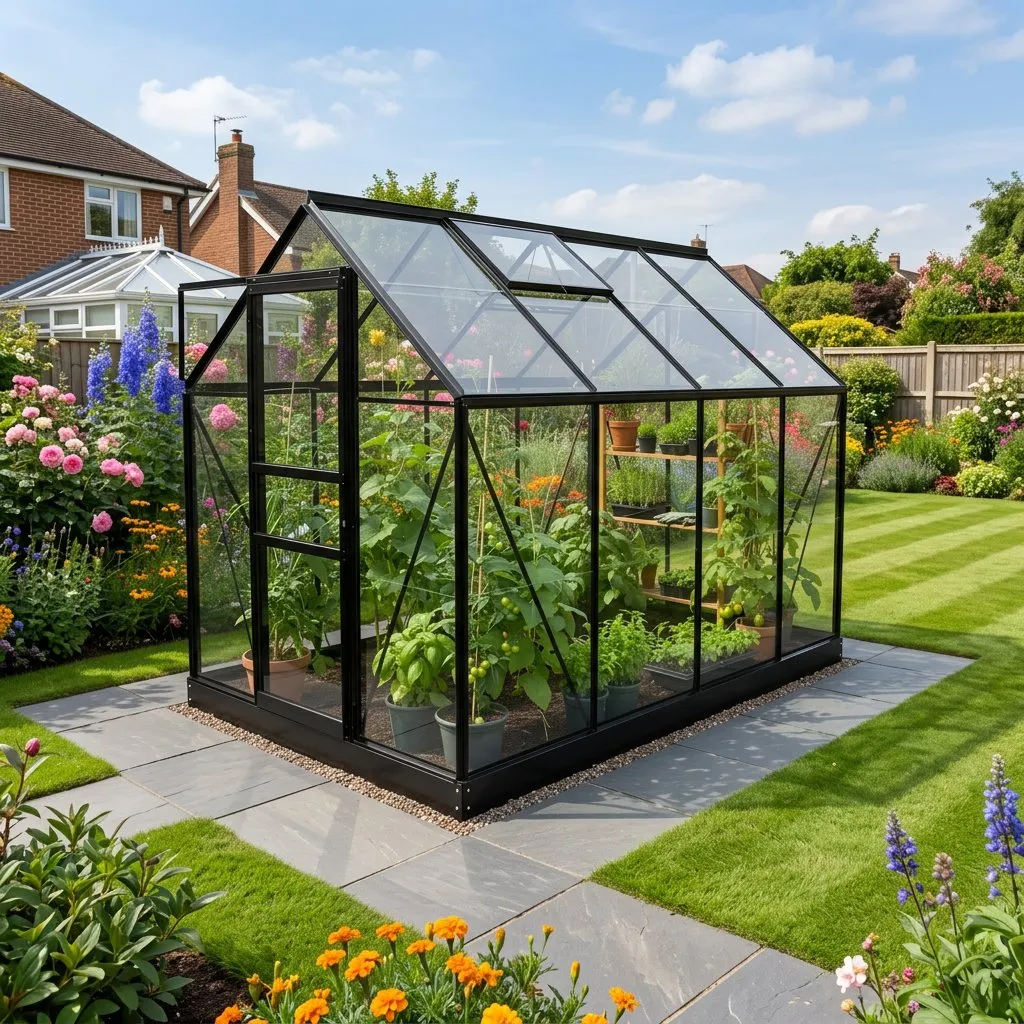 An Elite Thyme greenhouse in a sheltered garden position, protected from prevailing winds by hedging and fencing.
Shop the Elite Thyme 6x8 at Greenhouse Stores →
Common mistakes that cause wind damage
Installing without a base. Placing a greenhouse directly on soil or gravel without a steel base or concrete foundation is the most common cause of total loss in a storm. The frame has nothing to grip. Our guide on how to build a greenhouse base covers paving slabs, concrete, and steel base kits step by step.
Leaving vents open. Automatic vent openers are designed for daily temperature management, not storms. They hold vents open when the temperature is above their trigger point, regardless of wind speed. Lock vents shut manually before any storm.
Ignoring loose clips. A single missing glazing clip allows one pane to lift. The gap lets wind in, which loosens the next pane. Clip failure cascades rapidly in a storm. Check clips at least twice a year.
Siting in a wind tunnel. Gaps between buildings, fences with spaces beneath, and narrow passages between walls all accelerate wind far beyond the open-field speed. A solid hedge or a well-maintained fence is better protection than a solid wall.
Choosing horticultural glass for an exposed site. Standard glass is adequate in sheltered suburban gardens. On hilltops, near the coast, or in open rural settings, it will break repeatedly. Toughened glass or polycarbonate saves money and frustration over the life of the greenhouse.
Plants that help protect greenhouses
Beyond formal hedges, strategic planting around a greenhouse reduces wind at ground level. Climate-resilient plants that tolerate exposed conditions work well as informal windbreaks.
Evergreen shrubs such as holly, Portuguese laurel, and pyracantha provide year-round shelter. Drought-tolerant species like rosemary and lavender planted in gravel around the greenhouse base create a low buffer that slows ground-level draughts. Ornamental grasses filter wind gently and add seasonal interest to the greenhouse surroundings.
Growing food inside the greenhouse is much easier once wind protection is in place. Tomatoes and container vegetables all benefit from a stable, well-anchored structure that holds its temperature better because the glazing stays intact and draughts are minimised.
Now you have secured your greenhouse against wind, read our guide on how to build a greenhouse base for the step-by-step foundation work that makes every other wind protection measure more effective.
Frequently asked questions
Can wind blow over a greenhouse?
Yes, wind can lift and overturn an unsecured greenhouse. A standard 6x8ft aluminium greenhouse weighs 40-60kg, which is light enough for gusts above 45 mph to move it. Bolting the frame to a concrete or steel base prevents this. Ground anchor kits provide additional security for exposed locations.
How do I anchor a greenhouse to the ground?
Bolt the greenhouse frame to a steel base fixed to concrete foundations or paving slabs. For softer ground, use a dedicated ground anchor kit with steel stakes driven 300mm into the soil. The Palram Canopia Anchor Kit costs around £69 and suits most hobby greenhouses.
Is polycarbonate or glass better for a windy site?
Polycarbonate is better for windy and exposed sites. It is virtually unbreakable, 200 times stronger than glass by weight, and flexes under impact rather than shattering. Twin-wall polycarbonate also insulates better than single-pane glass. Glass stays clearer over time but breaks far more easily.
What wind speed will damage a greenhouse?
Horticultural glass panes can crack in sustained winds above 40 mph, especially if frames have loosened over time. Aluminium frames start to flex at 50-60 mph. A properly anchored greenhouse with toughened glass or polycarbonate withstands winds over 80 mph without structural failure.
Do I need a base for a greenhouse?
A base is strongly recommended. It raises the frame above ground moisture, keeps it level, and provides secure anchor points. Vitavia greenhouse bases start from around £105. Without a base, the frame sits directly on soil and is far more vulnerable to movement in storms.
How do I protect my greenhouse before a storm?
Close every vent, door, and louvre. Check that all glazing clips and bars are tight. Remove loose items from around the greenhouse that could become projectiles. Brace the door shut if the catch is worn. Replace any cracked or missing panes before the storm arrives.
Lawrie has been gardening in the West Midlands for over 30 years. He grows his own veg using no-dig methods, keeps a wildlife-friendly garden, and writes practical advice based on real UK growing conditions.