How to Sharpen Garden Tools: UK Guide
Step-by-step guide to sharpening secateurs, shears, hoes, and mower blades. Covers angles, techniques, maintenance, and when to replace worn garden tools.
Key takeaways
- Sharpen bypass secateurs at 20-25 degrees on the bevelled blade only, every 2-3 weeks of use
- A diamond file (£8-15) is the most versatile sharpening tool for garden use
- Hedge shears need a 35-degree bevel and should be sharpened every 3-4 hedge cuts
- Hoe blades sharpen from the top side only at 30 degrees for a clean slicing action
- Clean, oil, and dry all tools after every use to prevent rust and extend blade life
- Replace secateurs when the pivot becomes loose and cannot be tightened, or when blades are chipped beyond filing
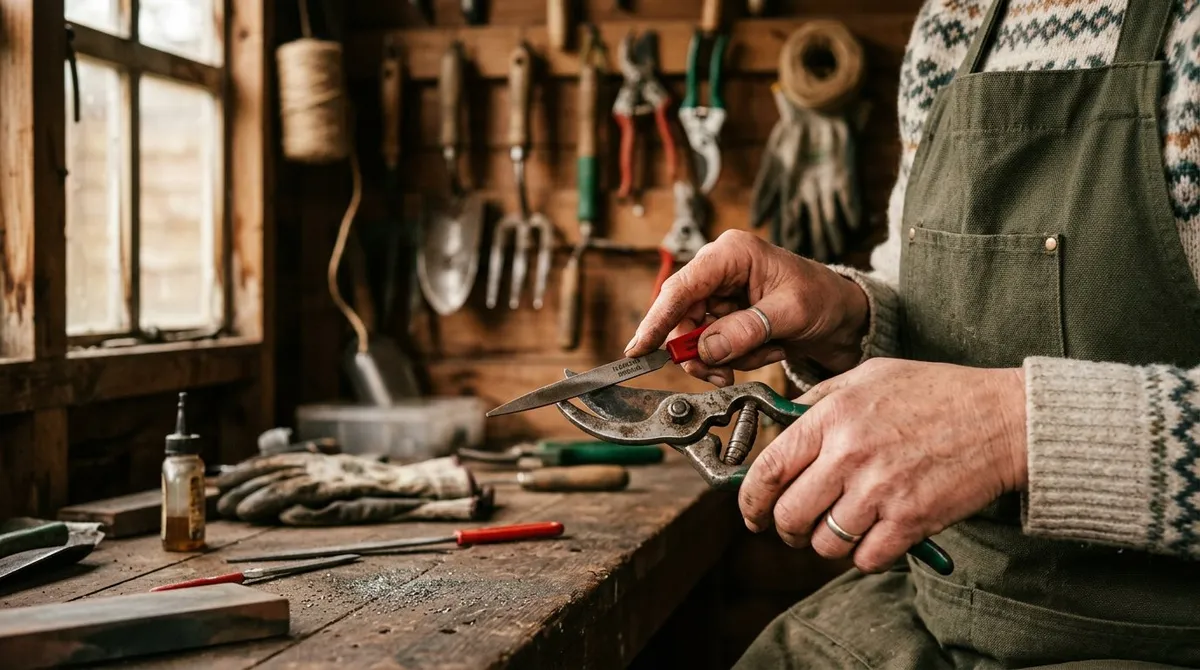
A blunt pair of secateurs crushes plant stems instead of cutting them. That crushed tissue turns brown, invites fungal infection, and leaves ragged wounds that heal slowly. Every tool in your shed works the same way: sharp edges cut cleaner, demand less effort, and cause less damage to plants.
Most gardeners know their tools should be sharp, but few actually sharpen them regularly. The process is simpler than it seems. Ten minutes with a diamond file restores an edge that makes pruning, hoeing, and hedge trimming noticeably easier. This guide covers every common garden tool, the correct sharpening angles, the best sharpening equipment, and the maintenance routine that keeps everything performing between sharpenings.
For the pruning techniques that put your freshly sharpened tools to work, see our guide on how to prune roses. The RHS guide to garden tool care covers additional buying advice.
Why sharp tools matter
Blunt tools cause three problems. They crush plant tissue instead of slicing it, which invites disease. They demand more physical effort, which causes fatigue and blisters. They produce untidy results, leaving ragged cuts on hedges and torn stems on shrubs.
A sharp spade slices through turf in one push. A sharp hoe glides just below the soil surface, severing weed roots on contact. Sharp secateurs close with one smooth squeeze instead of requiring repeated grinding motions. The difference is immediate and dramatic. Keeping tools sharp is one of the most productive spring gardening jobs you can tackle, and it takes less time than most people expect.
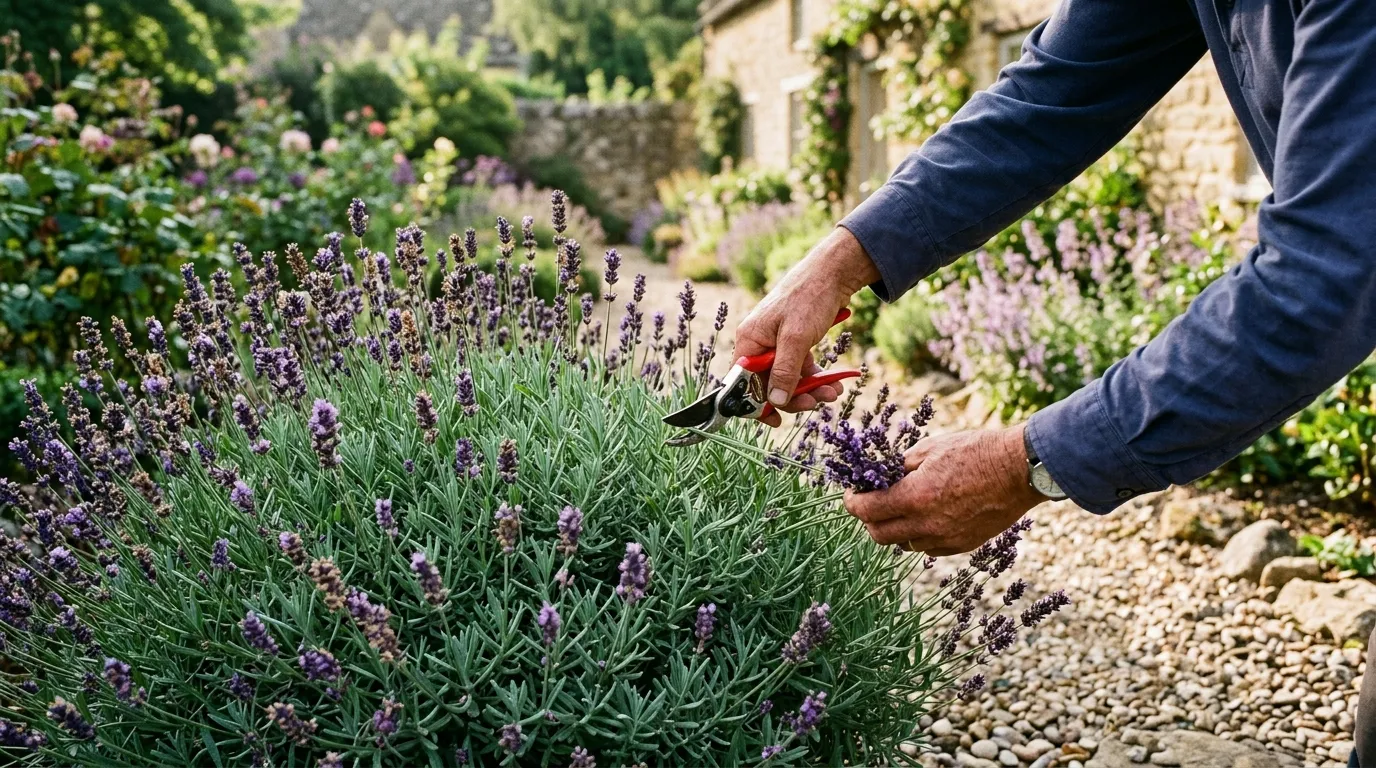
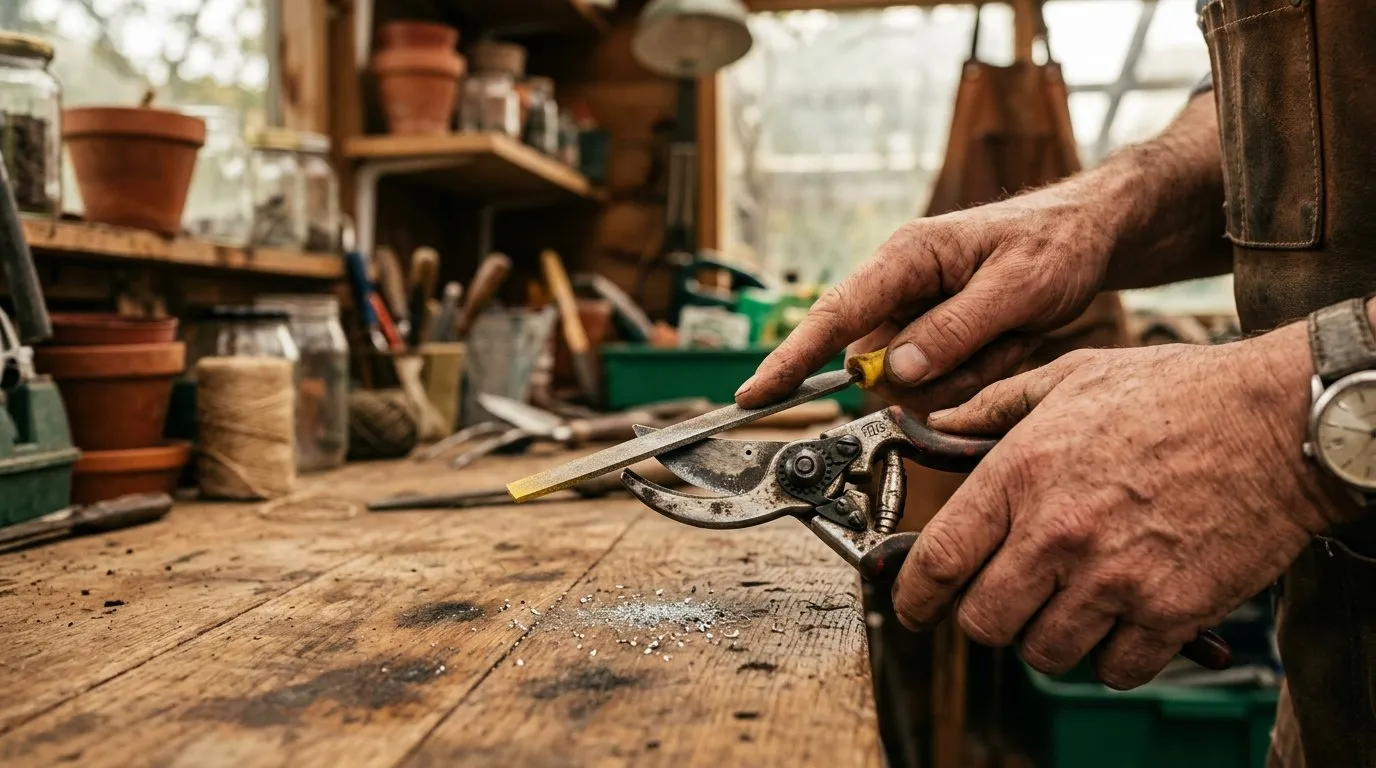 Sharpening bypass secateurs with a diamond file. Work only on the bevelled blade at 20-25 degrees.
Gardener’s tip: Test your secateurs on a sheet of paper. A sharp pair slices cleanly through a single sheet. If the paper folds, crumples, or tears instead of cutting, the blade needs sharpening.
How to sharpen secateurs
Secateurs are the most frequently used cutting tool in any garden. They dull faster than any other tool because they cut woody stems repeatedly.
Bypass secateurs
Bypass secateurs have one sharp convex blade that slides past a flat counter blade, like scissors. Sharpen only the bevelled cutting blade. The flat blade stays flat.
- Clean the blade. Wipe off dried sap with a rag soaked in methylated spirit or white vinegar. Sap build-up creates friction and makes cuts stick.
- Open the secateurs fully or remove the bolt to separate the blades. Working on a separated blade is safer and gives better access.
- Find the bevel angle. Hold the diamond file flat against the existing bevel. The factory angle on most bypass secateurs is 20-25 degrees.
- File in one direction. Push the file away from you along the bevel, from the base of the blade to the tip. Use smooth, even strokes. Apply moderate pressure on the push stroke, no pressure on the return.
- Count your strokes. Ten to fifteen strokes usually restores a keen edge. Check progress by looking at the edge under good light. A sharp edge reflects no light. A dull edge shows a bright line where metal is rounded.
- Remove the burr. A thin wire of metal (the burr) forms on the flat side of the blade. Lay the file flat against the back of the blade and make two or three light passes to remove it.
- Reassemble and oil. Put the blades back together, apply a drop of camellia oil or light machine oil to the pivot, and open and close the secateurs several times.
Anvil secateurs
Anvil secateurs have a single blade that closes onto a flat surface (the anvil). The blade needs a bevel on both sides, ground to approximately 25 degrees per side. Sharpen both sides of the blade equally using the same filing technique. Check the anvil pad for cuts and grooves. A damaged anvil prevents the blade from cutting cleanly, even when sharp. Replace the anvil pad if it is deeply scored.
Frequency: sharpen bypass secateurs every 2-3 weeks of regular use. Sharpen anvil types weekly, as the impact action dulls them faster.
How to sharpen loppers
Loppers are long-handled secateurs designed for branches up to 40-50mm diameter. Most loppers use a bypass cutting action.
Sharpen the single bevelled blade at 20-25 degrees, identical to bypass secateurs. The difference is blade size. Loppers have longer, thicker blades that need more strokes. Clamp the blade in a vice or rest it on a sturdy workbench. A blade that moves while you file is both dangerous and frustrating.
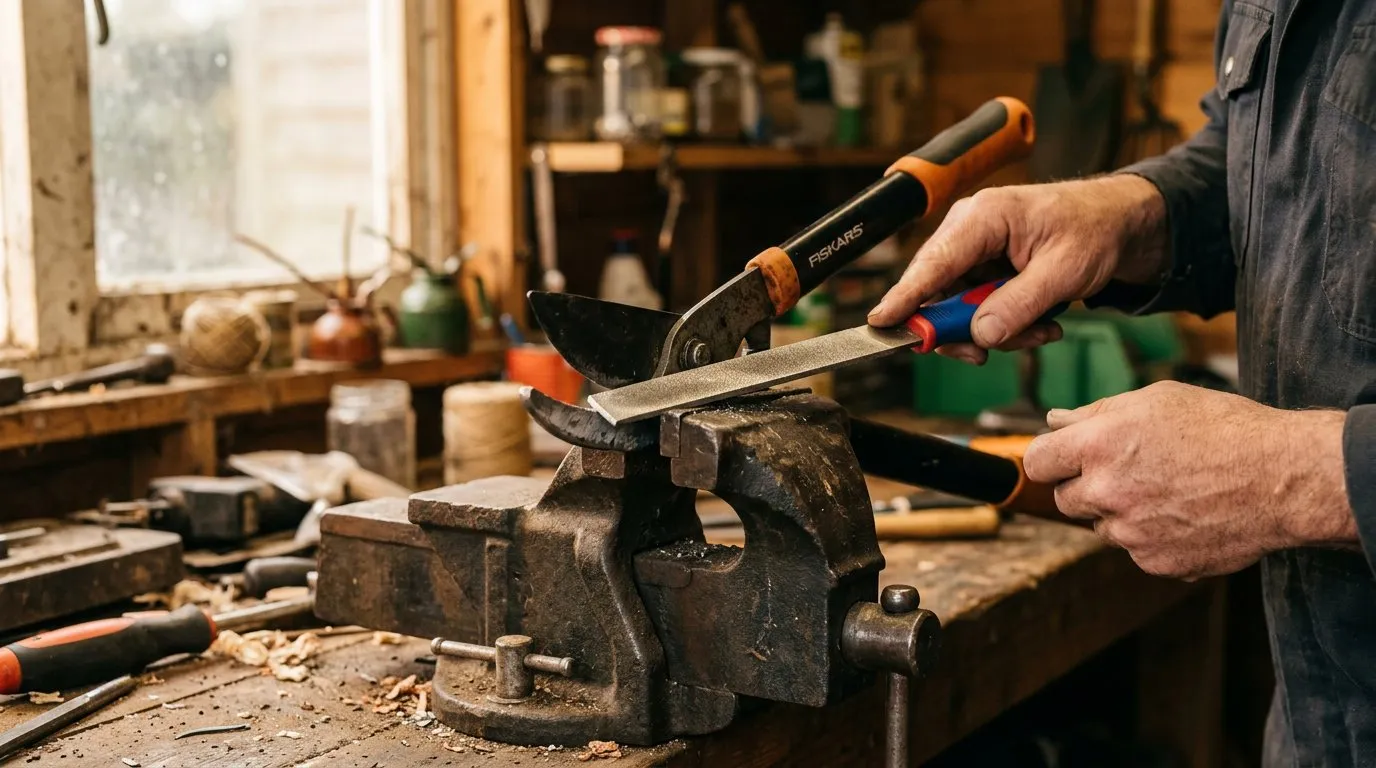 A lopper blade clamped in a vice for sharpening. The same 20-25 degree angle applies as for secateurs.
Use a flat mill file or a large diamond file rather than the small pocket-sized files suited to secateurs. Work in steady, full-length strokes from the pivot end to the tip. Fifteen to twenty strokes on a lightly dulled blade. Remove the burr from the flat side, oil the pivot, and check the cutting action on a pencil-thick twig.
Replace the bolt if the blades have developed play. Loose blades on loppers create a gap that traps stems instead of cutting them.
How to sharpen hedge shears
Hedge shears take more abuse than any other cutting tool. Each closing action cuts dozens of stems simultaneously, and leaf sap corrodes the blade surface.
Manual hedge shears
- Clean both blades. Scrub off dried sap and leaf residue with wire wool and methylated spirit.
- Clamp the shears open in a vice, or lay them flat on a workbench with one blade overhanging the edge.
- File the bevel. Hedge shears have a wider bevel than secateurs, typically 30-35 degrees. Use a flat mill file. Push along the blade in one direction, following the existing angle.
- Work the full length. Start at the base (near the pivot) and work towards the tip with each stroke. Fifteen to twenty strokes per blade.
- Check for nicks. Deep nicks in the blade catch stems instead of cutting them. File out small nicks by concentrating strokes on the damaged area. Large nicks (over 2mm) may need a bench grinder.
- Remove the burr from the flat side of each blade.
- Tighten the pivot. The blades should just touch when closed, with no wobble. Over-tightened blades bind and are hard to open.
Frequency: sharpen after every 3-4 hedge-trimming sessions. If you cut dense hedges like privet or beech, sharpen after every session.
Powered hedge trimmers
Electric and battery-powered hedge trimmers have reciprocating blades that are difficult to sharpen at home. Clean them thoroughly after each use, spray with a lubricant designed for cutting tools, and have them professionally sharpened once a year. A garden machinery service typically charges £15-25 for hedge trimmer blade sharpening.
How to sharpen hoes
A sharp hoe is one of the most effective weeding tools in the garden. It should slice through weed stems just below the soil surface without digging in.
Dutch hoe (push hoe): File the top surface only, at a 30-degree angle. Hold the file flat against the bevel and push away from the edge. The bottom surface stays flat to glide along the soil. Ten strokes with a flat file restores a working edge.
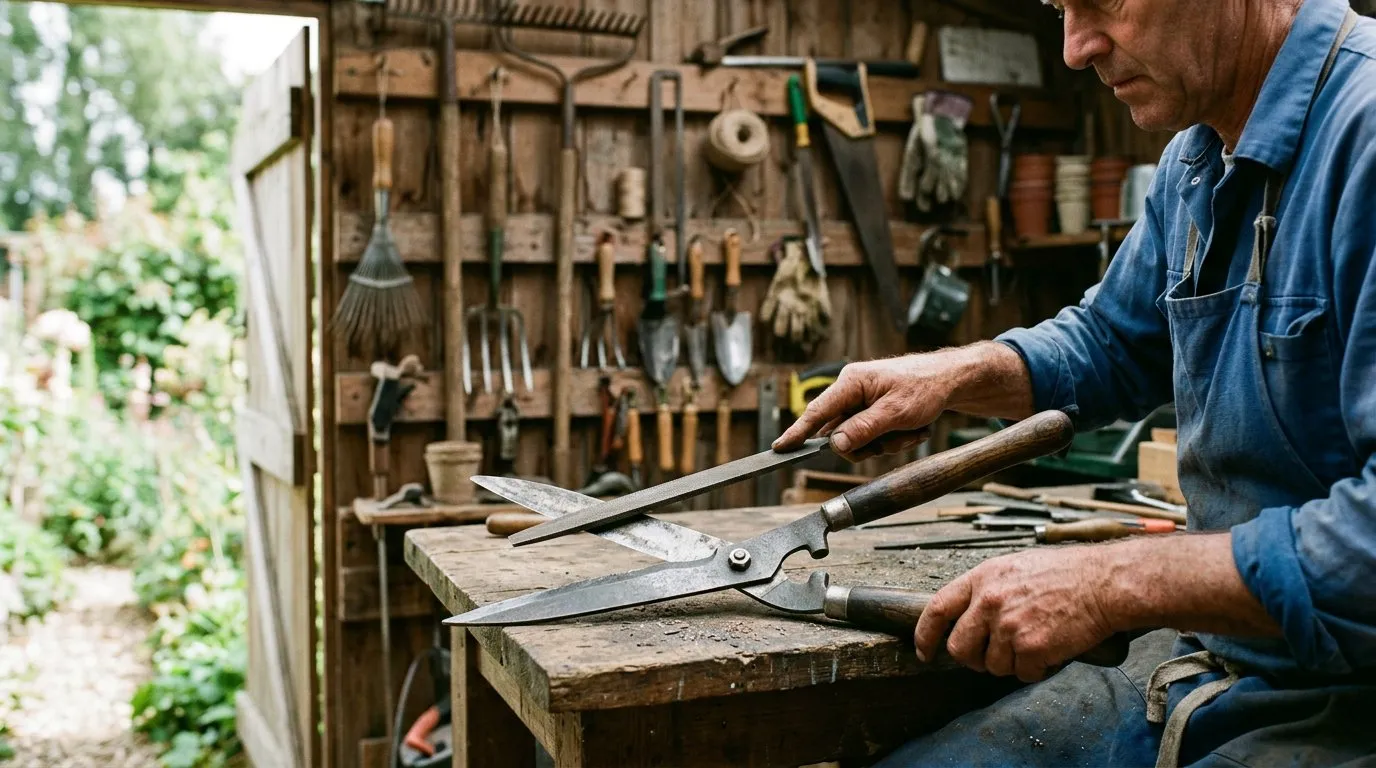 Sharpening hedge shears at 35 degrees. Five to ten strokes per blade restores a clean cutting edge.
Draw hoe (swan-neck): Sharpen the inside edge (the concave side) at 30 degrees. The draw hoe chops downward, so the cutting edge faces the ground when the tool is in use.
Stirrup hoe (oscillating hoe): Both edges need sharpening because the blade cuts on both the push and pull stroke. File each edge at 30 degrees, working from the inside of the stirrup outward.
After sharpening, wipe the blade with an oily rag. Soil abrasion dulls hoe blades quickly, so they need more frequent sharpening than cutting tools. Touch up before each major weeding session for best results.
Gardener’s tip: A sharp hoe does your weeding in half the time. When autumn gardening jobs pile up, a freshly sharpened hoe makes clearing beds far less effort.
How to sharpen spades and edging tools
Spades and edging irons benefit from a lightly sharpened edge, though they do not need the precision of secateurs or shears.
File the edge of a spade at a shallow 25-degree angle on the front face only (the concave digging face). Use a flat mill file and work from one corner to the other in sweeping strokes. The goal is a consistent edge that bites into turf and soil without bending. Do not create a knife-sharp edge. A thin edge chips and dents on stones.
Half-moon edging tools sharpen the same way. Keep the curved edge consistent by following the arc with each file stroke. A sharp edger cuts a clean lawn edge in a single push.
How to sharpen lawn mower blades
Mower blades spin at high speed and strike stones, sticks, and soil. They dull and nick faster than any other garden tool. A dull mower blade tears grass rather than cutting it, leaving white, frayed tips that turn brown within a day.
Rotary mower blades
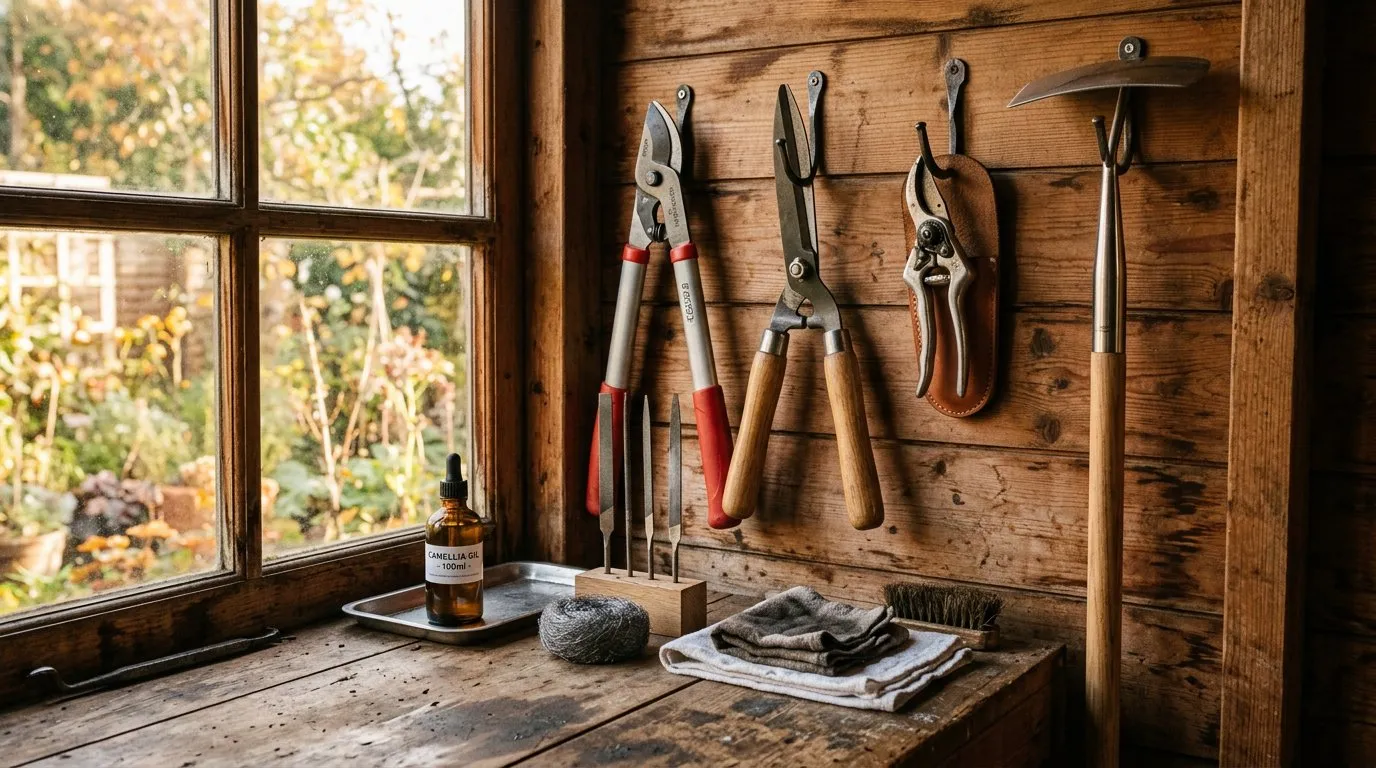 Clean, oil, and dry tools after every use. This routine adds years to the life of every blade.
- Disconnect the power source. Remove the spark plug lead (petrol), remove the battery (cordless), or unplug (corded). This is non-negotiable.
- Remove the blade. Tip the mower on its side (air filter facing up on petrol mowers). Use a socket wrench to remove the blade bolt. Mark the bottom of the blade so you refit it the correct way up.
- Clamp the blade in a vice. File the existing bevel at 30-40 degrees using a flat mill file. Work from the inner edge outward. Match the factory angle.
- File both ends equally. An unbalanced blade vibrates, damages bearings, and produces an uneven cut. Check balance by hanging the blade on a nail through the centre hole. If one end dips, file more from that end.
- Refit the blade. Tighten the bolt to the manufacturer’s torque setting. Hand-tight is not enough.
For the lawn care tasks that follow a clean mower cut, see our guide on how to scarify and aerate your lawn.
Cylinder mower blades
Cylinder mowers use a spinning reel of blades that cut against a fixed bottom blade. Adjusting the gap between the cylinder and bottom blade is more important than sharpening. Set the gap so a sheet of newspaper cuts cleanly across the full width. Professional back-lapping (grinding the cylinder with abrasive paste) restores the edge and costs £30-50 at a garden machinery dealer.
Sharpening tools compared
The tool you use to sharpen matters as much as the technique. Here is how the main options compare.
| Sharpening tool | Cost | Best for | Difficulty | Notes |
|---|---|---|---|---|
| Diamond file (flat) | £8-15 | Secateurs, shears, hoes, loppers | Easy | Most versatile. Works wet or dry. Long-lasting. |
| Whetstone (combination) | £10-25 | Secateurs, knives, chisels | Moderate | Produces a finer edge. Needs 10-15 min soaking. |
| Flat mill file | £5-10 | Mower blades, spades, large shears | Easy | Removes metal quickly. Replace when teeth clog. |
| Pull-through sharpener | £6-12 | Quick touch-ups on secateurs | Very easy | Convenient but removes excess metal. Not precise. |
| Bench grinder | £40-80 | Badly damaged or nicked blades | Difficult | Fast but easy to overheat and ruin the temper. |
A diamond file handles 80% of garden sharpening tasks. Invest in a good one with a comfortable handle and fine (600-grit) surface. Coarse diamond files remove metal fast but leave a rougher edge. A combination whetstone (1000/3000 grit) is the best second purchase for gardeners who want a polished finish on secateurs and knives.
Pull-through sharpeners are popular but imprecise. They grind both sides of the blade at a fixed angle, which is wrong for bypass secateurs that need sharpening on one side only. Use them only for quick field touch-ups, not as your main sharpening method.
Why we recommend a flat diamond file over all other sharpening tools: After 30 years of maintaining tools through every growing season, a quality flat diamond file is the one tool I would not be without. It handles secateurs, shears, hoes, and loppers without soaking, without setup, and without overheating the blade. A good £12 diamond file kept in my apron pocket has restored more edges in the field than any bench grinder or whetstone I have owned.
Maintenance beyond sharpening
Sharpening is only part of tool care. A sharp blade on a rusty, neglected tool still performs poorly.
Cleaning after every use
Wipe blades with a dry rag after every use. Remove soil from spade and hoe blades before it dries hard. Clean dried sap from secateur and shear blades with methylated spirit or white vinegar. Sap that stays on the blade corrodes the metal and creates friction that makes cuts stick.
Oiling
Apply a thin coat of camellia oil (traditional Japanese tool oil) or light machine oil to all metal surfaces after cleaning. Camellia oil does not go rancid and leaves a lasting protective film. WD-40 works as a short-term protectant but evaporates within a few days.
Oil the pivot points on secateurs, loppers, and shears after every sharpening session. A well-oiled pivot makes cutting smoother and reduces wear.
Rust removal
Surface rust on neglected tools comes off with wire wool and white vinegar. Soak the blade for 30-60 minutes, scrub with wire wool, rinse, and dry immediately. For heavier rust, use a proprietary rust remover or naval jelly. Once clean, apply oil immediately to prevent the rust returning.
Prevention is better than cure. Storing tools in a dry shed, wiping them after use, and applying a light oil coat stops rust forming in the first place.
Handle care
Wooden handles crack and splinter when they dry out. Sand rough areas with 120-grit sandpaper, then apply raw linseed oil. Work the oil into the grain and let it soak in for 24 hours. Repeat twice a year, in spring and autumn.
Replace handles that have cracks running along the grain. A cracked handle can snap under load and cause injury. Replacement ash handles for spades, forks, and hoes cost £5-12 and fit with a simple wedge.
Gardener’s tip: Keep a bucket of sharp sand mixed with old engine oil in the shed. After cleaning spade and fork blades, plunge them into the oily sand several times. It cleans off remaining soil and leaves a protective oil coating in one step.
When to sharpen versus when to replace
Not every tool is worth sharpening. Some damage goes beyond what a file can fix.
Sharpen when
- The blade is dull but the edge is intact (no chips or nicks deeper than 1mm)
- The tool still holds its shape and the handle is sound
- The pivot on secateurs and shears is tight and smooth
- The blade has not been ground below its original profile
- You can restore the edge in under 5 minutes of filing
Replace when
- Blade chips or nicks are deeper than 2mm and would require grinding away significant metal
- The pivot on secateurs or shears is permanently loose and the adjustment bolt is fully tightened
- The spring is broken and replacement springs are not available for that model
- Wooden handles have lengthwise cracks that weaken the structure
- Spade or hoe blades have worn down by more than 15mm from their original edge
- Mower blades are bent, cracked, or have lost balance that filing cannot correct
Good quality secateurs (Felco, Bahco, Niwaki) are designed for long-term use with replaceable blades, springs, and bolts. A £45 pair of Felco secateurs with a £12 blade replacement every 3-4 years costs less over a decade than buying cheap secateurs annually.
Tool care calendar
| Month | Task |
|---|---|
| March | Full sharpening session for all tools. Clean and oil everything. Replace worn handles. This prepares tools for the busy growing season. |
| April-May | Touch up secateurs and hoes fortnightly. Clean mower blades weekly. |
| June | Sharpen hedge shears before the main hedge-cutting season. Mid-season secateur sharpening. |
| July-August | Sharpen shears again after heavy hedge work. Touch up hoe blades. |
| September | Sharpen spade edges for autumn digging. Sharpen secateurs for pruning season. |
| October | Clean, sharpen, and oil all tools before winter storage. |
| November-February | Tools in storage. Check monthly for condensation and rust. Apply oil if any rust spots appear. |
Pair this schedule with your wider seasonal tasks. Our autumn gardening jobs guide covers October and November preparation in detail.
Five common sharpening mistakes
1. Sharpening the wrong blade on bypass secateurs
Bypass secateurs have one bevelled blade and one flat blade. Filing the flat blade creates a gap between the two blades. The secateurs then trap stems instead of cutting them. Always sharpen only the bevelled (convex) cutting blade.
2. Using too steep an angle
Grinding a blade to a thin, knife-like edge makes it sharper initially but fragile. The thin edge chips on the first woody stem. Match the factory bevel angle (20-25 degrees for secateurs, 30-35 for shears). A slightly wider angle is better than a too-narrow one for garden tools that hit hard materials.
3. Overheating on a bench grinder
Bench grinders remove metal quickly but generate heat. If the blade turns blue or straw-coloured at the edge, you have ruined the temper. The steel becomes soft and will not hold an edge. Dip the blade in water every few seconds when using a grinder, or use a file instead.
4. Forgetting to remove the burr
Filing creates a thin wire of metal on the opposite side of the blade. This burr feels sharp but folds over on the first cut, making the tool feel dull again immediately. Always flip the blade and make a few light strokes on the flat side to remove the burr.
5. Not cleaning before sharpening
Dried sap, rust, and soil on the blade surface prevent the file from cutting cleanly. You end up polishing grime rather than sharpening steel. Always clean the blade thoroughly before starting.
Safety when sharpening
- Wear thick leather gloves when handling and filing blades. A freshly sharpened edge cuts skin instantly.
- Clamp tools in a vice whenever possible. Holding a blade in one hand while filing with the other is unstable and dangerous.
- File away from your body. Push strokes only. Never pull the file towards yourself.
- Disconnect mower power before touching the blade. Remove the spark plug lead on petrol mowers. Remove the battery on cordless mowers.
- Work in good light. Checking the edge angle requires clear visibility. A head torch or task light at the workbench helps.
- Keep files clean. A clogged file skips across the blade instead of cutting. Use a file card (wire brush) to clean file teeth regularly.
- Store sharp tools safely. Hang secateurs and shears on wall hooks with blade guards. Never leave sharp tools loose in a tool bag or on the floor.
If you are making your own compost from garden prunings, sharp tools produce clean cuts that break down faster in the heap than ragged, crushed material.
Now you have mastered tool sharpening, read our guide on spring gardening jobs for the full seasonal maintenance checklist that puts your freshly sharpened tools to work.
Frequently asked questions
How often should I sharpen my secateurs?
Sharpen bypass secateurs every 2-3 weeks during the growing season. If you prune woody stems daily, sharpen weekly. A blade that crushes rather than slices needs immediate attention. Anvil secateurs dull faster than bypass models because the blade strikes a flat surface with every cut.
What angle should I sharpen garden shears?
Sharpen hedge shears at 35 degrees on the bevelled edge only. Maintain the factory angle by matching the existing bevel with your file. Hold the file flat against the bevel and push away from your body. Five to ten strokes per blade is usually enough.
Can I sharpen garden tools with sandpaper?
Sandpaper works for light touch-ups but not for reshaping an edge. Use 400-grit wet-and-dry paper wrapped around a flat block for a quick refresh on secateur blades. For proper sharpening, a diamond file or whetstone gives a more consistent edge and lasts far longer.
Is a whetstone better than a diamond file?
A diamond file is better for most gardeners. It cuts quickly, works on wet or dry blades, and does not need soaking. Whetstones produce a finer finish but require soaking for 10-15 minutes, and the technique takes practice. Professionals often finish with a whetstone after rough shaping with a file.
How do I remove rust from garden tools?
Soak the blade in white vinegar for 30-60 minutes to loosen surface rust. Scrub with wire wool or a brass brush, then rinse and dry immediately. For heavy rust, use a rust converter spray. Finish by applying a thin coat of camellia oil or WD-40 to prevent further oxidation.
Should I sharpen both blades on bypass secateurs?
No, sharpen only the bevelled cutting blade. The flat anvil blade (hook blade) should remain flat and unbevelled. Filing the flat blade creates a gap between the two blades, and the secateurs will stop cutting cleanly. Only clean the flat side to remove any burr formed during sharpening.
When should I replace garden tools instead of sharpening them?
Replace secateurs when the pivot is permanently loose, blades are chipped deeper than 2mm, or the spring has snapped and replacements are unavailable. Replace spade and hoe blades when they have worn thin at the edge and lost more than 15mm of material. Wooden handles with cracks running lengthways are unsafe and need replacing.
How do I sharpen a lawn mower blade safely?
Disconnect the spark plug (petrol) or remove the battery (cordless) before touching the blade. Clamp the blade in a vice and file along the existing bevel at 30-40 degrees. File equal amounts from both ends to maintain balance. An unbalanced blade vibrates and damages the mower spindle.
Lawrie has been gardening in the West Midlands for over 30 years. He grows his own veg using no-dig methods, keeps a wildlife-friendly garden, and writes practical advice based on real UK growing conditions.