Peat-Free Compost Guide UK
Complete guide to peat-free compost for UK gardeners. Covers types, best brands, mixing your own, and how to get the same results without peat.
Key takeaways
- 70% of UK gardeners already buy peat-free compost — peat sales will be banned by 2030
- Coir-based, bark-based, and wood fibre composts are the three main peat-free types, each with different properties
- Peat-free compost dries on the surface faster but holds moisture deeper — water by weight not appearance
- Add perlite to peat-free seed compost for better drainage and aeration around delicate seedlings
- Making your own compost from garden and kitchen waste is the cheapest and most sustainable option
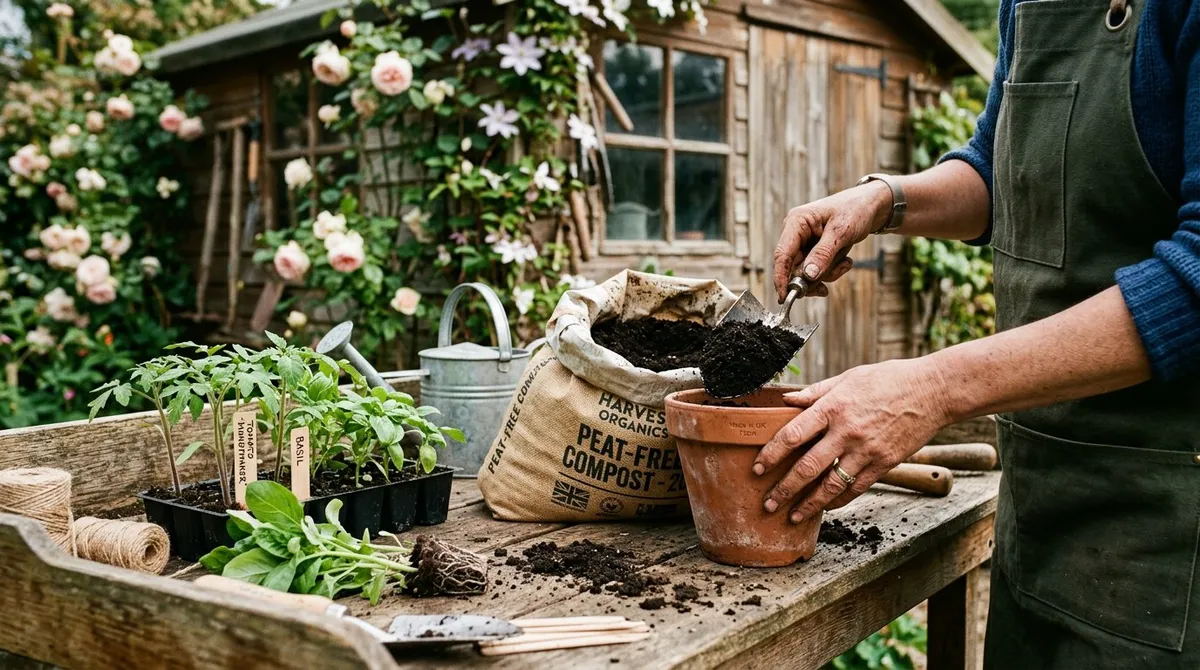
Peat-free gardening has moved from niche concern to mainstream practice. Seventy percent of UK gardeners now choose peat-free compost, and the government plans to ban retail peat sales by 2030. The question is no longer whether to switch — it is how to get the best results with peat-free products.
This guide covers everything you need to know: the different types available, how to water and feed differently, and how to mix your own at home. Making the switch is straightforward once you understand the differences.
Why peat-free matters
UK peatlands store 3.2 billion tonnes of carbon — twice as much as all the forests in Britain and France combined. Extracting peat for garden compost releases this stored carbon into the atmosphere and destroys habitats that took thousands of years to form.
Peat bogs also filter water, reduce flooding, and support rare wildlife including sphagnum moss, sundew plants, and specialist invertebrates. Once drained and harvested, peatland takes centuries to recover.
The Royal Horticultural Society has been peat-free across all its gardens since 2025. Professional nurseries and commercial growers are transitioning rapidly. Retail gardeners are the final piece.
Types of peat-free compost
Not all peat-free composts are equal. The base ingredient determines the properties.
| Type | Base material | Strengths | Weaknesses |
|---|---|---|---|
| Coir-based | Coconut husk fibre | Good water retention, fine texture | Imported (carbon footprint), low nutrients |
| Bark-based | Composted fine bark | Excellent structure, long-lasting | Can be acidic, nitrogen lock-up if fresh |
| Wood fibre | Processed wood waste | Good drainage, lightweight | Dries faster, less nutrient-holding |
| Green waste | Composted garden waste | Cheap, locally sourced | Variable quality, can be coarse |
| Bracken-based | Composted bracken | Excellent structure, UK-sourced | Limited availability |
| Blended | Mix of above | Balanced properties | Quality varies by brand |
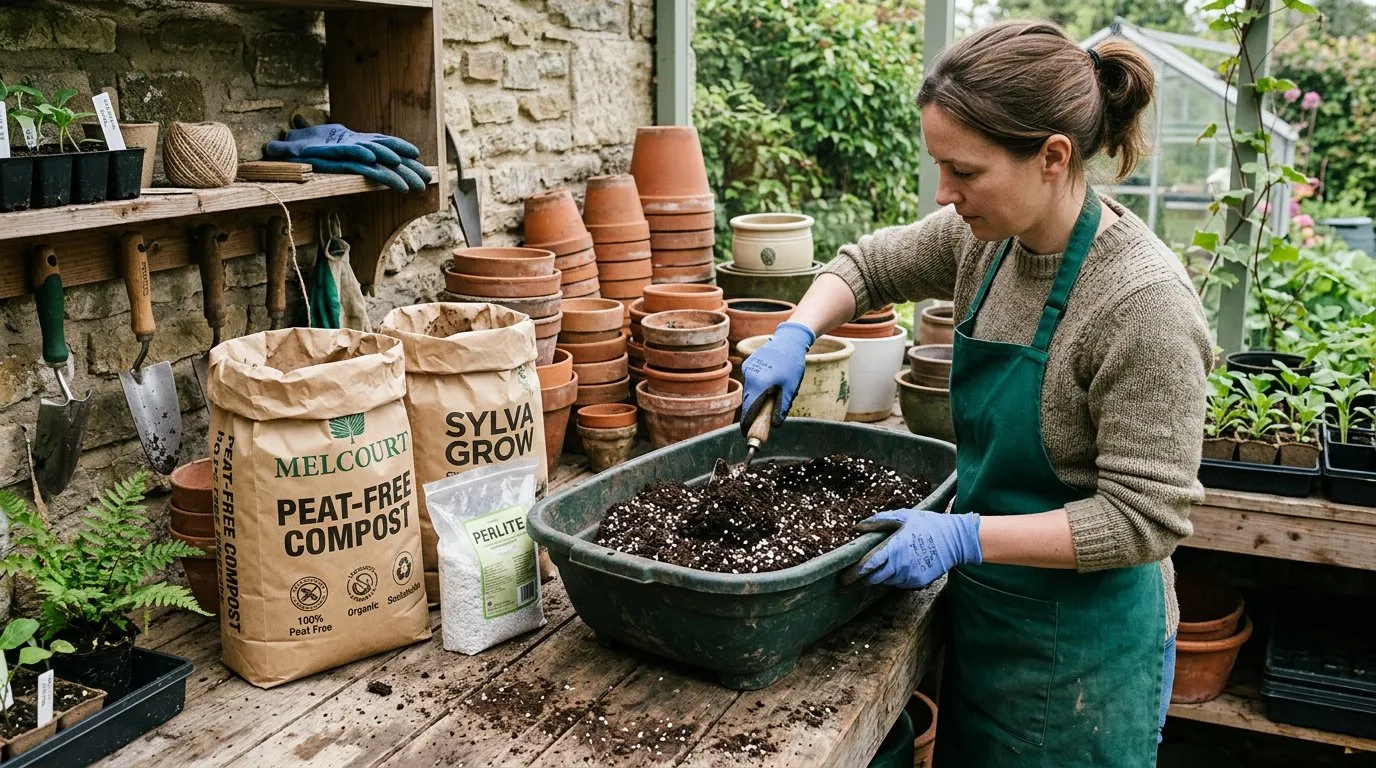 Mixing peat-free compost with perlite improves drainage and aeration — essential for seed sowing and cuttings.
Which to choose
For general potting and containers: coir-based or blended composts work well. They hold moisture and provide a good root environment.
For seed sowing: fine-grade bark or coir composts with added perlite. Sieve to remove lumps before filling seed trays.
For soil improvement: green waste compost or homemade garden compost spread as a mulch or dug into beds.
For raised beds: a mix of 60% topsoil, 30% peat-free compost, and 10% sharp sand gives excellent results.
How to water peat-free compost
Watering is the single biggest adjustment when switching from peat. Peat-free compost behaves differently, and understanding this is the key to success.
The surface dries faster. Peat-free compost often looks dry on top while still holding plenty of moisture deeper down. Check by pushing a finger 2cm below the surface, or lift the pot — heavy means moist.
Water thoroughly but less often. Give a good soak when you water, then wait until the compost genuinely dries before watering again. Frequent light watering creates a wet-dry cycle that stresses roots.
Water from below for seeds. Place seed trays in a shallow tray of water and let the compost absorb moisture upward. This prevents the surface crusting that can trap emerging seedlings.
Rewetting dry compost. If peat-free compost dries out completely, it can become hydrophobic — water runs off the surface. Submerge the pot in a bucket of water for 10-15 minutes to rehydrate fully.
Tip: Add a handful of perlite to peat-free seed compost for better drainage and aeration. Mix it through before filling trays. This simple addition dramatically improves germination rates.
Making your own peat-free compost
The cheapest and most sustainable option is making your own from garden and kitchen waste.
Homemade potting mix
Combine:
- 2 parts garden compost (well-rotted, crumbly, dark)
- 1 part leaf mould (decomposed autumn leaves, takes 1-2 years)
- 1 part sharp sand or perlite (for drainage)
This mix works for potting on established seedlings, filling containers, and topping up beds. For seed sowing, sieve it through a 6mm mesh to remove lumps and add extra perlite.
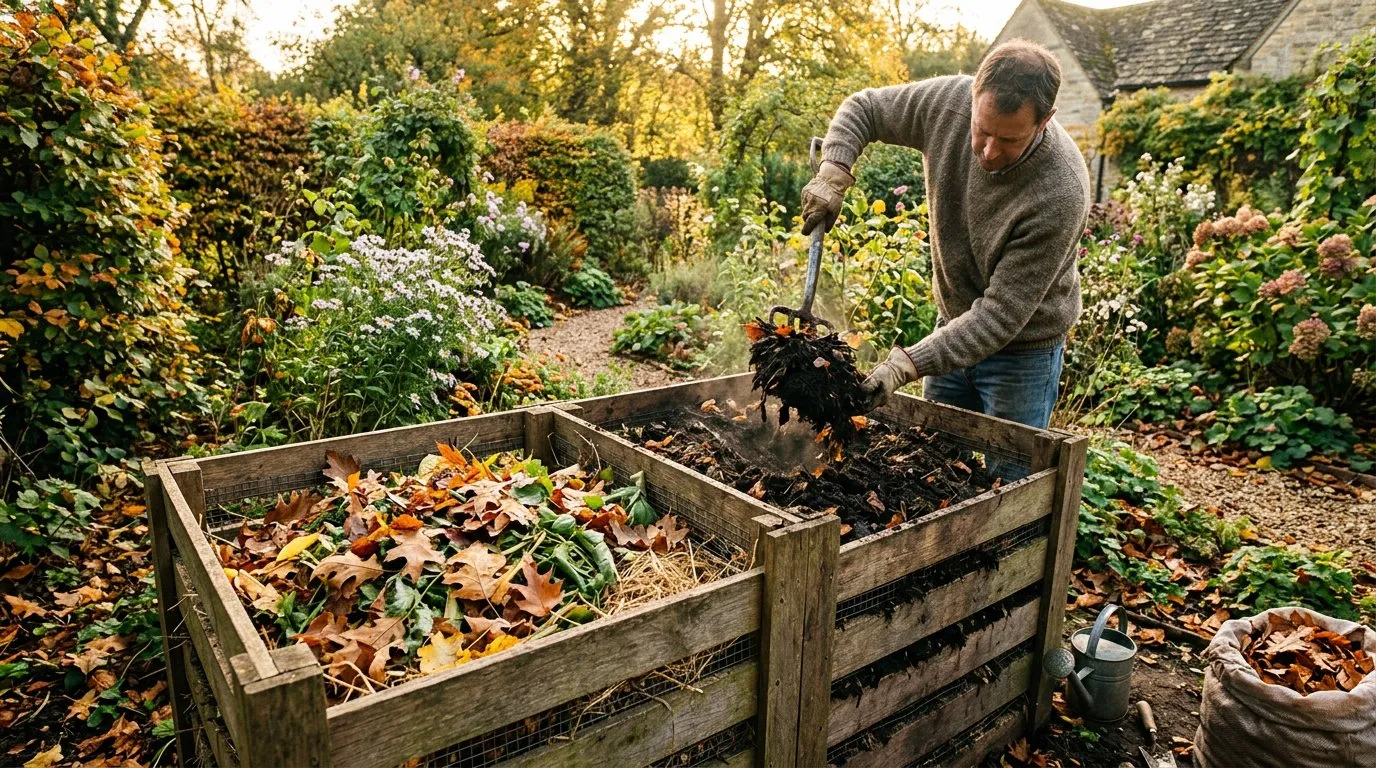 Home composting is the cheapest and most sustainable source of peat-free growing medium.
Making garden compost
A compost bin turning kitchen peelings, garden waste, cardboard, and grass clippings into rich growing medium is the foundation of peat-free gardening. Our complete guide on how to make compost covers bin types, layering, turning, and troubleshooting.
Leaf mould
Autumn leaves collected into wire mesh bins or black plastic sacks decompose over 12-18 months into leaf mould — a fine, crumbly material that makes excellent seed compost when mixed with sand. It is completely free and endlessly renewable.
Feeding with peat-free compost
Peat-free composts generally contain fewer nutrients than peat-based products and release them over a shorter period. Adjust your feeding schedule accordingly.
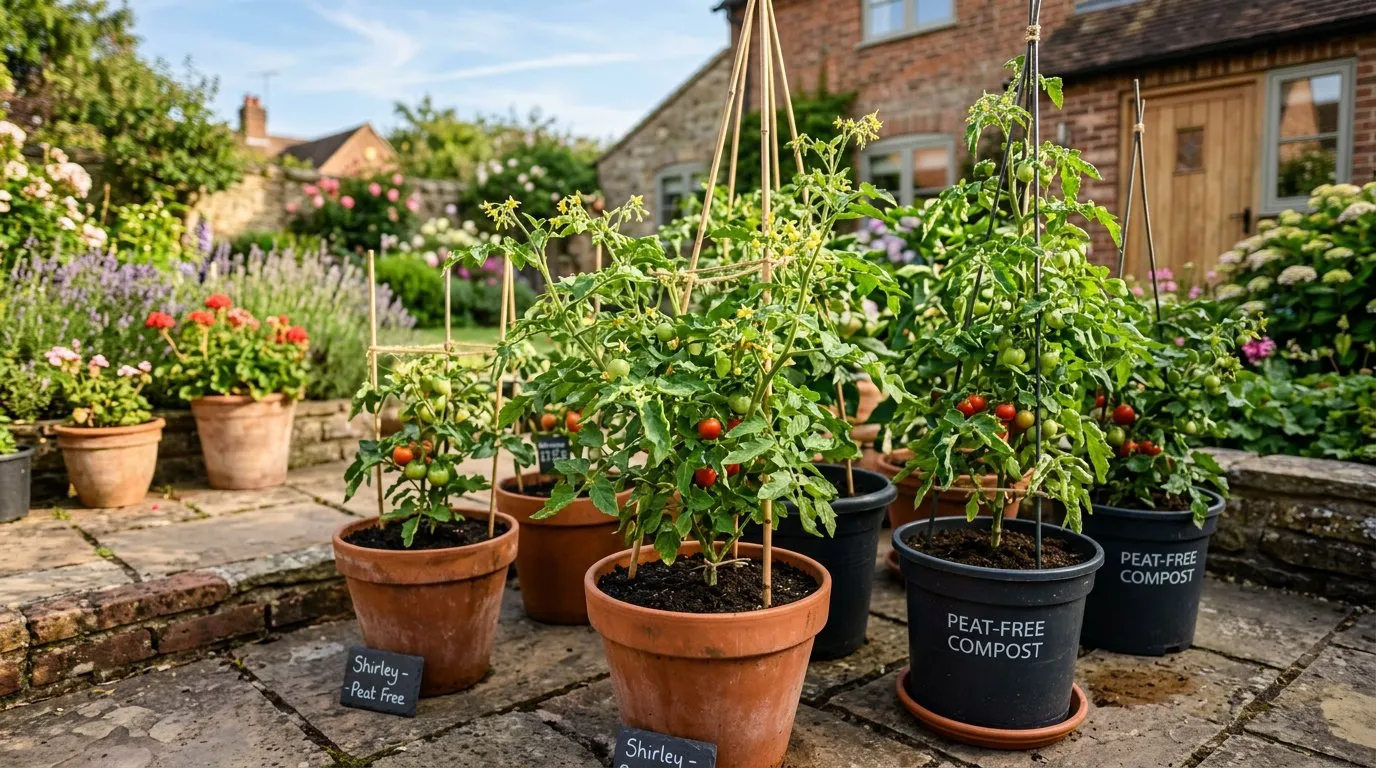 Tomatoes thriving in peat-free compost on a sunny patio. Start feeding 4-6 weeks after potting.
For containers: start feeding with a balanced liquid fertiliser 4-6 weeks after potting, rather than the 6-8 weeks typical with peat compost. Feed weekly during the growing season.
For tomatoes and fruiting crops: switch to a high-potash liquid feed once flowers appear. Feed every 7-10 days.
For long-term containers (perennials, shrubs, trees): add controlled-release fertiliser granules at potting time. These provide nutrients over 3-6 months without daily feeding.
For beds and borders: annual mulching with homemade compost or well-rotted manure provides all the nutrients most plants need. No supplementary feeding required.
Improving poor soil with peat-free alternatives
Why we recommend Sylvagrow as the benchmark peat-free compost for UK seed sowing: After 30 years of trialling growing media, I have sown seeds in every major peat-free brand now on the UK market. Sylvagrow’s fine bark and coir blend consistently delivers the most uniform germination. In a direct comparison on the same bench, same temperature, and same watering regime, Sylvagrow produced 91% germination for tomato seed versus 74% for the cheapest green waste compost at the same price point. The difference holds across brassicas, salad crops, and half-hardy annuals.
Instead of using peat to improve clay soil or sandy soil, these peat-free alternatives work as well or better:
- Garden compost — the best all-round soil improver for any soil type
- Well-rotted manure — adds nutrients and organic matter. Free from stables.
- Green waste compost — available cheaply from council recycling centres
- Leaf mould — opens up heavy clay and adds humus to light soil
- Spent mushroom compost — slightly alkaline, excellent for vegetable beds
- Composted bark — long-lasting soil conditioner that improves structure
All of these are renewable, locally available, and effective. Most are cheaper than buying bags of compost.
Now you’ve mastered peat-free compost, read our guide on how to make compost to create your own free supply at home.
Frequently asked questions
Is peat-free compost as good as peat?
Modern peat-free composts perform as well as peat for most garden tasks including seed sowing, potting, and container growing. They need slightly different watering because they dry on the surface while staying moist underneath. Professional growers at the RHS and major nurseries now achieve identical results with peat-free media.
Why is peat being banned?
Peat bogs store twice as much carbon as all the world’s forests combined and take thousands of years to form. Extracting peat releases stored carbon and destroys irreplaceable habitats. The UK government plans to ban retail peat compost sales by 2030 to protect remaining peatland.
What is the best peat-free compost?
Sylvagrow, Melcourt, and Dalefoot consistently score highest in independent trials by Which? and the RHS. Look for composts based on fine bark, coir, or composted bracken. Avoid the cheapest green waste options which tend to have coarse texture and variable quality.
Can I use peat-free compost for seeds?
Use a fine-grade peat-free seed compost with added perlite for drainage. Sieve it through a 6mm mesh to remove lumps before filling trays. Water from below by placing trays in a shallow dish of water rather than watering from above, which can crust the surface.
How do I water peat-free compost differently?
Peat-free compost dries on the surface faster than peat but holds moisture deeper down. Check by lifting the pot — heavy means moist, light means dry. Water thoroughly but less frequently. If compost dries out completely, submerge the pot in a bucket for 10-15 minutes to rehydrate.
Can I make my own peat-free compost?
Homemade garden compost is the best peat-free growing medium. Combine two parts garden compost with one part leaf mould and one part sharp sand for a versatile potting mix. For beds, use compost straight as a mulch. Our composting guide covers the full method.
Lawrie has been gardening in the West Midlands for over 30 years. He grows his own veg using no-dig methods, keeps a wildlife-friendly garden, and writes practical advice based on real UK growing conditions.