Polycarbonate vs Glass Greenhouse
Compare polycarbonate and glass greenhouses for UK gardens. Covers insulation, light, safety, cost, and which glazing suits different plants and budgets.
Key takeaways
- Twin-wall polycarbonate retains 30-40% more heat than single-glazed glass
- Horticultural glass transmits 90% of light but breaks into dangerous shards
- Toughened glass is five times stronger than horticultural and shatters safely
- Polycarbonate diffuses light, reducing leaf scorch on tender seedlings
- Polycarbonate greenhouses start from around 435 pounds, toughened glass from 549 pounds
- Glass gives sharper light for fruiting crops; polycarbonate suits propagation and overwintering
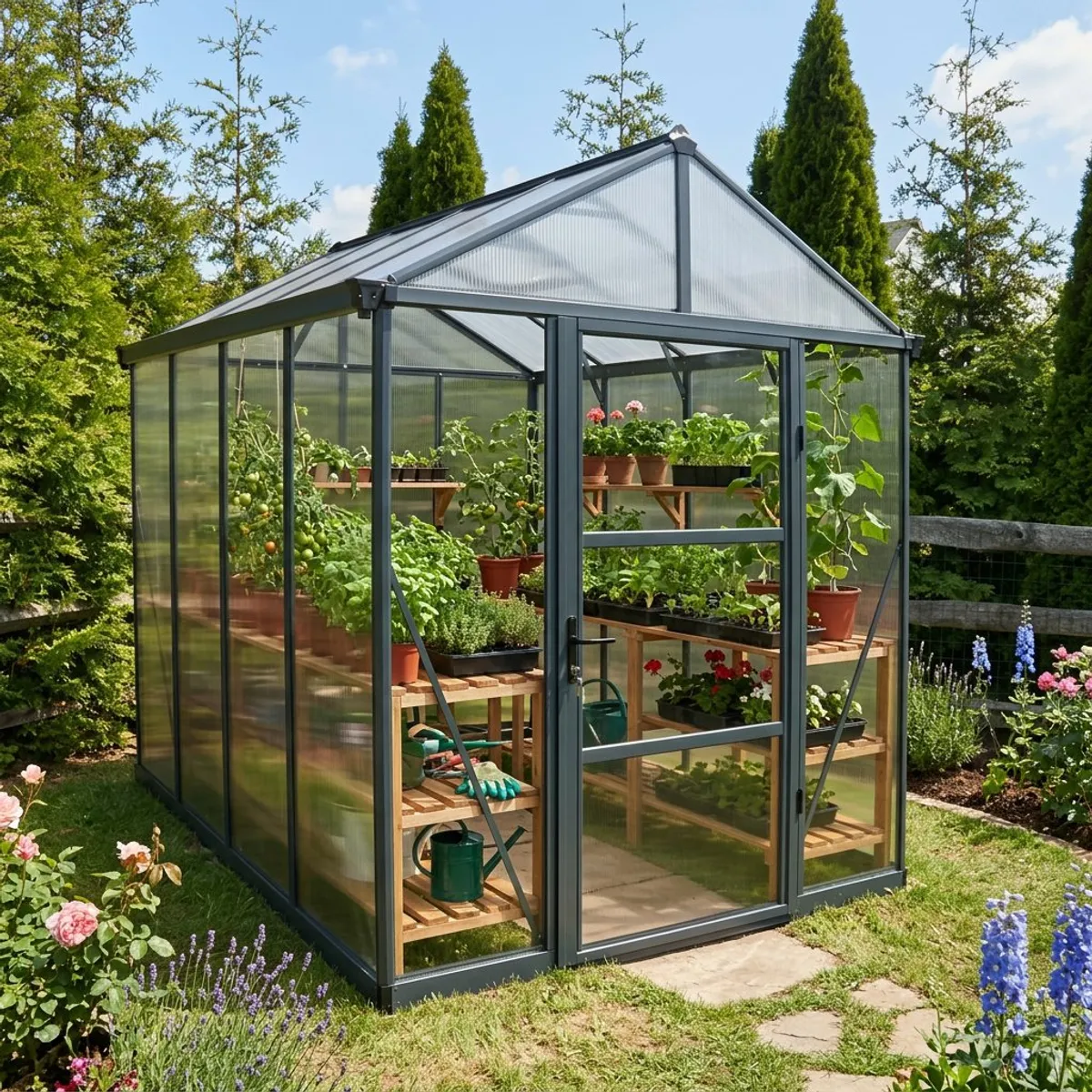
Choosing between polycarbonate and glass is one of the first decisions when buying a greenhouse. Both materials work. Both grow excellent crops across the UK. The differences come down to how much heat you need to retain, how much light your plants require, your budget, and whether safety is a concern.
This guide compares the three main glazing types: horticultural glass, toughened glass, and twin-wall polycarbonate. It covers the facts that matter for UK growing conditions, with real prices and specific performance figures. If you are still deciding which greenhouse to buy, our guide to the best greenhouse for UK gardens compares frame materials and sizes alongside glazing. If you are growing food for the first time, our guide to growing your own vegetables covers the basics of getting started.
What are the three greenhouse glazing types?
Horticultural glass is standard 3mm float glass, the cheapest and most traditional option. It has been the default greenhouse glazing for over a century. It transmits around 90% of available light, giving plants the maximum possible exposure. The trade-off is fragility. A stray football, falling branch, or heavy hailstone cracks it into jagged shards. The Elite High Eave 6x10 at around 849 pounds is a popular horticultural glass greenhouse with generous head height.
Toughened glass is 4mm glass that has been heat-treated to increase strength by a factor of five. When it does break, it crumbles into small, blunt granules rather than sharp splinters. This makes it the safest glass option for gardens where children or pets play. The Vitavia Venus 5000 toughened glass range starts from around 549 pounds, while the Elite Thyme 6x8 at 1,429 pounds offers a premium toughened option with a 25-year frame guarantee.
Twin-wall polycarbonate consists of two thin sheets with a honeycomb of air channels between them. This trapped air layer gives it insulating properties that single-pane glass cannot match. It transmits 80-83% of light, slightly less than glass, but diffuses it evenly across the growing space. The Palram Hybrid 6x8 at around 435 pounds is an affordable entry-level polycarbonate model.
Light transmission and plant growth
Glass transmits around 90% of photosynthetically active radiation (PAR). This matters most for fruiting crops that need intense, direct sunlight. Tomatoes, peppers, and aubergines all produce better harvests under glass. If you plan to grow tomatoes as your main crop, glass is the stronger choice. Our guide to growing tomatoes in the UK covers greenhouse growing in detail.
Twin-wall polycarbonate transmits 80-83% of PAR. The 7-10% difference sounds significant but is less noticeable in practice than the numbers suggest. Polycarbonate also diffuses incoming light, scattering it across the greenhouse rather than creating bright patches and shadows. This diffused light reaches plants from all angles and penetrates deeper into the canopy.
Diffused light benefits leafy crops, seedlings, and young transplants. Lettuce, herbs, and brassica seedlings grow more evenly under polycarbonate because there are no scorching hotspots. For propagation and growing herbs, polycarbonate performs as well as glass.
Gardener’s tip: If you grow mainly salads, herbs, and seedlings, polycarbonate’s diffused light is an advantage, not a drawback. Reserve glass for dedicated tomato and pepper houses.
Heat retention and insulation
This is where polycarbonate pulls clearly ahead. Twin-wall polycarbonate retains 30-40% more heat than single-glazed glass. The trapped air channels act as insulation, similar to double glazing in a house. On a cold March morning, a polycarbonate greenhouse will be several degrees warmer inside than a glass equivalent.
For UK growers, this matters in three key periods:
- Early spring (February-April): warmer night temperatures protect seedlings from late frost damage
- Late autumn (October-November): extended growing season for winter salads and overwintering
- Winter propagation: reduced heating costs if you use an electric heater
Glass loses heat rapidly after sunset. A glass greenhouse can drop to outdoor temperatures within 2-3 hours of darkness. A polycarbonate greenhouse holds warmth noticeably longer. If you start seeds indoors and then move them to a greenhouse for hardening off, a polycarbonate structure gives the seedlings a gentler transition.
The Palram Glory 6x8 at around 950 pounds uses thicker polycarbonate panels and a reinforced frame, offering even better heat retention for serious propagators.
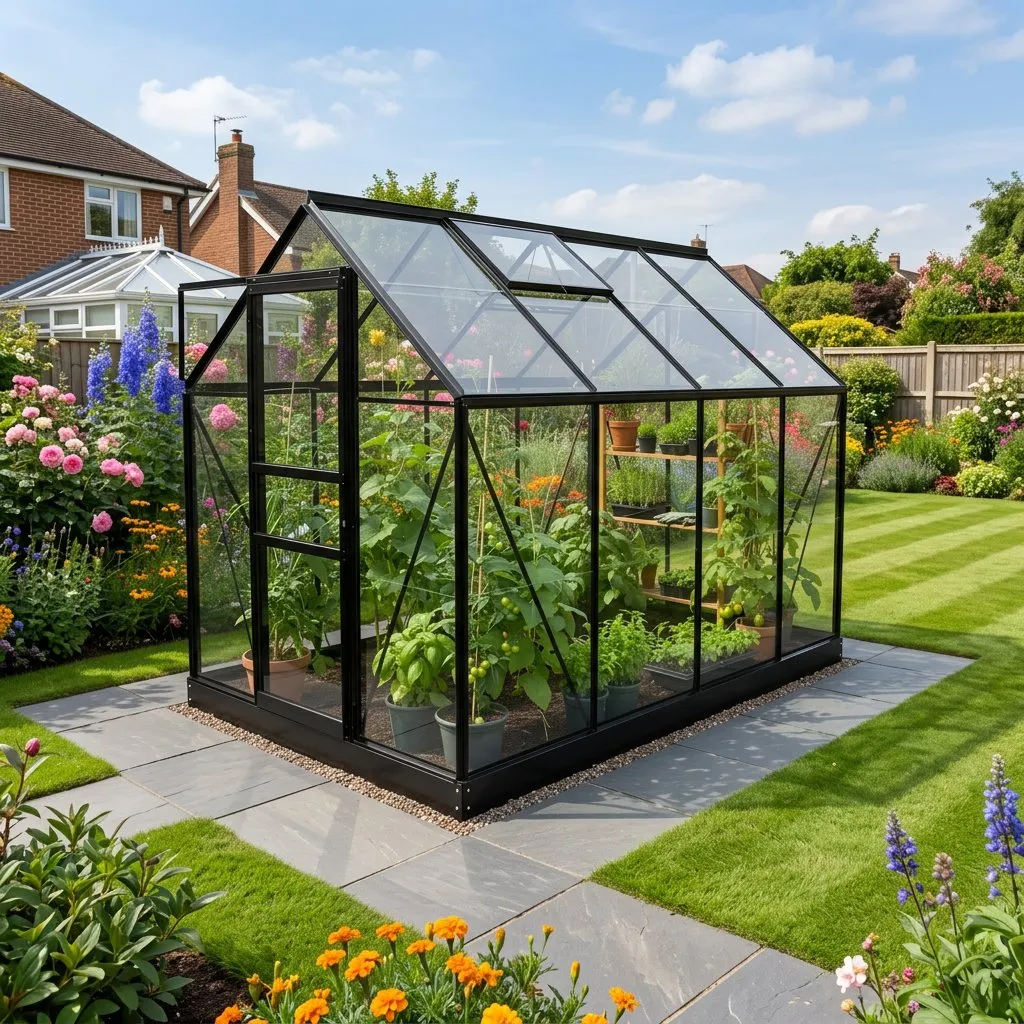 The Palram Glory with toughened glass offers excellent light transmission and safe breakage characteristics.
Shop the Palram Glory 8x8 at Greenhouse Stores →
Durability and safety
Horticultural glass is the weakest option. A 3mm pane cracks under moderate impact and produces long, razor-sharp shards. Replacement panes are cheap but fitting them is fiddly. Gardens with children, pets, or overhanging trees face higher breakage risk. The Royal Horticultural Society greenhouse growing guide recommends toughened glass or polycarbonate for family gardens.
Toughened glass resists impact five times better than horticultural glass. When it does fail, the entire pane disintegrates into small, roughly cubic granules with blunt edges. This is the same safety glass used in car side windows. It cannot be cut or drilled after manufacture, so each pane must be made to fit.
Polycarbonate is virtually unbreakable in normal garden conditions. It flexes under impact rather than cracking. It weighs roughly half as much as glass, making assembly safer and easier. Over 10-15 years, UV exposure causes some yellowing and reduced clarity. UV-stabilised panels resist this longer.
| Feature | Horticultural glass (3mm) | Toughened glass (4mm) | Twin-wall polycarbonate |
|---|---|---|---|
| Light transmission | 90% | 88-90% | 80-83% |
| Heat retention | Poor (single pane) | Poor (single pane) | Good (trapped air layer) |
| Impact resistance | Low | High (5x stronger) | Very high (virtually shatterproof) |
| Safety when broken | Dangerous sharp shards | Safe blunt granules | Does not shatter |
| Weight per panel | Heavy | Heavy | Light (half the weight of glass) |
| Lifespan | 30+ years | 30+ years | 10-15 years |
| UV resistance | Excellent | Excellent | Good (UV-stabilised panels) |
| Light quality | Direct, sharp | Direct, sharp | Diffused, even |
| Replacement cost | Low | Medium | Low |
| Best for | Budget builds, maximum light | Family gardens, exposed sites | Insulation, propagation, safety |
Cost comparison
Budget is often the deciding factor. Polycarbonate greenhouses are typically the most affordable for a given frame size. Horticultural glass sits in the middle. Toughened glass commands the highest prices because of the manufacturing process.
| Greenhouse | Glazing | Size | Price |
|---|---|---|---|
| Palram Hybrid 6x8 | Twin-wall polycarbonate | 6ft x 8ft | Around 435 pounds |
| Palram Glory 6x8 | Twin-wall polycarbonate | 6ft x 8ft | Around 950 pounds |
| Vitavia Venus 5000 | Toughened glass | 6ft x 8ft | From 549 pounds |
| Elite High Eave 6x10 | Horticultural glass | 6ft x 10ft | Around 849 pounds |
| Elite Thyme 6x8 | Toughened glass | 6ft x 8ft | Around 1,429 pounds |
Running costs differ too. A polycarbonate greenhouse needs less supplementary heating in winter and spring. Over five years, the energy savings can offset the replacement cost of panels that yellow with age. Glass greenhouses cost more to heat but need no panel replacement. Our greenhouse heating guide compares electric, gas, and paraffin heater running costs for both glazing types.
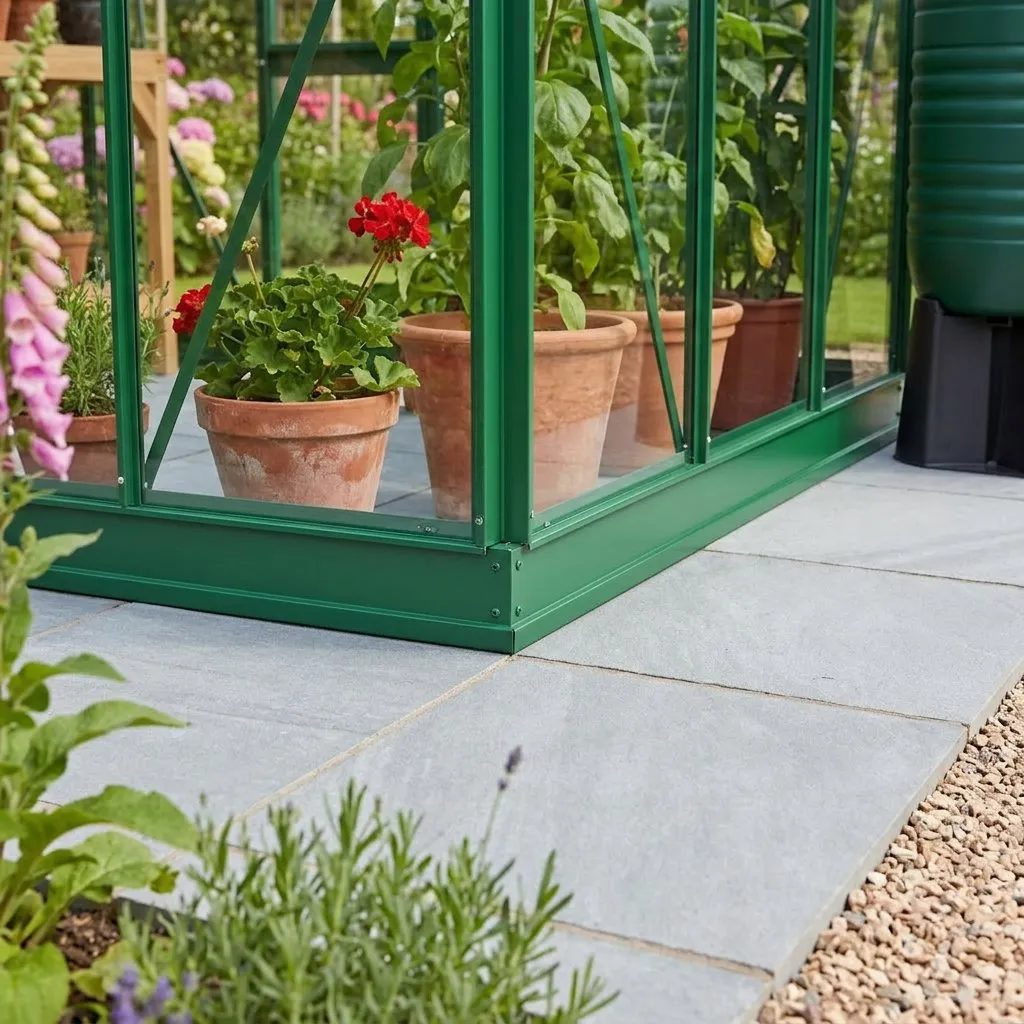 The Elite Thyme 6x8 comes with toughened glazing as standard, combining safety with maximum light transmission.
Shop the Elite Thyme 6x8 at Greenhouse Stores →
Which glazing suits which plants?
Different crops respond differently to light quality and temperature stability. Here is a practical guide based on UK growing conditions.
Glass greenhouses (horticultural or toughened)
Glass is the better choice for fruiting crops that need high light levels and warmth during the growing season. These include:
- Tomatoes - need intense, direct light for flavour development. See our tomato growing guide.
- Chilli peppers - require maximum sunlight hours and high temperatures. Our chilli growing guide covers greenhouse cultivation.
- Cucumbers - thrive in the humid warmth of a glass greenhouse. See our cucumber growing guide.
- Aubergines and peppers - both need every available hour of UK sunlight to ripen fully
Polycarbonate greenhouses
Polycarbonate suits propagation, overwintering, and cool-season crops best:
- Seed starting - diffused light prevents leggy seedlings. The warmth retention gives better germination rates.
- Lettuce and salad leaves - benefit from even light distribution with no scorch risk
- Herbs - basil, coriander, and parsley all grow well under diffused light. Our herb growing guide has variety recommendations.
- Overwintering tender plants - the insulation protects geraniums, fuchsias, and citrus through winter
- Container vegetables - an insulated greenhouse extends the season for pots and grow bags
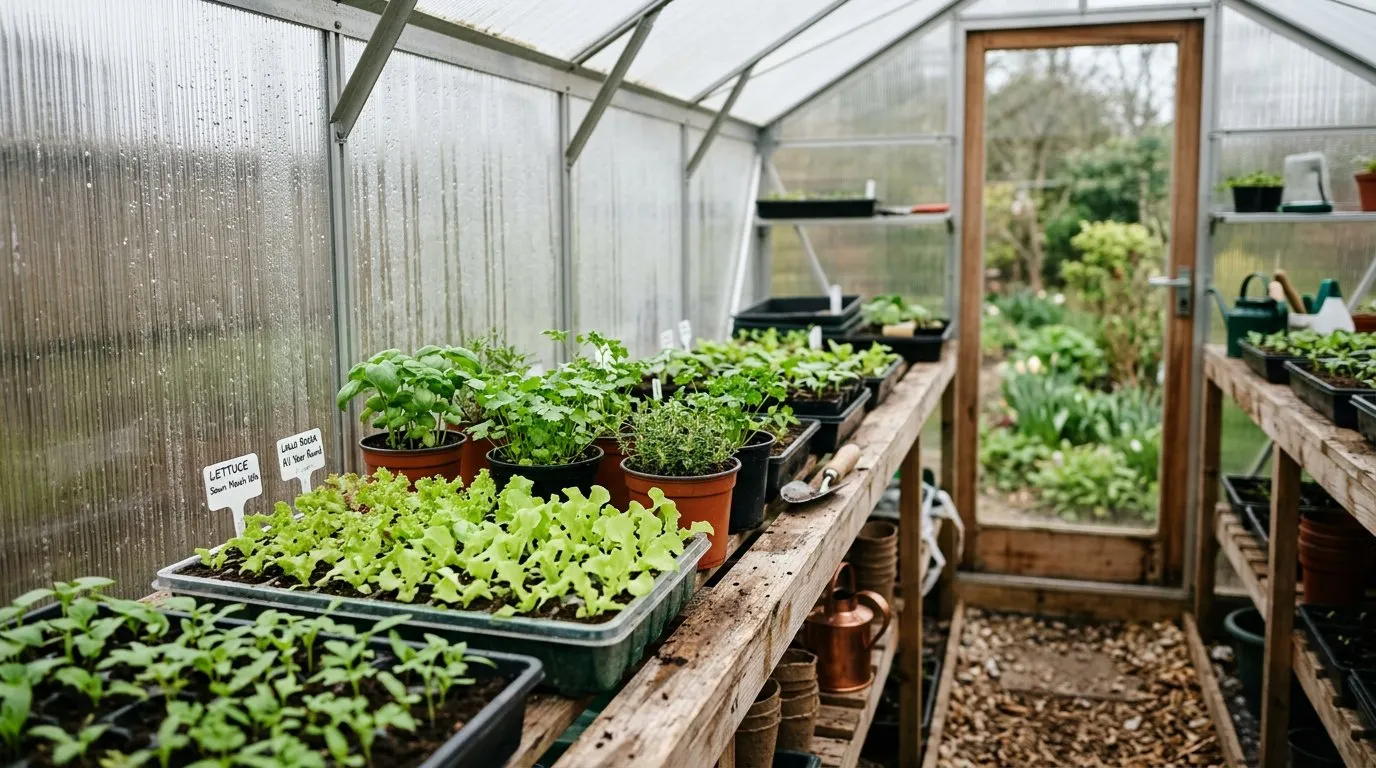 Diffused light through twin-wall polycarbonate panels spreads evenly across seed trays and herb pots, preventing the scorching hotspots common in glass greenhouses.
Gardener’s tip: Many experienced growers use both. A glass greenhouse for summer cropping and a smaller polycarbonate structure for propagation and overwintering. If you only have room for one, choose based on your primary use.
Why we recommend the Palram Hybrid 6x8 as the best starting greenhouse for most UK gardeners: After fitting and advising on greenhouses for over 30 years, the Palram Hybrid consistently satisfies the widest range of growers because the UV-stabilised twin-wall polycarbonate delivers reliable heat retention from February through November without requiring supplementary heating until temperatures drop below -5C. In back-to-back comparisons with equivalent horticultural glass models on the same site, the Palram Hybrid maintained night temperatures 3-4C higher on average across a full UK winter.
Common mistakes when choosing greenhouse glazing
Choosing horticultural glass near trees
Falling branches and conkers crack horticultural glass with ease. If your greenhouse site is within dropping distance of trees, choose toughened glass or polycarbonate. The replacement cost of broken panes adds up quickly. Our guide to securing a greenhouse in wind covers glazing choices for exposed UK sites in more detail.
Ignoring ventilation needs
Polycarbonate greenhouses retain more heat, which is an advantage in spring but a problem in summer. Without adequate roof vents and a louvre vent, temperatures soar above 35C on sunny days. Ensure any polycarbonate greenhouse has at least one roof vent per 2 metres of length.
Buying cheap polycarbonate without UV stabilisation
Budget polycarbonate panels without UV coating yellow and become brittle within 3-5 years. Always check that panels are UV-stabilised on both sides. Named brands like Palram use quality UV-protected sheets as standard.
Assuming glass is always better for plants
Glass transmits more light, but more light is not always better. Seedlings scorch under intense direct sun. Lettuce bolts faster in hotspots. Polycarbonate’s diffused light is genuinely preferable for many crops.
Forgetting about weight during assembly
Glass panels are heavy and awkward. A single 6ft x 2ft horticultural glass pane weighs around 4kg. Polycarbonate panels of the same size weigh under 2kg. If you are assembling a greenhouse alone, polycarbonate is far easier and safer to handle. Companion planting inside a new greenhouse helps establish a balanced growing environment from the start.
Now you’ve mastered the polycarbonate vs glass decision, read our guide on greenhouse heating for the next step in keeping your greenhouse productive through a UK winter.
Frequently asked questions
Is polycarbonate or glass better for a greenhouse?
Neither is universally better. Polycarbonate suits cold-climate propagation and families with children because it insulates well and does not shatter. Glass transmits more direct light, which fruiting crops like tomatoes and peppers prefer. Choose based on your main use and budget.
How long does polycarbonate greenhouse glazing last?
Quality twin-wall polycarbonate lasts 10-15 years before yellowing. UV-stabilised panels resist degradation longer. Budget panels without UV protection may cloud within 5 years. Replacement panels are cheaper and easier to fit than glass.
Does polycarbonate block light in a greenhouse?
Twin-wall polycarbonate transmits 80-83% of light, compared to 90% for glass. The difference is small in practice. Polycarbonate also diffuses light, spreading it evenly and reducing hotspots that cause leaf scorch.
Is toughened glass worth the extra cost?
Yes, for safety and durability. Toughened glass is five times stronger than horticultural glass and breaks into small, blunt granules instead of sharp shards. It costs more upfront but avoids replacement costs from accidental breakage.
Can I replace glass greenhouse panels with polycarbonate?
Yes, many gardeners retrofit polycarbonate into glass greenhouse frames. Twin-wall panels are lighter, so existing clips and glazing bars usually cope. Check the panel thickness matches your frame’s glazing channel before ordering.
Which greenhouse glazing is best for tomatoes?
Glass is the traditional choice for tomatoes because it transmits more direct light. Toughened glass in a well-ventilated greenhouse gives the best growing conditions for cordon varieties. Polycarbonate works but may produce slightly less intense flavour due to diffused light.
Lawrie has been gardening in the West Midlands for over 30 years. He grows his own veg using no-dig methods, keeps a wildlife-friendly garden, and writes practical advice based on real UK growing conditions.