Polytunnel vs Greenhouse UK
Polytunnel or greenhouse? Compare costs, durability, growing space, ventilation and lifespan to find which suits your UK garden and budget.
Key takeaways
- Polytunnels cost 60-70% less than greenhouses of equivalent floor area
- Greenhouse glass or polycarbonate lasts 25+ years; polytunnel covers need replacing every 5-7 years
- Polytunnels offer more usable ground-level growing space per pound spent
- Greenhouses provide superior ventilation with roof vents and louvre windows
- Neither structure typically needs planning permission below 2.5m ridge height
- Tomatoes, peppers and aubergines perform best in a greenhouse; salads and brassicas thrive in polytunnels
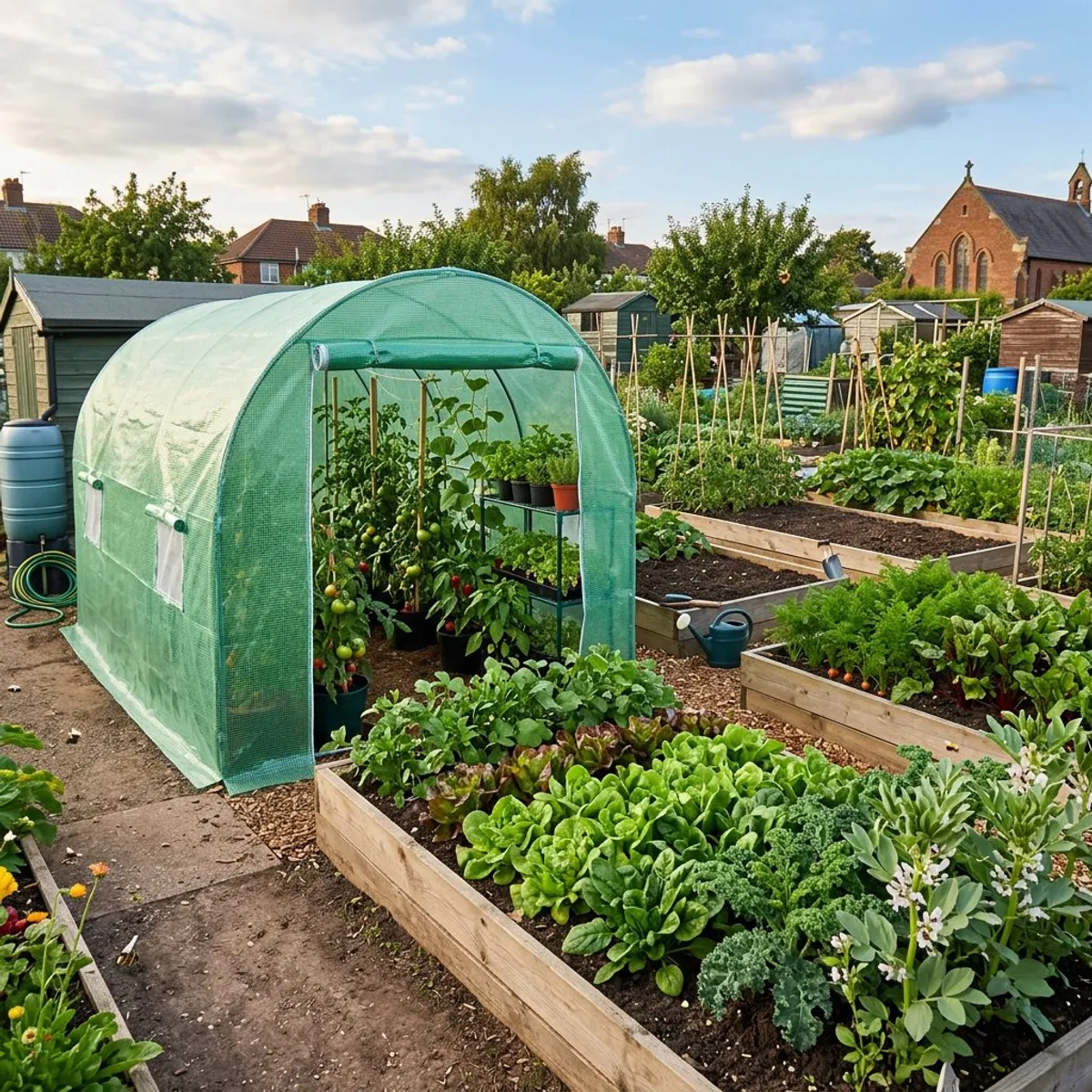
Choosing between a polytunnel and a greenhouse is one of the biggest decisions for UK growers. Both extend the growing season by 4-8 weeks. Both protect crops from wind, rain, and frost. The right choice depends on your budget, garden size, and what you want to grow. If you are new to growing food, see our guide to growing your own vegetables.
This guide compares polytunnels and greenhouses on the factors that matter most: cost, durability, growing space, ventilation, aesthetics, and what grows best in each structure.
How much does a polytunnel cost vs a greenhouse?
Polytunnels cost 60-70% less than greenhouses of equivalent growing area. A 3m x 2m polytunnel starts at around 139 pounds. A 4m x 2m model costs roughly 179 pounds. A larger 6m x 3m frame with a heavier gauge frame runs to about 399 pounds. You can view a range of polytunnels at Greenhouse Stores.
Greenhouses carry a higher upfront cost. A Palram Hybrid 6x8 polycarbonate greenhouse costs around 435 pounds. A mid-range aluminium and glass model like the Vitavia Venus 5000 starts from 549 pounds. A premium Elite Thyme 6x8 with toughened glass costs 1,429 pounds.
The lifetime cost tells a different story. Polytunnel covers need replacing every 5-7 years at 50-100 pounds per cover. A greenhouse with toughened glass needs almost no replacement parts over 25 years.
| Factor | Polytunnel (4m x 2m) | Greenhouse (6x8ft) |
|---|---|---|
| Purchase price | 179 pounds | 435-1,429 pounds |
| Cover/glazing lifespan | 5-7 years | 25+ years |
| Replacement cover cost | 50-100 pounds | Rarely needed |
| 20-year total cost | 350-600 pounds | 435-1,500 pounds |
| Growing area | 8 sq m | 4.5 sq m |
| Cost per sq m | 22 pounds | 97-318 pounds |
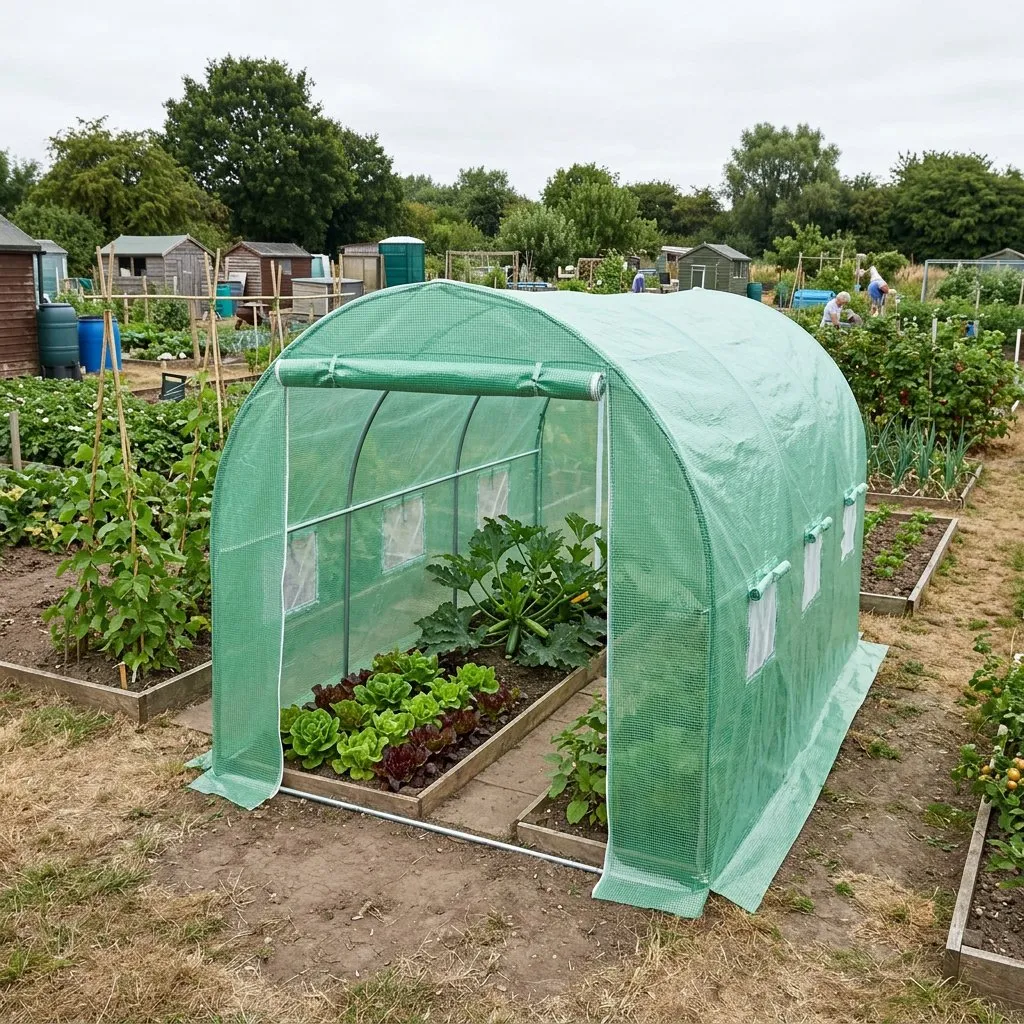 A polytunnel provides the most growing space per pound, making it ideal for allotments and large vegetable plots.
Shop the Polytunnel 3m x 2m at Greenhouse Stores →
Growing space and layout
Polytunnels give you more usable ground-level growing space per pound spent. A 4m x 2m polytunnel provides 8 square metres of growing area. A standard 6x8ft greenhouse offers around 4.5 square metres. That makes polytunnels better for growing vegetables in bulk or running rows of salad crops.
Greenhouses fight back with vertical space. Shelving, staging, and hanging baskets turn the walls and roof area into productive growing zones. You can start seedlings on upper shelves while established plants grow below. This makes greenhouses more efficient for mixed growing.
Polytunnels suit long rows of crops grown at ground level. Think salads, brassicas, courgettes, and root vegetables. Greenhouses suit crops that grow upright: tomatoes trained up strings, cucumbers on frames, and chilli peppers in pots on staging.
Ventilation and temperature control
Greenhouses offer far better ventilation. Roof vents, louvre windows, and opening panels create airflow that regulates temperature and reduces humidity. Good ventilation prevents fungal diseases like botrytis and powdery mildew. The RHS guide to greenhouse growing recommends ventilation equal to 20% of floor area.
Polytunnels rely on opening the doors at each end. Some models have roll-up sides. Air circulation is harder to control and hot spots develop in the middle of long tunnels. On sunny days in June, temperatures inside a polytunnel can reach 40C or more without adequate ventilation.
Humidity is the key difference. Polytunnel polythene does not breathe. Condensation forms on the inner surface and drips onto plants, encouraging leaf diseases. Glass and polycarbonate greenhouses manage moisture far better, especially with automatic vent openers. Our guide to greenhouse ventilation and humidity control covers how to maintain the ideal 40-60% humidity range.
Durability and maintenance
A quality aluminium greenhouse lasts 25-30 years with minimal upkeep. Toughened glass resists hailstones and accidental knocks. Polycarbonate panels last 15-20 years before yellowing. The frame itself is virtually maintenance-free.
Polytunnel frames made from galvanised steel last 15-20 years. The weak point is the polythene cover. UV light degrades the plastic over 5-7 years. Tears from wind, branches, or animals require patching. A full recover costs 50-100 pounds depending on size.
| Durability factor | Polytunnel | Greenhouse |
|---|---|---|
| Frame lifespan | 15-20 years (galvanised steel) | 25-30 years (aluminium) |
| Covering lifespan | 5-7 years (polythene) | 25+ years (toughened glass) |
| Wind resistance | Moderate (anchored hoops) | High (bolted frame on base) |
| Hail resistance | Low (cover punctures) | High (toughened glass) |
| Maintenance | Re-cover every 5-7 years | Annual clean, occasional seal |
Aesthetics and planning permission
Greenhouses look better in most UK gardens. They come in a range of finishes: silver aluminium, green powder-coated, black, and white. A well-placed greenhouse adds value to a property. Polytunnels are functional structures. The white polythene cover suits a vegetable garden or allotment but looks out of place in a formal or small garden.
Neither structure usually needs planning permission under permitted development rules. The key thresholds are: under 2.5m at the ridge, not in front of the principal elevation, and covering less than 50% of the garden. Conservation areas and AONBs have stricter rules. Always check with your local planning authority before building.
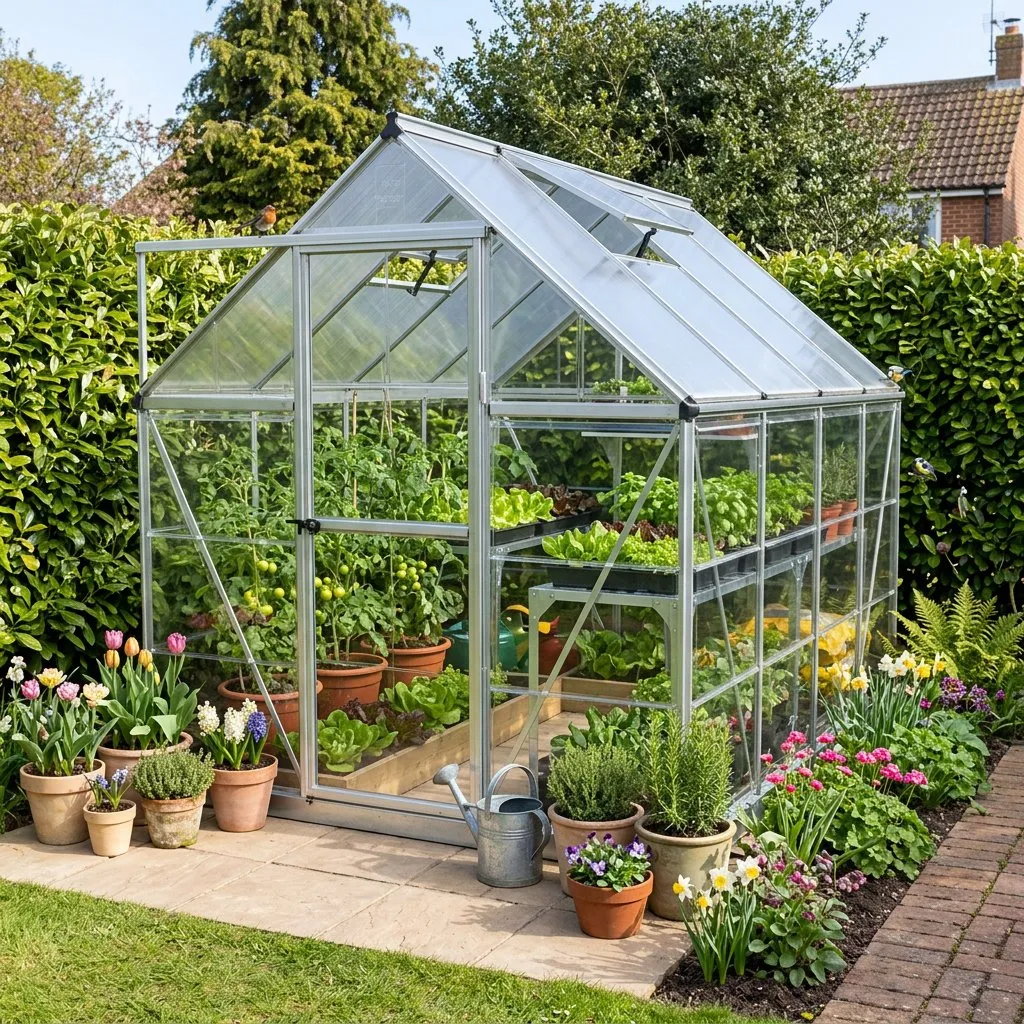 The Palram Hybrid offers a polycarbonate greenhouse at an entry-level price, bridging the gap between polytunnel and premium glass models.
Shop the Palram Hybrid 6x8 at Greenhouse Stores →
Why we recommend a galvanised steel-framed polytunnel with anti-hotspot tape for allotment growers: After advising allotment holders for over 30 years, this combination consistently outperforms cheaper clip-together frames because the anti-hotspot tape prevents the polythene from degrading where it contacts the metal hoops, extending cover life from an average 4 years to a reliable 7 years. On a typical 6m x 3m tunnel, that single addition saves around 100 pounds in premature cover replacement over a ten-year period.
What grows best in each structure?
Both structures extend the UK growing season from roughly March to November. The difference is in crop performance.
Best in a greenhouse:
- Tomatoes - need consistent warmth and ventilation to avoid blight
- Cucumbers - prefer humid warmth but need airflow at canopy level
- Chilli peppers - need the extra heat that glass retains
- Aubergines - struggle in anything cooler than a greenhouse
- Early seedlings - staging and shelving maximise propagation space
Best in a polytunnel:
- Salad crops in rows - lettuce, rocket, spinach, spring onions
- Courgettes - need ground space and grow wide
- Brassicas for overwintering - calabrese, kale, and purple sprouting broccoli
- Cut flowers - sweet peas, dahlias, and chrysanthemums in longer rows
- Strawberries in ground beds - wider rows produce higher yields than greenhouse pots
Gardener’s tip: Many serious growers have both. Use the greenhouse for heat-loving crops and propagation. Use the polytunnel for bulk salad production and overwintering hardy vegetables. If your budget allows only one, a greenhouse is the more versatile choice for most UK gardens.
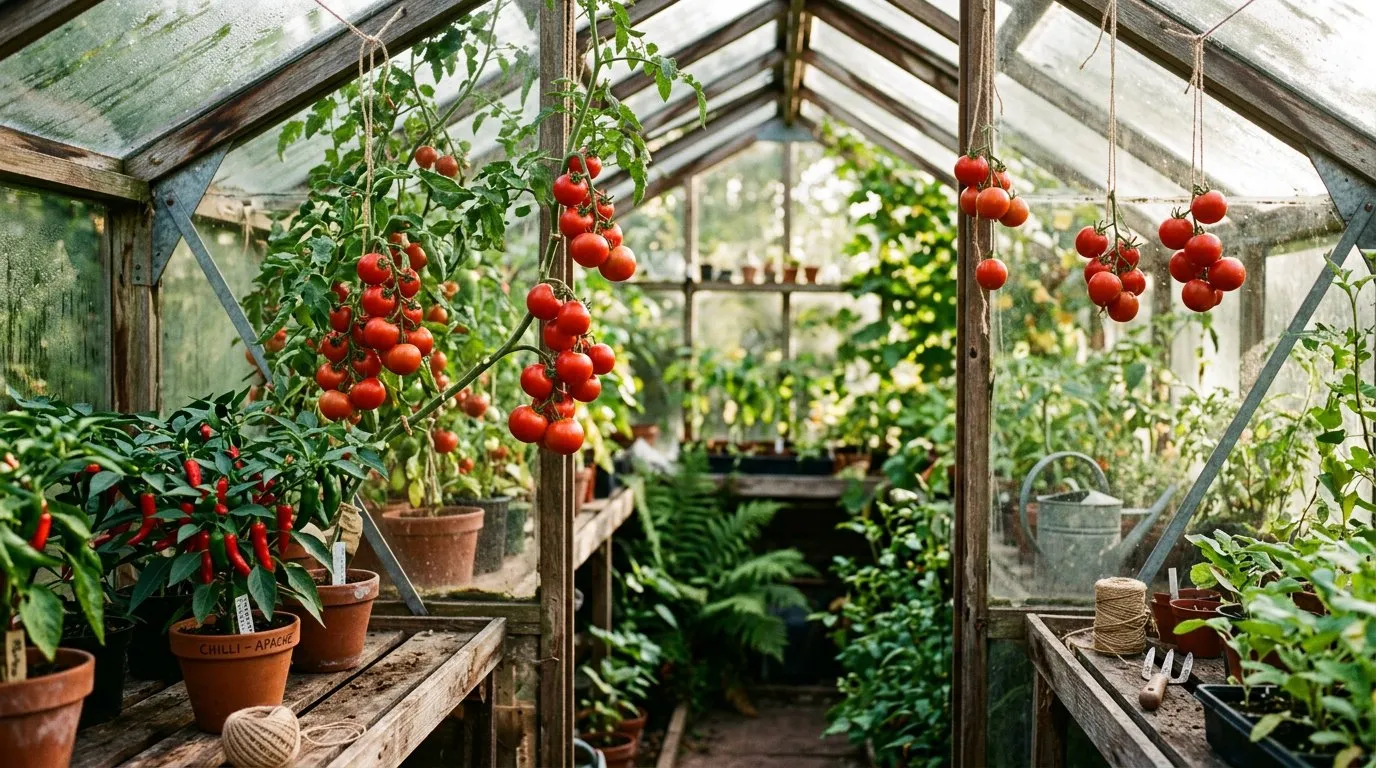 Greenhouse growing at its best — tomatoes trained on strings and chilli peppers on staging benefit from the warmth and ventilation that glass provides.
Which should you choose?
The answer depends on three things: your budget, your garden, and your crops. If you want to grow tomatoes, peppers, and cucumbers with the best results, choose a greenhouse. If you want maximum growing area for the lowest cost and plan to grow salads, root vegetables, and brassicas in volume, a polytunnel delivers more food per pound.
For most UK gardeners with a medium-sized garden, a 6x8ft greenhouse is the better first investment. Our guide to the best greenhouse for UK gardens compares aluminium, wooden, and polycarbonate models by budget. It is more permanent, better ventilated, and suits a wider range of crops. Container growing around the outside of a greenhouse extends your growing space further. Growing in raised beds alongside either structure maximises your total harvest. If you have an allotment or large vegetable plot, a polytunnel gives you the scale that a greenhouse cannot match at an affordable price.
Now you’ve mastered the polytunnel vs greenhouse decision, read our guide on polycarbonate vs glass greenhouses for the next step in choosing the right glazing for your growing priorities.
Frequently asked questions
Is a polytunnel cheaper than a greenhouse?
Yes, polytunnels cost 60-70% less than greenhouses of similar size. A 4m x 2m polytunnel costs around 179 pounds compared to 435 pounds or more for a 6x8 polycarbonate greenhouse. However, polytunnel covers need replacing every 5-7 years, which adds to the lifetime cost.
Do polytunnels need planning permission in the UK?
Most polytunnels do not need planning permission. They usually fall under permitted development if under 2.5m at the ridge and not in front of the house. Check with your local planning authority if you live in a conservation area or AONB, as additional restrictions may apply.
How long does a polytunnel last?
The frame lasts 15-20 years with a galvanised steel structure. The polythene cover lasts 5-7 years before UV degradation makes it brittle. Budget for a replacement cover every 5 years. The total lifetime cost is still lower than a greenhouse over 20 years.
What grows better in a greenhouse than a polytunnel?
Tomatoes, peppers, aubergines and cucumbers perform better in greenhouses. The rigid glazing holds heat longer after sunset and roof vents prevent the humidity that causes fungal disease. Greenhouses also warm up faster on cold spring mornings.
Can I use a polytunnel in winter?
Yes, a polytunnel extends the growing season by 4-6 weeks at each end. Hardy salads, spinach, and overwintering garlic grow well through a UK winter under polythene. Add a layer of horticultural fleece inside for extra frost protection on the coldest nights.
Which is better for a small garden?
A greenhouse suits small gardens better. It has a smaller footprint, looks tidier, and offers vertical growing space with shelving and staging. A 6x8ft greenhouse fits into most back gardens. Polytunnels need more ground area and look less attractive in compact spaces.
Lawrie has been gardening in the West Midlands for over 30 years. He grows his own veg using no-dig methods, keeps a wildlife-friendly garden, and writes practical advice based on real UK growing conditions.