Summer Gardening Jobs: Complete UK Checklist
Month-by-month summer gardening checklist for UK gardens. Covers watering, deadheading, harvesting, pruning, lawn care, and pond tasks for June to August.
Key takeaways
- Water deeply twice a week rather than lightly every day — 20-25 litres per square metre weekly
- Deadhead roses, dahlias, and annuals every 3-4 days to extend flowering by 4-6 weeks
- Mow lawns weekly at 3-4cm, raising to 5cm during drought to protect grass roots
- Prune wisteria in July by cutting summer growth back to 5-6 leaves from the main stem
- Harvest courgettes at 15-20cm — leaving them larger reduces further cropping
Summer is when UK gardens earn their keep. The long days from June to August produce the year’s best colour, the biggest harvests, and the most wildlife activity. But summer also brings the heaviest workload — watering, deadheading, harvesting, and keeping rampant growth under control.
This guide organises every summer task by garden area and by month. For the rest of the year, see our spring, autumn, and winter gardening jobs guides. Work through each section systematically, or use the month-by-month checklist at the end to plan your weekends. For planting guidance, see our monthly guides for June, July, and August. The RHS seasonal job finder is a useful companion reference.
Watering
Watering is the single most important summer task. Get it wrong and everything suffers.
How much and how often
Water deeply twice a week rather than lightly every day. Each watering should deliver 20-25 litres per square metre, enough to soak the top 15-20cm of soil. Shallow watering encourages roots to stay near the surface where they are more vulnerable to drought.
Water in the early morning or evening to reduce evaporation. Morning is best because foliage dries quickly, reducing fungal disease risk. Evening watering keeps the soil moist overnight but can encourage slugs.
What needs watering most
Newly planted trees, shrubs, and perennials need watering for their entire first summer, even during rain. Their root systems are too small to reach deep moisture.
Containers and hanging baskets dry out fastest. Check daily and water until it runs from the drainage holes. Large pots dry out slower than small ones.
Vegetables need consistent moisture, especially during flowering and fruiting. Irregular watering causes tomatoes to split, lettuce to bolt, and beans to drop flowers.
Established trees and shrubs rarely need watering once they have been in the ground for two years. Their roots reach deep enough to find moisture. For more strategies, see our guide to water-efficient gardening.
Why we recommend morning watering over evening watering for summer vegetables: After 30 years of growing crops through UK summers, watering in the morning — ideally between 6am and 9am — consistently produces healthier plants and fewer disease problems than evening watering. In a trial season where I split my tomato beds between morning and evening watering, the evening-watered plants developed septoria leaf spot three weeks earlier and showed measurably more botrytis on lower leaves. Morning watering delivers the same moisture to roots while giving foliage the entire day to dry, which removes the damp conditions that fungal diseases need overnight.
Gardener’s tip: Push your finger 5cm into the soil. If it is dry at finger depth, water. If it is moist, leave it. Overwatering kills more plants than underwatering by drowning roots and encouraging rot.
Lawn care
Mowing
Mow weekly at 3-4cm through June and July. In a heatwave or extended dry spell, raise the cutting height to 5cm and reduce frequency to every 10-14 days. Longer grass shades its own roots and retains moisture better.
Never mow a brown, dormant lawn. UK lawns go dormant in prolonged drought. The grass is alive but has shut down to conserve moisture. It recovers within days of steady rain. Mowing a dormant lawn damages the crowns and delays recovery.
Feeding
Apply a summer lawn feed in June. Use a balanced formulation, not a high-nitrogen spring feed which promotes soft growth vulnerable to drought. Avoid feeding during a heatwave — fertiliser salts can scorch dry grass.
Watering the lawn
Most UK lawns recover from drought without watering. If you choose to water, apply 20mm once a week (roughly 20 litres per square metre). A sprinkler running for 30 minutes typically delivers about 12mm, so adjust accordingly.
Dealing with drought damage
Brown patches after a dry spell recover naturally once rain returns. Avoid the temptation to scarify, feed, or reseed until the grass is growing actively again. Usually by mid-September the lawn looks green without any intervention.
Borders and beds
Deadheading
Deadhead every 3-4 days during peak flowering. Removing spent blooms redirects the plant’s energy from seed production into producing more flowers. Regular deadheading extends the flowering season by 4-6 weeks.
Roses: cut the spent flower back to the first outward-facing leaf with five leaflets. This encourages a strong new shoot and another flush of blooms.
Dahlias: snap off spent heads just below the flower. New buds form at the leaf joints further down the stem.
Sweet peas: pick every flower, including faded ones. The moment sweet peas set seed, they stop producing new flowers entirely.
Weeding
Stay on top of weeds through summer. Annual weeds set seed within 6-8 weeks, and a single plant can produce thousands of seeds. Hoe beds in dry weather — severed weeds shrivel on the soil surface. In wet weather, hand-pull instead because hoed weeds can re-root.
Staking and tying
Tall summer perennials need support. Delphiniums, hollyhocks, and tall dahlias lean and snap in wind and rain without staking. Tie stems loosely to canes with soft twine, leaving room for the stem to thicken.
Late summer planting
Order and plant autumn-flowering perennials in August — Japanese anemones, sedums, asters, and rudbeckia. Watering them in during late summer allows root establishment before winter.
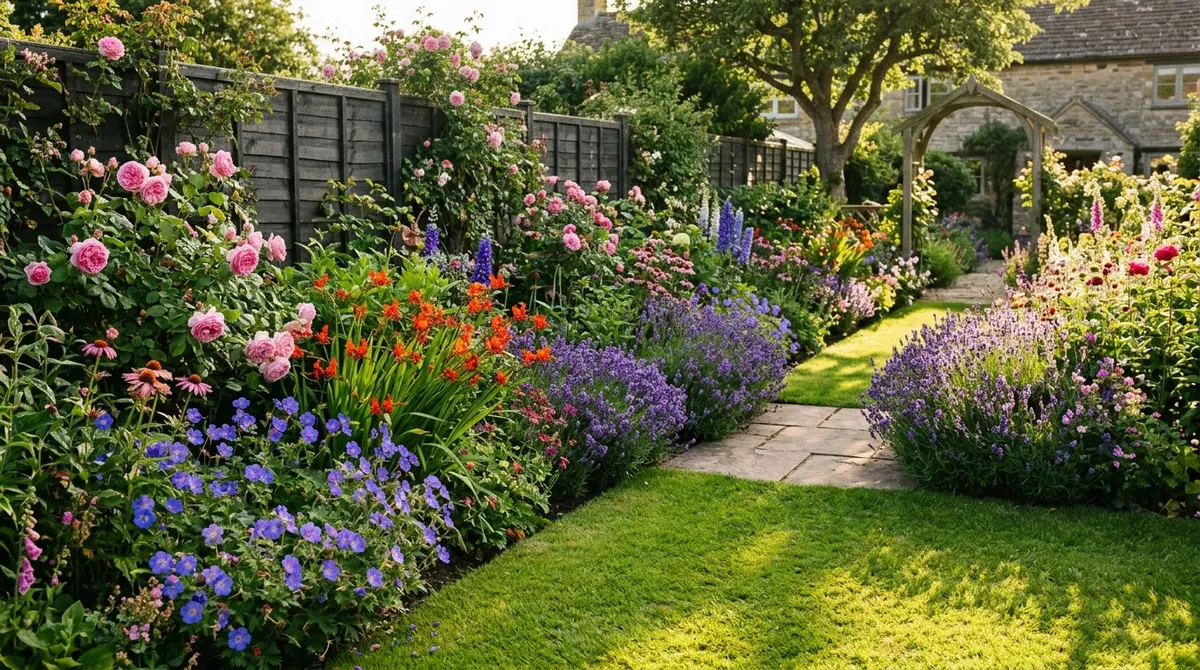
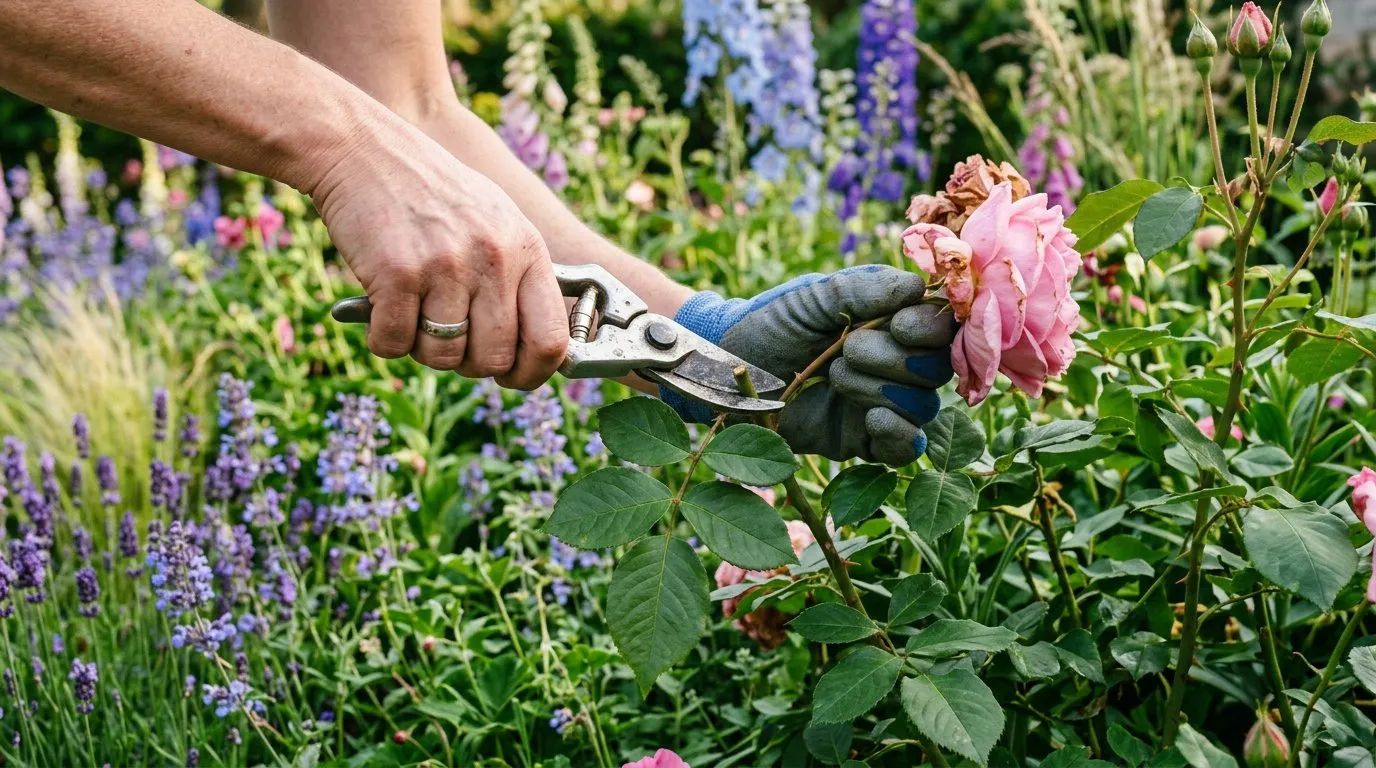 Deadheading roses every few days encourages repeat flowering right through to October
Pruning
After-flowering shrubs
Prune shrubs that flowered in spring and early summer immediately after flowering finishes:
- Philadelphus (mock orange) — cut back flowered shoots to strong new growth lower on the stem
- Deutzia — remove one-third of the oldest stems at ground level
- Weigela — cut flowered branches back to a young side shoot
- Lilac (Syringa) — deadhead only, removing spent flower panicles
Wisteria summer pruning
Prune wisteria in July or August by cutting the current season’s whippy green growth back to 5-6 leaves from the main framework. This controls size and encourages the short spurs that carry next year’s flowers. A second prune in winter shortens these same shoots to 2-3 buds.
Hedge trimming
Trim formal hedges in June and again in August:
| Hedge species | First trim | Second trim | Notes |
|---|---|---|---|
| Box (Buxus) | June | Late August | Avoid cutting in strong sun |
| Yew (Taxus) | June | August | Tolerates hard cutting |
| Privet | June | August | May need a third trim in fast-growing years |
| Beech/hornbeam | August only | — | One trim maintains shape |
| Leylandii | June | August | Never cut into brown wood |
Check for nesting birds before trimming any hedge. Under the Wildlife and Countryside Act 1981, it is an offence to deliberately disturb nesting birds. If you find an active nest, delay trimming until the chicks have fledged.
Lavender
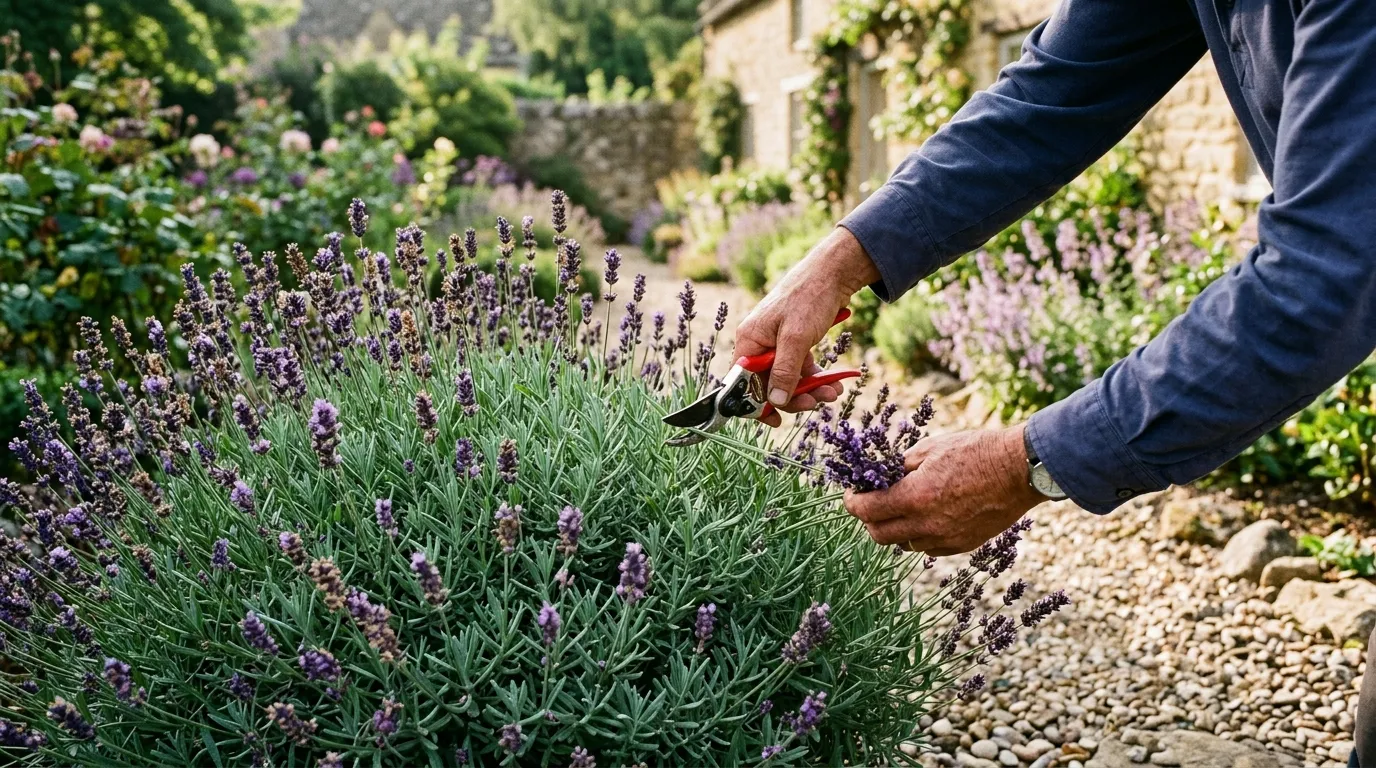
Prune lavender immediately after flowering finishes, typically late July or August. Cut back flower stalks and about 2-3cm of the current year’s leafy growth. Shape the plant into a dome. Never cut into bare, woody stems — lavender does not regenerate from old wood.
Harvesting
Summer is harvest season. Picking regularly encourages plants to produce more.
Vegetables
Courgettes: harvest at 15-20cm long. Leaving them to become marrows reduces further cropping dramatically. Check every other day because courgettes grow fast in warm weather.
Tomatoes: pick when fully coloured and slightly soft to the touch. Remove side shoots weekly on cordon varieties. Feed with a high-potash tomato fertiliser every week once the first truss sets fruit. See our tomato growing guide for the full method.
Runner beans and French beans: pick every 2-3 days when pods are 15-20cm long for runners and 10-12cm for French beans. Leaving mature pods on the plant signals it to stop producing flowers.
Potatoes: lift first early varieties from June, second earlies from July, and maincrops from August. Wait until the foliage yellows and dies back for maincrops.
Salads: harvest lettuce and salad leaves as needed. Cut-and-come-again varieties provide 3-4 harvests from a single sowing. Make successional sowings every 2-3 weeks through summer for continuous supply.
Soft fruit
Strawberries: pick when fully red, checking every other day. Remove runners unless you want new plants. After fruiting finishes, cut back the foliage to 10cm and clear away straw mulch. For full details, see our strawberry growing guide.
Raspberries: pick summer-fruiting varieties from late June. After harvesting, cut the fruited canes to ground level and tie in new canes for next year.
Blackcurrants, gooseberries, and redcurrants ripen from late June through July. Pick entire trusses of currants rather than individual berries.
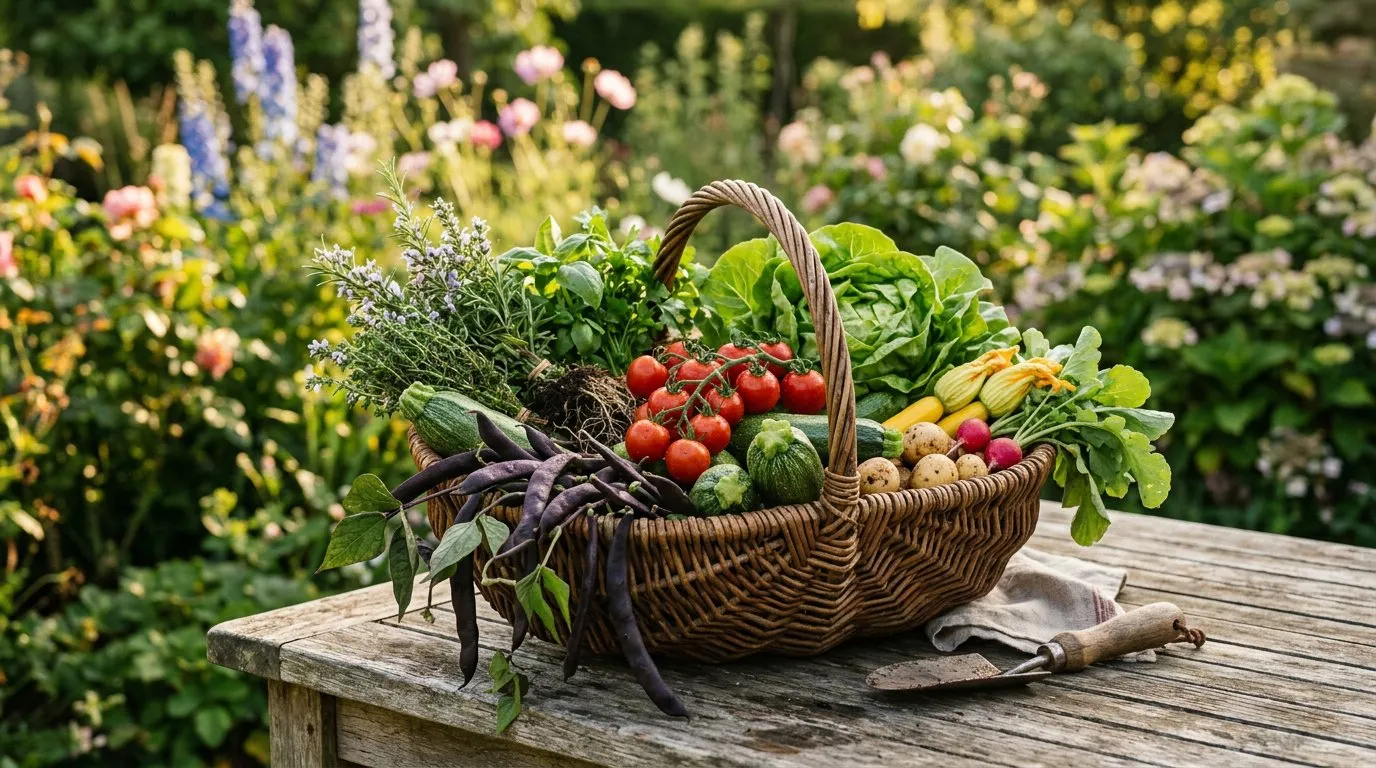 Regular harvesting keeps crops productive. Pick courgettes small, beans young, and tomatoes fully ripe.
Greenhouse tasks
Ventilation and shading
Open all vents and doors on warm days. Greenhouse temperatures above 30C stress plants and reduce fruiting. Apply shading paint or fit shade netting from June to reduce direct sun.
Damping down — wetting the greenhouse floor on hot days — raises humidity and lowers air temperature by 3-5C. Do this in the morning on days forecast to exceed 25C.
Watering and feeding
Greenhouse plants need daily watering in summer, twice daily in a heatwave. Tomatoes, cucumbers, peppers, and aubergines are all heavy drinkers.
Feed tomatoes and peppers with a high-potash liquid feed every week once the first fruits set. Feed cucumbers with a balanced feed. Yellowing lower leaves on tomatoes usually indicate a need for more magnesium — add Epsom salts at a tablespoon per 5 litres.
Pest management
Watch for red spider mite, which thrives in hot, dry conditions. Fine webbing on leaf undersides is the telltale sign. Increase humidity by damping down and misting foliage to deter them.
Whitefly clusters on the undersides of tomato and pepper leaves. Hang yellow sticky traps above plants to monitor numbers. Introduce the biological control Encarsia formosa for chemical-free management.
Wildlife
Providing water
Put out shallow water dishes for birds, hedgehogs, and insects. A saucer of water with a few stones for insects to land on supports pollinators in dry weather. Refresh daily.
Leaving areas wild
Let a section of lawn grow long through summer. Unmown grass provides habitat for grasshoppers, beetles, and small mammals. Wildflower areas attract the highest diversity of pollinators. See our guide to creating a mini meadow.
Supporting hedgehogs
Hedgehogs are most active from June to September. Create access holes (13cm x 13cm) in fence bases to allow them to move between gardens. Provide a shallow dish of water and cat food (not bread or milk) to support them through dry spells.
Pond care
Topping up
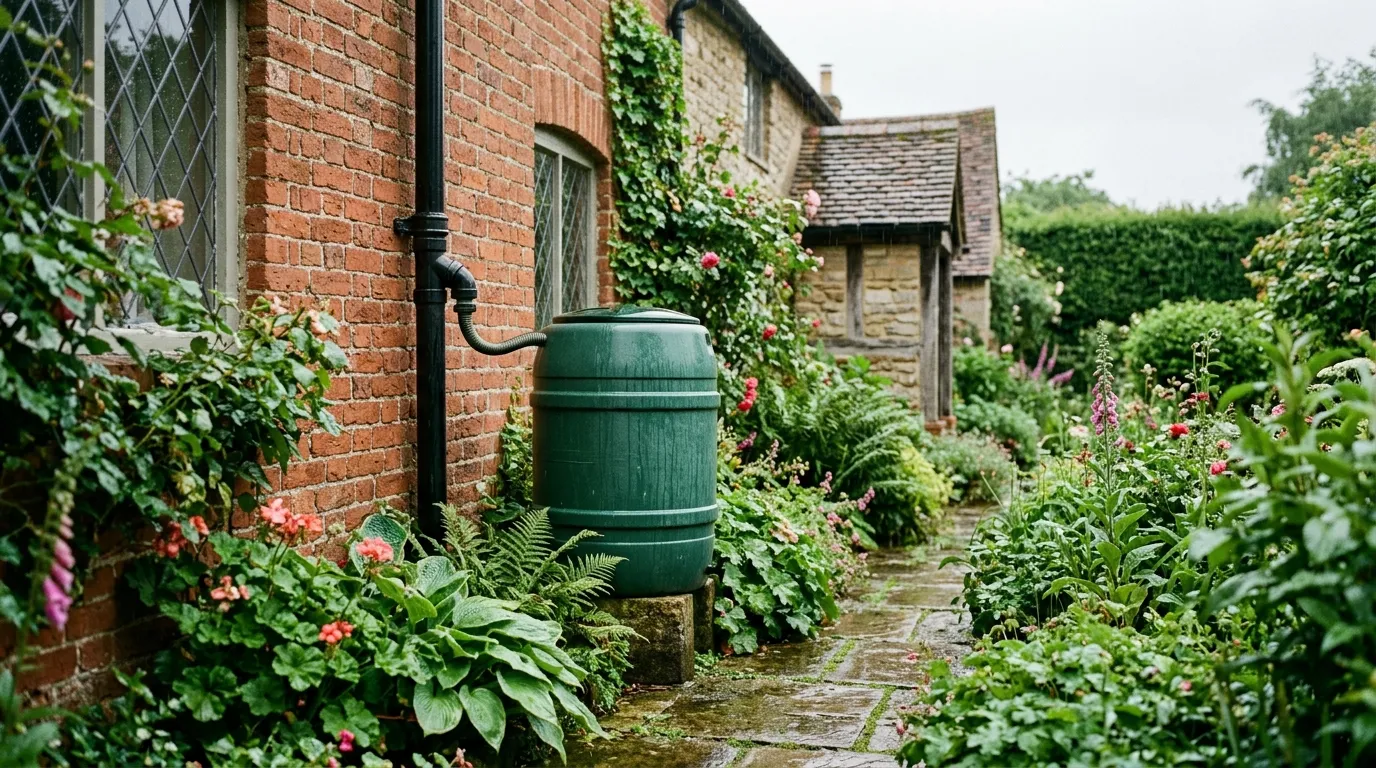
Ponds drop 2-5cm per week through evaporation in summer. Top up with rainwater from a butt rather than tap water, which contains chlorine and encourages algae. If using tap water, let it stand for 24 hours before adding.
Controlling blanketweed
Blanketweed grows fast in summer warmth and sunlight. Remove it by twirling around a stick or cane. Barley straw bales, dropped in the pond in spring, release compounds that slow algae growth through summer.
Oxygenating plants
Thin oxygenating plants like elodea and hornwort if they fill more than one-third of the pond volume. Remove excess growth with a net and leave it beside the pond overnight for creatures to crawl back in.
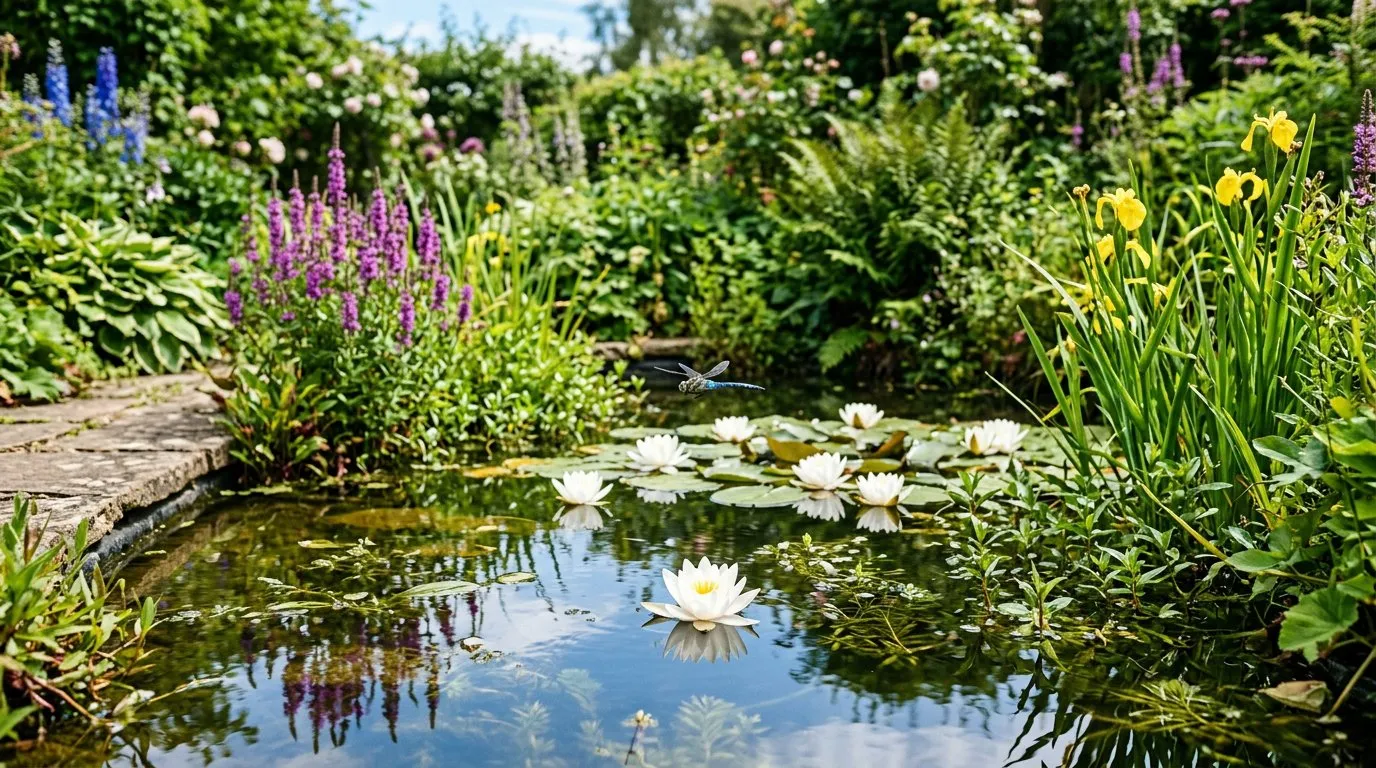 Summer ponds need regular topping up with rainwater and blanketweed removal to keep the water clear and oxygenated
Tools and maintenance
Holiday preparation
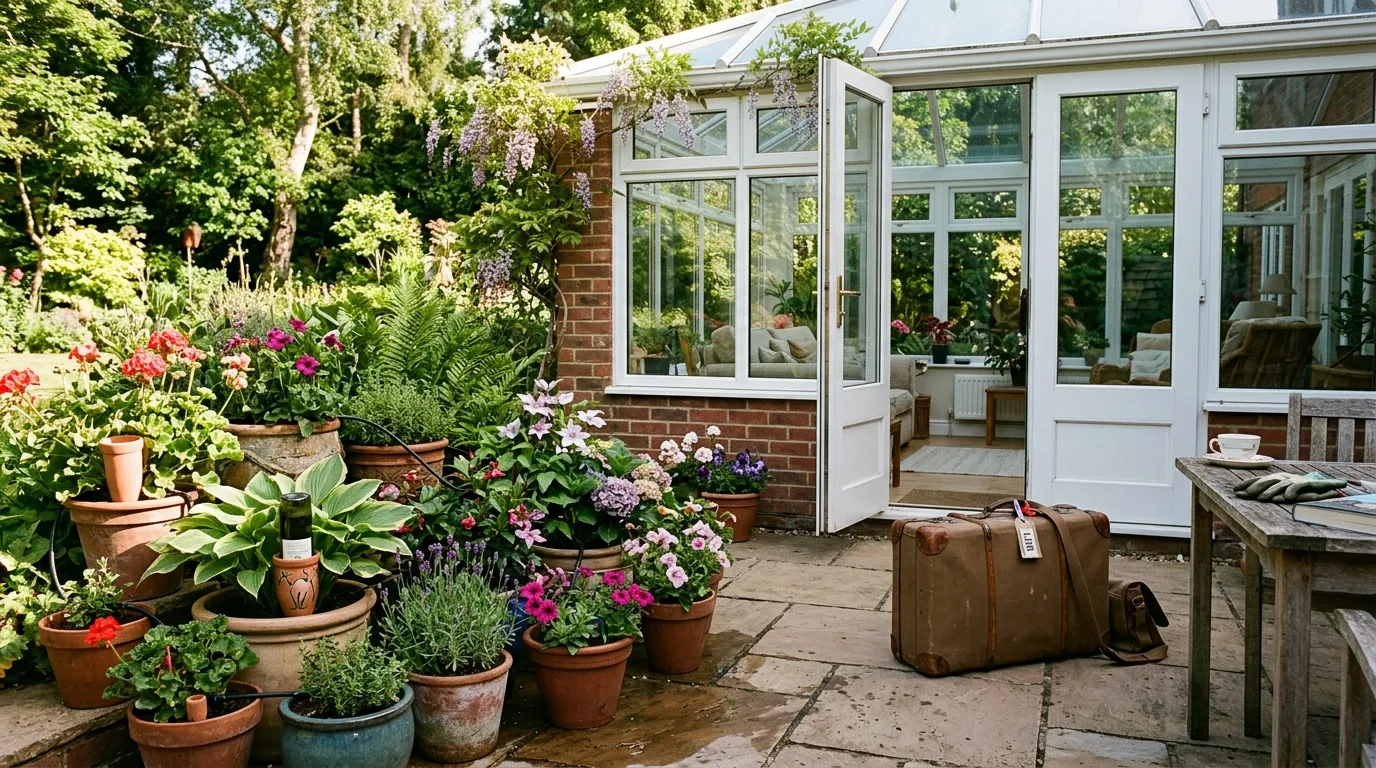
Before a summer holiday, water everything deeply, move containers into shade, group pots together (they shelter each other), and ask a neighbour to water containers and harvest crops. Mow the lawn the day before you leave.
Composting
Summer generates huge amounts of green waste. Keep the compost heap balanced with equal parts green (nitrogen-rich) and brown (carbon-rich) material. Grass clippings are heavy in nitrogen — mix with shredded cardboard, straw, or dry leaves to prevent a slimy, anaerobic heap. See our guide on how to make compost.
Collecting seed
Save seed from open-pollinated varieties of flowers and vegetables. Allow seed heads to ripen and dry on the plant, then collect into paper envelopes. Label with the variety and date. Stored in a cool, dry place, most seed remains viable for 2-3 years.
Month-by-month summer checklist
| Task | June | July | August |
|---|---|---|---|
| Water borders | As needed | Twice weekly | Twice weekly |
| Water containers | Daily | Daily, twice in heat | Daily, twice in heat |
| Mow lawn | Weekly at 3cm | Weekly or fortnightly | Weekly at 4cm |
| Deadhead | Every 3-4 days | Every 3-4 days | Every 3-4 days |
| Weed borders | Hoe weekly | Hoe weekly | Hoe weekly |
| Harvest vegetables | Early potatoes, salads | Beans, courgettes, tomatoes | Main harvest |
| Harvest soft fruit | Strawberries, gooseberries | Raspberries, currants | Late raspberries |
| Prune hedges | First trim | Wisteria | Second trim |
| Prune after-flowering shrubs | Philadelphus, weigela | Lavender | — |
| Greenhouse: ventilate | Open daily | Open daily | Open daily |
| Greenhouse: feed | Weekly | Weekly | Weekly |
| Pond: top up | Rainwater | Rainwater | Rainwater |
| Pond: blanketweed | Remove regularly | Remove regularly | Remove regularly |
| Collect seed | — | Early ripeners | Main collection |
Common mistakes
Watering little and often
Sprinkling the surface for five minutes every evening wets only the top centimetre of soil. Roots stay shallow and the plant becomes dependent on daily watering. Water deeply but less frequently to encourage deep rooting.
Letting courgettes become marrows
A single courgette left on the plant for a week becomes a marrow. The plant then channels energy into ripening that one fruit rather than producing new ones. Regular picking maintains productivity.
Pruning lavender too late
Pruning lavender in September removes the small buds that would produce next year’s flowers. Always prune immediately after flowering in July or August, while there is still time for a little regrowth before winter.
Ignoring greenhouse ventilation
Closing the greenhouse to trap warmth makes sense in spring but kills plants in summer. Temperatures above 35C damage tomato pollen, stop fruiting, and scorch foliage. Open everything from June to September.
Mowing a brown lawn
A brown lawn is dormant, not dead. Mowing it causes physical damage to the grass crowns. Leave it alone. It will green up within a week of steady rain.
Now you have your summer tasks covered, read our guide on autumn gardening jobs for the next phase of the gardening year.
Frequently asked questions
How often should I water my garden in summer?
Water deeply twice a week rather than lightly every day. Each watering should deliver 20-25 litres per square metre, enough to soak 15-20cm deep. Water early morning or evening to reduce evaporation. Newly planted trees and shrubs need watering throughout their first summer regardless of rain.
When should I deadhead flowers?
Deadhead every 3-4 days during the peak flowering season from June to September. Cut spent blooms back to the first healthy leaf set below the flower. Roses, dahlias, sweet peas, and bedding plants all produce more flowers when old ones are removed promptly.
Should I mow the lawn in a heatwave?
Raise the mowing height to 5cm and reduce frequency to every 10-14 days. Longer grass shades its own roots and survives drought better than close-mown turf. Never mow a brown dormant lawn. It recovers naturally once rain returns, usually within 5-7 days.
What vegetables can I still sow in summer?
Sow French beans, beetroot, spring onions, and lettuce until mid-July. In August, sow turnips, spring cabbage, and winter salad leaves. Quick-maturing salad varieties take just 4-6 weeks from seed to harvest, so a July sowing produces an autumn crop.
How do I stop tomatoes splitting?
Water consistently, never letting the compost dry out completely. Irregular watering causes fruit to absorb water suddenly after a dry spell and the skin splits. Water daily in hot weather and feed with a high-potash tomato fertiliser every week once fruit sets.
When should I prune lavender?
Prune immediately after flowering finishes, typically late July to August. Cut back the flower stalks and about 2-3cm of the current year’s leafy growth. Shape the plant into a rounded dome. Never cut into old bare wood because lavender does not regenerate from woody stems.
Lawrie has been gardening in the West Midlands for over 30 years. He grows his own veg using no-dig methods, keeps a wildlife-friendly garden, and writes practical advice based on real UK growing conditions.