Water-Efficient Gardening for UK Gardens
Practical guide to reducing water use in UK gardens. Covers mulching, rainwater harvesting, drought-tolerant planting, and efficient watering methods.
Key takeaways
- Mulching with 5-8 cm of organic matter reduces watering needs by up to 70%
- A 200-litre water butt collects enough rainwater from a shed roof to supply a small garden
- Water at the base of plants in the morning — avoid wetting leaves and evening watering
- Improving soil with compost increases water retention in sandy soil and drainage in clay
- Drought-tolerant plants like lavender, sedum, and ornamental grasses thrive with minimal watering once established
Water is becoming a precious resource in UK gardens. Hosepipe bans are now a regular summer occurrence across southern and eastern England, and climate projections suggest drier summers ahead. Learning to garden efficiently with water is no longer optional. It is a core skill.
The good news is that water-efficient gardening is not about letting your garden suffer. It is about smarter techniques that keep plants healthy while using far less water. Most of these methods save you time and money as well.
Why water efficiency matters in the UK
The UK receives 1,200mm of rainfall per year on average, but distribution is uneven. South-east England receives less than 600mm — comparable to parts of North Africa. Summer months produce the least rain at exactly the time gardens need the most water.
A single garden sprinkler uses 1,000 litres per hour — more water than an average household uses in a day. A hosepipe running for an hour uses 540 litres. These figures make the case for smarter watering methods clear.
Water companies issued hosepipe bans in 12 of the last 20 years. Building a garden that thrives with less water is not about responding to one dry summer — it is about preparing for the new normal.
Mulching: the single most effective technique
Mulching is the most impactful change you can make. A 5-8 cm layer of organic mulch spread over exposed soil reduces evaporation by 50-70%, suppresses weeds that compete for moisture, and feeds the soil as it decomposes.
Best mulch materials
| Material | Water retention | Cost | Notes |
|---|---|---|---|
| Garden compost | Excellent | Free if homemade | Best all-round mulch |
| Well-rotted manure | Excellent | Free from stables | Stack for 6 months first |
| Bark chips | Good | Eight to twelve pounds per bag | Lasts 2-3 years |
| Straw | Good | Four to six pounds per bale | Excellent around strawberries |
| Leaf mould | Excellent | Free | Takes 1-2 years to make |
| Gravel | Moderate | Varies | Good for Mediterranean plants |
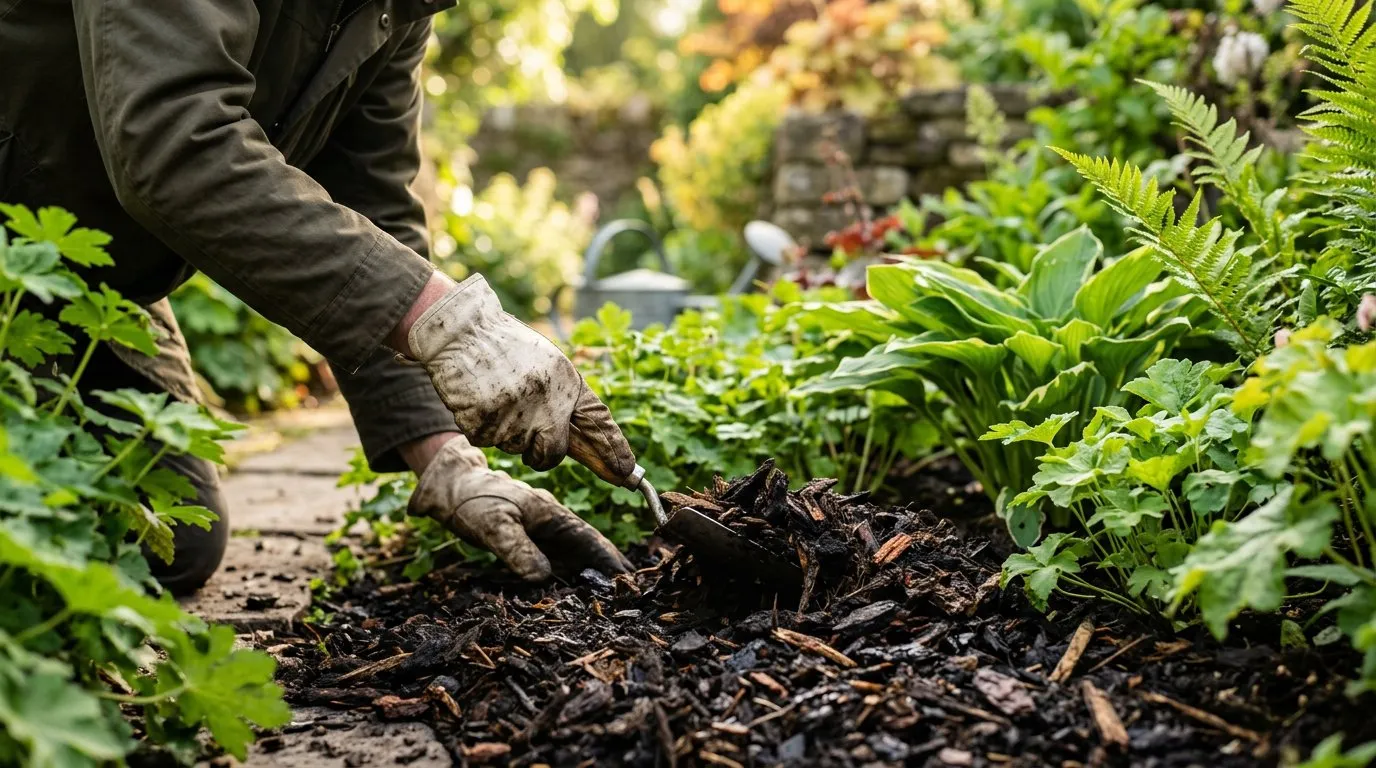 A 5-8 cm mulch layer reduces watering by up to 70%. Apply in spring when the soil is already moist.
Apply mulch in spring when the soil is already moist. Pull it back from plant stems to prevent rot. Top up annually as it breaks down. Our guide on making compost covers producing your own supply.
Rainwater harvesting
Collecting rainwater is free, better for plants than tap water, and reduces your dependence on mains supply during dry spells.
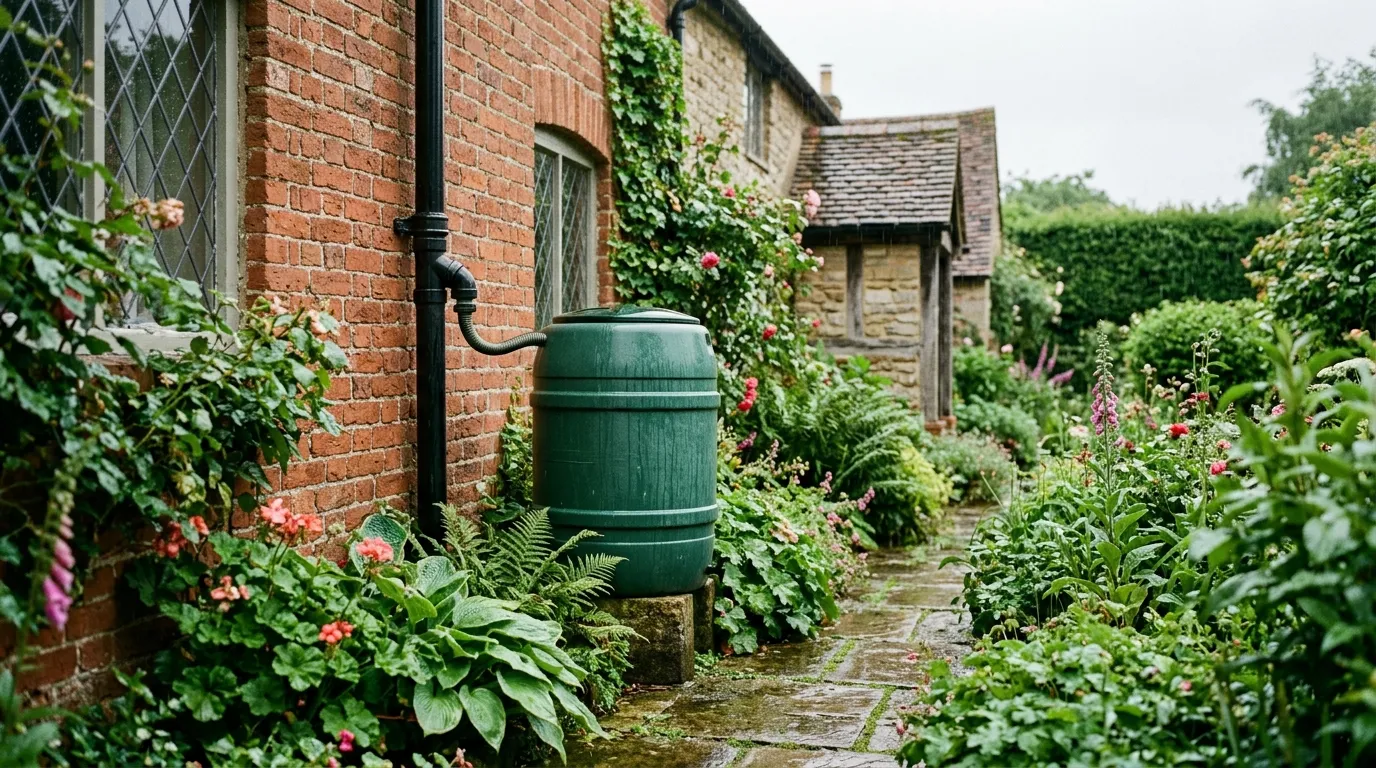
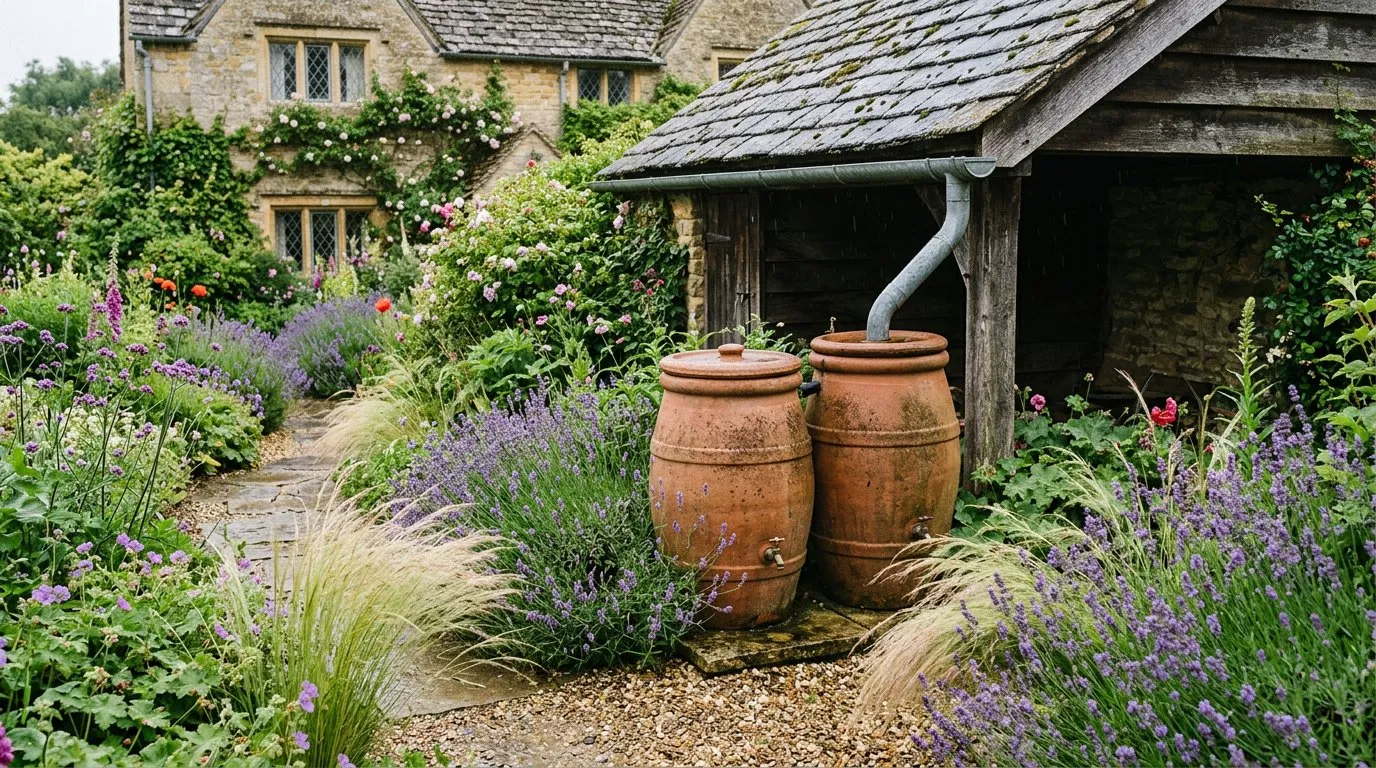 Water butts connected to a shed roof collect thousands of litres per year — enough for a small vegetable garden.
Water butts
A 200-litre water butt connected to a shed, greenhouse, or house downpipe fills from a single heavy shower. Position it on a stand so a watering can fits underneath the tap. A standard 6m x 8m shed roof collects around 4,800 litres per year — enough to supply a small vegetable garden through summer.
Costs: A basic water butt and diverter kit costs fifteen to thirty pounds. Slimline models fit against walls and fences for small spaces.
Beyond water butts
For larger gardens, underground rainwater tanks store 1,000-5,000 litres. These cost more but provide genuine water independence. Even a simple arrangement of linked water butts triples your storage capacity.
Tip: Cover water butts with a lid to prevent algae growth and mosquito breeding. Clean out debris in autumn when leaves fall.
Improving soil for water retention
Soil structure determines how well your garden holds moisture. Sandy soil drains too fast. Clay soil holds water but becomes waterlogged. Both improve with the same treatment: organic matter.
Adding 5-8 cm of compost or well-rotted manure to beds annually turns soil structure. In sandy soil, organic matter acts like a sponge, holding moisture where roots can reach it. In clay soil, it opens up the structure, improving both drainage and air circulation.
The difference is dramatic. Well-composted soil holds up to 20 times its weight in water. Poor soil loses moisture within hours of rain stopping.
Efficient watering techniques
How you water matters as much as how often.
Water at the base, not the top
Direct water to the soil at the base of each plant, not over the leaves. Overhead watering from a sprinkler loses 30-50% of water to evaporation before it reaches roots. Use a watering can with the rose removed, a drip hose, or leaky pipe laid along beds.
Water deeply but less often
One deep soak twice a week is far more effective than light daily watering. Deep watering encourages roots to grow downward into consistently moist soil. Surface watering keeps roots shallow, making plants more vulnerable to drought.
Water in the morning
Morning watering allows plants to absorb moisture before the heat of the day increases evaporation. Evening watering leaves foliage wet overnight, creating conditions for fungal diseases like blight and mildew.
Prioritise what needs water
Not everything needs watering equally:
- Seedlings and transplants — water every 1-2 days for the first two weeks
- Fruiting crops (tomatoes, beans, courgettes) — consistent moisture prevents blossom end rot
- Leafy crops (lettuce, spinach) — dry conditions trigger bolting
- Established shrubs and perennials — rarely need watering after the first year
- Lawns — recover naturally when rain returns. Do not water established lawns.
Choosing drought-tolerant plants
The most permanent solution to water-efficient gardening is choosing plants that thrive without supplementary watering. See our complete guide to drought-tolerant plants for detailed recommendations.
Plants from Mediterranean climates naturally tolerate dry conditions:
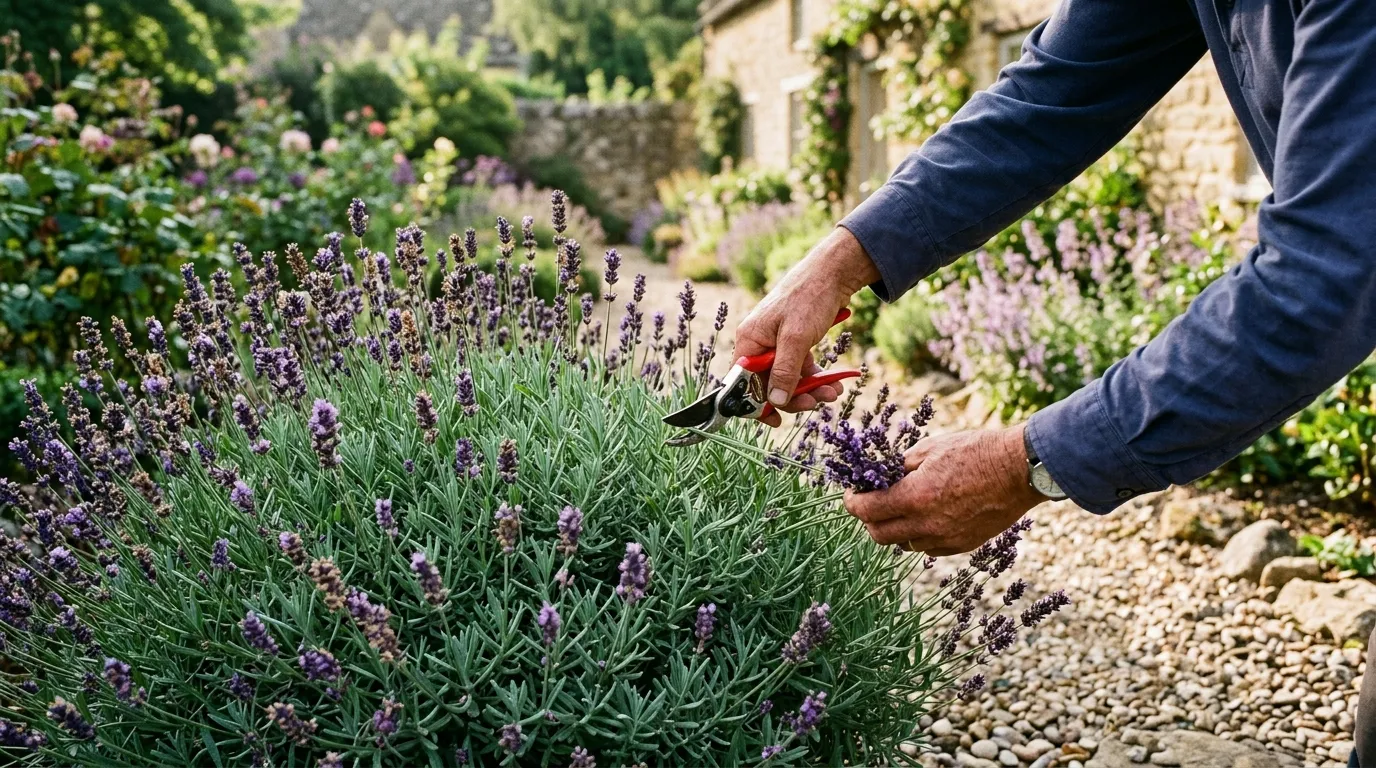
- Lavender — thrives in poor, dry soil and full sun
- Rosemary — needs almost no watering once established
- Sedum — succulent leaves store water, flowers attract pollinators
- Ornamental grasses — deep roots access moisture that shallow-rooted plants cannot reach
- Thyme — creeping varieties make excellent ground cover
- Echinacea — prairie native adapted to dry summers
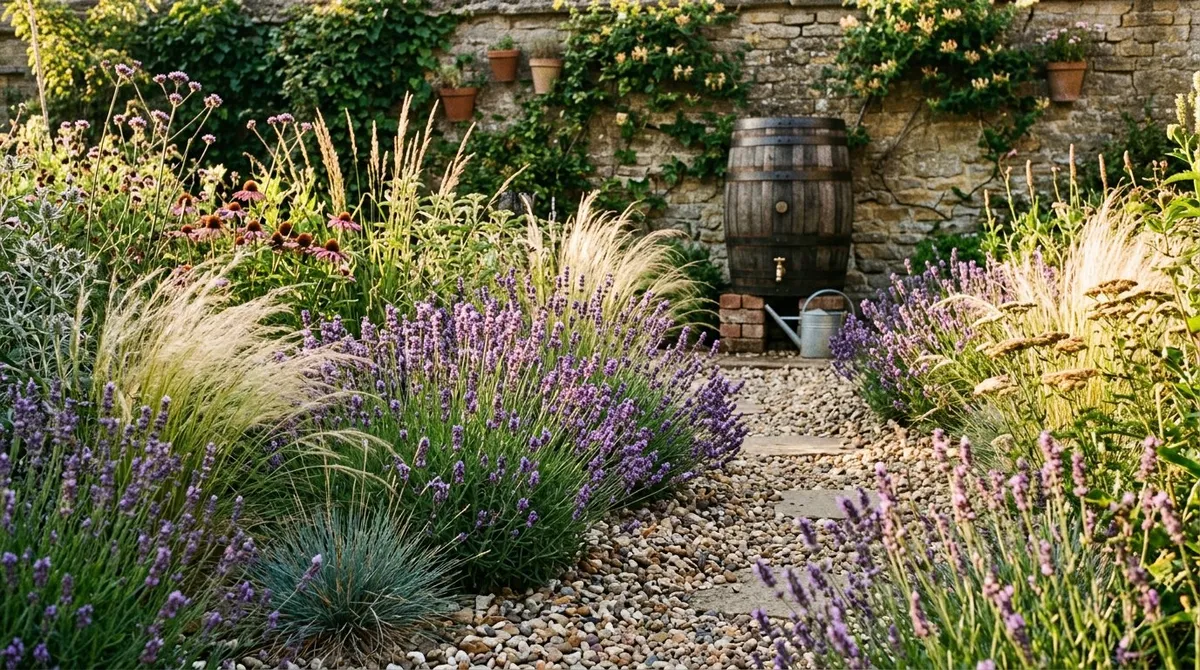
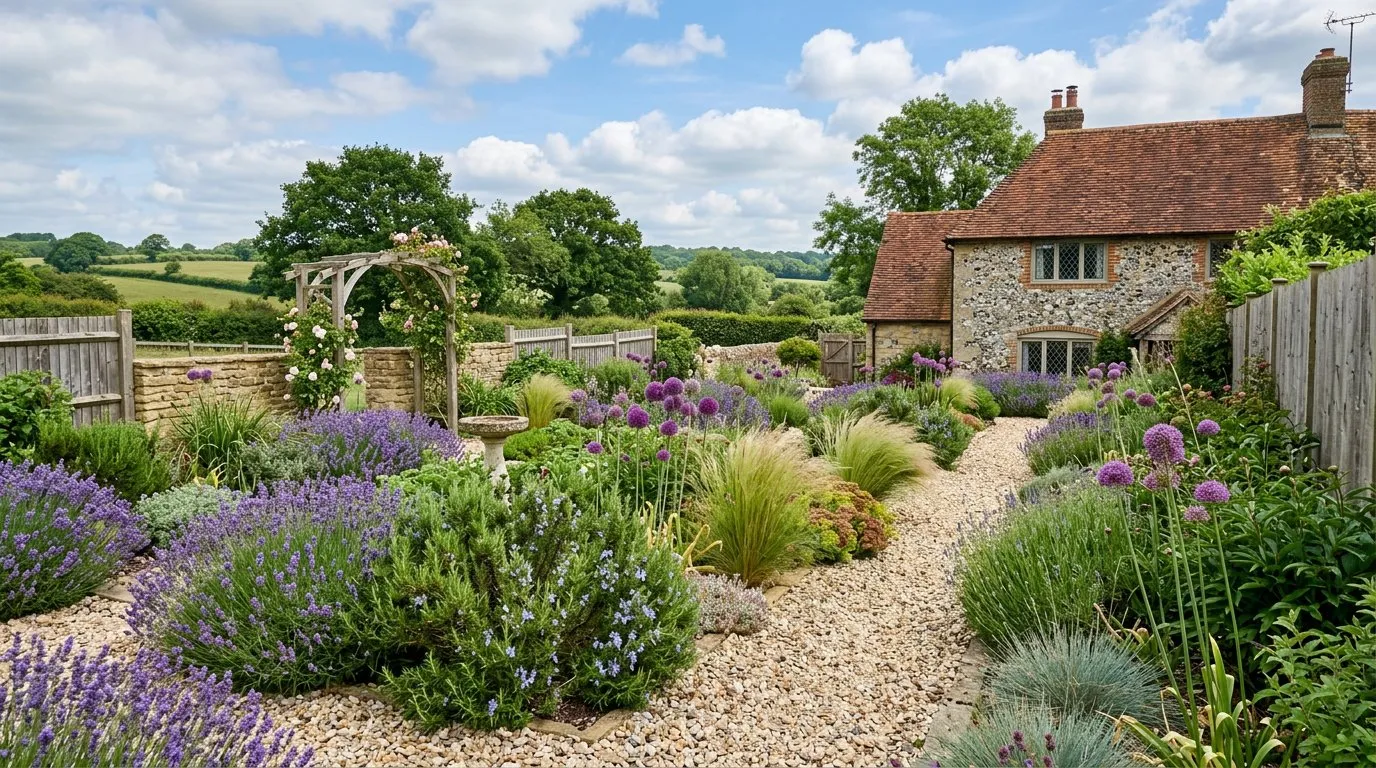 A gravel garden with drought-tolerant planting needs almost no watering once plants establish.
Native UK wildflowers also handle dry conditions well. A mini wildflower meadow needs no watering after establishment and supports pollinators.
Why we recommend Sedum ‘Herbstfreude’ (Autumn Joy) as the cornerstone drought-tolerant perennial: After 30 seasons of trialling low-water plants across clay, chalk, and sandy soils, Sedum ‘Herbstfreude’ consistently performs where other plants struggle. In a south-facing border that received no supplementary watering through a 12-week dry spell, it produced its fullest flowering season with zero wilting or leaf scorch. It also delivers a second dividend: the seed heads feed goldfinches and provide winter structure from October to February.
Garden design for water efficiency
Group plants by water needs
Plant thirsty crops together and drought-tolerant species together. This prevents overwatering plants that prefer dry conditions and underwatering those that need moisture.
Use shade strategically
Position taller plants to shade lower, moisture-loving crops. A wigwam of runner beans shades lettuce growing at its base, reducing evaporation and preventing bolting.
Reduce lawn area
Lawns consume more water than any other garden feature. Replace underused grass with ground cover plants, gravel areas, or additional beds. A 10 square metre lawn reduction saves hundreds of litres per dry week.
Now you’ve mastered water-efficient techniques, read our guide on drought-tolerant plants for UK gardens to choose the right species that thrive with minimal watering.
Frequently asked questions
How do I reduce water use in my garden?
Mulch all beds with 5-8 cm of organic matter to cut evaporation by up to 70%. Install water butts on shed and greenhouse downpipes. Water at the base of plants in the early morning. Choose drought-tolerant species and improve soil annually with compost or well-rotted manure.
When is the best time to water the garden?
Water in the early morning before 10am when air is cool and evaporation is lowest. Morning watering gives plants time to absorb moisture before afternoon heat. Avoid evening watering which leaves foliage wet overnight, encouraging fungal diseases like blight and powdery mildew.
How often should I water my garden in summer?
Established plants need deep watering once or twice a week rather than light daily sprinkling. Deep soaking encourages roots to grow downward into consistently moist soil layers. Newly planted specimens need watering every 2-3 days for the first 4-6 weeks until roots establish.
Are water butts worth it?
A 200-litre water butt costs fifteen to thirty pounds and fills from a single heavy rain event. Rainwater is better for plants than tap water because it contains no chlorine or lime. Most gardens recoup the cost within one dry summer through reduced mains water use.
What plants need the least water?
Lavender, rosemary, sedum, ornamental grasses, thyme, and other Mediterranean herbs need minimal watering once roots establish, typically after one growing season. Native wildflowers, established trees, and most mature shrubs also handle dry periods without intervention.
Does mulch really save water?
Mulching reduces soil moisture evaporation by 50-70% in trials conducted by the Royal Horticultural Society. A 5-8 cm layer of bark, compost, or straw keeps roots cool and moist, suppresses competing weeds, and feeds the soil as it decomposes over 1-2 years.
Lawrie has been gardening in the West Midlands for over 30 years. He grows his own veg using no-dig methods, keeps a wildlife-friendly garden, and writes practical advice based on real UK growing conditions.