What Is Mulch and How to Use It
A practical guide to mulching in UK gardens. Covers mulch types, application depth, timing, costs, and free sources for every situation.
Key takeaways
- Mulch reduces soil water evaporation by up to 70%, cutting summer watering in half
- Apply organic mulch 5-8cm deep in March-April after rain, or October-November before frost
- Bark chips last 2-3 years before needing replacement, compost mulch breaks down in one season
- Always leave a 5cm gap between mulch and plant stems to prevent rot and disease
- Free mulch sources include council green waste, tree surgeons, and homemade compost
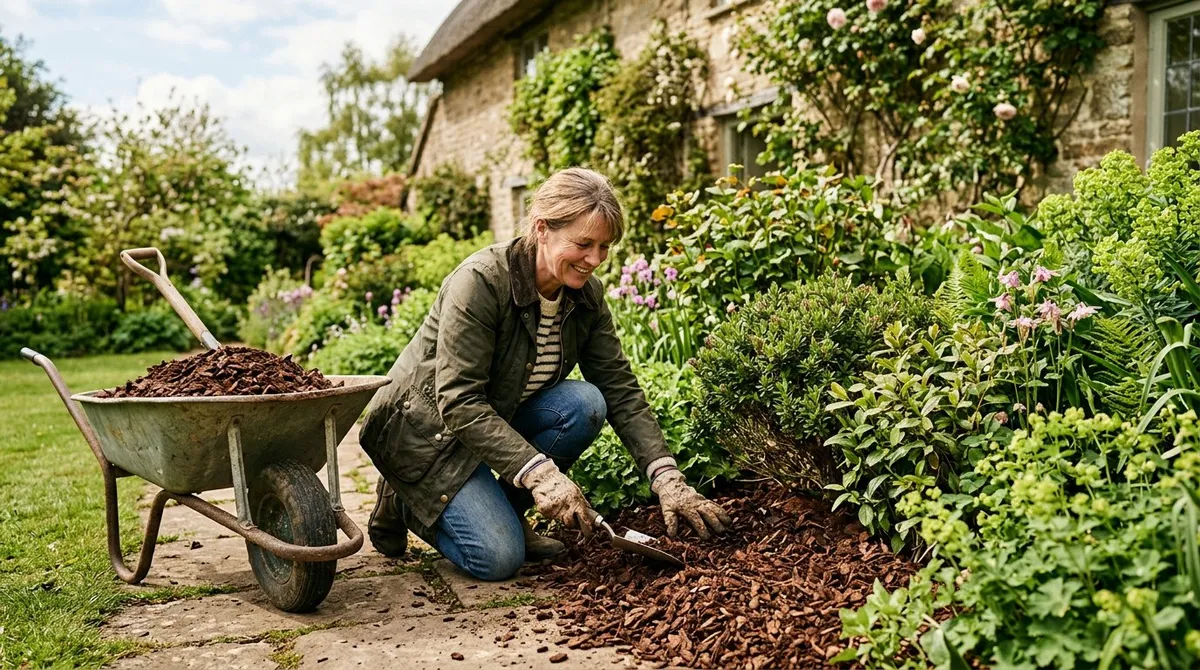
Mulch is any material laid on the soil surface to protect and improve the ground beneath. It is one of the most useful techniques in gardening, yet many people overlook it. A 5-8cm layer keeps moisture in, stops weeds germinating, and steadies soil temperature through the seasons.
Every professional gardener mulches. Every well-maintained public garden relies on it. Yet in domestic gardens, bare soil between plants remains common. This guide explains what mulch is, which types suit different situations, and where to find it for free.
Organic vs inorganic mulch
All mulches fall into two categories. Understanding the difference helps you choose the right type for each part of your garden.
Organic mulch comes from once-living material: bark, wood chips, compost, leaf mould, straw, and cocoa shells. It breaks down over time, feeding the soil and improving its structure. Organic mulch needs replacing every 1-3 years as it decomposes. This decomposition is a benefit, not a drawback. It mimics the natural cycle of a forest floor.
Inorganic mulch does not decompose. Gravel, slate chippings, pebbles, and weed membrane are all inorganic. They suppress weeds and retain moisture but add nothing to the soil. They are permanent or near-permanent, making them suited to paths, driveways, and low-maintenance borders.
Gardener’s tip: Use organic mulch on beds and borders where you want to improve the soil over time. Use inorganic mulch on paths, around alpine plants, and in gravel gardens where soil enrichment is not the goal.
Types of mulch: a comparison
The right mulch depends on location, budget, and whether you want to improve the soil or simply suppress weeds.
| Mulch type | Depth | Lifespan | Cost per m2 | Best use | Improves soil |
|---|---|---|---|---|---|
| Bark chips | 5-8cm | 2-3 years | Three to six pounds | Borders, shrub beds, paths | Yes, slowly |
| Garden compost | 3-5cm | 6-12 months | Free (homemade) | Vegetable beds, flower borders | Yes, quickly |
| Straw | 5-8cm | 6-12 months | One to two pounds | Vegetable beds, strawberry beds | Yes, slowly |
| Leaf mould | 3-5cm | 6-12 months | Free (homemade) | Woodland borders, acid-loving plants | Yes, excellent |
| Wood chip | 5-8cm | 2-3 years | Free to four pounds | Paths, large borders, tree circles | Yes, slowly |
| Gravel | 3-4cm | Permanent | Four to eight pounds | Paths, alpine beds, Mediterranean plants | No |
| Slate chippings | 3-4cm | Permanent | Six to twelve pounds | Contemporary borders, paths | No |
| Weed membrane | N/A | 10-15 years | One to three pounds | Under gravel, new plantings | No |
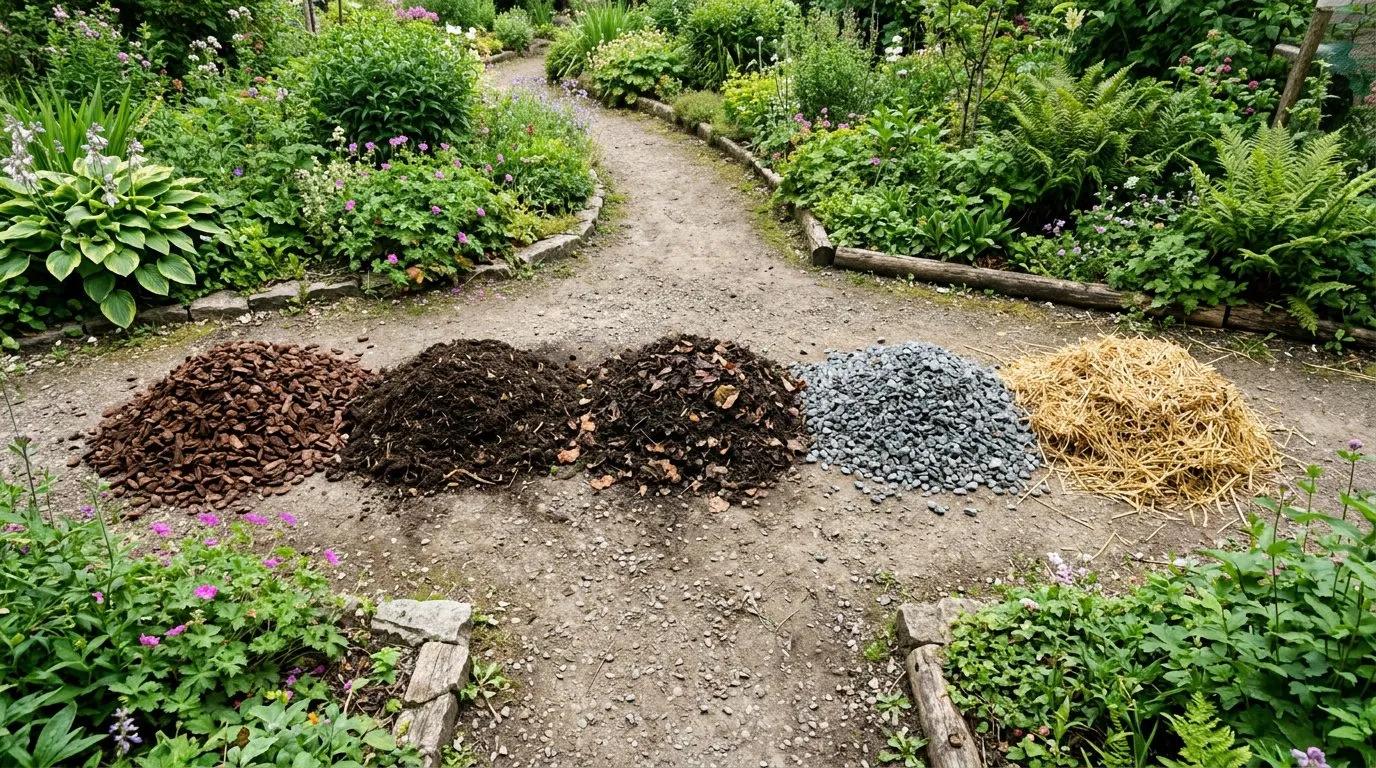 Six common mulch types. Clockwise from top left: bark chips, garden compost, straw, gravel, leaf mould, and wood chip.
The benefits of mulching
Mulching does more than make beds look tidy. Each benefit is backed by solid science and decades of practical gardening experience.
Moisture retention
A 5-8cm layer of organic mulch reduces soil water evaporation by up to 70%. The mulch creates a barrier between the soil surface and the air, slowing moisture loss on warm, windy days. In practical terms, a well-mulched border needs watering roughly half as often as bare soil during a typical UK summer. For more techniques that cut water use, see our guide to water-efficient gardening.
This matters most from June to August, when extended dry spells are increasingly common. A mulched bed holds enough moisture for most established plants to manage without daily watering.
Weed suppression
Mulch suppresses weeds in two ways. It blocks light from reaching weed seeds already in the soil, preventing germination. It also creates a physical barrier that smothers small weed seedlings before they establish. A properly applied mulch layer at the right depth reduces annual weed growth by 80-90%.
Some weeds still appear. Birds drop seeds onto the mulch surface, and a few persistent perennials push through anything. But the difference between a mulched bed and bare soil is dramatic. You spend minutes a month on weeding instead of hours. If lawn weeds creep into borders, a thick mulch layer at the bed edge helps keep them out.
Soil temperature regulation
Mulch acts as insulation. In winter, it keeps the soil warmer than exposed ground, protecting roots from frost damage. In summer, it keeps roots cooler, reducing heat stress. This steadying effect is particularly valuable for shallow-rooted plants and newly planted specimens still establishing their root systems.
Spring-applied mulch slows soil warming slightly. Wait until March or April when the ground has begun to warm naturally. Mulching frozen ground in January traps the cold and delays spring growth.
Soil structure improvement
As organic mulch decomposes, earthworms drag fragments down into the soil. This process adds humus, improves soil structure, increases water-holding capacity, and feeds the soil food web. Over 3-5 years of consistent mulching, even poor soil shows noticeable improvement.
The effect is particularly valuable on heavy clay soil. Annual mulching with compost or bark gradually opens up the surface layer, improving drainage and workability. On sandy soil, the same mulch adds body and helps the ground hold moisture and nutrients.
How to apply mulch
Applying mulch is straightforward. A few important steps make the difference between a mulch that works and one that causes problems.
Step 1: Clear existing weeds
Remove every weed from the area you plan to mulch. Pull annuals by hand. Dig out perennial weeds including the full root system. Bindweed, couch grass, and ground elder will push through mulch if any root fragment remains.
If the area is badly weeded, consider laying cardboard beneath the mulch to smother remaining growth. This is especially effective when mulching new beds or reclaiming neglected borders.
Step 2: Water the soil
Mulch works best when applied over moist soil. If the ground is dry, water thoroughly the day before mulching. The mulch then locks in that moisture. Applying mulch over dry soil seals in the drought, which is the opposite of what you want.
Step 3: Spread evenly to the right depth
Apply organic mulch 5-8cm deep for bark, wood chip, and straw. Use 3-5cm for finer materials like garden compost and leaf mould. Use a rake or your hands to spread it evenly across the bed.
Step 4: Leave gaps around stems
This is the most commonly ignored rule. Always leave a 5cm gap between mulch and the base of plant stems, shrub trunks, and tree bark. Mulch piled against stems creates damp conditions that encourage rot, fungal disease, and bark decay. Pull mulch back from every stem, creating a small well of bare soil around each plant.
Warning: Never pile mulch against tree trunks. This practice, sometimes called “volcano mulching,” causes bark to soften and rot. Keep mulch at least 10cm away from the trunk of any tree. Spread it in a flat ring around the drip line instead.
Step 5: Water after application
After spreading, water the mulch lightly. This settles it into position and begins the process of moisture retention. Light bark chips can blow around in wind until they are dampened.
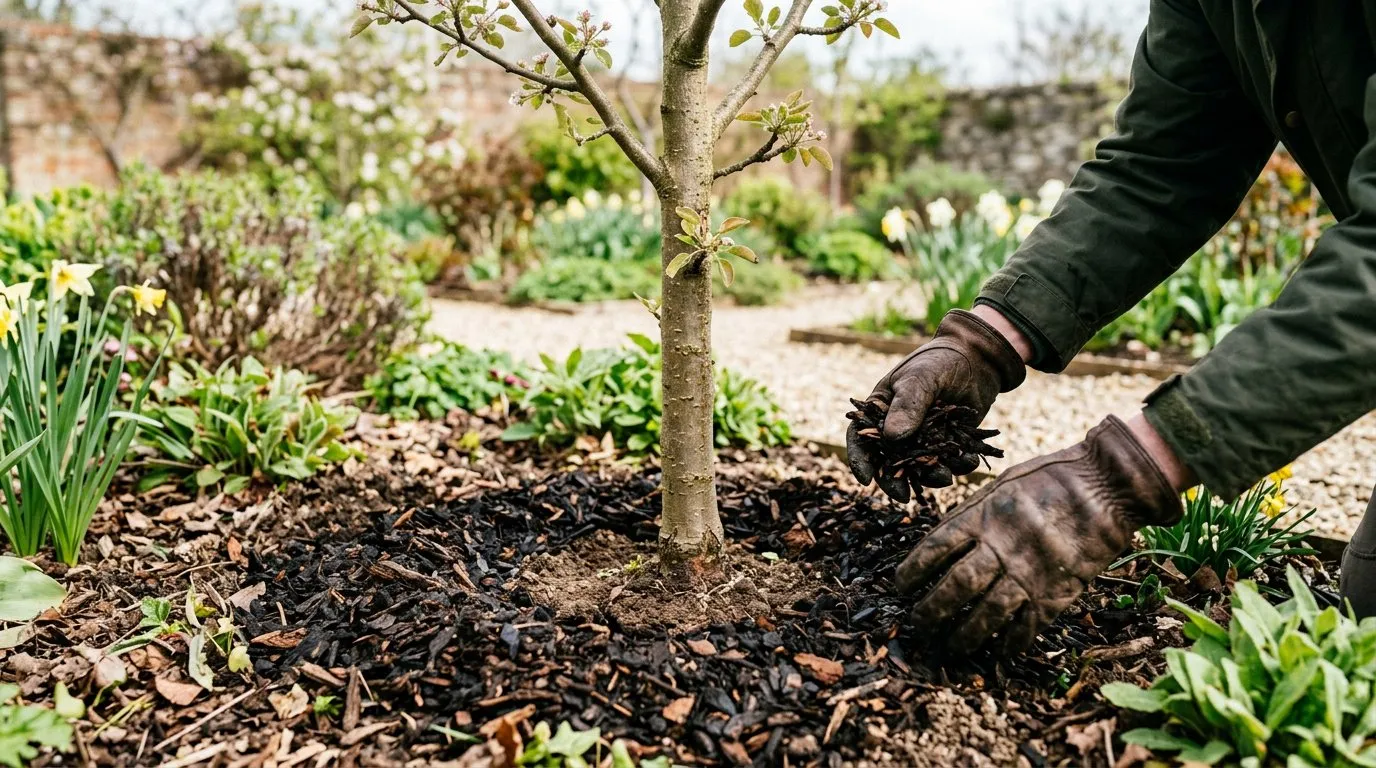 Spreading bark mulch in a shrub border. Note the gap left around each plant stem to prevent rot.
When to mulch: seasonal timing
Timing your mulching makes a measurable difference to its effectiveness.
Spring mulching (March to April)
This is the primary mulching window in the UK. Apply mulch after a period of rain when the soil is moist and beginning to warm. Soil temperatures rise above 5C by mid-March in southern England and early April further north.
Spring mulch locks in winter moisture, suppresses the first flush of annual weeds, and feeds the soil. If you only mulch once a year, spring is the time.
Autumn mulching (October to November)
The second-best window. Autumn mulch protects roots through winter and insulates the soil against frost. It begins decomposing so nutrients are available for spring growth. Spread mulch before the first hard frosts, while the soil still has residual warmth.
Autumn mulching is particularly important for tender perennials, newly planted specimens, and fruit trees that benefit from winter protection.
When NOT to mulch
Do not mulch when the soil is frozen. The mulch traps the cold and delays spring warming. Do not mulch bone-dry soil in summer. Water first, then mulch. Do not mulch waterlogged ground in winter, as adding an insulating layer over saturated soil promotes root rot.
Month-by-month mulching calendar
| Month | Mulching activity |
|---|---|
| January | Do not mulch. Ground is too cold. Plan mulch purchases and sources for spring. |
| February | Order bark chips or compost in bulk for March delivery. Clear weeds from beds. |
| March | Main mulching month in southern England. Apply to borders and beds after rain. |
| April | Main mulching month for northern regions. Mulch vegetable beds before planting. |
| May | Mulch around newly planted specimens. Top up any thin patches in borders. |
| June | Apply straw mulch around strawberries as fruits develop. |
| July | Check moisture under mulch. Water deeply during dry spells before topping up. |
| August | Add thin compost mulch to productive vegetable beds as crops are harvested. |
| September | Collect fallen leaves for making leaf mould. Begin autumn mulch planning. |
| October | Apply autumn mulch to borders and around fruit trees. Protect tender plants. |
| November | Final autumn mulching window. Spread leaf mulch on woodland and shade borders. |
| December | Do not mulch. Shred Christmas tree branches for future mulch material. |
Mulching specific areas
Different parts of the garden benefit from different mulching approaches.
Flower borders and shrub beds
Best mulch: bark chips or composted bark, applied 5-8cm deep.
Bark is the classic border mulch for good reason. It looks attractive, lasts 2-3 years, suppresses weeds effectively, and improves the soil slowly as it breaks down. For a cottage garden planting scheme, bark mulch between perennials gives a natural, established look.
Apply in spring after weeding and feeding. Top up thin patches in autumn. Around shade-loving plants, bark mulch mimics the natural woodland floor conditions these plants prefer.
Vegetable beds
Best mulch: garden compost, well-rotted manure, or straw, applied 3-5cm deep.
Vegetable beds need mulch that breaks down quickly and feeds the soil. Garden compost is ideal. It decomposes within a single season, adding nutrients and organic matter directly where crops need it.
Straw works well around tomatoes, courgettes, and strawberries. It keeps fruit off the soil surface, reducing rot and slug damage. In raised beds, a 5cm compost mulch after planting reduces watering by half and feeds the soil all season.
Fruit trees and bushes
Best mulch: bark chips or compost, applied 5-8cm deep in a ring 60-90cm from the trunk.
The mulch ring suppresses competing grass and retains moisture during fruit-swelling (June to August). It feeds roots as it decomposes. Extend the mulch to the drip line of the canopy.
Gardener’s tip: When mulching fruit trees, keep the ring clear of the trunk by at least 10cm. Spread it like a flat doughnut, not a volcano. This prevents bark rot while benefiting the root zone.
Paths and walkways
Best mulch: gravel, wood chip, or bark, applied 5-8cm deep over weed membrane.
Wood chip paths through kitchen gardens and allotments are practical and inexpensive. Lay weed membrane first to prevent weeds, then spread wood chip 5-8cm deep. Top up annually as it compresses and decomposes.
Gravel paths are permanent. Lay membrane, then 3-4cm of gravel. The membrane stops gravel sinking into the soil and prevents weeds from growing up through it.
Containers and pots
Best mulch: fine bark, gravel, or decorative pebbles, applied 2-3cm deep. A thin mulch layer slows evaporation and keeps roots cooler in summer. Use fine bark or small gravel rather than large chips.
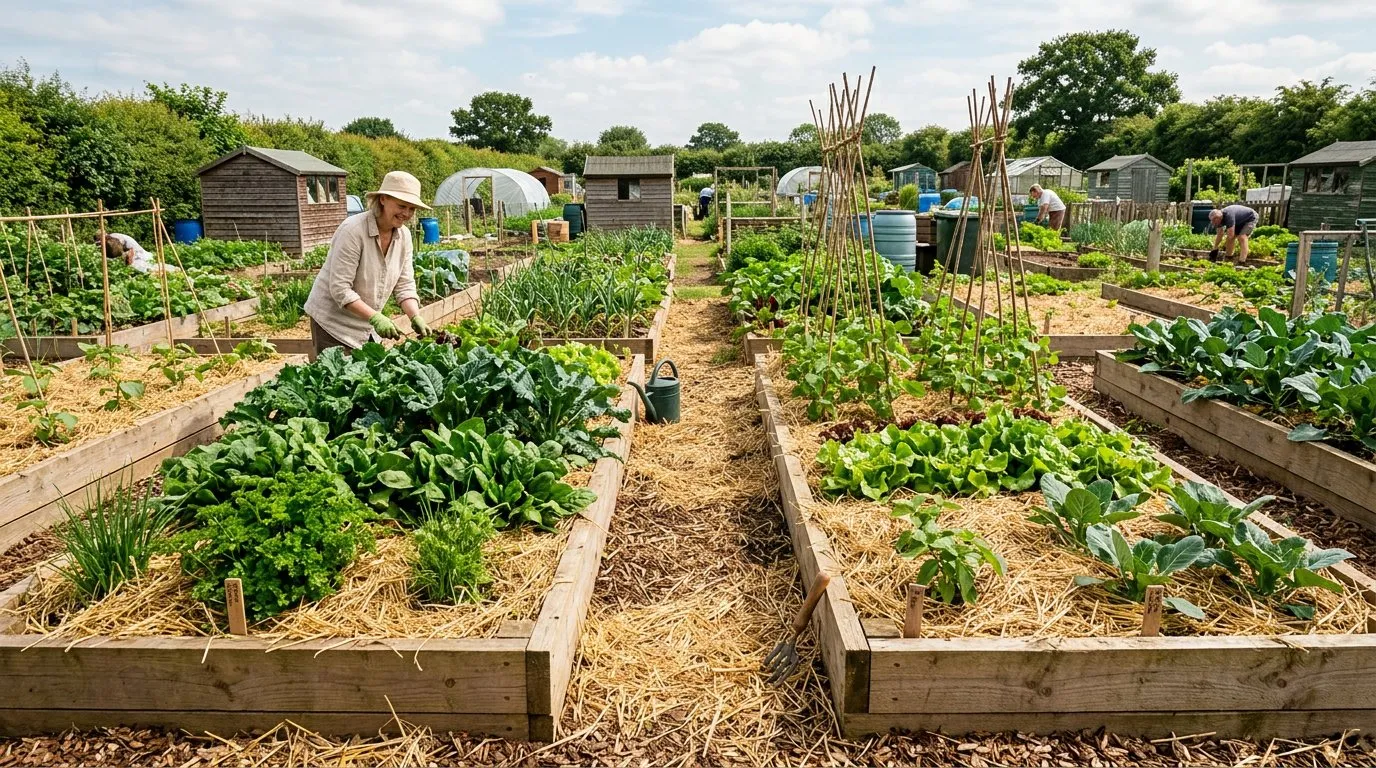 Straw mulch around strawberry plants keeps fruit clean, reduces rot, and suppresses weeds between rows.
Where to source free mulch
You do not need to spend money on mulch. Several excellent sources cost nothing.
Council green waste
Most UK councils operate green waste recycling centres that give away or sell composted material at low cost. This municipal compost is produced at temperatures that kill weed seeds and pathogens. Check your local council website for collection points.
Tree surgeons
Local tree surgeons produce large volumes of wood chip daily. Many drop a load in your driveway for free because it saves them disposal costs. Let fresh wood chip age for 6-12 months before using on beds, or use it immediately on paths.
Warning: Fresh wood chip temporarily depletes nitrogen from the soil surface as it decomposes. Use fresh chips only on paths or as a top layer on beds where it does not contact the soil directly. Composted or aged wood chip (6-12 months old) is safe for direct soil contact.
Homemade compost
A standard compost bin produces enough material to mulch several square metres of garden each year. Making your own compost is the most sustainable and cost-effective mulch source. Every garden generates enough green and brown waste to keep a compost bin running year-round.
Leaf mould
Collect autumn leaves and bag them in black bin liners with holes punched for airflow. After 12-18 months, the leaves break down into leaf mould, one of the finest soil conditioners available. It costs nothing. Oak and beech leaves produce the best results.
Grass clippings
Free and available throughout the growing season. Use in thin layers (3-5cm maximum) and let them dry before applying. Mix with dry material to prevent them forming a slimy mat. Top up every 3-4 weeks as they decompose quickly.
Cost comparison for purchased mulch
When free sources are not available, here is what you can expect to pay.
| Mulch type | Bagged cost | Bulk cost (per tonne) | Coverage per bag | Cost per m2 at 5cm depth |
|---|---|---|---|---|
| Bark chips (ornamental) | Four to seven pounds (70L) | Eighty to one hundred and twenty pounds | 1-1.5m2 | Three to six pounds |
| Play bark (fine grade) | Five to eight pounds (70L) | Ninety to one hundred and forty pounds | 1-1.5m2 | Four to seven pounds |
| Composted bark | Five to eight pounds (50L) | One hundred to one hundred and fifty pounds | 0.8-1m2 | Five to eight pounds |
| Garden compost (bagged) | Three to five pounds (50L) | Fifty to eighty pounds | 1-1.5m2 | Two to four pounds |
| Gravel (20mm) | Four to six pounds (25kg) | Thirty to sixty pounds | 0.3-0.5m2 | Four to eight pounds |
| Slate chippings | Six to ten pounds (25kg) | Eighty to one hundred and fifty pounds | 0.3-0.5m2 | Six to twelve pounds |
Buying in bulk saves 40-60% compared to bags. A cubic metre of bark chips costs sixty to eighty pounds delivered versus one hundred to one hundred and fifty pounds in bags. For areas over 5 square metres, always order in bulk.
Common mistakes
Mulching too thin
A 2cm layer of bark looks tidy for a week, then weeds push straight through. The minimum effective depth for weed suppression is 5cm for bark and wood chip, 3cm for compost. Go thinner and you waste time and money for little benefit.
Piling mulch against plant stems
Mulch heaped against stems creates permanent damp that softens bark, encourages fungal disease, and can kill the plant. Always leave a 5cm gap around herbaceous stems and 10cm around tree trunks. Check every stem is clear after application.
Using fresh wood chip on beds
Fresh wood chip contains high carbon relative to nitrogen. Soil microbes decomposing it draw nitrogen from surrounding soil, temporarily starving nearby plants. Symptoms include yellowing leaves and stunted growth. Age fresh chip for 6-12 months, or use it only on paths.
Mulching dry or frozen soil
Applying mulch over dry soil locks in the drought. Applying it over frozen soil traps the cold. Both situations harm plants. Always mulch when the ground is moist and beginning to warm (spring) or still retains warmth (autumn). Water dry soil the day before mulching.
Covering crowns of perennials
Some gardeners blanket everything with mulch, including dormant perennial crowns. This causes crowns to rot in wet winters. Keep mulch around the plant, not on top. Leave the central growing point exposed to air.
Why we recommend bark chips as your default mulch: After 30 years of testing every mulch type on UK soils, bark chips consistently outperform the alternatives for border use. They last 2-3 years, suppress annual weeds by 85-90%, and gradually improve soil structure as they break down. A single bulk delivery of ornamental bark at 5-8cm depth typically saves 12-15 hours of hand weeding across a standard front garden per season.
Mulch and soil improvement: the long game
Consistent mulching turns garden soil over time. In year one, a 5cm compost mulch suppresses weeds and retains moisture. Worms begin pulling organic matter into the soil profile. By year three, the top 10-15cm of soil shows noticeably improved structure. By year five, poor compacted ground develops a dark, crumbly texture full of worm channels and fungal networks.
This is the same principle behind the no-dig method championed by Charles Dowding. Annual surface mulching builds soil from the top down, without disruption. For difficult ground, combining mulching with other techniques delivers faster results. Our guide to improving clay soil covers complementary methods.
Mulching is also a key strategy in climate-resilient gardening, helping soil handle both drought and heavy rain. It is also one of the most effective tools for reducing garden workload. A properly mulched garden needs 50% less watering, 80-90% less weeding, and no digging if you adopt the no-dig approach. Combine mulching with low-maintenance plant choices and you create a garden that largely looks after itself.
Now you’ve mastered mulching, read our guide on improving clay soil for the next step in building a healthy, low-maintenance garden.
Frequently asked questions
When is the best time to mulch in the UK?
Spring (March to April) is the best mulching window. Apply after a period of rainfall when the soil is moist and starting to warm above 5C. The mulch locks in winter moisture, suppresses the first wave of annual weeds, and feeds the soil all season. Autumn (October to November) is the second-best option, protecting roots and insulating soil ahead of winter frost.
How deep should mulch be?
Apply bark chips, wood chip, and straw at 5-8cm deep. Fine materials like garden compost and leaf mould need 3-5cm. Gravel and slate work at 3-4cm. If applied too thin, weeds push through within weeks. If too thick, rainwater struggles to penetrate the layer and reach the soil beneath.
Can you put mulch on top of weeds?
No, always clear weeds before mulching. Mulch prevents new weed seeds from germinating, but it cannot kill established weeds. Perennial weeds such as bindweed, couch grass, and ground elder are strong enough to push through even 10cm of bark. Remove every root and runner from the area before spreading any mulch.
Does mulch attract slugs?
Organic mulch provides the damp shelter that slugs prefer. Bark chips and straw are the worst offenders. If slugs are a serious problem in your garden, use gravel or slate mulch around slug-prone plants like hostas. When using organic mulch in slug-heavy areas, apply nematode biological controls or ferric phosphate pellets at the same time.
How often should you replace mulch?
Garden compost mulch decomposes within one growing season and needs topping up every spring. Bark chips last 2-3 years before the layer becomes too thin to suppress weeds. Gravel and slate are permanent and rarely need replacing. Top up areas where material has been displaced. Check mulch depth each March and top up any areas below the minimum effective depth.
Is mulch the same as compost?
They are different things, though compost can serve as mulch. Compost is decomposed organic matter used to improve soil. Mulch is any material spread on the soil surface to retain moisture and suppress weeds. Garden compost works excellently as both a soil improver and a mulch. Bark, gravel, and membrane are mulches only. They suppress weeds and retain moisture but do not add nutrients to the soil.
Can I use grass clippings as mulch?
Yes, grass clippings make effective free mulch in thin layers of 3-5cm. Never pile them thicker than 5cm. They compact into a wet, airless mat that prevents rain from reaching the soil. Let clippings wilt for a day before spreading. Mix with dry leaves or straw to improve airflow through the layer. Top up every 3-4 weeks as clippings break down quickly.
Lawrie has been gardening in the West Midlands for over 30 years. He grows his own veg using no-dig methods, keeps a wildlife-friendly garden, and writes practical advice based on real UK growing conditions.