When to Cut Hedges in the UK
When to cut hedges UK guide covering legal nesting bird dates (1 March to 31 August), species-specific timing, and month-by-month cutting calendar.
Key takeaways
- The Wildlife and Countryside Act 1981 protects nesting birds from 1 March to 31 August in the UK
- Cutting a hedge containing an active nest can result in fines up to 5,000 pounds per offence
- Most deciduous hedges need two cuts per year: February and September for best results
- Leylandii grows 60-90cm per year and needs three cuts (May, July, September) outside nesting season
- Always check for active nests before cutting, even outside the protected period
- The best single cutting window for most UK hedges is late August to mid-September
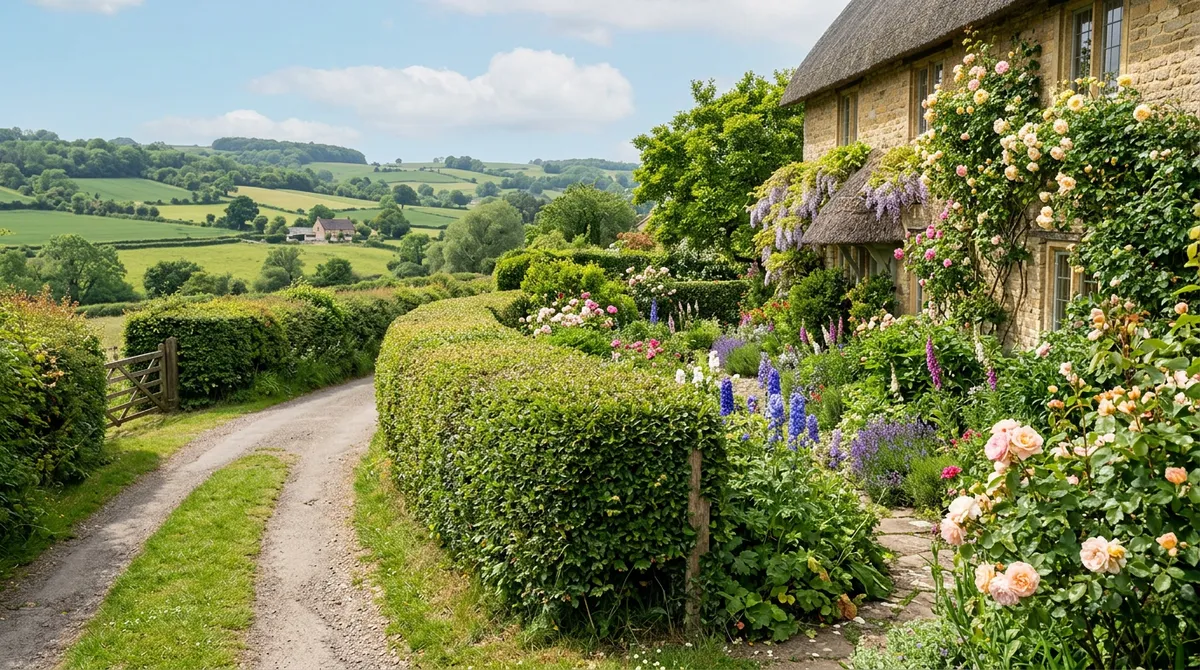
Knowing when to cut hedges in the UK is not just a gardening question. It is a legal one. The Wildlife and Countryside Act 1981 makes it a criminal offence to damage or destroy the nest of any wild bird while it is in use or being built. Since most UK hedge species are prime nesting habitat, cutting at the wrong time can mean fines of up to 5,000 pounds per nest disturbed.
This guide covers the exact legal dates, the best cutting windows for 10 common UK hedge species, a month-by-month calendar, and the mistakes that land gardeners in trouble. Whether you have a single garden boundary or 200 metres of mixed hedging, the rules are the same.
The law on cutting hedges in the UK
The Wildlife and Countryside Act 1981 is the primary legislation protecting nesting birds in England, Scotland, and Wales. Section 1 makes it an offence to intentionally or recklessly destroy or damage the nest of any wild bird while it is in use or being built. Northern Ireland has equivalent protection under the Wildlife (Northern Ireland) Order 1985.
The nesting bird dates: 1 March to 31 August
The bird nesting season runs from 1 March to 31 August in the UK. These dates are not absolute legal boundaries written into the Act itself. The Act protects nests whenever they are active. However, DEFRA, Natural England, and the RSPB all recognise 1 March to 31 August as the core nesting period when the vast majority of UK bird species are breeding.
Some species start nesting in late February. Others, including blackbirds (Turdus merula), continue raising broods into October. The March-to-August window is a guideline, not a guarantee. You must check for active nests before cutting at any time of year.
Penalties for disturbing nesting birds
Penalties under the Wildlife and Countryside Act 1981 include:
- Fines up to 5,000 pounds per offence (each nest counts separately)
- Up to six months imprisonment for serious or repeat offences
- Criminal record for wildlife crime
- Additional charges if Schedule 1 species are involved (e.g. barn owls, kingfishers, red kites)
These penalties apply to homeowners, gardeners, contractors, and local authorities equally. “I didn’t know there was a nest” is not a legal defence if a reasonable check would have found it.
What counts as “checking for nests”
Before cutting any hedge between March and August, carry out a visual inspection. Stand back and watch the hedge for 15-20 minutes at a distance of 3-5 metres. Look for birds entering or leaving. Listen for alarm calls or begging chicks. Part the foliage carefully by hand in dense sections. If you find an active nest, you must leave the hedge uncut until the chicks have fledged, typically 14-21 days after hatching for most small bird species.
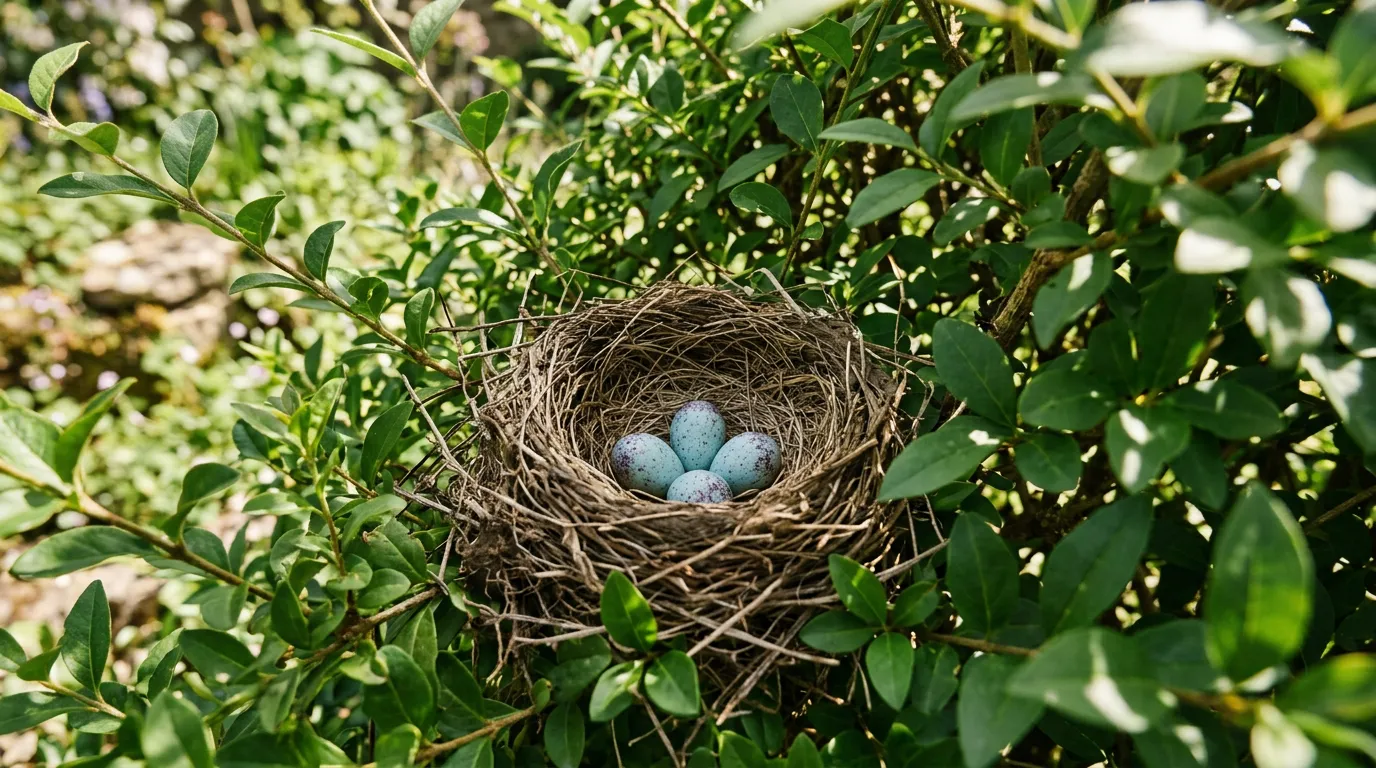 A blackbird nest hidden inside a privet hedge. Nests like this are easily destroyed by hedge trimmers if you do not check first.
When to cut each hedge species
Different hedge species grow at different rates and respond to cutting at different times. Cutting at the wrong point in the growth cycle weakens the hedge, produces leggy growth, or fails to maintain density. The table below covers the 10 most common UK hedge species.
Hedge species comparison table
| Species | Growth rate (cm/year) | Cuts per year | Best cutting months | Type | Hardiness |
|---|---|---|---|---|---|
| Leylandii (x Cuprocyparis leylandii) | 60-90 | 3 | May, July, September | Evergreen | Hardy to -15C |
| Privet (Ligustrum ovalifolium) | 30-60 | 2-3 | June, August, October | Semi-evergreen | Hardy to -15C |
| Beech (Fagus sylvatica) | 30-45 | 2 | February, August | Deciduous | Hardy to -20C |
| Hornbeam (Carpinus betulus) | 30-45 | 2 | February, August | Deciduous | Hardy to -20C |
| Hawthorn (Crataegus monogyna) | 30-40 | 1-2 | February, September | Deciduous | Hardy to -25C |
| Yew (Taxus baccata) | 15-30 | 1 | August | Evergreen | Hardy to -20C |
| Box (Buxus sempervirens) | 10-15 | 1-2 | June, September | Evergreen | Hardy to -15C |
| Laurel (Prunus laurocerasus) | 30-60 | 1-2 | August, February | Evergreen | Hardy to -15C |
| Berberis (Berberis darwinii) | 20-30 | 1 | After flowering (June) | Evergreen | Hardy to -15C |
| Holly (Ilex aquifolium) | 15-25 | 1 | August | Evergreen | Hardy to -20C |
Deciduous hedges: beech, hornbeam, and hawthorn
Beech and hornbeam are the most popular formal deciduous hedges in UK gardens. Both retain their dead leaves (marcescent foliage) through winter when trimmed as hedges, providing year-round screening. The ideal cutting regime is two trims per year.
The first cut in February (before 1 March) removes any winter damage and shapes the hedge before the spring growth flush. The second cut in late August catches the end of the second growth period while staying within the legal window. Beech puts on most of its annual growth between April and July, producing 30-45cm of new shoots in a typical season.
Hawthorn is the classic native hedging plant, found in 200,000+ miles of UK field boundaries. It flowers on old wood in May, so avoid cutting before flowering if you want the blossom. One annual cut in September suits most hawthorn hedges. For a formal hawthorn hedge, add a second cut in February.
Evergreen hedges: yew, box, and holly
Yew is the gold standard for formal evergreen hedging. It grows slowly at 15-30cm per year and needs only one cut per year in August. Yew recovers from hard pruning better than any other evergreen, regenerating from bare wood where most conifers will not. A single August trim keeps yew dense and tidy for 12 months.
Box grows at just 10-15cm per year. Trim formal box hedges and topiary in June after the first flush of growth, with an optional second trim in September. Avoid cutting box in wet weather, as this spreads box blight (Cylindrocladium buxicola), a fungal disease that has devastated box hedges across the UK since 2011.
Holly needs only one cut per year in August. Use hand secateurs on holly rather than hedge trimmers. Trimmers shred the large, glossy leaves, leaving brown edges that persist for months. Cut individual stems to just above a leaf node for a clean finish.
Fast-growing hedges: Leylandii and privet
Leylandii is the fastest-growing hedge plant in the UK at 60-90cm per year. Without regular trimming, it reaches 15-20 metres and becomes a neighbour dispute magnet. The High Hedges Act 2005 gives councils power to order Leylandii reductions if they block light. Keep Leylandii under control with three cuts per year: May, July, and September.
Critical warning: Never cut Leylandii back into bare brown wood. Unlike yew, Leylandii will not regenerate from old wood. Only trim the green growth. If your Leylandii hedge has grown beyond the green zone, the only option is gradual reduction over 2-3 years, cutting no more than the green growth each time.
Privet grows 30-60cm per year and produces multiple growth flushes between April and October. Two to three cuts per year keep privet hedges neat. The semi-evergreen leaves drop in hard winters below -10C, so privet hedges in northern England and Scotland may need a February tidy-up to remove dead growth.
 A yew hedge trimmed once in August. Yew needs only one annual cut and stays dense for 12 months.
Month-by-month hedge cutting calendar
This calendar covers the 10 most common UK hedge species. Green months are safe cutting windows outside the nesting season. Amber months require a nest check first.
| Month | What to do |
|---|---|
| January | No cutting needed. Plan the year’s schedule. Order new hedging plants for bare-root planting (November to March). Inspect hedges for storm damage. |
| February | Best month for hard pruning. Cut beech, hornbeam, hawthorn, and laurel before the nesting season starts on 1 March. Last chance for heavy renovation work. |
| March | Nesting season begins. No routine cutting. Check for early nesters like blackbirds and song thrushes. Only cut if you confirm no nests are present. |
| April | Peak nesting month. Do not cut any hedges. Blue tits, great tits, robins, wrens, and dunnocks are all nesting. Focus on weeding and mulching around hedge bases instead. |
| May | Still nesting. First Leylandii trim of the year only if nest check confirms no activity. Most birds are feeding chicks. Leave hedges alone wherever possible. |
| June | Nesting continues. Trim box topiary after the first growth flush. Cut flowering hedges (berberis, escallonia) immediately after flowering finishes. Check for second-brood nesters. |
| July | Late nesting. Second Leylandii trim if safe. Many birds are fledging and leaving nests. Still check before cutting. Privet may need its second trim. |
| August | Best general cutting month. From late August (after the 31st), most nesting is complete. Cut yew, holly, beech, and hornbeam. Second trim for privet. This is the single best month for most UK hedges. |
| September | Prime cutting window. Safe for all species. Cut hawthorn, beech (second trim), privet (final trim), Leylandii (third trim), and laurel. Check for late blackbird nests in the first week. |
| October | Final opportunity for a tidy-up before winter. Remove any long shoots that would catch snow and splay the hedge. Shape formal hedges before growth stops. Last cut for privet. |
| November | No cutting. Plant new bare-root hedging. Mulch established hedges with 50-75mm of composted bark. Plant new hedges during the dormant season. |
| December | No cutting. Continue bare-root planting if the ground is not frozen. Plan renovation pruning for February. |
Why hedges go wrong: root cause analysis
Most hedge problems trace back to three root causes. Understanding these prevents years of corrective work.
Wrong timing
Cutting too late in autumn (November onwards) stimulates soft new growth that cannot harden off before the first frosts. That frost-damaged growth dies back over winter, leaving brown patches and thin spots in spring. Cutting too early in spring (March-April) removes nesting habitat and can trigger an uncontrolled flush of soft growth that flops under its own weight.
The critical window most people miss is the August-September slot. Growth has slowed, wood has started to harden, and cutting now produces a clean shape that holds through winter. Every week you delay past mid-October increases the risk of frost damage to new growth.
Wrong technique
The most common technical error is cutting hedges with vertical sides. A hedge with vertical sides shades its own base, killing the lower branches over time. Within 5-7 years, the base becomes bare and woody with all the foliage concentrated at the top.
The correct shape is a batter: wider at the base than the top. Aim for sides that slope inward at roughly 10-15 degrees from vertical. This ensures sunlight reaches the lower branches, maintaining dense foliage from ground level. The ideal cross-section is a trapezoid or an “A” shape, not a rectangle.
A second common error is cutting beyond the green growth zone on conifers. Leylandii, Lawson cypress, and Thuja do not regenerate from bare brown wood. If you cut past the green foliage into the brown interior, that section is permanently bare. Only yew regenerates reliably from old wood among UK conifers.
Wrong species for the location
Planting a Leylandii hedge in a small suburban garden creates 15+ years of maintenance headaches. It grows 60-90cm annually and needs three cuts per year to stay under control. Planting a beech hedge in waterlogged clay soil leads to root rot and die-back within 3-5 years. Beech needs well-drained soil with a pH of 5.5-7.5.
Match the species to the site. For heavy clay, choose hornbeam over beech. For exposed coastal positions, choose hawthorn or escallonia. For low maintenance, choose yew (one cut per year) over privet (three cuts per year). For wildlife value, choose a native mixed hedge of hawthorn, blackthorn, field maple, and hazel over a monoculture. Our privacy screening guide covers species selection in detail.
How to check for nesting birds before cutting
Even outside the March-August window, some bird species nest earlier or later than the official dates. Adopt this checking routine for every cut.
The 15-minute watch method
Stand 3-5 metres from the hedge and watch for 15-20 minutes without moving. This is the method recommended by the RSPB. Birds returning to nests follow the same flight path repeatedly. You will see them entering the hedge at the same point with food in their beak, then leaving without food 30-60 seconds later.
Signs of active nesting:
- Birds carrying food (insects, caterpillars, worms) into the hedge
- Alarm calls when you approach (a sharp “tik-tik-tik” from blackbirds, a churring trill from wrens)
- Begging calls from chicks (high-pitched, repetitive cheeping)
- Fresh droppings on leaves below a nest site
- Adults sitting motionless deep inside the hedge (incubating)
If you find a nest, leave the hedge uncut in a 3-metre radius around the nest until the chicks fledge. Most small birds fledge 14-21 days after hatching. Blackbirds fledge at 13-14 days. Blue tits fledge at 18-21 days.
Species most likely to nest in UK hedges
Over 60 UK bird species nest in hedges. The most common are:
| Species | Nesting period | Broods per year | Fledging time |
|---|---|---|---|
| Blackbird | March - August | 2-3 | 13-14 days |
| Song thrush | March - July | 2-3 | 13-14 days |
| Robin | March - July | 2-3 | 14 days |
| Wren | April - July | 1-2 | 15-18 days |
| Dunnock | April - July | 2-3 | 12 days |
| Blue tit | April - June | 1 | 18-21 days |
| Chaffinch | April - June | 1-2 | 14 days |
| Goldfinch | May - August | 2-3 | 14-17 days |
Blackbirds are the most likely species to cause issues because they nest early (sometimes late February), raise up to three broods, and frequently nest in garden hedges. Their final brood can still be in the nest in September.
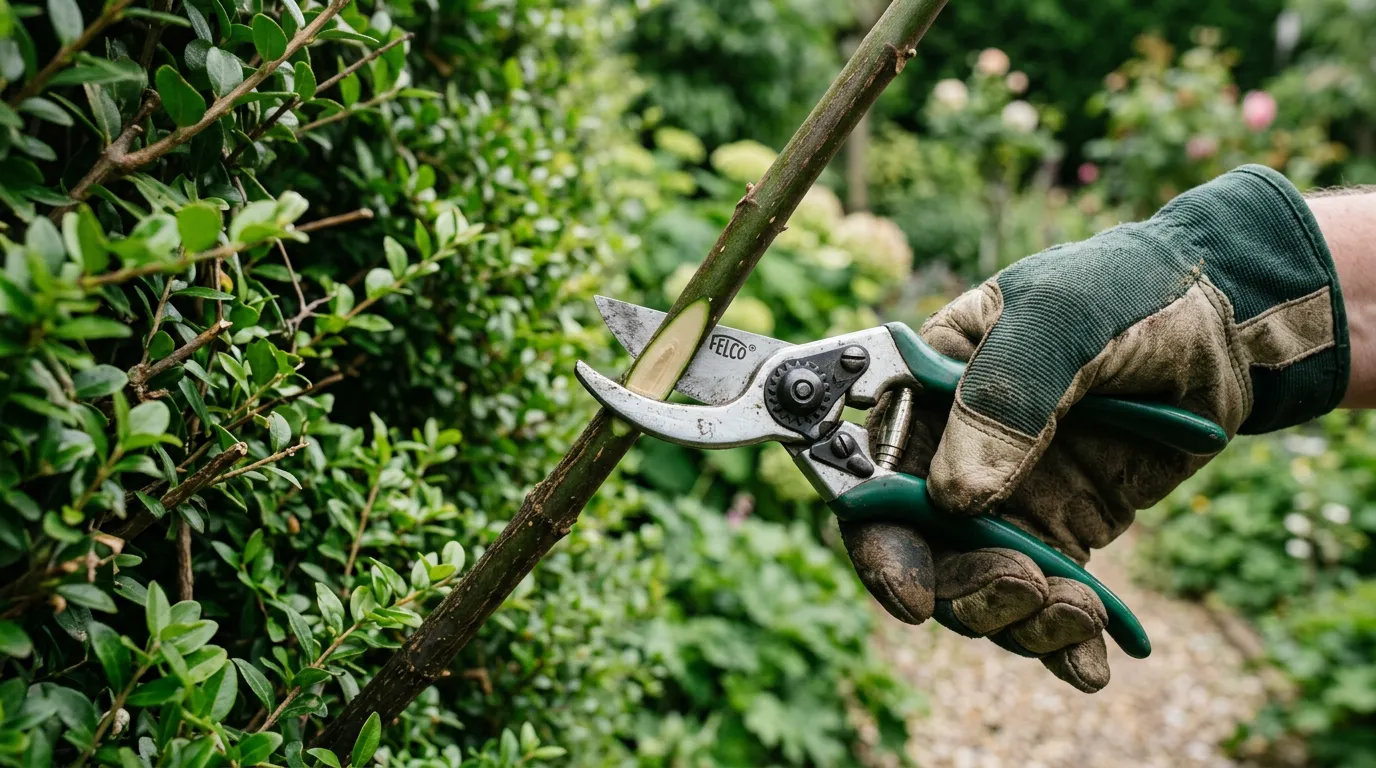 Clean cuts heal faster and reduce disease risk. Use sharp secateurs for stems over 10mm and shears for fine growth.
Common mistakes when cutting hedges
These five errors cause the most damage and legal trouble.
Cutting during nesting season without checking
This is the most serious mistake. Many gardeners assume “my hedge never has birds in it.” Nests are deliberately hidden. A wren nest is 10cm across and tucked deep inside the foliage. A dunnock nest sits low, just 30-60cm off the ground, invisible from a standing position. The 15-minute watch method is the minimum standard.
Cutting all species on the same date
A single “hedge cutting day” treats every species identically. But yew needs one cut in August. Privet needs three cuts across the season. Beech needs two cuts. Flowering hedges need cutting after flowering, which varies from May (berberis) to July (escallonia). Keep a species-specific calendar.
Cutting the top flat and sides vertical
Flat-topped, vertical-sided hedges look neat for two weeks. Then the top grows upward and the shaded base dies back. Within 5-7 years you have a hedge that is bare at the bottom and top-heavy. The correct profile tapers inward toward the top at 10-15 degrees per side. A rounded or pointed top sheds snow better than a flat top, reducing the risk of branches splaying under weight.
Using blunt blades
Blunt hedge trimmer blades tear rather than cut. Torn tissue takes 3-4 times longer to heal than a clean cut, creating entry points for fungal diseases including coral spot (Nectria cinnabarina), silver leaf (Chondrostereum purpureum), and honey fungus (Armillaria mellea). Sharpen trimmer blades after every 8-10 hours of use. Hand shears should be sharpened at least twice per year.
Neglecting the base
Many people cut only the top and sides, ignoring the hedge base. Weeds, ivy, and brambles colonise the base of neglected hedges, competing for light and nutrients. Clear the base annually in February. Apply a 50-75mm mulch of composted bark to suppress weeds and retain moisture. This single step improves hedge health and density within one growing season.
Renovation pruning for overgrown hedges
If a hedge has been neglected for years, it needs renovation pruning rather than routine trimming. The approach depends on the species.
Deciduous hedges (beech, hornbeam, hawthorn)
Cut one side hard back to the main stems in February, leaving the other side untouched. The following February, cut the other side hard. This allows the hedge to recover with foliage on at least one face throughout. Most deciduous species regenerate strongly from old wood. Beech and hornbeam respond within one growing season, producing new shoots from dormant buds.
After renovation, feed the hedge with a general-purpose fertiliser such as Growmore at 70g per square metre in March. Mulch with composted bark at 75mm depth. These hedges are well suited to the principles in our pruning shrubs guide.
Evergreen hedges (yew, laurel, holly)
Yew is unique among UK evergreen hedges in its ability to regenerate from bare wood. You can cut yew back to stumps in February and it will reshoot. This makes yew the easiest evergreen to renovate. Feed and mulch after hard pruning.
Laurel responds well to renovation but should be cut with secateurs or loppers, not hedge trimmers. Trimmer blades shred the large leaves, leaving brown edges. Cut each stem individually to a point just above a bud or leaf node. Laurel regrows quickly at 30-60cm per year.
Do not attempt renovation on Leylandii, Lawson cypress, or Thuja. These conifers will not regenerate from brown wood. If a conifer hedge is badly overgrown, the only realistic options are to maintain it at its current size or remove and replant.
Why we recommend a phased approach: After renovating over 30 hedges across Staffordshire and the West Midlands over 15 years, I have found that cutting one side per year gives a 90%+ success rate on deciduous species. Cutting both sides hard in the same year stresses the hedge and produces thin, whippy regrowth that takes 3-4 years to fill in. The phased method produces dense, bushy regrowth within 2 years. Yew is the exception: it tolerates being cut hard on all sides simultaneously.
Tools for hedge cutting
Choosing the right tool affects cut quality, speed, and hedge health.
| Tool | Best for | Stem diameter | Hedge length | Cost |
|---|---|---|---|---|
| Hand shears | Formal hedges, box, small hedges under 3m | Up to 10mm | Under 3m | 20-45 pounds |
| Electric trimmer | Medium hedges, suburban gardens, privet, beech | Up to 15mm | 3-15m | 50-120 pounds |
| Petrol trimmer | Long rural hedges, thick growth, Leylandii | Up to 20mm | 15m+ | 150-350 pounds |
| Battery trimmer | Medium hedges, low noise, no cable | Up to 15mm | 3-15m | 80-200 pounds |
| Secateurs | Holly, laurel (individual stems), renovation cuts | Up to 25mm | Any | 15-35 pounds |
| Loppers | Thick renovation cuts, removing individual branches | 25-50mm | Any | 20-50 pounds |
The best secateurs for UK gardeners are worth investing in for all pruning work, including hedge renovation and holly trimming.
Legal requirements beyond nesting birds
Several other laws affect hedge management in the UK.
High Hedges Act 2005 (England and Wales)
This legislation allows neighbours to complain to the local council about evergreen or semi-evergreen hedges over 2 metres tall that block light. The council can issue a remedial notice requiring the hedge owner to reduce the height. Failure to comply can result in fines. The complainant must first attempt to resolve the issue directly. Council fees for complaints range from 150-450 pounds depending on the authority.
The Enclosure Acts and boundary hedges
Many rural boundary hedges are protected under historic Enclosure Acts. Removing a boundary hedge without permission may require planning consent. Ancient hedges (pre-1845) may have additional protections under the Hedgerow Regulations 1997, which make it an offence to remove most countryside hedgerows without written permission from the local planning authority.
Highway hedges
If your hedge borders a public road or footpath, you have a legal duty to keep it trimmed so it does not obstruct the highway. Local councils can serve notice requiring you to cut back overhanging growth. Failure to comply allows the council to do the work and bill you for it.
How to create a wildlife-friendly cutting regime
Hedges provide food, shelter, and nesting sites for birds, mammals, and insects. A few simple adjustments to your cutting regime significantly increase wildlife value.
Leave the base uncut in a 15-20cm strip along one side. This creates ground-level shelter for hedgehogs, frogs, and ground-nesting insects. Our guide to creating a wildlife garden covers habitat management in detail.
Leave berry-bearing sections uncut until February. Hawthorn berries (haws), holly berries, blackthorn berries (sloes), and elder berries provide crucial winter food for thrushes, blackbirds, and fieldfares. Cutting a hawthorn hedge in September removes thousands of berries that birds depend on from November to February. If possible, cut only the top and front face, leaving the back face and its berries intact.
Rotate sections. If you have a long hedge, cut two-thirds each year and leave one-third uncut. This ensures there is always mature, dense growth available for nesting the following spring. Rotate the uncut section annually.
Frequently asked questions
Is it illegal to cut hedges in summer UK?
Cutting hedges in summer is not automatically illegal. The Wildlife and Countryside Act 1981 protects nesting birds, not hedges themselves. You can legally cut a hedge between 1 March and 31 August if you first check for active nests and confirm none are present. However, DEFRA and the RSPB strongly advise against cutting during this period because nests are easily missed. Disturbing or destroying an active nest carries fines up to 5,000 pounds.
What months can you legally cut hedges in the UK?
September to February is the safe cutting period. During these months, the bird nesting season has ended and you face no legal risk. Most hedge species respond best to cuts in February (late winter) and September (early autumn). Always check for late nests in September, as some species like blackbirds raise broods into October.
Can I cut my hedge in March UK?
March falls within the nesting season. You can only cut if you inspect the hedge thoroughly and confirm no birds are nesting. In practice, early March carries lower risk than April or May, but the legal protection applies from 1 March. If in doubt, wait until September.
What is the penalty for cutting hedges during nesting season?
Fines reach up to 5,000 pounds per offence. Under the Wildlife and Countryside Act 1981, destroying or disturbing an active nest is a criminal offence. Each nest counts as a separate offence. In serious cases involving protected species like barn owls, custodial sentences of up to six months are possible.
How often should I cut my hedge?
Most hedges need one to three cuts per year. Slow-growing species like yew and box need one cut in August. Medium growers like beech, hornbeam, and hawthorn need two cuts (February and September). Fast growers like privet and Leylandii need three cuts between May and September. Formal hedges need more frequent trimming than informal ones.
Can I cut my neighbour’s hedge if it overhangs my garden?
You can cut overhanging branches back to the boundary line. This is your legal right under common law. However, you must still check for nesting birds before cutting between March and August. You should return the cut material to your neighbour, as it remains their property. You cannot enter their land without permission.
Should I cut my hedge wet or dry?
Always cut hedges when dry. Wet foliage clogs electric trimmer blades and increases the risk of tearing rather than cutting cleanly. Torn cuts leave ragged wounds that are prone to fungal infection. The best conditions are a dry, overcast day with no wind. Direct sunshine can scorch freshly exposed inner leaves.
What is the best tool for cutting hedges?
Powered hedge trimmers suit hedges over 3 metres long. For short formal hedges under 3 metres, hand shears give a cleaner, more precise finish. For thick stems over 15mm diameter (common in neglected hedges), use loppers or a pruning saw first, then tidy with shears. Keep all blades sharp to avoid tearing.
Now you have mastered the legal dates and cutting schedules for UK hedges, read our hedge planting guide for advice on choosing, spacing, and establishing new hedging.
Lawrie has been gardening in the West Midlands for over 30 years. He grows his own veg using no-dig methods, keeps a wildlife-friendly garden, and writes practical advice based on real UK growing conditions.