Winter Gardening Jobs: Complete UK Checklist
Month-by-month winter gardening checklist for UK gardens. Covers pruning, planning, frost protection, bare-root planting, and wildlife care for Dec to Feb.
Key takeaways
- Prune apple and pear trees between December and February while dormant — the branch structure is clearly visible
- Plant bare-root trees, shrubs, and hedging at 30-50% less cost than container-grown plants
- Protect tender plants with fleece, mulch, and cold frames when temperatures drop below minus 5C
- Order seeds in January for the best selection before popular varieties sell out
- Winter reveals the garden's structure — use this clarity to plan borders, paths, and focal points
Winter is when the garden rests, but the gardener should not. December to February offers the clearest view of the garden’s structure — when the leaves drop, every line, path, and focal point stands exposed. This is the season for pruning, planning, planting bare-root stock, and building the structural bones that support next year’s growth.
This guide organises every winter task by garden area and month. For the rest of the year, see our spring, summer, and autumn gardening jobs guides. Work through each section systematically, or use the month-by-month checklist at the end. For detailed planting guidance, see our monthly guides for November and December. The RHS seasonal job finder is a useful companion reference.
Pruning
Winter is prime pruning season. Deciduous trees and shrubs reveal their entire branch structure, making it easy to see what needs removing.
Apple and pear trees
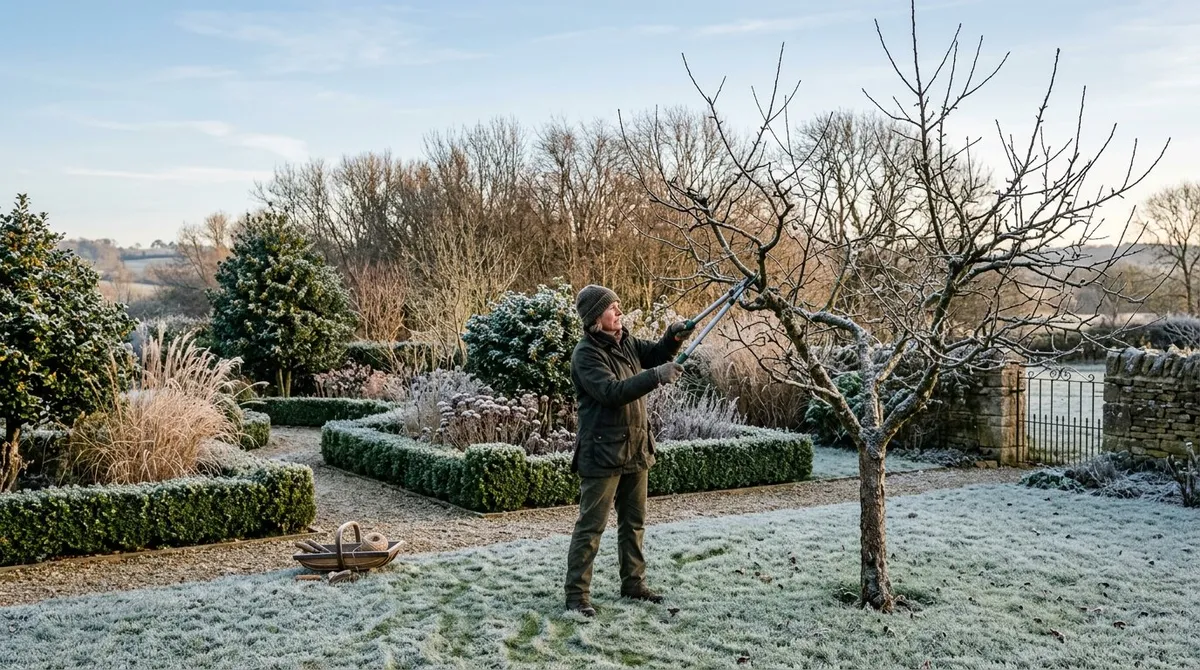
Prune between December and February while the trees are fully dormant. The goals are simple: remove dead, diseased, and crossing branches, open up the centre to allow light and air, and maintain the tree’s shape.
Method: start by removing the three Ds — dead, damaged, and diseased wood. Then remove branches that cross or rub. Finally, thin the canopy by cutting back to an outward-facing bud. Aim for a goblet shape on freestanding trees with an open centre.
Do not remove more than 25% of the canopy in a single year. Heavy pruning shocks the tree and produces a mass of unproductive water shoots. If you are managing trained forms such as cordons, fans, or espaliers, our guide to training fruit trees covers the specific winter pruning cuts for each shape.
Wisteria winter prune
Cut back the summer-pruned shoots to 2-3 buds from the main framework in January or February. These short stubs produce the flowering spurs that carry the May display. Without this second pruning, wisteria puts its energy into leafy growth rather than flowers.
Deciduous shrubs
Prune deciduous shrubs that flower on new wood in late winter (February):
- Cornus (dogwood) — grown for winter stem colour. Cut all stems to 15cm from ground level in late February. New growth produces the brightest red, orange, and yellow stems for the following winter
- Salix (willow) — pollard or coppice in February for colourful new stems
- Elder (Sambucus) — cut to a low framework for larger, more colourful foliage
Do not prune spring-flowering shrubs in winter. Forsythia, Chaenomeles, and ribes flower on last year’s growth. Pruning now removes every flower bud. Wait until after flowering.
Roses
Prune hybrid tea and floribunda roses in late February or early March. The timing depends on your region — prune when you see buds swelling but before new growth extends. For the full technique, see our guide on how to prune roses.
Climbing roses: tie in new shoots horizontally. The more horizontal the stem, the more flowering side shoots it produces. Remove only dead wood and thin, weak stems.
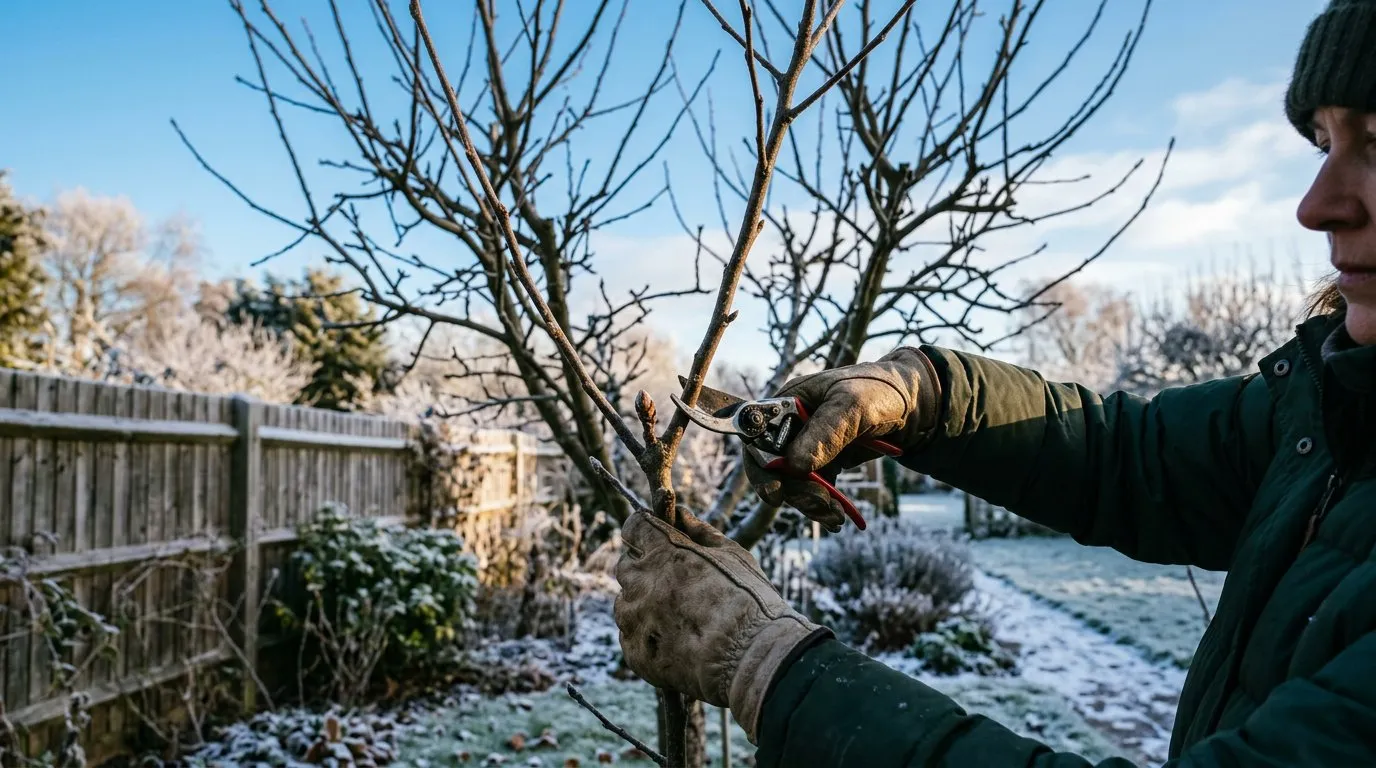 Winter pruning reveals the whole tree structure. Remove crossing branches and open the centre to light and air.
Planting
Bare-root trees and shrubs
The bare-root planting season runs from November to March. Bare-root plants cost 30-50% less than container-grown equivalents and often establish better because their roots spread naturally into the surrounding soil rather than circling inside a pot.
Plant on a mild day when the soil is workable — not frozen, waterlogged, or under snow. Dig a hole wide enough to spread the roots without cramping. Position the tree at the same depth it grew in the nursery (look for the soil line on the trunk). Backfill, firm gently, water well, and stake.
Why we recommend bare-root hawthorn for native hedging: After 30 years of planting both bare-root and container hedging, bare-root hawthorn planted between November and February consistently establishes faster and produces denser growth by the second year than pot-grown equivalents at three times the cost. In one 20-metre hedge we planted with bare-root whips at 1.20 per plant, every single plant survived and the hedge reached 1.2m height by the end of its second growing season.
Hedging
Winter is the most cost-effective time to plant a hedge. Bare-root hedging plants cost one to three pounds each. A 10-metre native hedge needs 30-40 plants and costs sixty to one hundred and twenty pounds. Plant hawthorn, blackthorn, beech, hornbeam, or mixed native species for maximum wildlife value.
Moving established plants
December to February is ideal for moving established deciduous shrubs and trees while they are dormant. The roots are inactive, so transplant shock is minimal. Water the plant thoroughly the day before. Dig around the root ball as widely as practical. Replant at the same depth immediately and water well.
Frost protection
What to protect
Not everything needs winter protection. Most established trees, shrubs, and hardy perennials survive UK winters without help. Focus protection on:
- Tender plants — tree ferns, banana plants, agapanthus, and salvias
- Newly planted specimens with undeveloped root systems
- Container plants — their roots are more exposed to cold than plants in the ground
- Early blossom on fruit trees in late February
Methods
| Method | Protection level | Cost | Best for |
|---|---|---|---|
| Horticultural fleece | Down to -2 to -5C | Three to five pounds per roll | Wrapping individual plants |
| Straw or bark mulch (10-15cm) | Insulates roots | Free to five pounds | Root zones of borderline hardy plants |
| Bubble wrap on pots | Prevents root freezing | Two to four pounds per roll | Containers |
| Cold frame | Down to -5 to -8C | Forty to one hundred and fifty pounds | Overwintering cuttings and tender plants |
| Greenhouse with heater | Frost-free (5C+) | Variable | Tender collections, citrus |
Fleece a frost-tender plant when overnight temperatures drop below -3C. Remove fleece during the day to allow light and air circulation. Leaving fleece on permanently causes etiolated (pale, stretched) growth and fungal problems.
Protecting containers
Move container plants against a sheltered house wall — the wall radiates stored heat overnight. Group pots together for mutual insulation. Wrap pots in bubble wrap to protect roots, but leave the top open for rain and air.
Raise pots onto pot feet or bricks to prevent waterlogging. More container plants die from cold, wet roots in winter than from frost damage to their foliage.
Lawn care
Stay off frozen grass
Walking on a frozen lawn snaps the frozen leaf blades and leaves brown footprints that take weeks to recover. Stay off until the frost thaws.
Winter drainage
Spike waterlogged areas with a fork to help drainage. Heavy clay lawns benefit from spiking in December after prolonged rain. Brush in sharp sand to keep the drainage channels open.
Moss
Moss thrives in winter because damp, shade, and lack of competition from dormant grass create perfect conditions. Do not treat moss now — wait until spring when the grass is growing actively. Raking out moss in winter just creates bare patches that more moss colonises.
Borders and beds
Winter digging
Dig heavy clay soil in December and leave it in rough clods. Winter frost breaks the clods into a fine, crumbly tilth by spring — the freeze-thaw cycle does the work for you. This is called the “winter frost tilth” and is the easiest way to improve clay. For more techniques, see our guide on how to improve clay soil.
Clearing and composting
Continue composting autumn debris through winter. Turn the heap on mild days. A heap that was started in autumn should be well advanced by spring. See our guide on how to make compost.
Winter interest
The garden does not have to look bare. Winter-flowering plants earn their place in every border:
- Hellebores — flower from January to March in shade or part shade
- Snowdrops — flower from January, best planted “in the green” in February
- Winter jasmine (Jasminum nudiflorum) — bright yellow flowers on bare stems from November
- Witch hazel (Hamamelis) — fragrant ribbon-like flowers in January and February
- Sarcococca (Christmas box) — intensely fragrant tiny white flowers December to February
Plant these where you pass daily — by the front door, along the path to the shed, or visible from the kitchen window.
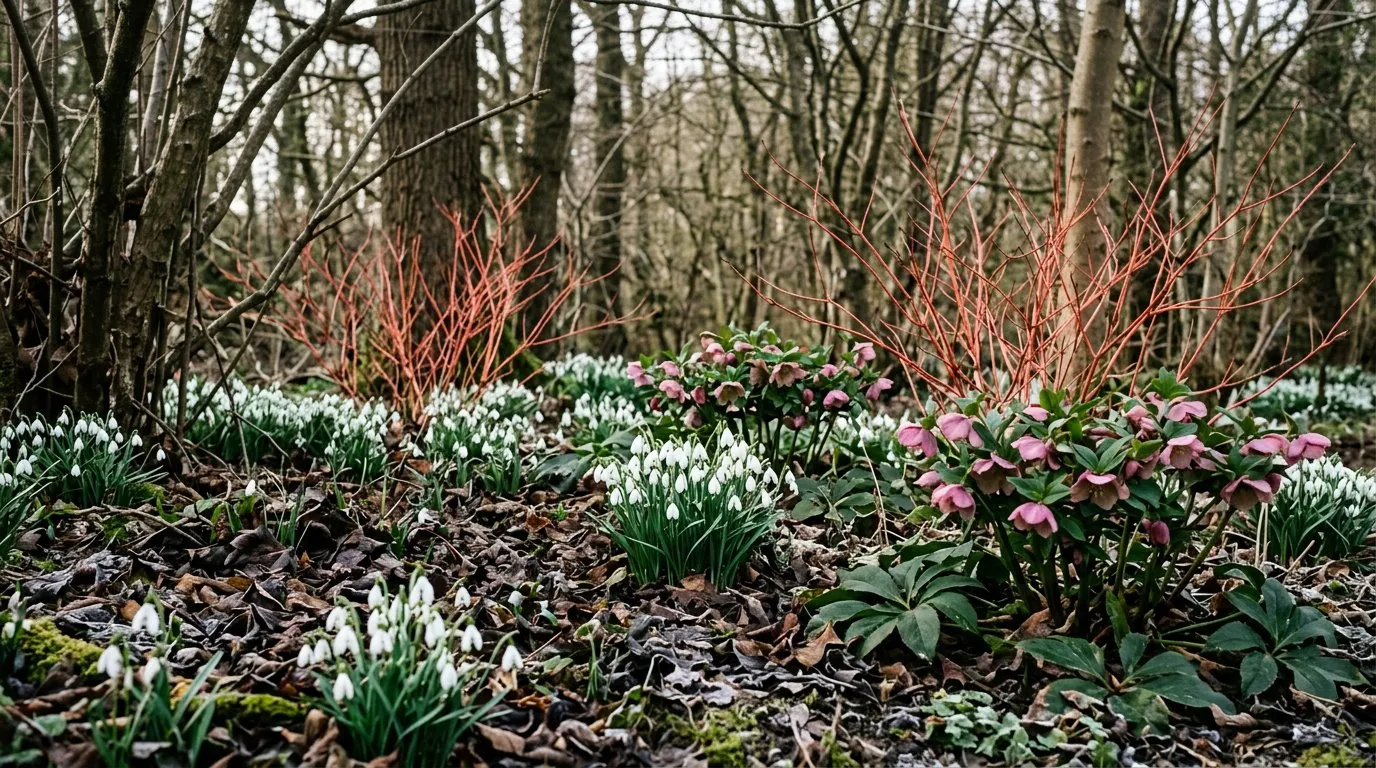 Winter borders with snowdrops, hellebores, and dogwood stems. Position winter-flowering plants where you see them daily.
Greenhouse tasks
Insulation
Insulate the greenhouse with bubble wrap from November to February. Fix it to the inside of the frame with clips, leaving gaps at the ridge for ventilation. Bubble wrap raises the minimum temperature by 2-3C and significantly reduces heating costs.
Heating
A frost-stat heater set to 5C keeps the greenhouse frost-free for overwintering tender plants, rooted cuttings, and early seed sowings. Use an electric fan heater with a thermostat rather than paraffin, which produces moisture that encourages fungal disease.
Ventilation
Open vents on mild winter days (above 10C) for an hour or two. Stagnant, humid air encourages botrytis (grey mould) and other fungal diseases. Good air circulation is as important in winter as in summer.
Winter sowing
From late January, sow early crops under cover: broad beans, early peas, sweet peas, and hardy lettuce. Sow in modules or small pots and keep on a heated bench or in a propagator. These gain 4-6 weeks over outdoor sowing.
Fruit garden
Winter pruning fruit trees
Apple and pear trees — prune between December and February (see Pruning section above).
Do not prune plums, cherries, damsons, or other stone fruit in winter. They are susceptible to silver leaf disease, which enters through pruning cuts during the dormant season. Prune stone fruit from late April to August instead.
Gooseberries and redcurrants — prune in December. Open up the centre of the bush and shorten side shoots to 2-3 buds.
Mulching soft fruit
Mulch around raspberries, blackcurrants, and blueberries with a 5-8cm layer of well-rotted compost in January. Keep mulch 5cm clear of the stems. This feeds the plants, suppresses weeds, and retains moisture for the critical spring growth period.
Forcing rhubarb
Cover rhubarb crowns with a forcing pot or upturned dustbin from January. Excluding light produces tender, pink stems 4-6 weeks earlier than uncovered plants. Force only established crowns (3+ years old) and rest them the following year.
Wildlife
Feeding birds
Winter bird feeding is essential. Natural food supplies are lowest between December and February. Provide high-energy foods: sunflower hearts, peanuts (in mesh feeders), suet blocks, and fat balls. Clear feeders and feeding stations weekly to prevent disease. For detailed advice, see our guide on how to attract birds.
Providing water
Keep bird baths free of ice. Float a tennis ball on the water surface — the movement prevents total freezing. Alternatively, pour warm (not boiling) water onto the ice each morning. Never add salt or antifreeze.
Checking nest boxes
Clean out old nest boxes in January or February. Remove old nesting material, which harbours parasites. Wash with boiling water (no chemicals) and leave to dry. Replace boxes that are rotten or damaged.
Leaving habitat
Do not clear all fallen leaves, log piles, and dead stems. These provide hibernation sites for hedgehogs, frogs, toads, beetles, and other beneficial creatures. A garden that is too tidy in winter supports almost no wildlife.
Planning and preparation
Winter is the best time to design and plan because the garden reveals its true structure.
Reviewing the garden
Walk around the garden on a clear winter day. Note what worked well last year and what did not. Which borders had gaps in summer? Which plants underperformed? Where does the eye settle, and where does it drift?
Look at the hard landscaping — paths, fences, seating areas. Do they still work? Our guides to garden path ideas, fence ideas, garden storage solutions, and garden ideas for every budget may help with improvements.
Ordering seeds
Order seeds in January for the best selection. Popular varieties sell out by February. Seed catalogues arrive from December. Compare varieties, check sowing dates in our seed sowing calendar, and order early.
Planning borders
Design new borders on paper during January and February. Measure the space, note the aspect (sun or shade), and choose plants suited to the conditions. See our guides to cottage garden planting and low-maintenance plants for planting ideas. For shady areas, our shade plant guide lists the best performers.
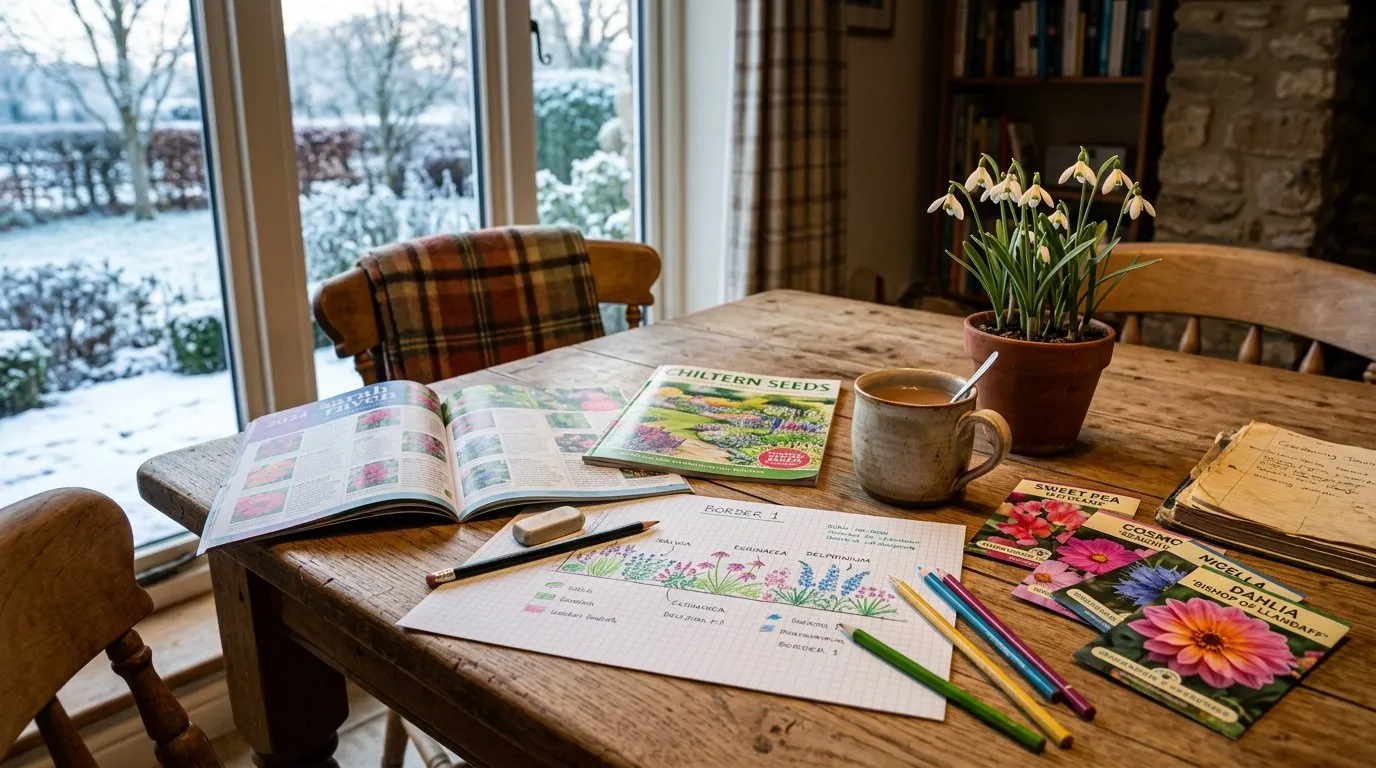 Winter planning. Order seeds in January while the full range is available, and design borders on paper before spring arrives.
Tools and maintenance
Tool care
Give all tools a thorough clean in January. Wire-brush rust from spade and fork blades. Sharpen secateurs, loppers, shears, and hoe blades with a diamond sharpening stone. Oil wooden handles with linseed oil to prevent cracking. Properly maintained tools are safer, more effective, and last decades.
Hard landscaping projects
Winter is ideal for building raised beds, paths, and structures because the ground is firm and there are no plants in the way. Timber raised beds, gravel paths, and pergolas are all achievable winter DIY projects. See our guide on raised bed gardening for construction details.
Checking fences
Inspect fences after every winter storm. Repair or replace damaged panels before climbing plants start growing through them in spring. Loose fence posts need resetting in concrete before the next gale. Our step-by-step guide to garden fence repair and maintenance covers fixing posts, replacing panels, and preventing rot.
Month-by-month winter checklist
| Task | December | January | February |
|---|---|---|---|
| Prune apple/pear trees | Yes | Yes | Yes |
| Prune wisteria | — | Yes | Yes |
| Prune cornus/salix | — | — | Late February |
| Prune roses | — | — | Late February |
| Plant bare-root stock | Yes | Yes | Yes |
| Protect tender plants | Fleece as needed | Fleece as needed | Fleece as needed |
| Dig heavy soil | Yes | — | — |
| Mulch soft fruit | — | Yes | — |
| Force rhubarb | — | Yes | Continue |
| Feed birds | Daily | Daily | Daily |
| Clean nest boxes | — | Yes | Yes |
| Order seeds | Browse catalogues | Order | Order |
| Plan borders | — | Yes | Yes |
| Greenhouse: insulate | Maintain | Maintain | Remove late Feb |
| Greenhouse: early sowing | — | Late January | Continue |
| Sharpen tools | — | Yes | — |
Common mistakes
Pruning stone fruit in winter
Plums, cherries, damsons, and other stone fruit are susceptible to silver leaf disease, which enters through dormant-season pruning cuts. The spores are most active from September to February. Always prune stone fruit between late April and August when wounds heal quickly.
Leaving containers on frozen ground
Terracotta and ceramic pots can crack when the compost inside freezes and expands. Raise pots onto feet, wrap with bubble wrap, and group against a sheltered wall. Move the most valuable pots into a greenhouse or cold frame.
Walking on frozen grass
Frozen grass blades snap underfoot, creating brown footprints that take weeks to recover. Lay temporary boards as stepping stones if you must cross the lawn in frost. Wait until the lawn has thawed before resuming normal use.
Not ventilating the greenhouse
A sealed greenhouse in winter creates stagnant, humid air — ideal conditions for botrytis and mildew. Open vents on mild days. Even 30 minutes of fresh air makes a significant difference to plant health.
Forgetting to order seeds early
Popular seed varieties sell out by February. Order in January when the full range is available. Waiting until March means settling for second choices and paying premium prices for late stock.
Why we recommend a diamond sharpening stone for winter tool maintenance: After 30 years of maintaining garden tools with files, whetstones, and diamond stones, Lawrie found that a 400/1000 grit diamond stone sharpens secateur blades in under 2 minutes and lasts 10 years without replacement. In a comparison across three sharpening methods, diamond-sharpened secateurs made the cleanest cuts on live rose stems, reducing dieback at pruning wounds by over 50% compared to file-sharpened blades.
Now you’ve worked through the winter gardening checklist, read our guide to winter greenhouse care for the next step.
Frequently asked questions
What gardening jobs can I do in winter?
Prune fruit trees and deciduous shrubs between December and February. Plant bare-root trees, shrubs, and hedging. Protect tender plants from frost. Clean tools and service mowers. Plan next year’s borders, order seeds, and build hard landscaping projects like raised beds and paths.
When should I prune fruit trees?
Prune apple and pear trees between December and February while fully dormant. The leafless canopy reveals the branch structure clearly. Never prune plums, cherries, or damsons in winter — silver leaf disease enters through dormant pruning cuts. Prune stone fruit from late April to August.
How do I protect plants from frost?
Wrap tender plants in horticultural fleece when temperatures drop below -3C. Apply 10-15cm of bark or straw mulch over root zones. Move containers against a sheltered house wall and wrap pots in bubble wrap. Remove fleece during the day to allow light and prevent fungal disease.
Can I plant in winter?
Plant bare-root trees, shrubs, and hedging from November to March whenever the ground is not frozen or waterlogged. Bare-root plants cost 30-50% less than container-grown equivalents. Plant on mild days, water well, and stake trees. Avoid planting when the soil is frozen solid.
Should I walk on a frozen lawn?
No. Frozen grass blades snap underfoot and leave brown footprints that take weeks to recover. Stay off the lawn completely until the frost has thawed. If you must cross, lay temporary boards as stepping stones to distribute your weight.
What should I do with my greenhouse in winter?
Insulate with bubble wrap to raise minimum temperatures by 2-3C. Use a frost-stat electric fan heater set to 5C for tender plants. Ventilate on mild days to prevent grey mould and mildew. Clean the glass for maximum light transmission. Start early seed sowings from late January.
Lawrie has been gardening in the West Midlands for over 30 years. He grows his own veg using no-dig methods, keeps a wildlife-friendly garden, and writes practical advice based on real UK growing conditions.