Agapanthus
Agapanthus africanus
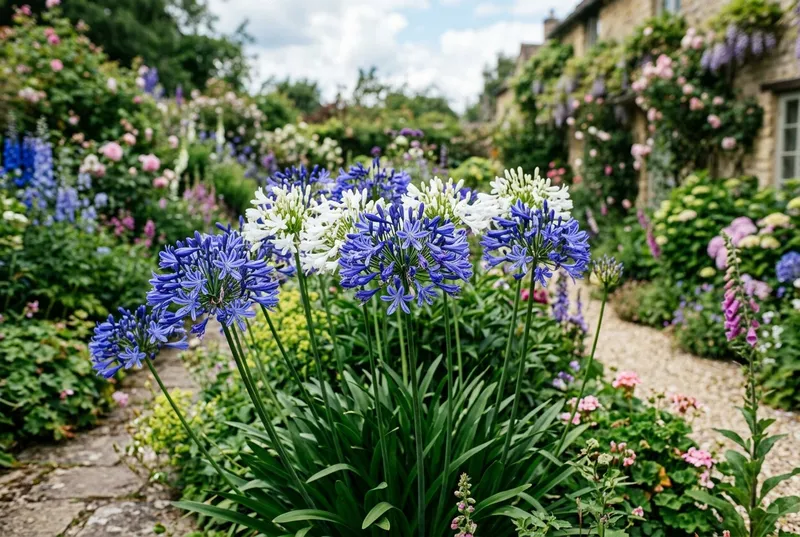
A striking, clump-forming perennial producing rounded umbels of trumpet-shaped blue or white flowers on tall, sturdy stems from July to September. The African lily brings a touch of Mediterranean drama to UK gardens and performs brilliantly in containers, coastal gardens, and sheltered sunny borders. Its strap-like foliage forms dense architectural clumps that look good even out of flower.
How to grow agapanthus
Plant in spring in a warm, sunny, sheltered spot with free-draining soil. Agapanthus flowers best when its roots are slightly congested, so choose a container only marginally larger than the root ball or plant in a confined border position. Water regularly during the growing season from April to September, then reduce watering over winter. Feed fortnightly with a high-potash liquid fertiliser from May to August. In colder UK regions, grow in containers and move to a frost-free greenhouse or porch over winter. For garden-planted specimens, mulch the crown thickly with bark or straw in late autumn. Choose hardy deciduous varieties like 'Headbourne Hybrids' for permanent outdoor planting in most of the UK.
Pruning
Deadhead spent flower stems once the blooms fade, cutting back to the base. Leave some seed heads for architectural interest if preferred. Remove any damaged or yellowing leaves throughout the growing season. In spring, tidy up evergreen foliage by removing old outer leaves.
Propagation
- Division in spring
- Seed sown in spring
Common problems
- Frost damage to evergreen varieties in cold winters
- Failure to flower if roots have too much room
- Lily beetle occasionally
- Snails hiding in foliage clumps
Good companions
Related guides
Drought-Tolerant Plants for UK Gardens
Best drought-tolerant plants for UK gardens. Covers perennials, shrubs, grasses, ground cover, and Mediterranean species that thrive without watering.
Mediterranean Garden Planting in the UK
How to create a Mediterranean garden in the UK with drought-tolerant plants, gravel mulching, and planting for sunny, sheltered spots.
Container Vegetable Gardening UK
How to grow vegetables in pots and containers in the UK. Covers best crops, pot sizes, compost, watering, feeding, and balcony and patio growing.