Bluebell
Hyacinthoides non-scripta
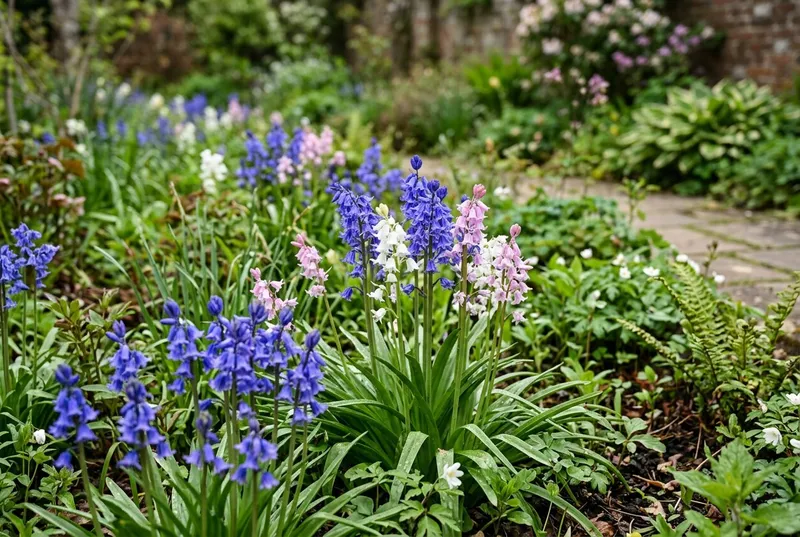
The native English bluebell is one of Britain's most iconic wildflowers, carpeting ancient woodlands in violet-blue from late April to May. The UK holds roughly half the world's population of this species. Protected under the Wildlife and Countryside Act 1981, it is illegal to dig up wild bluebell bulbs. Distinguished from the invasive Spanish bluebell by its drooping one-sided flower stem, narrow leaves, and sweet fragrance.
How to grow bluebell
Plant bulbs in autumn, 10-12 cm deep and 10 cm apart, in dappled shade under deciduous trees where conditions mimic their native woodland habitat. Bluebells prefer humus-rich, moist soil that does not dry out in summer. Mulch annually with leaf mould. Once established, they require no feeding or watering. Native bluebells spread slowly by seed and offsets, gradually forming dense drifts. Avoid planting Spanish bluebells (H. hispanica) nearby, as they cross-pollinate freely and the resulting hybrids can overwhelm the native species. Buy only from reputable suppliers who guarantee nursery-propagated stock. Never collect bulbs from the wild — it is illegal.
Pruning
No pruning needed. Leave all foliage to die back naturally through summer. Do not mow areas with naturalised bluebells until leaves have fully withered, usually by July.
Propagation
- Offsets (divide in late summer)
- Seed (self-sows freely in suitable conditions)
Common problems
- Hybridisation with Spanish bluebell
- Rust disease
- Slugs on young growth
Good companions
Related guides
How to Create a Wildflower Lawn
Turn your lawn into a wildflower meadow with native UK species. Soil preparation, seed mixes, sowing rates, yellow rattle, and mowing.
How to Create a Wildlife Garden UK
Turn any UK garden into a wildlife haven. Covers ponds, native planting, hedgehog access, bird feeding, bug hotels, and seasonal wildlife tasks.
Best Plants for Shade in UK Gardens
Best shade-tolerant plants for UK gardens, from full shade to dappled light. Covers perennials, shrubs, ground cover, ferns, and climbers.