Buddleja
Buddleja davidii
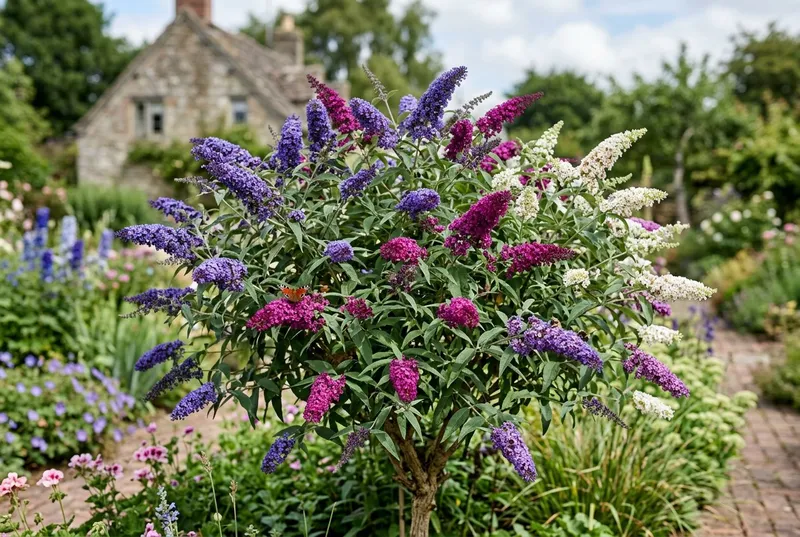
Known as the butterfly bush, this vigorous deciduous shrub produces long, conical flower spikes from July to September. Extremely popular in UK gardens for attracting butterflies, bees and other pollinators. Grows rapidly in most soils and tolerates poor, dry ground. Self-seeds freely and is often seen colonising waste ground, railway embankments and walls across Britain.
How to grow buddleja
Plant in full sun for the best flowers and most butterfly visitors. Buddleja tolerates virtually any soil, including thin chalk and heavy clay, though it performs best in well-drained ground. It establishes quickly and needs little attention once settled. Water young plants during dry spells in their first summer. Apply a general-purpose fertiliser in spring after pruning. Deadhead spent flower spikes throughout summer to encourage a second flush of blooms and prevent excessive self-seeding. In exposed gardens, stake newly planted specimens until roots anchor firmly. This shrub is ideal for new or neglected gardens where fast results are needed.
Pruning
Hard prune every year in March, cutting all stems back to a low framework about 60cm from the ground. This keeps the shrub compact and produces larger flower panicles on the new season's growth. Without annual pruning, buddleja becomes leggy and bare at the base. Remove any frost-damaged tips at the same time.
Propagation
- Hardwood cuttings in late autumn
- Semi-ripe cuttings in summer
- Seed (self-sows freely)
Common problems
- Excessive self-seeding
- Capsid bug damage to shoot tips
- Can become leggy without hard pruning
- Mullein moth caterpillars