Calathea
Calathea ornata
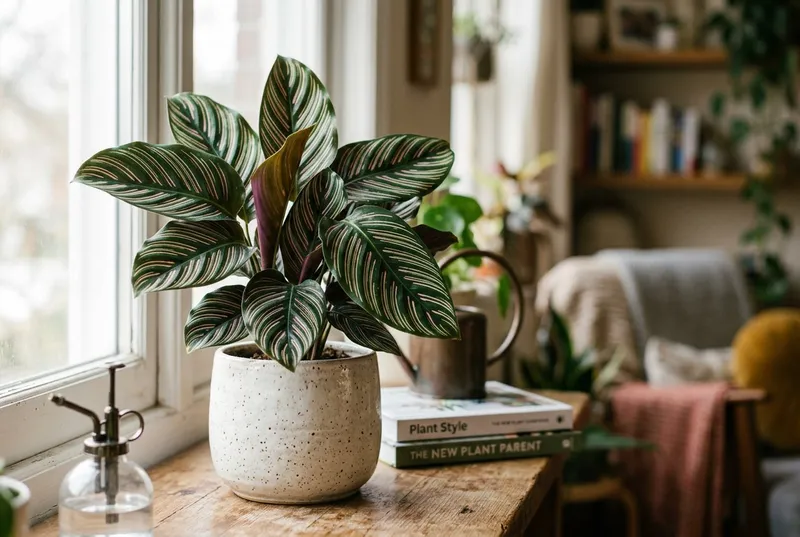
A decorative tropical houseplant with striking dark green leaves marked by fine pink or white pinstripe patterns. The undersides of the leaves are a rich burgundy-purple. Calatheas are part of the prayer plant family, folding their leaves upward at night and opening them again in the morning. They prefer warm, humid conditions typical of well-heated UK homes and make outstanding specimen plants for tabletops and shelves.
How to grow calathea
Position in medium to low indirect light. Direct sunlight fades the leaf markings and scorches the foliage. Calatheas are sensitive to chemicals in tap water; use filtered, distilled, or rainwater at room temperature. Keep the compost consistently moist but never sodden. Water little and often rather than drenching and drying out. Maintain high humidity by misting daily, using a pebble tray, or placing a humidifier nearby. UK central heating in winter is particularly drying, so increase humidity measures from October onwards. Use a well-draining peat-free houseplant compost. Feed monthly from April to September with a dilute liquid fertiliser. Keep in a warm room above 16 degrees Celsius; avoid draughts and sudden temperature changes. Calatheas are non-toxic, making them safe for households with pets and children.
Pruning
Remove brown or crispy leaves at the base as needed. No structural pruning is required. Occasional removal of older outer leaves keeps the plant looking fresh and directs energy to new growth from the centre.
Propagation
- Division in spring
Common problems
- Brown leaf edges from low humidity or tap water chemicals
- Curling leaves from underwatering
- Faded leaf patterns from too much light
- Spider mites in dry conditions
Good companions
Related guides
Best Indoor Plants for UK Homes
The best indoor plants for UK homes ranked by light needs, care difficulty, and pet safety. Includes lux data for every room orientation.
Best Low-Light Houseplants for UK Homes
Ten low-light houseplants ranked by actual lux tolerance. Covers north-facing rooms, dark hallways, and bathrooms with specific care data per plant.
Best Plants for Bathrooms UK
The best bathroom plants for UK homes ranked by humidity tolerance, low light, and pet safety. Covers 12 species with windowless bathroom solutions.
How to Repot Houseplants
Learn when and how to repot houseplants. Step-by-step guide to pot sizes, compost types, and aftercare for healthy indoor plants.