Camellia
Camellia japonica
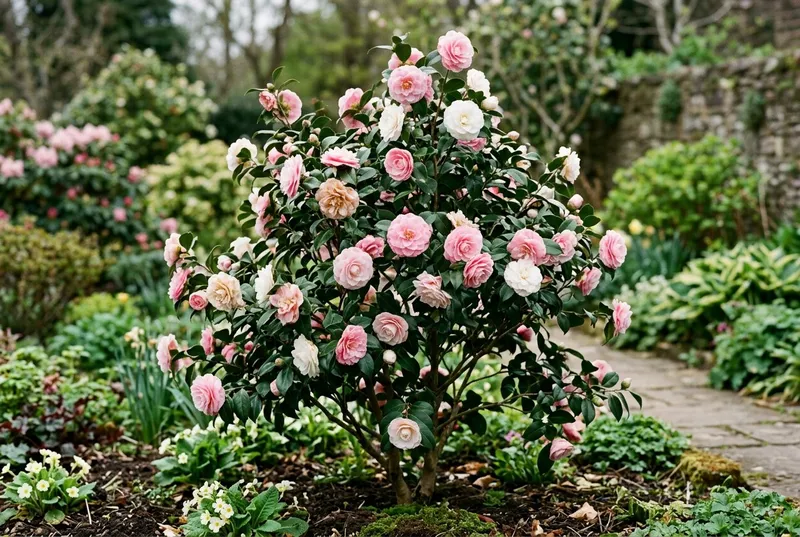
An elegant evergreen shrub prized for its glossy dark leaves and exquisite waxy flowers in late winter and early spring. Camellias require acid soil and a sheltered position away from cold east winds and early morning sun. Widely grown in south and west UK gardens, in borders, woodland settings and containers. Provides colour when little else is in bloom.
How to grow camellia
Plant in autumn or spring in acid soil enriched with ericaceous compost and leaf mould. Choose a sheltered, west-facing or north-facing position to protect early flowers from morning sun, which damages frozen buds. Water with rainwater rather than tap water in hard water areas. Keep the soil consistently moist from July to September, when flower buds are forming — drought stress at this stage causes bud drop. Mulch annually with composted bark or pine needles to maintain soil acidity and moisture. Feed in spring with a specialist ericaceous fertiliser. Camellias grow well in large containers of peat-free ericaceous compost where garden soil is alkaline.
Pruning
Prune lightly immediately after flowering, removing any dead or crossing branches. Camellias respond well to renovation pruning if they become too large — cut back hard in late spring and they will reshoot from old wood. No routine annual pruning is needed. Remove spent blooms to keep the plant tidy.
Propagation
- Semi-ripe cuttings in late summer
- Layering in autumn
- Leaf-bud cuttings in summer
Common problems
- Bud drop from drought or frost
- Sooty mould from scale insect
- Yellowing leaves on alkaline soil
- Petal blight in wet springs