Chives
Allium schoenoprasum
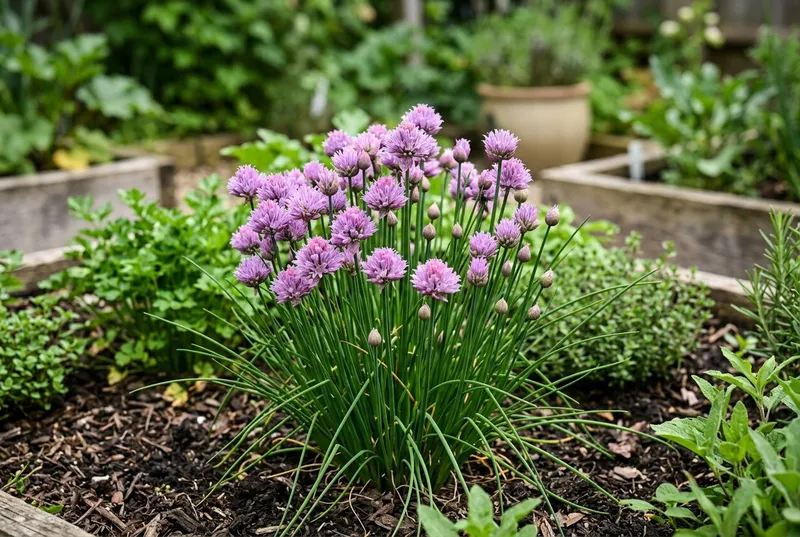
Chives are a hardy perennial herb producing slender, hollow, onion-flavoured leaves used fresh in salads, soups, omelettes, and as a garnish. Attractive spherical mauve-pink flower heads appear from May to June, making chives as ornamental as they are useful. A member of the allium family, they grow in neat clumps and are one of the easiest herbs for UK gardens. The flowers are edible and look striking scattered over salads.
How to grow chives
Sow seed indoors in March or outdoors from April in drills 1 cm deep. Thin seedlings to 15 cm apart. Alternatively, plant pot-grown chives at any time during the growing season. Choose a spot with moist, fertile soil in sun or partial shade. Water during dry spells — chives prefer consistently moist conditions. Feed monthly with a balanced liquid fertiliser. Harvest regularly by cutting leaves to 2 cm above soil level with scissors. This encourages fresh regrowth and prevents the clump from becoming tired. Remove flower heads to prolong leaf production, or leave some for the bees and to self-seed. Divide congested clumps every three to four years in spring or autumn. Lift the clump, split into smaller sections of 5-6 bulbs, and replant immediately. Chives grow well in pots on a windowsill for year-round indoor harvesting.
Pruning
Cut entire clumps back to 2 cm above soil level when leaves look tired or after flowering. Fresh growth appears within two weeks. Remove flower heads before they set seed if self-sowing is not wanted.
Propagation
- Division in spring or autumn
- Seed (sow March-April)
Common problems
- Onion downy mildew
- Rust
- Leek moth
- Self-seeding can be invasive
Good companions
Related guides
How to Grow Chives in the UK
Grow chives in UK gardens with this practical guide covering seed sowing, dividing clumps, pot growing, companion planting benefits, and garlic chives.
How to Grow Herbs in the UK
Complete guide to growing herbs in UK gardens. Covers the best herbs, growing from seed, container growing, harvesting, and preserving herbs year-round.
How to Create a Herb Garden in the UK
Plan and build a herb garden that suits your space and budget. Covers raised beds, containers, formal designs, and the best herbs for every UK position.