Cotoneaster
Cotoneaster horizontalis
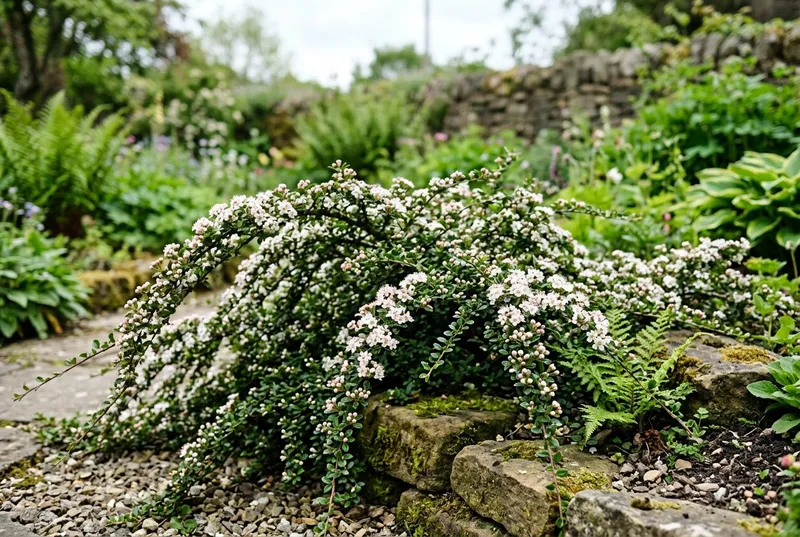
A versatile semi-evergreen shrub with a distinctive herringbone branching pattern. Small white-pink flowers in late spring attract bees, followed by masses of bright red berries in autumn that provide vital food for birds. Grows flat against walls, along banks and over low walls. One of the best shrubs for wildlife in UK gardens, thriving in almost any soil and position.
How to grow cotoneaster
Plant in autumn or spring in any well-drained soil. Cotoneaster horizontalis grows happily in full sun, partial shade or even full shade on a north-facing wall. It requires almost no care once established. Water during the first season only. No feeding is necessary on most soils. This shrub is self-clinging and will grow flat against a wall or fence without support, reaching 2m or more in height when grown vertically. On flat ground it forms a low, spreading mound. Ideal for covering difficult banks, disguising manhole covers or filling awkward gaps. The autumn berry display is exceptional and lasts well into winter. Note that this species self-seeds freely and is listed as invasive in some areas — remove unwanted seedlings promptly.
Pruning
Requires minimal pruning. Trim back any overlong or outward-growing branches in late winter to keep the plant tidy. Wall-trained plants can be clipped after flowering. Hard renovation pruning in spring is tolerated if the plant has outgrown its position. Remove any self-sown seedlings from nearby borders and paths.
Propagation
- Semi-ripe cuttings in late summer
- Hardwood cuttings in autumn
- Seed (self-sows readily)
Common problems
- Fireblight causing blackened shoots
- Woolly aphid
- Self-seeding can be invasive
- Scale insects on stems