Cyclamen
Cyclamen hederifolium
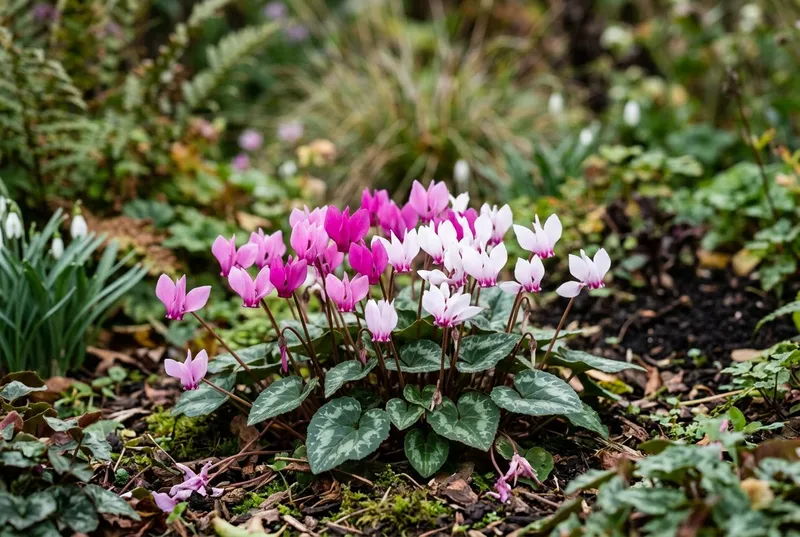
Hardy cyclamen is one of the finest autumn-flowering plants for dry shade, producing delicate pink or white swept-back flowers from September to November. The ivy-shaped leaves, marbled in silver and dark green, emerge as flowers fade and provide ground cover through winter and spring. Native to southern Europe, it has naturalised in parts of the UK. Each tuber can live for over 100 years, slowly expanding to the size of a dinner plate.
How to grow cyclamen
Plant tubers in late summer or early autumn, just below the soil surface with the slightly concave side facing upwards — this is where the growing points sit. Choose a spot in dappled shade with well-drained soil rich in leaf mould. The base of deciduous trees and north-facing walls are ideal positions. Hardy cyclamen tolerate very dry conditions once established, thriving where little else will grow. Do not water during the summer dormancy period. Top-dress with leaf mould each autumn. Self-sown seedlings appear freely once plants are established — ants help distribute the sticky seeds. Avoid disturbing established tubers, as they resent being moved. Buy nursery-grown tubers from reputable suppliers rather than wild-collected stock.
Pruning
No pruning needed. Remove faded flowers only if you want to prevent self-seeding. Leaves die back naturally by late spring.
Propagation
- Seed (sow fresh seed in autumn, germinates in darkness)
- Self-seeding
Common problems
- Vine weevil grubs eating tubers
- Grey squirrels digging up tubers
- Mice eating seeds
Good companions
Related guides
Best Plants for Shade in UK Gardens
Best shade-tolerant plants for UK gardens, from full shade to dappled light. Covers perennials, shrubs, ground cover, ferns, and climbers.
Best Winter Flowering Plants for the UK
Ten best winter flowering plants for UK gardens from November to March. Covers hellebores, snowdrops, witch hazel, and winter jasmine with care advice.
How to Create a Wildlife Garden UK
Turn any UK garden into a wildlife haven. Covers ponds, native planting, hedgehog access, bird feeding, bug hotels, and seasonal wildlife tasks.