Dill
Anethum graveolens
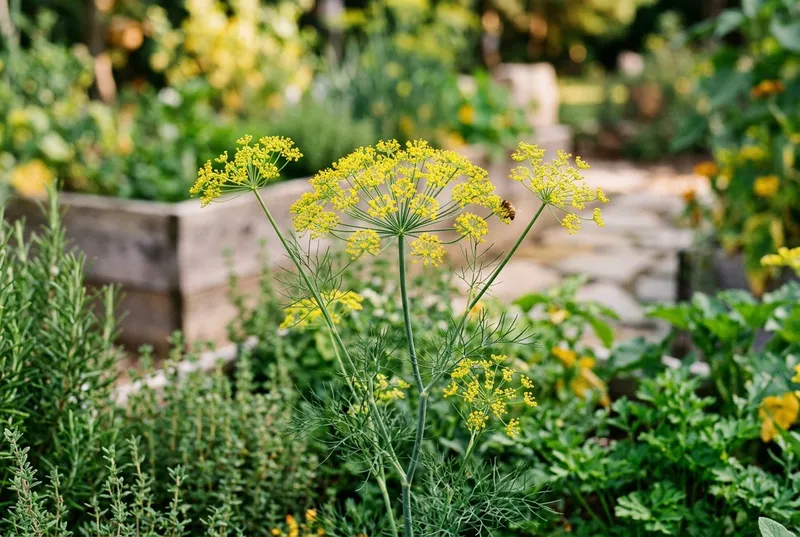
Dill is a tall, feathery annual herb with a distinctive aniseed flavour prized in Scandinavian, Eastern European, and Middle Eastern cooking. Its wispy, thread-like leaves pair perfectly with salmon, potatoes, pickles, and yoghurt dressings. Flat-topped umbels of tiny yellow flowers appear from June to August, attracting hoverflies and other beneficial insects. The seeds are also harvested as a spice. Quick-growing and easy from seed in a sunny spot.
How to grow dill
Sow seed directly outdoors from April to July in a sunny, sheltered spot. Dill has a long taproot and dislikes transplanting, so sow where it is to grow. Scatter seed thinly in drills 1 cm deep and thin seedlings to 15-20 cm apart. Keep the soil moist — dry conditions cause premature bolting. Provide shelter from strong winds, as the tall, slender stems snap easily. Stake tall plants or grow among supportive neighbours. For a continuous supply of fresh leaves, make successional sowings every three to four weeks. Begin harvesting leaves as soon as plants are 15 cm tall. Cut whole stems rather than stripping individual fronds. If growing for seed, allow flower heads to mature and harvest when seeds turn brown. Keep dill away from fennel — the two cross-pollinate and produce inferior offspring.
Pruning
No pruning required. Pinch out flower heads to prolong leaf production if seeds are not wanted. Cut entire stems for use rather than stripping individual leaves.
Propagation
- Seed (sow directly April-July)
- Self-seeding
Common problems
- Bolting in hot, dry weather
- Aphids
- Wind damage to tall stems
- Cross-pollination with fennel
Good companions
Related guides
How to Grow Herbs in the UK
Complete guide to growing herbs in UK gardens. Covers the best herbs, growing from seed, container growing, harvesting, and preserving herbs year-round.
How to Create a Herb Garden in the UK
Plan and build a herb garden that suits your space and budget. Covers raised beds, containers, formal designs, and the best herbs for every UK position.
How to Dry and Store Herbs at Home
Practical guide to drying and storing herbs from your garden. Covers air drying, oven drying, freezing, and making herb salts, oils, and vinegars.