Forsythia
Forsythia x intermedia
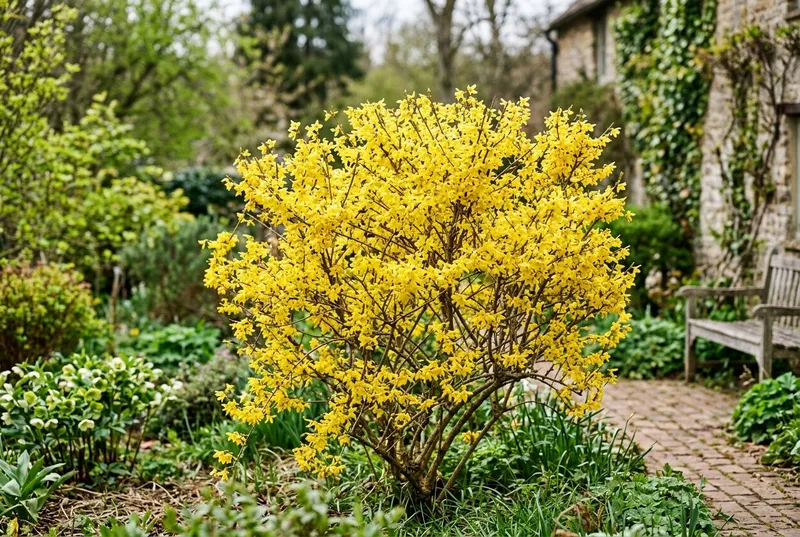
One of the earliest and most cheerful sights of spring, forsythia covers its bare branches with bright yellow flowers from March to April before the leaves appear. This vigorous deciduous shrub is incredibly easy to grow and thrives in most UK garden soils and positions. Often used for hedging and boundary planting. A reliable indicator that spring has arrived in British gardens.
How to grow forsythia
Plant in autumn or early spring in any well-drained soil. Forsythia flowers most prolifically in full sun but tolerates partial shade. Extremely tough and adaptable, it grows well on heavy clay, thin chalk and poor soils. Water during the first growing season while establishing. Once settled, it needs almost no attention. Mulch around the base in spring. Feed with a general-purpose fertiliser after pruning. For a flowering hedge, plant 60cm apart. In smaller gardens, choose the compact cultivar 'Minigold' or train against a wall or fence where space is limited. Avoid planting in frost pockets where early blossom may be damaged.
Pruning
Prune immediately after flowering in late April. Cut back all flowered shoots to strong young growth lower down the stem. Remove one in four of the oldest stems at ground level each year to prevent the shrub becoming congested and unproductive. Never prune in winter or summer — this removes the flower buds. Hedge plants should be trimmed after flowering rather than in autumn.
Propagation
- Hardwood cuttings in late autumn
- Softwood cuttings in early summer
- Layering in autumn
Common problems
- Forsythia gall causing rounded swellings on stems
- Birds pecking flower buds
- Can become bare at base if not pruned regularly