Hart's Tongue Fern
Asplenium scolopendrium
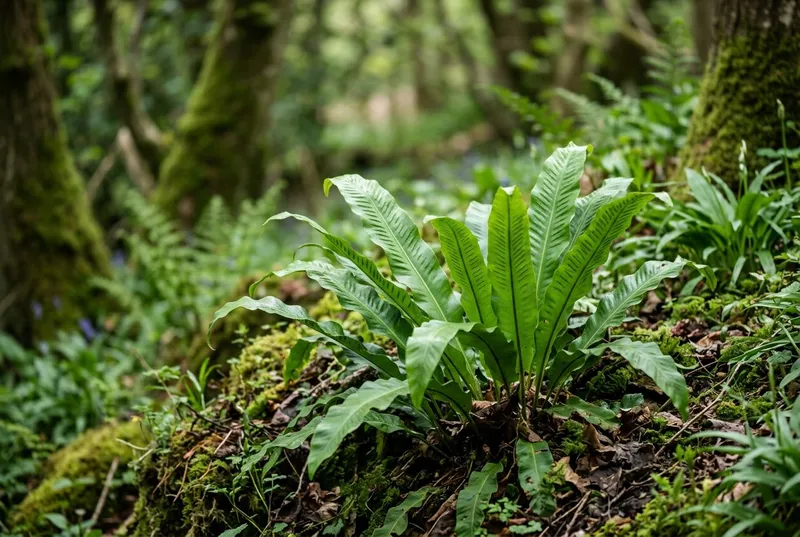
A distinctive evergreen fern with undivided, glossy, tongue-shaped fronds that unfurl from a central crown. Unlike most ferns, the leaves are entire rather than divided, creating a bold, architectural contrast with lacy-fronded species. Hart's tongue fern is native to the UK and found growing wild in damp, shaded hedgerows, walls, and woodland throughout Britain. It is fully hardy and thrives in the alkaline conditions that many ferns dislike.
How to grow hart's tongue fern
Plant in a shaded or partially shaded spot with moist, humus-rich soil. Hart's tongue fern is one of the few ferns that thrives on alkaline soils, including chalky ground and lime mortar in old walls. Dig in plenty of leaf mould or garden compost before planting. Water regularly during dry periods, especially in the first year, though established plants cope with short dry spells in shade. Avoid hot, sunny positions where the fronds scorch and turn yellow. Mulch annually in spring with leaf mould or bark chips to retain moisture and mimic woodland conditions. Feed is rarely needed if the soil is enriched with organic matter. Plant in crevices in shaded walls or at the base of north-facing boundaries for a naturalistic look. Grows well in containers using a loam-based compost with added leaf mould.
Pruning
Remove tattered or brown fronds in early spring before new crosiers unfurl. Cut old fronds at the base, leaving the emerging central crown untouched. The evergreen foliage provides winter interest, so delay removal until new growth is visible.
Propagation
- Spore sowing
- Division of mature clumps in spring
Common problems
- Scorched fronds in sun or dry conditions
- Rust on frond undersides in wet weather
- Slugs and snails on young fronds
Good companions
Related guides
Best Plants for Shade in UK Gardens
Best shade-tolerant plants for UK gardens, from full shade to dappled light. Covers perennials, shrubs, ground cover, ferns, and climbers.
How to Create a Wildlife Garden UK
Turn any UK garden into a wildlife haven. Covers ponds, native planting, hedgehog access, bird feeding, bug hotels, and seasonal wildlife tasks.
Cottage Garden Planting Plan for the UK
How to plan and plant a cottage garden in the UK. Covers classic plants, colour schemes, seasonal structure, and a ready-to-use planting plan.
Low Maintenance Garden Plants for the UK
Best low-maintenance plants for UK gardens that thrive with minimal care. Covers evergreens, perennials, ground cover, grasses, and shrubs.