Hebe
Hebe 'Great Orme'
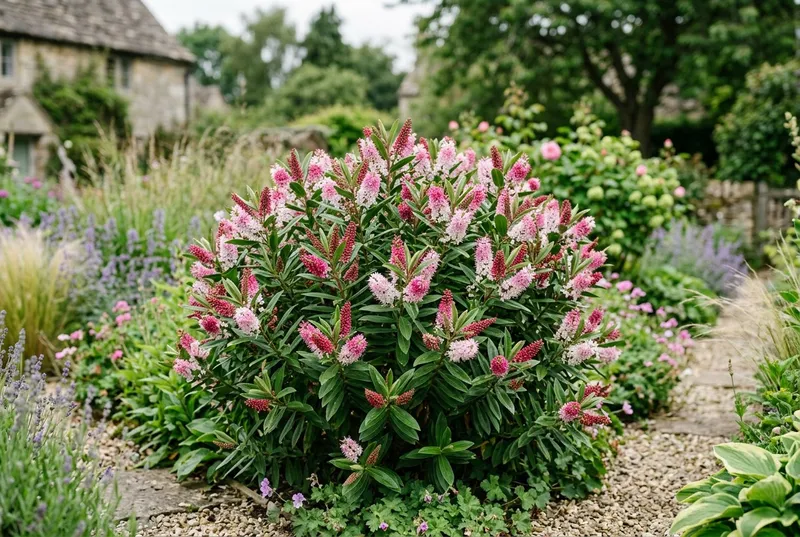
A popular compact evergreen shrub bearing long spikes of bright pink flowers from midsummer to mid-autumn. The flowers gradually fade to white as they age, creating an attractive two-tone effect. Glossy dark green foliage remains neat year-round. Best suited to milder areas of the UK, coastal gardens and sheltered urban plots. A magnet for bees and butterflies during its long flowering season.
How to grow hebe
Plant in spring in a sunny, sheltered position with well-drained soil. Hebes dislike cold, wet soils and exposed, frosty positions. In colder parts of the UK, grow in containers that can be moved to a sheltered spot in winter, or plant against a south or west-facing wall. Water moderately during the growing season and keep on the dry side in winter. Good drainage is essential — add grit to heavy soils before planting. Mulch with gravel rather than organic matter to keep the crown dry. Feed lightly with a balanced fertiliser in spring. Smaller-leaved hebe species and cultivars tend to be hardier than large-leaved types like 'Great Orme', so choose accordingly for cold gardens.
Pruning
Trim back lightly after flowering to remove faded flower spikes and maintain a compact shape. In spring, cut out any frost-damaged or dead growth. Avoid hard pruning into old wood as hebes are slow to regrow from bare stems. If the plant becomes leggy, replace rather than attempt hard renovation.
Propagation
- Semi-ripe cuttings in late summer
- Softwood cuttings in early summer
Common problems
- Frost damage in cold inland gardens
- Root rot in waterlogged soil
- Downy mildew
- Leaf spot in damp conditions