Yellow Flag Iris
Iris pseudacorus
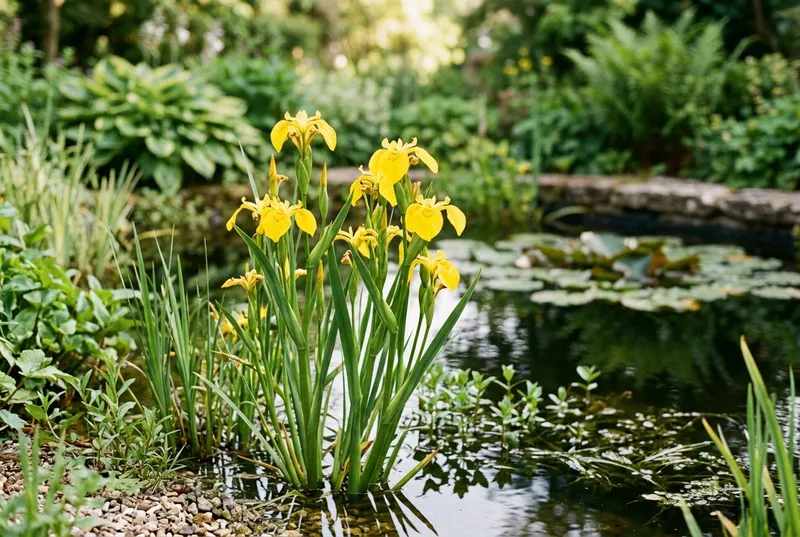
A vigorous, native British marginal aquatic plant producing bold, sword-shaped leaves and bright yellow flowers from May to July. Yellow flag iris is one of the most recognisable wildflowers of UK pond margins, riverbanks, and ditches. Each flower stem carries several blooms marked with brown or purple veining. The tall, upright foliage provides structural height at the water's edge and shelter for amphibians and dragonflies.
How to grow yellow flag iris
Plant in full sun or partial shade in wet soil or shallow water up to 15 cm deep at the pond margin. Yellow flag iris is extremely vigorous and spreads by thick rhizomes, so plant it in aquatic baskets to contain its growth in small to medium ponds. In large wildlife ponds and natural waterways, it can be planted directly into the mud. Space plants 60-90 cm apart. It tolerates a wide range of soil types from heavy clay to silt. Water is rarely needed as it grows in permanently wet conditions. Feed is unnecessary in fertile pond mud. Remove spent flower stems after blooming. Thin out congested clumps every three years in early autumn by lifting and dividing the rhizomes. The variegated cultivar 'Variegata' is less vigorous and suited to smaller ponds.
Pruning
Cut back flower stems after blooming. Remove yellowing or brown foliage in autumn, cutting to just above the waterline. This prevents dead foliage from decomposing in the pond over winter. Leave some upright stems standing for overwintering insects.
Propagation
- Rhizome division in late summer or autumn
- Seed
Common problems
- Excessive spreading in uncontained plantings
- Iris sawfly larvae eating the leaves
- Leaf spot in late summer
Good companions
Related guides
Best Pond Plants for UK Gardens
Native UK pond plants for every planting zone. Covers water lilies, oxygenators, marginals, and bog plants with depths, spreads, and wildlife value.
How to Build a Wildlife Pond UK Guide
Step-by-step guide to building a wildlife pond in the UK. Covers liner choice, planting, depth, wildlife access, maintenance, and costs from fifty pounds.
How to Build a Garden Pond: UK Guide
Step-by-step guide to building a garden pond in the UK. Covers liner types, digging, pumps, filters, fish stocking, planting, and maintenance.
How to Create a Wildlife Garden UK
Turn any UK garden into a wildlife haven. Covers ponds, native planting, hedgehog access, bird feeding, bug hotels, and seasonal wildlife tasks.