Ivy
Hedera helix
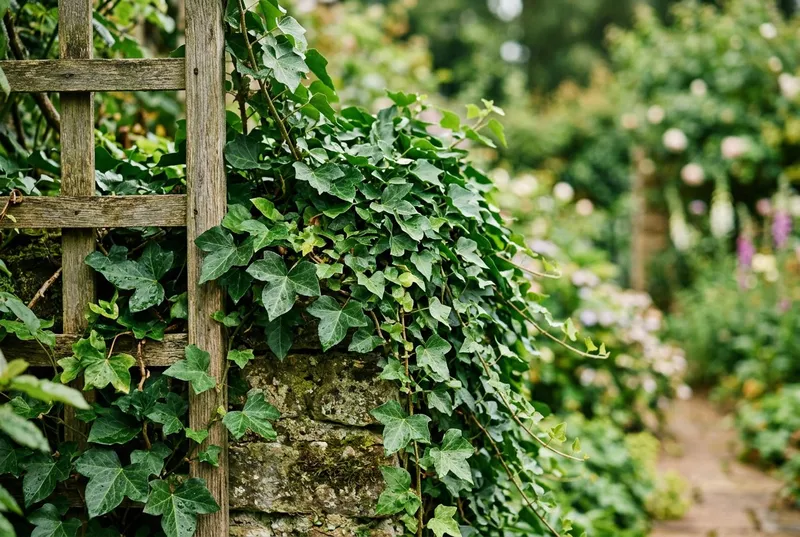
Common ivy is a native British evergreen climber and ground cover plant found in almost every habitat across the UK. It provides vital late-season nectar for bees and butterflies in autumn, and its black berries feed birds through winter. Ivy is self-clinging and covers walls, fences, and tree trunks without additional support. It thrives in deep shade where few other plants grow.
How to grow ivy
Plant at any time of year in virtually any soil or aspect. Ivy is one of the most adaptable plants in the UK, growing in full sun to deep shade, dry or wet conditions, and poor or fertile soil. It is invaluable for covering north-facing walls and shaded fences. Variegated cultivars such as 'Glacier' and 'Goldchild' need more light to maintain their colouring. Ivy does not damage sound brickwork, but avoid growing it over walls with loose mortar or crumbling render. Water during the first season to establish. Ivy rarely needs feeding. It is an outstanding wildlife plant, providing shelter for nesting wrens, hibernating butterflies, and overwintering hedgehogs.
Pruning
Trim back two or three times a year between spring and autumn to keep within bounds. Cut back hard in late winter if it has grown too large. Ivy regenerates vigorously from old wood. Remove growth from gutters, windows, and roof tiles annually. When ivy reaches the top of a wall, it produces mature, non-climbing branches with rounded leaves and flowers.
Propagation
- Semi-ripe cuttings
- Layering
Common problems
- Scale insects
- Leaf spot
- Can harbour snails
- May loosen old mortar
Good companions
Related guides
Best Climbing Plants for UK Gardens
Best climbing plants for UK gardens covering walls, fences, pergolas, and small spaces. Planting advice, aspect guidance, and care tips.
How to Create a Wildlife Garden UK
Turn any UK garden into a wildlife haven. Covers ponds, native planting, hedgehog access, bird feeding, bug hotels, and seasonal wildlife tasks.
Best Plants for Shade in UK Gardens
Best shade-tolerant plants for UK gardens, from full shade to dappled light. Covers perennials, shrubs, ground cover, ferns, and climbers.