Japanese Maple
Acer palmatum
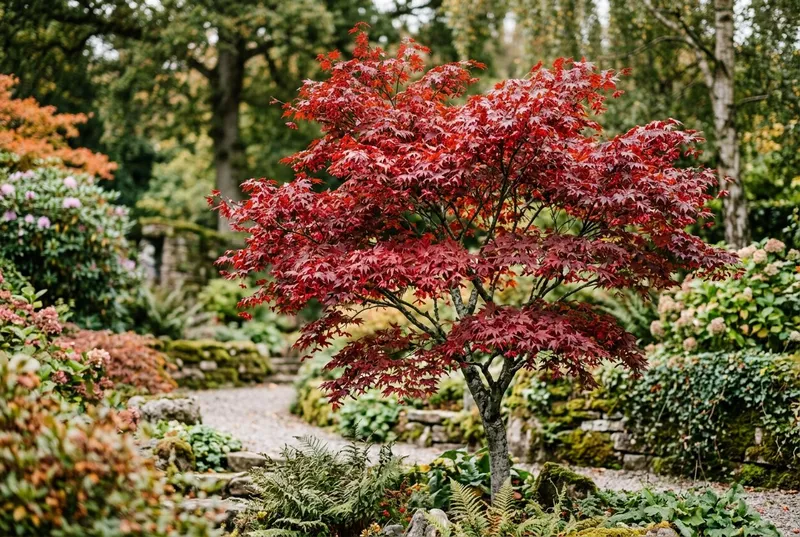
Japanese maples are among the most elegant ornamental trees for UK gardens. Their finely dissected leaves turn spectacular shades of crimson, orange, and gold in autumn. Compact and slow-growing, they suit small gardens, borders, and large containers. Most cultivars thrive in sheltered positions across all UK regions, tolerating temperatures down to -15°C once established.
How to grow japanese maple
Plant in a sheltered spot away from cold winds and late frosts, which can scorch emerging leaves. Dappled shade is ideal, though some cultivars tolerate full sun if soil stays moist. Enrich the planting hole with ericaceous compost or leaf mould. Water regularly during the first two summers and mulch annually with bark chips to retain moisture. Container-grown specimens need ericaceous compost and should be watered consistently, never allowed to dry out completely. Feed in spring with a balanced slow-release fertiliser. Protect young trees from harsh winter winds with horticultural fleece if planted in an exposed spot.
Pruning
Prune lightly in late autumn or winter when fully dormant, between November and January. Remove dead, crossing, or damaged branches to maintain an open, airy framework. Avoid heavy pruning, as Japanese maples bleed sap freely if cut during the growing season.
Propagation
- Seed
- Grafting
Common problems
- Wind scorch
- Coral spot
- Verticillium wilt
- Aphids
Good companions
Related guides
Japanese Maple Care in the UK
How to grow Japanese maples in UK gardens. Covers Acer palmatum varieties, positioning, soil, container growing, pruning, and autumn colour.
Best Trees for Small Gardens in the UK
Top trees for small UK gardens with ultimate heights under 8m. Covers Amelanchier, crab apple, Japanese maple, birch, magnolia, rowan, and cherry.
Japanese Garden Design for the UK
How to create a Japanese garden in the UK. Covers key elements, best plants for UK climate, zen dry gardens, water features, and budgets from £500.