Lady Fern
Athyrium filix-femina
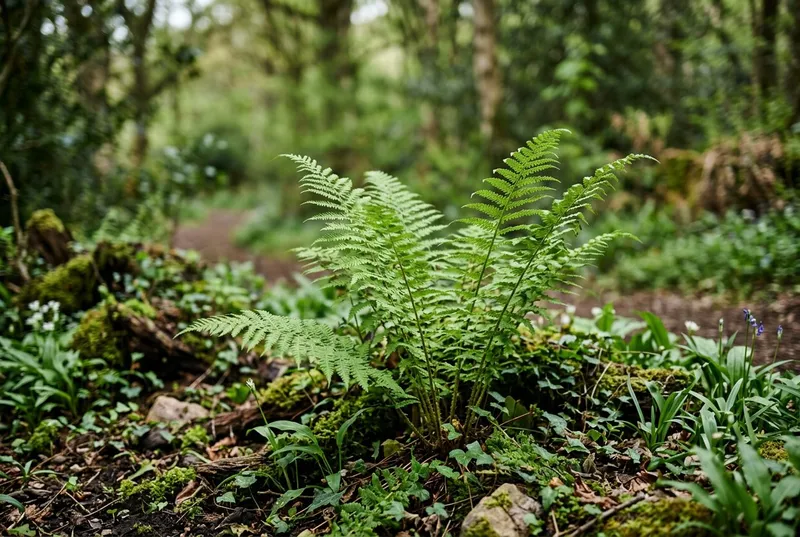
A graceful, deciduous fern native to the UK, with finely divided, lace-like fronds that create a soft, feathery texture in shaded borders. Lady fern is lighter and more delicate in appearance than the male fern, with pale green, arching fronds that grow in an elegant shuttlecock formation. It thrives in damp, sheltered woodland conditions and is found wild across Britain. Numerous cultivars offer crested, tasselled, and ruffled frond forms.
How to grow lady fern
Plant in a sheltered, shaded position with moist, humus-rich soil. Lady fern is less tolerant of dry conditions than the male fern, so keep the soil consistently moist, particularly during summer. Dig in plenty of leaf mould, well-rotted garden compost, or composted bark before planting. Mulch annually in spring to retain moisture and enrich the soil as it breaks down. Water regularly during dry spells. Avoid exposed, windy positions as the delicate fronds scorch and shred in wind. Lady fern grows well beside ponds, streams, and in bog gardens where moisture is abundant. Space plants 50-60 cm apart in groups of three or more for a naturalistic effect. Feed is rarely needed in rich soil but a scattering of fish, blood, and bone in spring benefits plants on poorer ground.
Pruning
Cut back all dead fronds to the crown in late February before new crosiers unfurl. The deciduous foliage turns brown after the first frosts, but leaving it in place over winter protects the crown from cold and provides habitat for overwintering insects.
Propagation
- Division in spring
- Spore sowing
Common problems
- Fronds scorching in wind or sun
- Slugs and snails on emerging crosiers
- Crown rot in waterlogged soil over winter
Good companions
Related guides
Best Plants for Shade in UK Gardens
Best shade-tolerant plants for UK gardens, from full shade to dappled light. Covers perennials, shrubs, ground cover, ferns, and climbers.
How to Create a Wildlife Garden UK
Turn any UK garden into a wildlife haven. Covers ponds, native planting, hedgehog access, bird feeding, bug hotels, and seasonal wildlife tasks.
How to Build a Wildlife Pond UK Guide
Step-by-step guide to building a wildlife pond in the UK. Covers liner choice, planting, depth, wildlife access, maintenance, and costs from fifty pounds.
Cottage Garden Planting Plan for the UK
How to plan and plant a cottage garden in the UK. Covers classic plants, colour schemes, seasonal structure, and a ready-to-use planting plan.