Lavender
Lavandula angustifolia
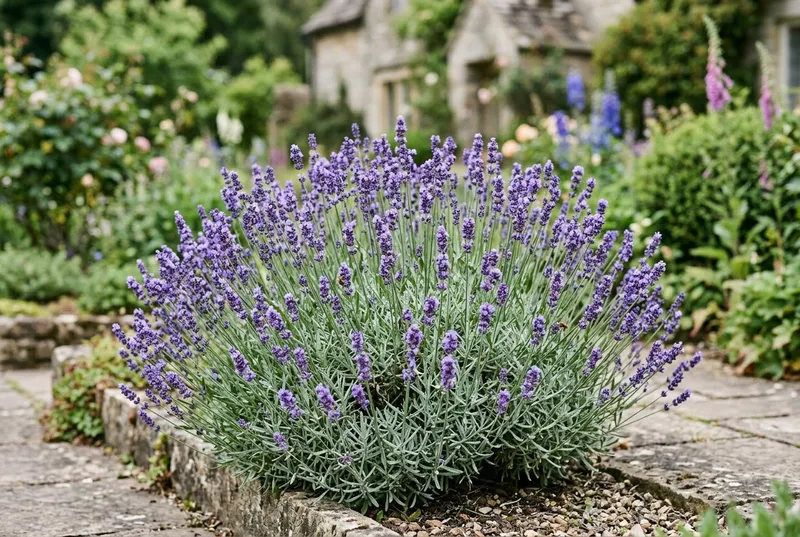
A compact, aromatic evergreen shrub producing spikes of purple-blue flowers from June to August. Lavender thrives in poor, well-drained soil and full sun, making it ideal for borders, paths, and gravel gardens across the UK. Its silvery-green foliage provides year-round structure while the intensely fragrant flowers attract pollinators throughout summer.
How to grow lavender
Plant in spring or autumn in a sunny, sheltered spot with free-draining soil. Lavender hates wet feet, so add grit to heavy clay before planting. Space plants 30-45 cm apart for a low hedge or 60 cm for individual specimens. Water newly planted lavender regularly during the first summer, then leave it alone — established plants are extremely drought tolerant. Avoid rich compost or high-nitrogen feeds, which produce leggy growth and fewer flowers. In exposed UK gardens, choose compact varieties like 'Hidcote' or 'Munstead' that withstand winter cold better than taller French types. Mulch with gravel rather than bark to keep the crown dry.
Pruning
Trim after flowering in late summer, cutting back to just above the current season's growth but never into old bare wood. A second light trim in April keeps the plant compact. Without regular pruning, lavender becomes woody and bare at the base within three to four years, and rarely recovers once this happens.
Propagation
- Semi-ripe cuttings in summer
- Layering
Common problems
- Root rot in waterlogged soil
- Grey mould in humid conditions
- Rosemary beetle feeding on foliage
Good companions
Related guides
How to Grow Lavender in the UK
A practical guide to growing lavender in UK gardens. Covers hardy and tender types, planting, pruning, drainage, harvesting, and best UK varieties.
Drought-Tolerant Plants for UK Gardens
Best drought-tolerant plants for UK gardens. Covers perennials, shrubs, grasses, ground cover, and Mediterranean species that thrive without watering.
Best Bee-Friendly Plants for UK Gardens
Attract bees and pollinators with plants that thrive in British conditions. Covers spring, summer, and autumn flowering for year-round forage.
Cottage Garden Planting Plan for the UK
How to plan and plant a cottage garden in the UK. Covers classic plants, colour schemes, seasonal structure, and a ready-to-use planting plan.