Lupin
Lupinus polyphyllus
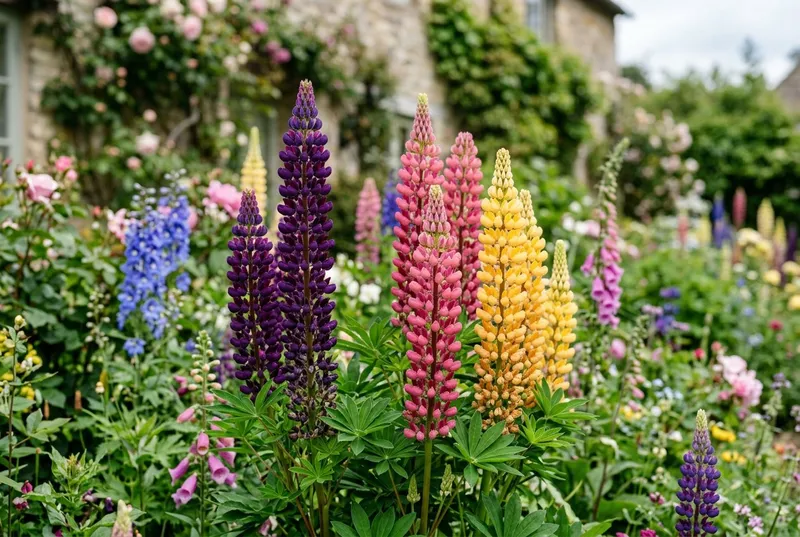
A bold, upright perennial producing dense, tapering spikes of pea-like flowers in a stunning range of colours from May to July. Lupins are a cottage garden classic, growing quickly to form substantial clumps in their second year. They fix nitrogen in the soil through their root nodules, improving conditions for neighbouring plants in UK borders.
How to grow lupin
Plant in spring or autumn in a sunny or lightly shaded spot with well-drained, slightly acidic to neutral soil. Lupins dislike chalk and heavy clay, so add composted bark to improve drainage on difficult sites. Space plants 45-60 cm apart and water regularly until established. Avoid rich feeding — their nitrogen-fixing roots make additional fertiliser unnecessary and excess nitrogen produces foliage at the expense of flowers. Deadhead immediately after the first flush to encourage a second smaller display in late summer. Lupins are relatively short-lived, typically lasting three to five years, so propagate regularly to maintain your stock.
Pruning
Cut each flower spike down to a strong set of leaves immediately after fading to promote a second flush. Cut all foliage back to ground level in late autumn once it has yellowed. Remove any damaged or diseased leaves during the growing season to improve air circulation.
Propagation
- Basal cuttings in spring
- Seed sown in autumn after nicking the seed coat
Common problems
- Lupin aphid causing distorted growth
- Slugs and snails on young plants
- Powdery mildew in dry conditions
Good companions
Related guides
How to Grow Lupins in the UK
Step-by-step guide to growing lupins in UK gardens. Covers varieties, sowing, soil prep, slug control, and how to get a second flush of flowers.
Cottage Garden Planting Plan for the UK
How to plan and plant a cottage garden in the UK. Covers classic plants, colour schemes, seasonal structure, and a ready-to-use planting plan.
Best Bee-Friendly Plants for UK Gardens
Attract bees and pollinators with plants that thrive in British conditions. Covers spring, summer, and autumn flowering for year-round forage.