Magnolia
Magnolia stellata
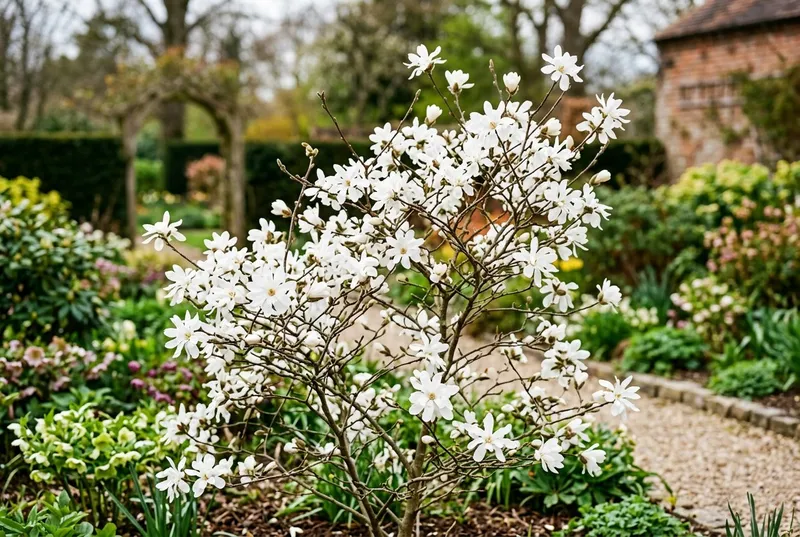
Magnolia stellata, the star magnolia, is one of the best magnolias for smaller UK gardens. It produces masses of star-shaped, fragrant white flowers on bare branches in early spring. Slow-growing and compact, it rarely exceeds 3 metres in height and works beautifully as a specimen in borders, lawns, or large containers. Fully hardy throughout the UK.
How to grow magnolia
Plant in a sheltered, south or west-facing position to protect early flowers from late frosts. Avoid east-facing spots where morning sun can damage frosted buds. Magnolia stellata prefers moist, humus-rich, neutral to acidic soil and dislikes chalky or alkaline conditions. Dig in plenty of well-rotted compost or leaf mould before planting. Water regularly during dry spells, especially in the first two summers. Mulch generously each spring with bark or leaf mould, keeping mulch away from the trunk. This magnolia resents root disturbance, so choose its permanent position carefully and avoid moving once established.
Pruning
Prune as little as possible. If needed, remove dead or damaged branches immediately after flowering in late spring. Never prune in winter or autumn, as magnolias heal poorly and cuts invite disease. If reshaping is necessary, do so gradually over several years.
Propagation
- Layering
- Semi-ripe cuttings
Common problems
- Frost damage to buds
- Coral spot
- Scale insects
- Honey fungus
Good companions
Related guides
Best Trees for Small Gardens in the UK
Top trees for small UK gardens with ultimate heights under 8m. Covers Amelanchier, crab apple, Japanese maple, birch, magnolia, rowan, and cherry.
Spring Gardening Jobs: Complete UK Checklist
Month-by-month spring gardening checklist for UK gardens. Covers lawn care, pruning, sowing, borders, wildlife, and pond tasks for March to May.
Best Flowering Shrubs for UK Gardens
Discover the best flowering shrubs for UK gardens. Covers hydrangea, lavender, buddleja, philadelphus and more with pruning groups and soil needs.