Marsh Marigold
Caltha palustris
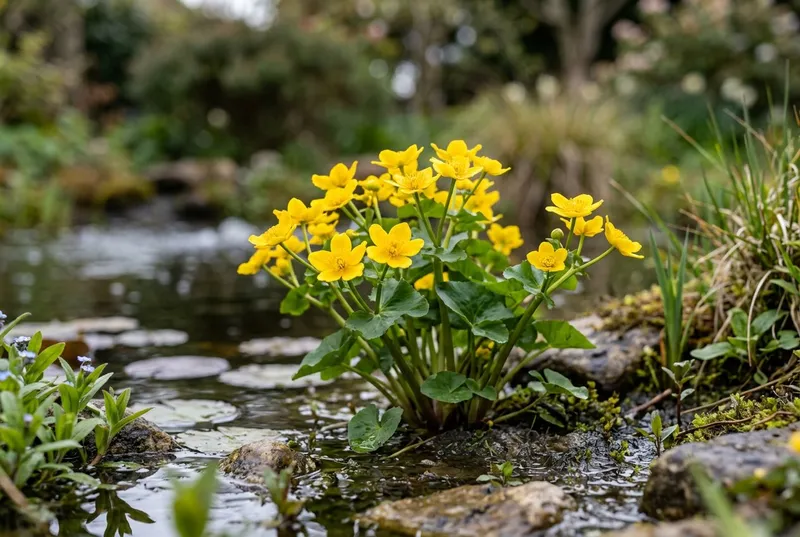
A cheerful, native British wildflower producing clusters of bright golden-yellow, buttercup-like flowers in March and April. Marsh marigold is one of the earliest pond-marginal plants to flower, providing a vital nectar source for emerging bees and hoverflies in early spring. Its glossy, kidney-shaped leaves form dense, low mounds at the water's edge. It grows naturally in damp meadows, stream banks, and boggy ground across the UK.
How to grow marsh marigold
Plant in full sun or light shade in permanently moist or wet soil at the edge of a pond, stream, or in a bog garden. Marsh marigold thrives in up to 5 cm of standing water and also grows well in ordinary garden soil that never dries out. Plant in autumn or spring, spacing 30 cm apart. Enrich the planting area with well-rotted compost or leaf mould. No staking is needed. Water thoroughly during any dry spells in the first year. Once established, it requires virtually no maintenance in the right conditions. Feed is rarely needed in fertile, moisture-retentive soil. The double-flowered form 'Flore Pleno' is showier and equally easy. Marsh marigold self-seeds gently in damp conditions, forming natural-looking colonies.
Pruning
Cut back the foliage after it yellows and dies down in midsummer. Remove any dead or damaged leaves as they appear. No structural pruning is needed.
Propagation
- Division after flowering
- Seed sown fresh in damp compost
Common problems
- Powdery mildew in dry conditions
- Wilting and dying back if soil dries out
- Slugs on young shoots in early spring
Good companions
Related guides
Best Pond Plants for UK Gardens
Native UK pond plants for every planting zone. Covers water lilies, oxygenators, marginals, and bog plants with depths, spreads, and wildlife value.
How to Build a Wildlife Pond UK Guide
Step-by-step guide to building a wildlife pond in the UK. Covers liner choice, planting, depth, wildlife access, maintenance, and costs from fifty pounds.
How to Create a Wildlife Garden UK
Turn any UK garden into a wildlife haven. Covers ponds, native planting, hedgehog access, bird feeding, bug hotels, and seasonal wildlife tasks.
Best Bee-Friendly Plants for UK Gardens
Attract bees and pollinators with plants that thrive in British conditions. Covers spring, summer, and autumn flowering for year-round forage.