Monstera
Monstera deliciosa
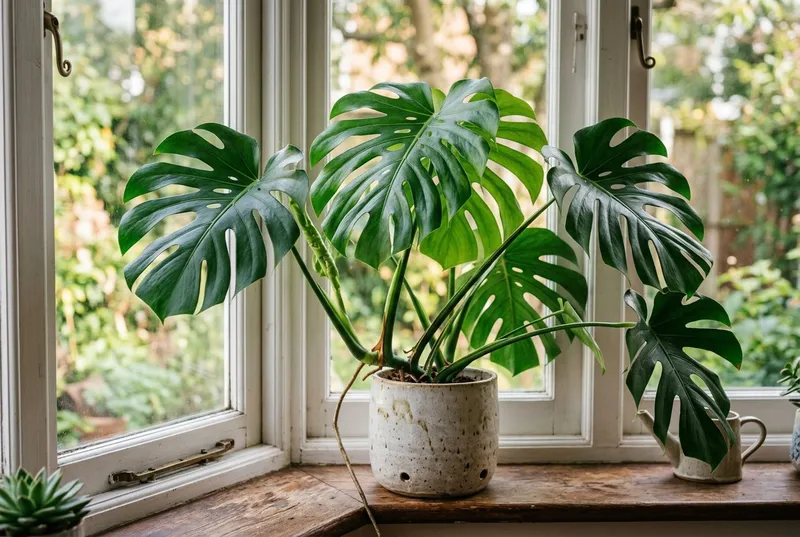
A striking tropical houseplant prized for its large, fenestrated leaves that develop distinctive splits and holes as they mature. Native to Central American rainforests, Monstera thrives in the warm, draught-free conditions of UK homes. It climbs using aerial roots and benefits from a moss pole for support. Given bright indirect light, it produces new leaves regularly throughout spring and summer.
How to grow monstera
Position in bright, indirect light away from direct sun, which scorches the leaves. A north- or east-facing windowsill works well in most UK homes. Water when the top 5 cm of compost feels dry, roughly weekly in summer and fortnightly in winter. Use a peat-free houseplant compost mixed with perlite for good drainage. Mist the foliage regularly or place the pot on a pebble tray filled with water to raise humidity, especially during winter when central heating dries the air. Feed monthly with a balanced liquid fertiliser from April to September. Wipe the large leaves with a damp cloth to remove dust and improve light absorption. Provide a moss pole or coir support once the plant exceeds 60 cm, tying aerial roots gently against it to encourage climbing.
Pruning
Prune in spring by cutting back leggy stems just above a leaf node using clean, sharp secateurs. Remove any yellowed or damaged leaves at their base. Monstera tolerates hard pruning well and will produce new growth from dormant nodes below the cut point.
Propagation
- Stem cuttings
- Air layering
Common problems
- Yellow leaves from overwatering
- Brown leaf tips from low humidity
- Leggy growth in low light
- Root rot in waterlogged compost
Good companions
Related guides
Best Indoor Plants for UK Homes
The best indoor plants for UK homes ranked by light needs, care difficulty, and pet safety. Includes lux data for every room orientation.
How to Propagate Houseplants
How to propagate houseplants from cuttings, division, and offsets. Covers water and soil methods with success rates for 10 popular species.
How to Repot Houseplants
Learn when and how to repot houseplants. Step-by-step guide to pot sizes, compost types, and aftercare for healthy indoor plants.
Best Hanging Houseplants UK
The best hanging houseplants for UK homes ranked by trail length, light needs, and care. Covers 10 trailing species with room-by-room placement advice.