Peace Lily
Spathiphyllum wallisii
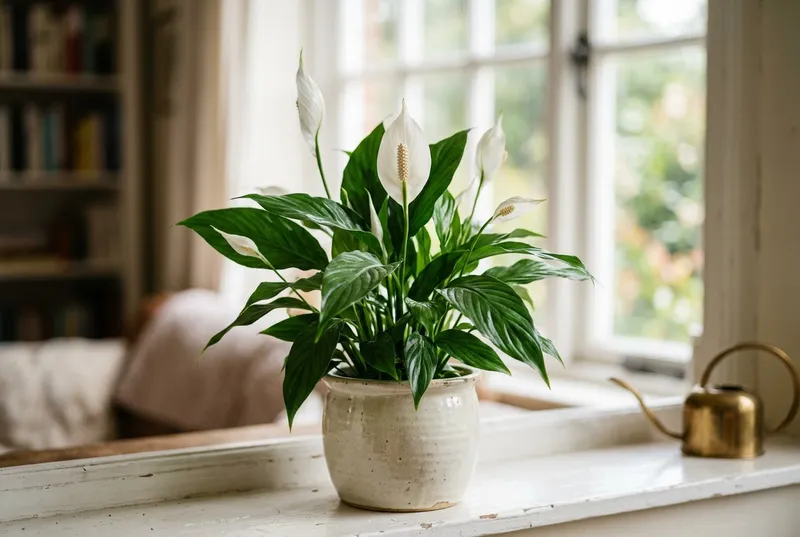
An elegant, shade-tolerant houseplant producing glossy dark green leaves and distinctive white spathe flowers from spring through summer. Peace lilies are among the most forgiving indoor plants for UK homes, thriving in low-light rooms where other houseplants struggle. NASA research identified them as effective air purifiers. They signal when thirsty by drooping slightly, then recover quickly once watered.
How to grow peace lily
Place in a room with indirect or filtered light. Peace lilies tolerate shade well but flower more freely with brighter conditions. Avoid direct sunlight, which bleaches the foliage. Water thoroughly when the top 2-3 cm of compost dries out, using tepid water where possible. They dislike cold water straight from the tap. Reduce watering in winter but never let the compost dry out completely. Mist the leaves weekly or group with other houseplants to increase humidity. Feed fortnightly from April to September with a dilute liquid houseplant fertiliser. Repot every two to three years in spring, moving up one pot size. Use a peat-free multipurpose compost. Keep away from draughts and radiators. Note that peace lilies are toxic to cats and dogs if ingested.
Pruning
Remove spent flower stalks by cutting them at the base once the spathe turns green and fades. Trim away any brown or yellowed leaves at soil level. No structural pruning is needed as the plant grows from a central crown.
Propagation
- Division in spring
Common problems
- Brown leaf tips from dry air or fluoride in tap water
- Yellow leaves from overwatering
- Failure to flower in very low light
- Mealybug infestations on leaf undersides
Good companions
Related guides
Best Indoor Plants for UK Homes
The best indoor plants for UK homes ranked by light needs, care difficulty, and pet safety. Includes lux data for every room orientation.
Best Low-Light Houseplants for UK Homes
Ten low-light houseplants ranked by actual lux tolerance. Covers north-facing rooms, dark hallways, and bathrooms with specific care data per plant.
Best Plants for Bathrooms UK
The best bathroom plants for UK homes ranked by humidity tolerance, low light, and pet safety. Covers 12 species with windowless bathroom solutions.
Best Plants for Bedrooms UK
The best bedroom plants for UK homes ranked by air purifying ability, night oxygen release, and sleep-boosting fragrance. Includes pet safety data.