Fountain Grass
Pennisetum alopecuroides
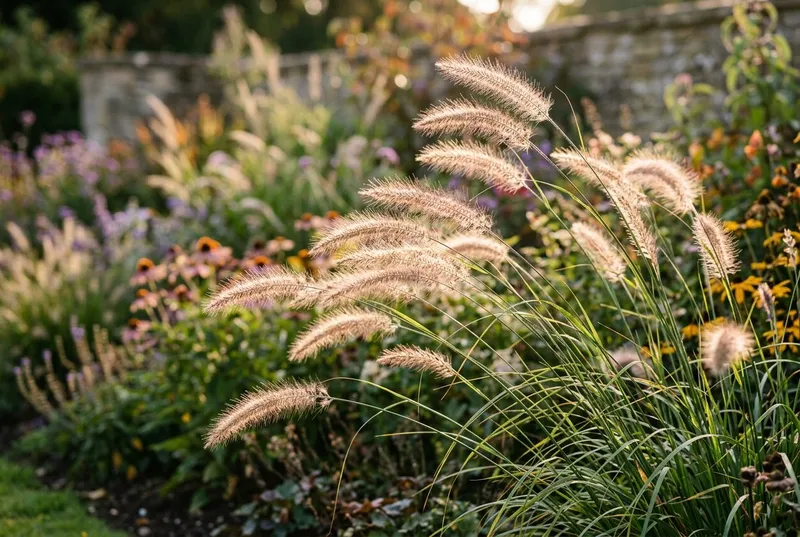
A compact, mound-forming ornamental grass producing arching foliage and distinctive bottlebrush-shaped flower heads from midsummer to autumn. The soft, fuzzy plumes start pinkish-brown and age to tawny gold, catching the light beautifully in low autumn sun. Fountain grass is hardy in most of England and Wales, though it benefits from a sheltered spot in colder northern regions. Cultivar 'Hameln' is the most reliable compact form for UK gardens.
How to grow fountain grass
Plant in spring in a warm, sunny position with well-drained soil. Pennisetum needs heat and sun to flower well and may disappoint in cool, shaded spots. Space plants 60-80 cm apart. Water regularly during the first growing season. Once established, fountain grass is reasonably drought tolerant but flowers better with some moisture. Avoid rich, heavy soils that promote lush foliage at the expense of flowers. Leave the dried flower heads and foliage standing through winter for structure and to protect the crown from frost. In colder northern UK gardens, apply a dry mulch of straw or bracken around the base in late autumn. Feed lightly in spring with a general-purpose fertiliser. Grows well in containers using a loam-based compost such as John Innes No. 2 mixed with grit.
Pruning
Cut all growth to 10-15 cm in late February or early March before new shoots emerge. Use shears for a clean cut. Never cut back in autumn, as the old stems insulate the crown from winter cold and wet.
Propagation
- Division in late spring
Common problems
- Poor flowering in shade or cold summers
- Crown rot in wet, heavy soil over winter
- Slow to emerge in spring after cold winters
Good companions
Related guides
Ornamental Grasses for UK Gardens
Guide to the best ornamental grasses for UK gardens. Covers tall, medium, and low varieties with planting, dividing, and cutting back advice.
Cottage Garden Planting Plan for the UK
How to plan and plant a cottage garden in the UK. Covers classic plants, colour schemes, seasonal structure, and a ready-to-use planting plan.
Low Maintenance Garden Plants for the UK
Best low-maintenance plants for UK gardens that thrive with minimal care. Covers evergreens, perennials, ground cover, grasses, and shrubs.
Best Plants for Butterflies in the UK
Top nectar and caterpillar food plants for UK butterflies. Covers 59 species, seasonal planting, host plants, and garden design for butterflies.