Peony
Paeonia lactiflora
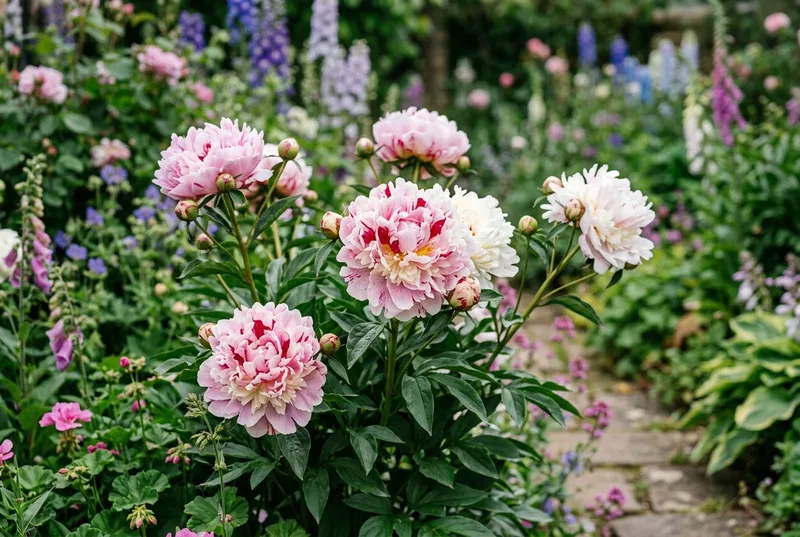
A long-lived, clump-forming perennial producing large, sumptuous, often fragrant blooms in shades of white, pink, and red from May to June. Herbaceous peonies are among the most rewarding garden plants in the UK, with established specimens flowering reliably for fifty years or more. The divided foliage turns bronze and crimson in autumn, providing a second season of interest.
How to grow peony
Plant bare-root peonies in autumn, positioning the pink buds (eyes) no more than 2.5 cm below the soil surface — planting too deeply is the most common reason peonies fail to flower. Choose a sunny or lightly shaded spot with fertile, well-drained soil. Avoid areas that receive early morning sun, as rapid thawing of frosted buds damages flowers. Space plants 90 cm apart to allow good air circulation. Water well during the first two seasons but avoid overhead watering which encourages botrytis. Feed with a high-potash fertiliser like rose food in March and again after flowering. Peonies resent being moved, so choose their position carefully.
Pruning
Deadhead faded flowers unless you want seed pods to develop. Cut all stems back to ground level in late autumn once the foliage has died down, and dispose of the cut material rather than composting it — this reduces the risk of peony wilt carrying over to the next season.
Propagation
- Division in autumn
- Root cuttings in winter
Common problems
- Peony wilt (botrytis) causing stems to collapse
- Failure to flower from planting too deep
- Ant activity on buds is harmless and not a problem
Good companions
Related guides
How to Grow Peonies: UK Planting Guide
A complete guide to growing peonies in UK gardens. Covers bare-root planting depth, herbaceous and tree types, soil prep, and seasonal care.
Cottage Garden Planting Plan for the UK
How to plan and plant a cottage garden in the UK. Covers classic plants, colour schemes, seasonal structure, and a ready-to-use planting plan.
Best Flowering Shrubs for UK Gardens
Discover the best flowering shrubs for UK gardens. Covers hydrangea, lavender, buddleja, philadelphus and more with pruning groups and soil needs.