Philadelphus
Philadelphus coronarius
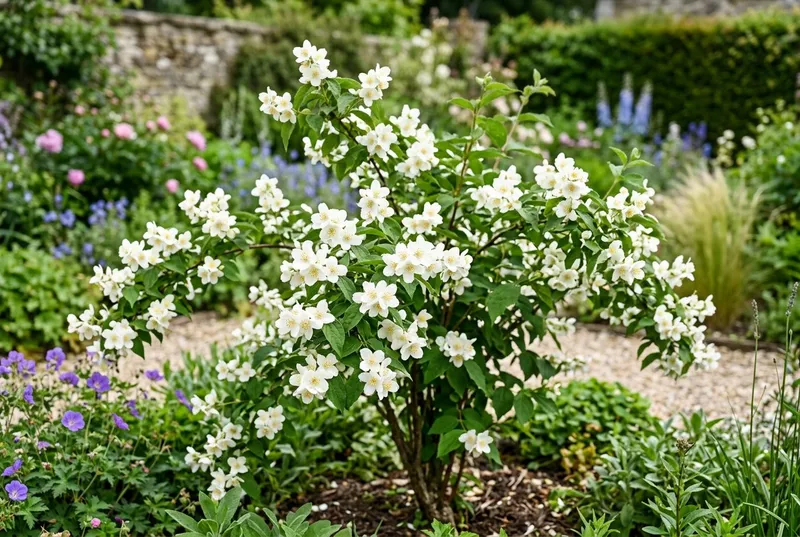
Known as mock orange for its intensely fragrant white flowers, this deciduous shrub is a classic of early summer in UK gardens. The creamy-white, four-petalled blooms appear in June and July, filling the garden with a sweet orange-blossom scent. Reliable and undemanding, it grows well in most soils across all regions of Britain. A traditional cottage garden favourite.
How to grow philadelphus
Plant in autumn or spring in any well-drained soil. Philadelphus thrives in full sun but also performs well in partial shade, though flowering is heavier in sunnier positions. Water newly planted specimens regularly during the first growing season. Once established, mock orange is drought-tolerant and rarely needs watering. Mulch around the base in spring with garden compost. Feed with a general-purpose fertiliser after pruning. Position near a seating area, path or doorway to enjoy the fragrance. In smaller gardens, choose compact cultivars such as 'Belle Etoile' or 'Manteau d'Hermine' which stay below 1.5m.
Pruning
Prune immediately after flowering in late July. Cut back flowered shoots to strong young side branches lower down the stem. Remove one in four of the oldest, thickest stems at ground level each year to encourage vigorous new growth. This keeps the bush productive and prevents it becoming bare and leggy at the base. Do not prune in winter or spring — this removes the flower buds.
Propagation
- Hardwood cuttings in late autumn
- Softwood cuttings in early summer
Common problems
- Aphids on young growth
- Can become bare at base without regular pruning
- Blackfly in early summer