Royal Fern
Osmunda regalis
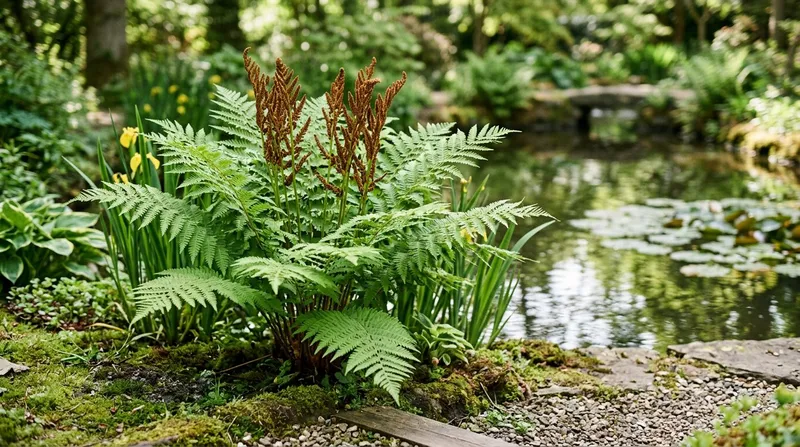
The largest native British fern, forming magnificent clumps of elegant, twice-divided fronds that turn rich copper and gold in autumn. Royal fern produces distinctive rusty-brown fertile fronds at the top of the plant in summer, resembling flower clusters. It thrives beside ponds, streams, and in bog gardens, where its roots can reach moisture. Once common across the UK, it is now rarer in the wild but widely available from nurseries.
How to grow royal fern
Plant in partial shade beside a pond, stream, or in a bog garden where the soil stays permanently moist or wet. Royal fern also tolerates full sun provided the roots never dry out. Use an acid to neutral, humus-rich soil; it dislikes alkaline or chalky ground. Dig in generous quantities of leaf mould, garden compost, or composted bark before planting. Water copiously during dry spells, especially in the first two years. Mulch heavily each spring with leaf mould to retain moisture and suppress weeds. This fern grows slowly at first but becomes a spectacular specimen after three to four years. It does not tolerate drought. Space plants at least 100 cm apart as mature clumps are substantial. Feed is rarely needed in humus-rich soil but a light dressing of fish, blood, and bone in spring can boost growth.
Pruning
Cut all dead fronds to the base in late February before new crosiers emerge. The autumn colour is attractive, so leave the foliage standing until it collapses naturally over winter. Remove the spent fertile fronds once they turn brown.
Propagation
- Spore sowing
- Division of established clumps in spring
Common problems
- Fronds wilting from drought stress
- Poor growth on alkaline soils
- Slugs on new crosiers in spring
- Slow establishment in the first two years
Good companions
Related guides
Best Plants for Shade in UK Gardens
Best shade-tolerant plants for UK gardens, from full shade to dappled light. Covers perennials, shrubs, ground cover, ferns, and climbers.
How to Build a Wildlife Pond UK Guide
Step-by-step guide to building a wildlife pond in the UK. Covers liner choice, planting, depth, wildlife access, maintenance, and costs from fifty pounds.
Best Pond Plants for UK Gardens
Native UK pond plants for every planting zone. Covers water lilies, oxygenators, marginals, and bog plants with depths, spreads, and wildlife value.
How to Create a Wildlife Garden UK
Turn any UK garden into a wildlife haven. Covers ponds, native planting, hedgehog access, bird feeding, bug hotels, and seasonal wildlife tasks.