Rubber Plant
Ficus elastica
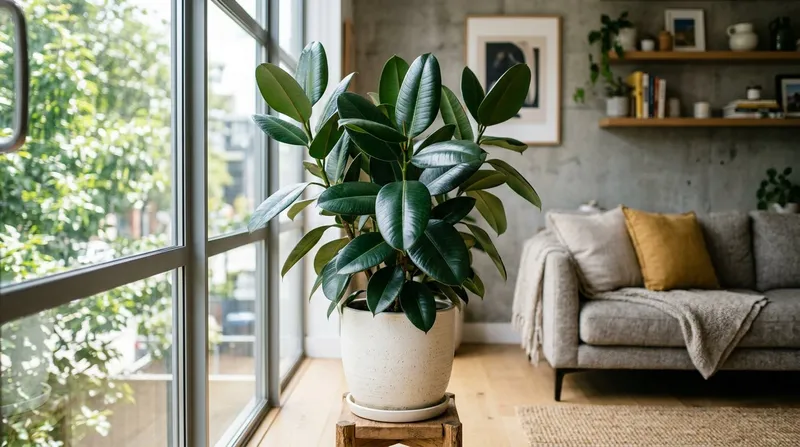
A bold, architectural houseplant with thick, glossy leaves in deep burgundy-green or variegated cream and pink. The rubber plant was a staple of Victorian parlours and has returned to popularity in modern UK interiors. It grows steadily into a small indoor tree with minimal fuss, tolerating lower light levels better than many large-leaved houseplants. Its leathery foliage is naturally dust-resistant and adds instant presence to any room.
How to grow rubber plant
Position in bright, indirect light. Variegated cultivars such as 'Tineke' and 'Ruby' need more light than plain green forms to maintain their colour. Water when the top 3-5 cm of compost dries out. Rubber plants are sensitive to overwatering; always check before adding more. Use a well-draining peat-free compost with added perlite or bark. Feed monthly from April to September with a balanced liquid fertiliser. Wipe the large leaves with a damp cloth regularly to keep them glossy and free of dust. Rubber plants tolerate average UK room humidity but appreciate occasional misting. Repot every two to three years in spring, or when roots circle the bottom of the pot. Keep above 10 degrees Celsius and away from cold draughts. The milky latex sap stains fabrics and irritates skin, so wear gloves when pruning.
Pruning
Prune in spring to control height or encourage branching. Cut the stem at the desired point and the plant will produce one or two new shoots below. Dab the cut with damp tissue to stop latex flow. Remove any leggy lower growth or damaged leaves at the main stem.
Propagation
- Stem cuttings
- Air layering
Common problems
- Leaf drop from cold draughts or overwatering
- Brown leaf edges from low humidity
- Scale insects on stems and leaf undersides
- Leggy growth in low light
Good companions
Related guides
Best Indoor Plants for UK Homes
The best indoor plants for UK homes ranked by light needs, care difficulty, and pet safety. Includes lux data for every room orientation.
How to Propagate Houseplants
How to propagate houseplants from cuttings, division, and offsets. Covers water and soil methods with success rates for 10 popular species.
How to Repot Houseplants
Learn when and how to repot houseplants. Step-by-step guide to pot sizes, compost types, and aftercare for healthy indoor plants.
Best House Plants for Beginners UK
The easiest house plants for UK homes. Covers low-light species, watering schedules, common mistakes, and the best plants for every room.