Snowdrop
Galanthus nivalis
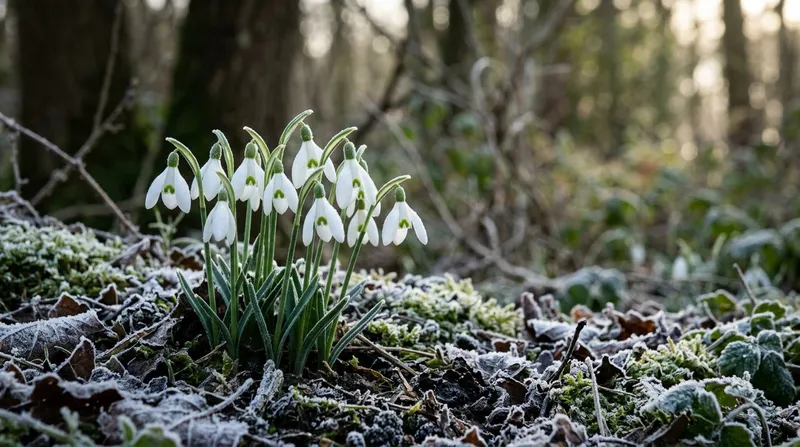
The earliest flowering bulb in UK gardens, snowdrops push through frozen ground from January to March. Their delicate white bell-shaped flowers with green markings are a welcome sign that spring is approaching. Naturalised across Britain in woodlands, churchyards, and hedgerows, they spread readily by division and self-seeding. Over 2,500 named cultivars exist, fuelling a passionate collecting community known as galanthophiles.
How to grow snowdrop
Plant snowdrops 'in the green' — as growing plants with leaves attached — immediately after flowering in March or April. This gives far better results than planting dry bulbs in autumn, which often fail to establish. Set bulbs 10 cm deep and 8 cm apart in humus-rich soil under deciduous trees or shrubs where they receive winter light and summer shade. Keep the soil moist but not waterlogged. Snowdrops resent being dried out. Once established, they need no feeding or watering. Lift and divide congested clumps every three to four years immediately after flowering. Replant divisions straight away — never let the roots dry out.
Pruning
No pruning required. Leave foliage to die back naturally by late spring. Do not cut, mow, or tidy leaves until they have fully yellowed.
Propagation
- Division in the green (after flowering)
- Self-seeding
Common problems
- Narcissus bulb fly
- Grey mould (Botrytis)
- Snowdrop stagonospora disease
Good companions
Related guides
How to Grow Snowdrops in the UK
Expert guide to growing snowdrops in the UK. Plant 'in the green' for best results, naturalise under trees, and find the best varieties for your garden.
When to Plant Spring Bulbs in the UK
Find out when to plant spring bulbs across the UK. Covers daffodils, tulips, crocuses, hyacinths, alliums, and snowdrops with exact timing by type.
Best Winter Flowering Plants for the UK
Ten best winter flowering plants for UK gardens from November to March. Covers hellebores, snowdrops, witch hazel, and winter jasmine with care advice.