Spider Plant
Chlorophytum comosum
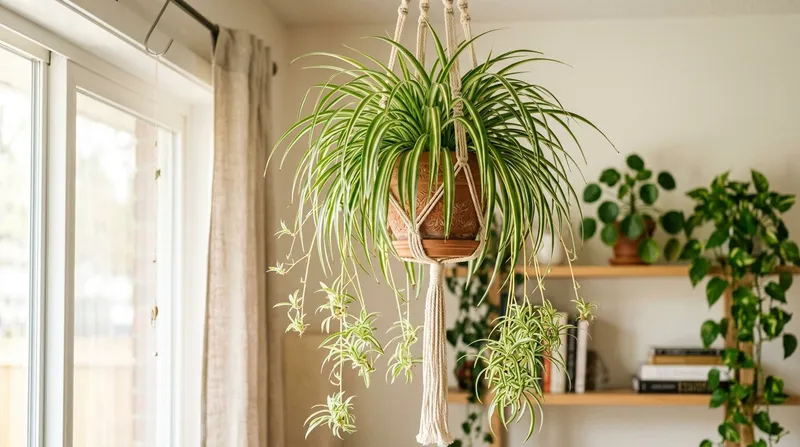
A classic UK houseplant with arching, grass-like leaves striped in green and white. Spider plants are famously easy to grow and propagate, producing long runners tipped with miniature plantlets that dangle from the parent. They adapt to almost any indoor position and tolerate fluctuating temperatures common in British homes. An excellent air-purifying plant that has remained popular since the Victorian era.
How to grow spider plant
Position in bright indirect light for the best leaf colour, though spider plants cope well in shadier spots. Avoid direct midday sun, which scorches the foliage. Water regularly during the growing season, allowing the top layer of compost to dry between waterings. Reduce watering in winter. Spider plants store water in their thick, fleshy roots and tolerate short dry spells. Use a standard peat-free multipurpose compost. Feed fortnightly from April to September with a dilute liquid fertiliser. Brown tips often result from fluoride or chlorine in tap water; switch to rainwater or leave tap water to stand overnight before using. Repot when thick roots push the plant upward out of the pot, usually every two years. Spider plants are non-toxic and safe around children and pets.
Pruning
Remove brown or damaged leaves at the base. Cut off runners at any time if you do not want plantlets. Alternatively, leave runners for a cascading display in hanging baskets. Trim brown leaf tips with scissors, cutting at an angle for a natural look.
Propagation
- Plantlet division
- Root division
Common problems
- Brown leaf tips from fluoride in tap water
- Pale leaves from too much direct sun
- Root rot if overwatered in winter
- Mealybug on leaf bases
Good companions
Related guides
Best Indoor Plants for UK Homes
The best indoor plants for UK homes ranked by light needs, care difficulty, and pet safety. Includes lux data for every room orientation.
Best Hanging Houseplants UK
The best hanging houseplants for UK homes ranked by trail length, light needs, and care. Covers 10 trailing species with room-by-room placement advice.
How to Propagate Houseplants
How to propagate houseplants from cuttings, division, and offsets. Covers water and soil methods with success rates for 10 popular species.
Best House Plants for Beginners UK
The easiest house plants for UK homes. Covers low-light species, watering schedules, common mistakes, and the best plants for every room.