Tulip
Tulipa gesneriana
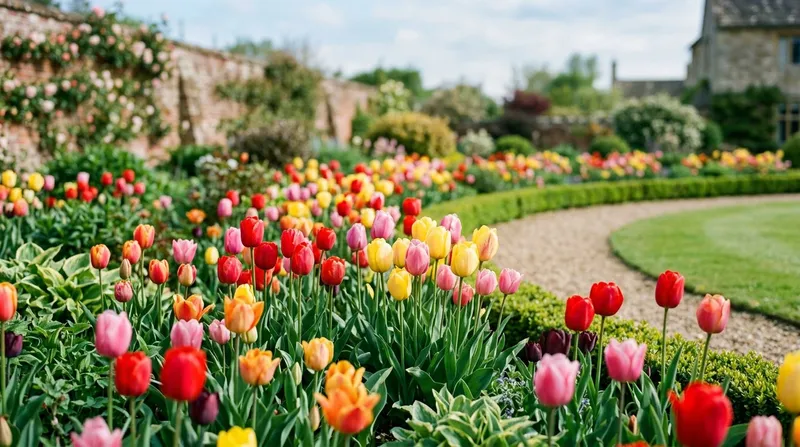
One of the most popular spring-flowering bulbs in UK gardens, tulips produce elegant cup-shaped blooms in almost every colour imaginable. Originally from Central Asia, they thrive in well-drained soil and full sun. Plant bulbs in November or December for the best display the following spring. Over 3,000 registered cultivars exist, from classic Darwins to fringed and parrot types.
How to grow tulip
Plant bulbs 15-20 cm deep in late November or December to reduce the risk of tulip fire disease. Choose a spot with full sun and well-drained soil; waterlogged ground causes bulbs to rot. Add grit to the planting hole on heavy clay soils. Space bulbs 10-15 cm apart for a natural display. Feed with a high-potash fertiliser when shoots emerge in spring. Deadhead spent flowers promptly but leave the foliage to die back naturally over six weeks, allowing the bulb to store energy for the following year. In borders, plant through low ground cover such as forget-me-nots to disguise the fading leaves. Lift and store bulbs after foliage dies if your soil is heavy, or treat as annuals and replant fresh each autumn for the strongest display.
Pruning
No pruning required. Remove spent flower heads to prevent seed formation, but leave the stem and foliage intact until it has yellowed completely. This allows the bulb to build reserves for the next season.
Propagation
- Offsets in autumn
- Seed (takes 5-7 years to flower)
Common problems
- Tulip fire (Botrytis tulipae)
- Squirrels digging up bulbs
- Slugs and snails on young shoots
- Bulb rot in waterlogged soil
Good companions
Related guides
How to Grow Tulips in the UK
A practical guide to growing tulips in UK gardens. Covers planting times, bulb depth, varieties, containers, naturalising, and tulip fire disease.
When to Plant Tulip Bulbs in the UK
Expert UK guide to planting tulip bulbs at the right time. Covers planting depth, best varieties, lasagne planting in pots, and tulip fire prevention.
When to Plant Spring Bulbs in the UK
Find out when to plant spring bulbs across the UK. Covers daffodils, tulips, crocuses, hyacinths, alliums, and snowdrops with exact timing by type.